
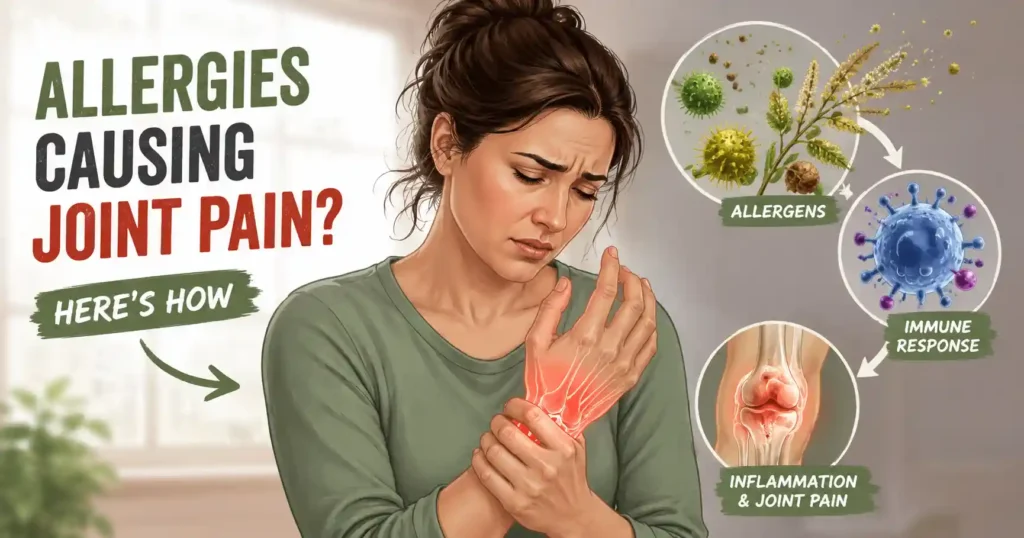
Yes, allergies can cause joint pain in some people. The pain usually happens indirectly through inflammation, immune system activity, histamine release, fatigue, and worsening of existing inflammatory conditions. Seasonal allergies are more likely to cause body aches, stiffness, and soreness than severe joint damage itself.
Many people notice aching knees, stiff fingers, sore muscles, or “flu-like” body pain during heavy allergy seasons. Current research suggests this overlap is real, although the exact mechanism is still being studied as of 2026.
- Yes, allergies can contribute to joint pain and body aches through inflammation and immune activity.
- Seasonal allergies are more likely to cause temporary stiffness and soreness than permanent joint damage.
- Histamine, fatigue, poor sleep, and inflammatory signaling all appear to play a role.
- Allergy-related pain can overlap with arthritis, but they are not the same condition.
- Persistent swelling, severe pain, or long-lasting stiffness should not be blamed on allergies alone.
- Antihistamines rarely cause joint pain directly, though side effects can sometimes contribute indirectly.
Can Allergies Cause Joint Pain?
Allergies can trigger joint pain through inflammation and immune-system signaling. The pain is usually mild to moderate and often appears alongside congestion, fatigue, sneezing, itchy eyes, or sinus pressure.
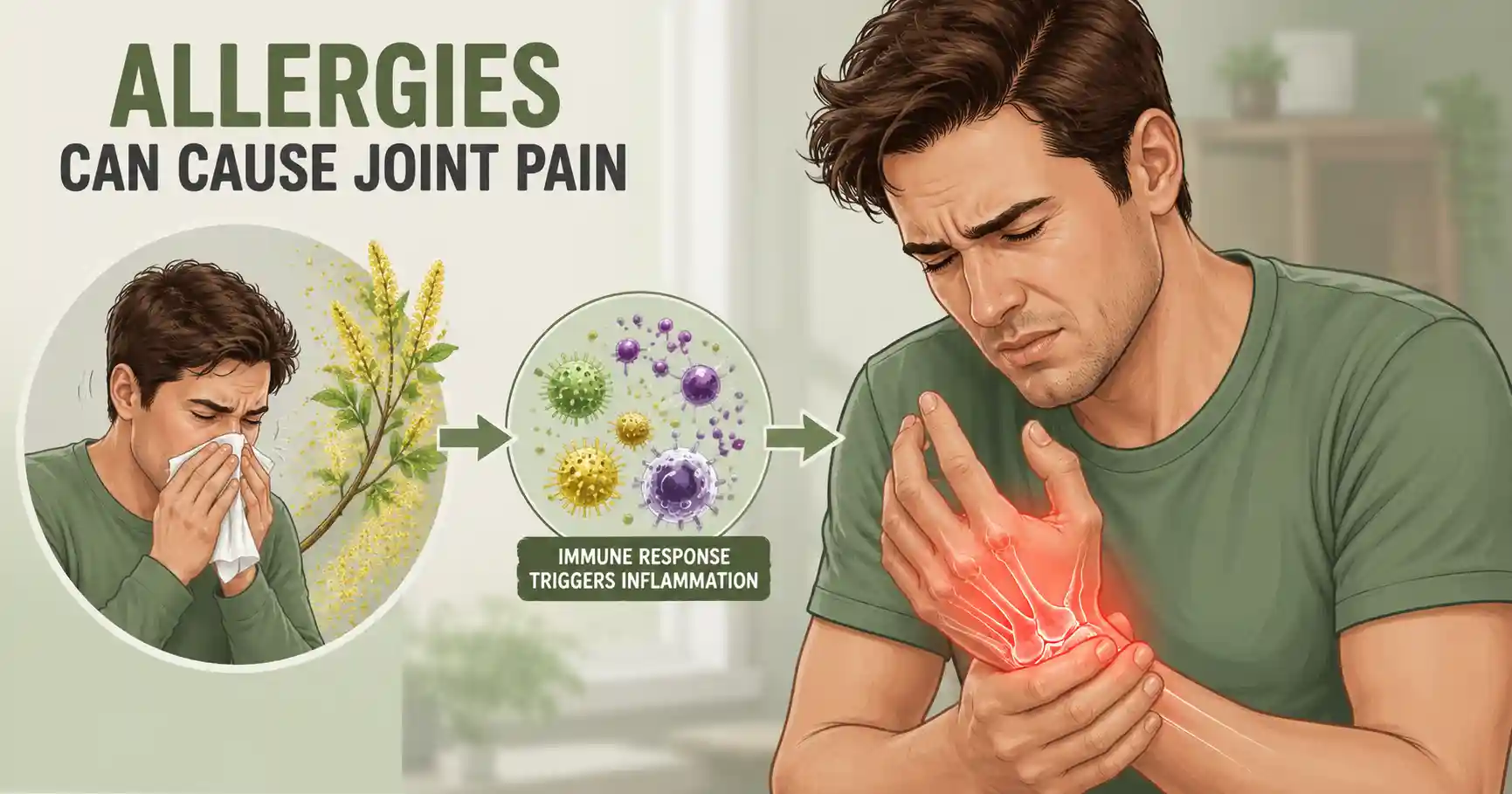
This is where a lot of health content gets sloppy. Allergies do not usually attack joints directly, the way autoimmune arthritis can. The connection is more indirect.
During an allergic reaction, the body releases chemicals like:
- Histamine
- Cytokines
- Leukotrienes
These chemicals help the immune system react to pollen, mold, pet dander, or dust. The problem is that inflammation does not always stay neatly isolated in the nose or eyes. In some people, it spills into the rest of the body and creates:
- Muscle soreness
- Fatigue
- Joint stiffness
- General body aches
Research published in the Journal of Allergy and Clinical Immunology has shown that allergic inflammation can increase systemic inflammatory markers, especially during heavy seasonal exposure. That does not automatically mean “arthritis,” but it helps explain why some people feel physically worn down during allergy season.
Another thing competitors barely explain: poor sleep matters here. Severe allergies often wreck sleep quality. Bad sleep increases pain sensitivity.
So part of “allergy joint pain” may actually be the nervous system becoming more sensitive after several nights of congestion and interrupted sleep. That overlap gets ignored constantly online.
Why Do Seasonal Allergies Cause Body Aches and Stiffness?
Seasonal allergies can cause body aches because the immune system creates widespread inflammatory signals during allergic reactions.
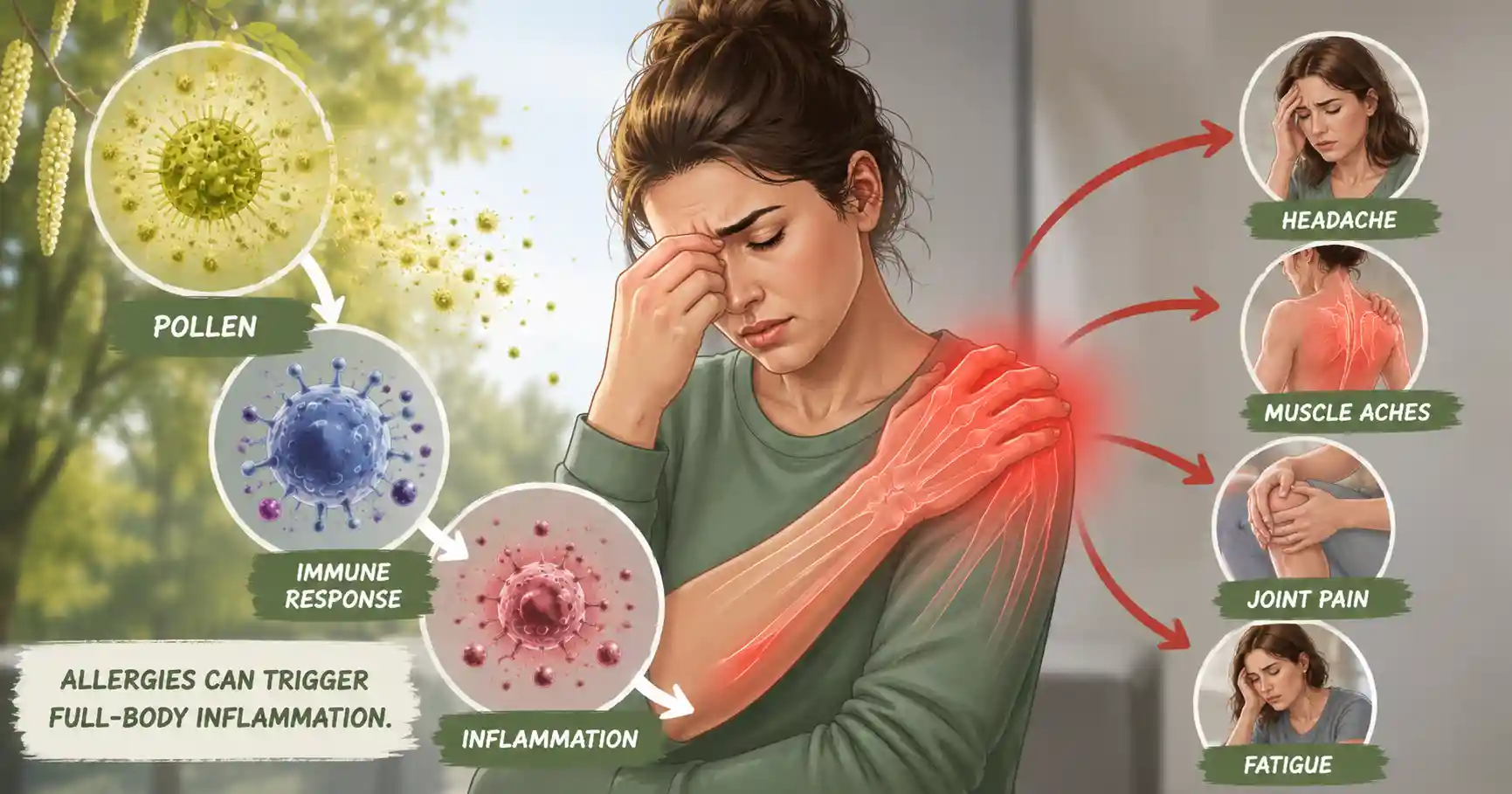
People often describe this feeling as:
- “Feeling rough”
- Heavy limbs
- Sore muscles
- Stiff joints
- Flu-like aches without a fever
Pollen is the most common trigger. During high pollen periods, the body may stay in a prolonged inflammatory state for weeks.
Histamine can:
- Affect blood vessels
- Influence pain signaling
- Increase tissue sensitivity
- Contribute to swelling in some people
That does not mean every ache during allergy season comes from allergies. Viral infections, dehydration, and autoimmune disease can overlap. But people with strong seasonal allergies often notice a predictable pattern:
- Symptoms worsen during high pollen counts
- Symptoms improve after rain or indoors
- Body aches improve when allergy symptoms improve
The American College of Allergy, Asthma & Immunology notes that severe allergic inflammation can contribute to fatigue and general malaise.
Fatigue changes how the body processes pain. That connection is stronger than many wellness blogs admit.
Why does sneezing sometimes make joints hurt
Searches like:
- “Whole body hurts when sneezing.”
- “Joints hurt after sneezing.”
sounds strange at first, but they make sense mechanically.
Forceful sneezing:
- Increases pressure through the chest and spine
- Briefly tightens muscles
- Stresses already inflamed tissues
If someone already has:
- arthritis
- back inflammation
- muscle tension
- poor sleep
- allergy-related inflammation
Repeated sneezing can genuinely make the body ache afterward. That is not usually dangerous. Persistent swelling or severe joint pain is different.
Helpful Articles On Joint Pain
- What is the Best Inflammation Medicine? The Real Answer

- Why My Ankle Joint is Paining? What You Need to Know
- How to Decrease Inflammation Naturally? A Simple Guide
- What to Take for Knee and Joint Pain? Here’s What to Know
- What to Take for Knee Joint Pain? What the Research Says
- How to Treat Inflammation of the Scalp? Simple Steps That Help





Can Allergies Cause Joint Pain in Hands, Fingers, or Knees?
Yes, allergies can contribute to pain or stiffness in smaller joints like fingers and hands, especially in people already prone to inflammation.
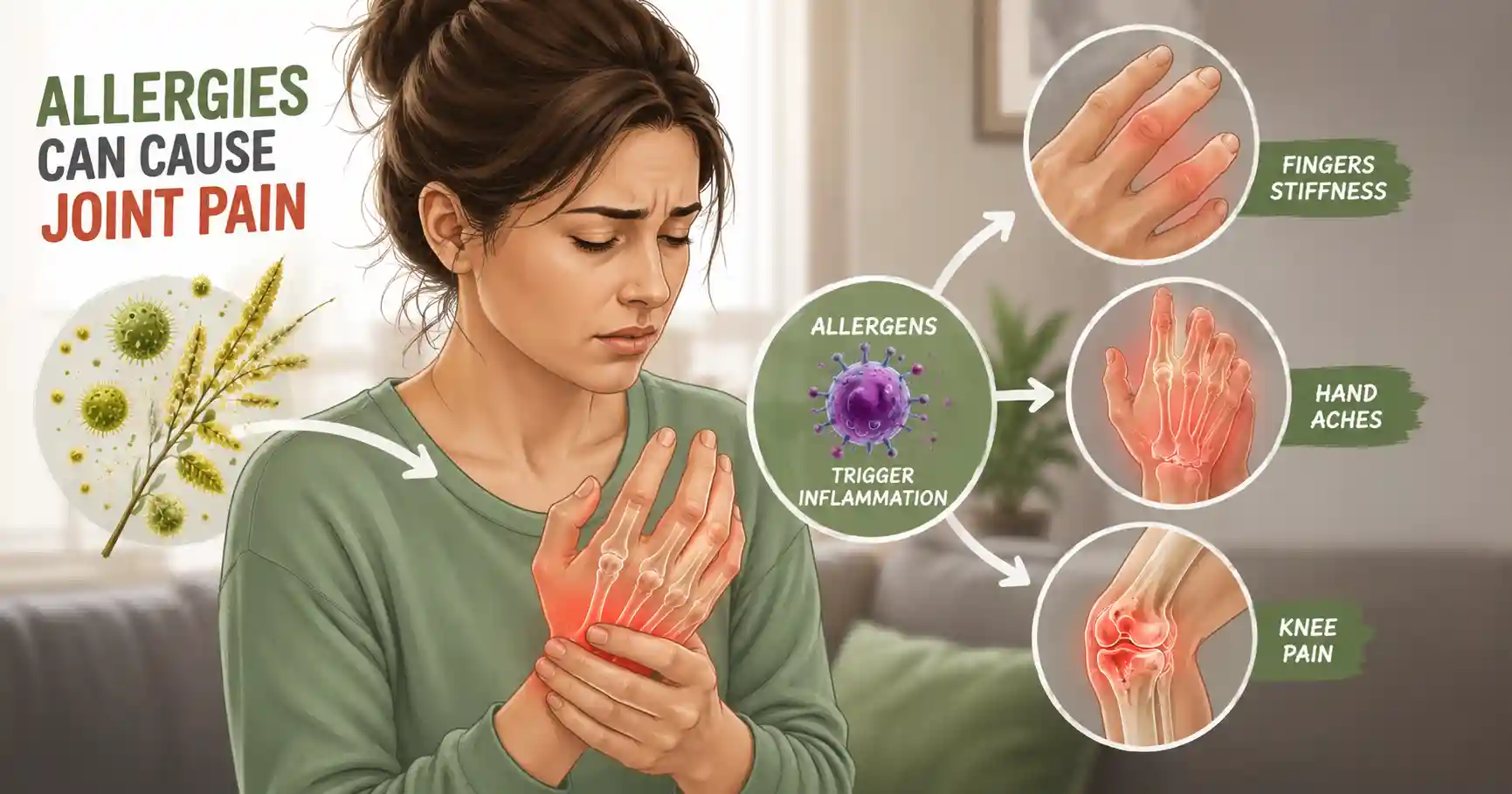
The knees are also commonly mentioned because they already handle high physical stress.
Here is where people get confused:
- Allergies can amplify inflammation.
- They usually do not create structural joint damage.
That distinction matters.
Why smaller joints often feel stiff
Small joints in the:
- fingers
- wrists
- hands
They are more sensitive to inflammatory changes because they contain many small connective tissues and nerve endings.
When inflammation rises, people may notice:
- Morning stiffness
- Puffiness
- Aching
- Reduced grip comfort
But persistent swelling, redness, or worsening pain should not automatically be blamed on allergies. That is where many online articles overreach badly.
Allergy pain vs arthritis symptoms
| Feature | Allergy-Related Joint Pain | Arthritis |
|---|---|---|
| Often seasonal | Yes | Sometimes |
| Linked with sneezing/congestion | Common | Rare |
| Usually temporary | Yes | Often chronic |
| Visible joint damage | No | Possible |
| Morning stiffness over 1 hour | Less common | More common |
| Improves when allergies improve | Often | Not always |
This comparison is missing from most ranking pages, even though it is probably the most useful information readers actually need.




Can Allergies Make Arthritis Worse?
Yes, allergies may worsen arthritis symptoms in some people because both involve inflammatory immune pathways.
This is especially discussed with:
- rheumatoid arthritis
- psoriatic arthritis
- inflammatory arthritis
The overlap is complicated. Researchers are still studying how mast cells and inflammatory cytokines interact across allergic and autoimmune diseases.
A review published in Frontiers in Immunology discussed how mast cells may contribute to both allergic disease and inflammatory arthritis. That does not prove that allergies cause arthritis. It does suggest the immune systems involved share some signaling pathways.
People often notice:
- more stiffness during allergy season
- heavier fatigue
- worse pain during high pollen counts
Some of that may be inflammation. Some may have poor sleep and stress. Some may simply be a coincidence. Realistically, it is probably a mix.
The biggest mistake online content makes is acting like allergies are secretly causing every chronic pain problem. Evidence does not support that.
But pretending there is zero connection is also outdated.
Can Antihistamines Cause Joint Pain?
Antihistamines do not commonly cause joint pain, but some people report body aches, muscle tension, or discomfort while taking them.
This is usually indirect.
Possible reasons include:
- dehydration
- fatigue
- medication interactions
- dry tissues
- Reduced activity due to drowsiness
Older antihistamines are more likely to cause side effects than newer non-drowsy options.
Some people also make mistakes:
- Ongoing allergy inflammation
for - medication side effects
That confusion happens constantly.
If joint pain:
- starts suddenly after a medication change
- becomes severe
- includes swelling or rash
Then, the medical evaluation matters.
When Should Joint Pain During Allergy Season Concern You?
Joint pain should be evaluated if it becomes persistent, severe, swollen, or unrelated to allergy timing.
Red flags include:
- visible swelling
- hot joints
- fever
- unexplained weight loss
- severe fatigue
- Symptoms lasting for weeks
- numbness
- progressive stiffness
These symptoms can point toward:
- autoimmune disease
- infection
- inflammatory arthritis
- gout
- other medical conditions
Allergies are common. Arthritis is also common. Sometimes people have both at the same time. Not every ache during the spring pollen season is “just allergies.”
What Helps Allergy-Related Joint Pain?
The most effective approach is to reduce the allergic inflammation itself.
That usually means:
- Managing pollen exposure
- Improving sleep quality
- Reducing inflammation triggers
- Staying hydrated
- Treating underlying allergy symptoms
Helpful strategies may include:
- HEPA air filtration
- showering after outdoor exposure
- saline nasal rinses
- antihistamines when appropriate
- allergy immunotherapy in selected cases
Regular movement also matters. Light walking and mobility work often reduce stiffness better than complete rest.
One thing that gets misunderstood online: supplements are not magic here. Some people chase “anti-inflammatory detox” products when the bigger issue is uncontrolled allergies, terrible sleep, or untreated arthritis. Simple fixes often matter more.
FAQs
Can seasonal allergies cause joint pain and swelling?
Seasonal allergies can contribute to mild joint discomfort and occasional puffiness because allergic reactions increase inflammatory activity in the body. Severe swelling, hot joints, or long-lasting inflammation are less typical and may point toward arthritis or another medical condition rather than allergies alone.
Can pollen cause body aches?
Yes, pollen exposure can trigger body aches in some people. Heavy allergic reactions increase immune-system activity and inflammation, which may create fatigue, muscle soreness, and a general “sick” feeling even without an infection or fever.
Can allergies cause joint pain in fingers?
Allergies may contribute to temporary stiffness or aching in fingers, especially during strong inflammatory flare-ups. Persistent finger swelling, deformity, or severe morning stiffness should be evaluated for arthritis or autoimmune conditions instead of assuming allergies are the only cause.
Can allergies make arthritis worse?
Some studies suggest allergies may worsen inflammatory arthritis symptoms because both conditions involve overlapping immune-system pathways. Many people with arthritis report more stiffness and fatigue during allergy season, although the exact biological connection is still being researched.
Can antihistamines cause joint pain?
Antihistamines are not a common cause of joint pain, but some people report body aches or muscle discomfort while taking them. Dehydration, drowsiness, medication interactions, or ongoing allergy inflammation may explain these symptoms more often than the antihistamine itself.
End Conclusion
Allergies can cause joint pain, but the connection is usually indirect and inflammation-driven rather than true joint damage. The important question is not just whether allergies can cause joint pain, but whether the pattern fits temporary allergic inflammation or something more serious that needs medical attention.
