
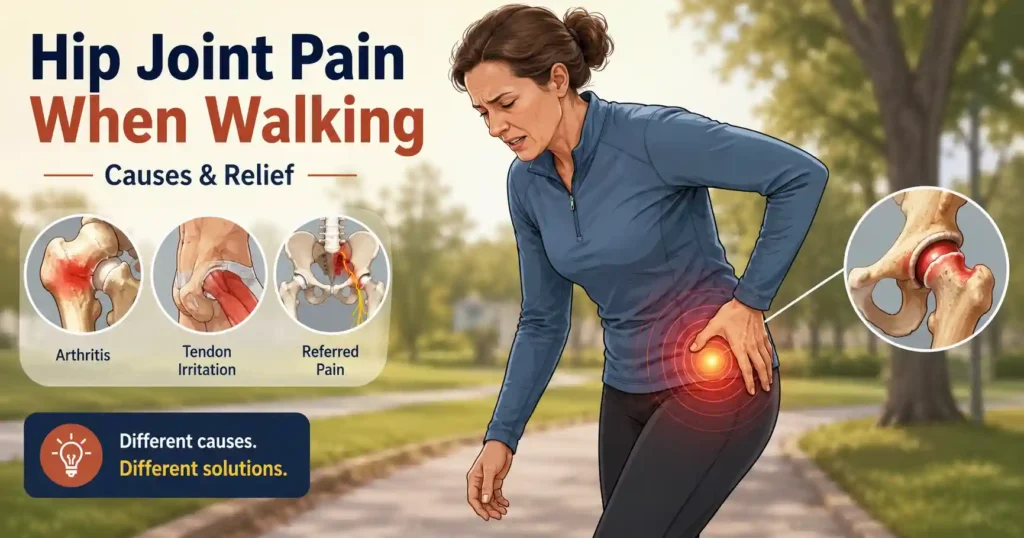
Hip joint pain when walking usually happens because the structures around the hip joint are irritated, overloaded, inflamed, or worn down. The exact pain pattern often gives clues about the cause. Pain in the groin, side hip, buttock, or during specific movements like stairs or standing up can point toward different problems affecting the joint, tendons, muscles, or nearby nerves.
Many people assume all hip pain is arthritis. That is not true. Hip pain while walking can also stem from gluteal tendon problems, bursitis, hip impingement, lower back nerve irritation, or stiffness after prolonged sitting. As of 2026, research continues to show that movement patterns and muscle weakness often matter as much as joint damage itself.
Key Takeaways
- Groin pain and side hip pain usually come from different problems.
- Pain after sitting often points toward stiffness or arthritis-related irritation.
- Walking downstairs significantly increases hip joint load.
- Many “bursitis” cases are actually gluteal tendon problems.
- Rest alone usually does not solve chronic hip pain.
- Movement quality and strength matter more than most people realize.
What Does Hip Joint Pain When Walking Usually Mean?
Hip pain during walking usually means the joint or nearby tissues are struggling to tolerate the load normally. Walking places force through the hip with every step. Stair climbing increases that force even more.
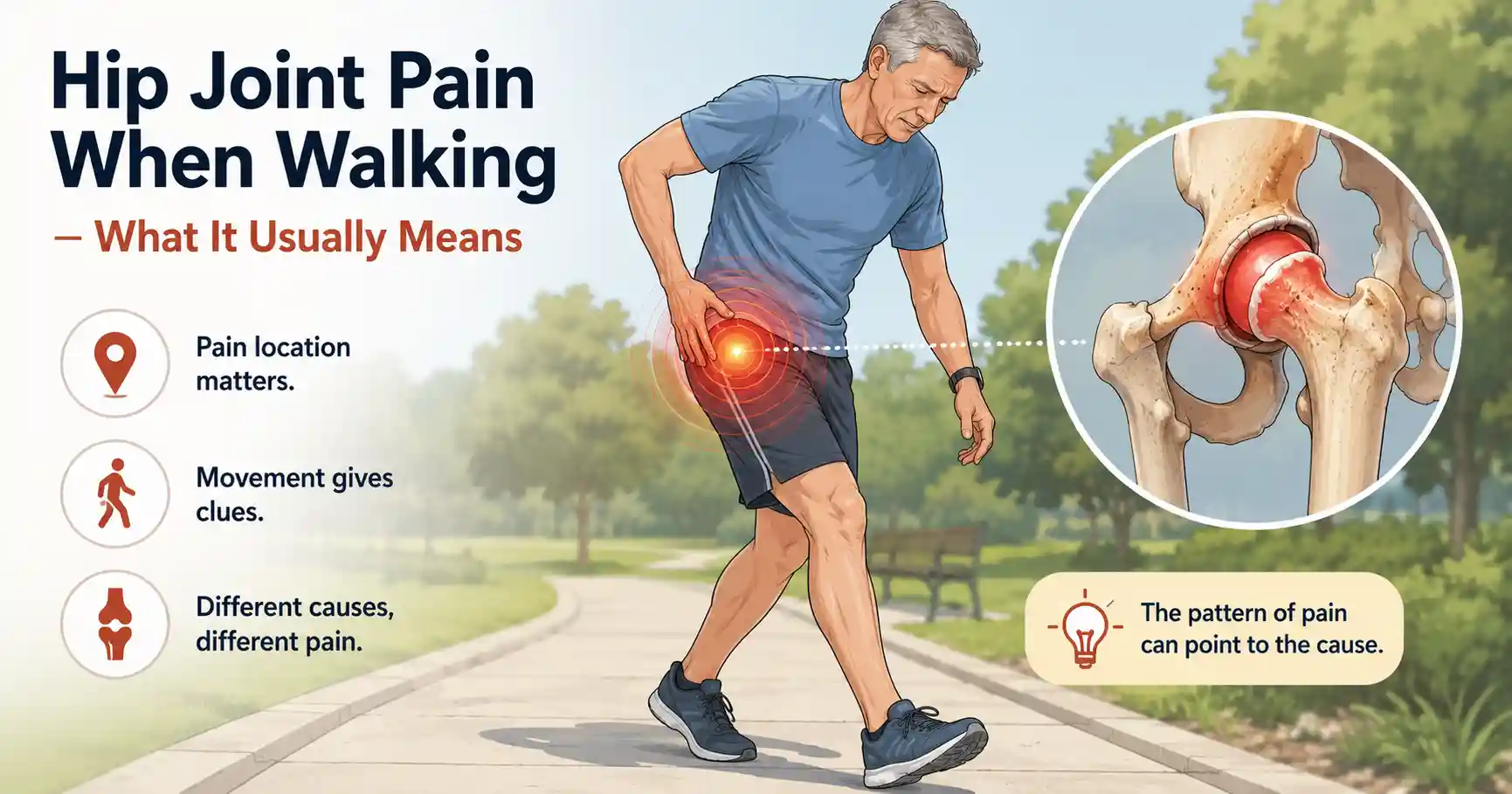
The location matters:
- Front or groin pain often points toward hip joint problems like osteoarthritis or labral irritation.
- Pain on the outside of the hip is more commonly linked to gluteal tendinopathy or bursitis.
- Pain in the buttocks or back hip may come from the lower back, sacroiliac joint, or deep hip muscles.
Pain intensity does not always match damage severity. Some people with moderate arthritis walk comfortably. Others with mild imaging findings hurt badly because the surrounding muscles are weak or the movement patterns have changed over time.
That disconnect frustrates people because scans and symptoms do not always line up neatly.
What Causes Hip Joint Pain When Walking?
Several conditions can cause hip joint pain while walking, but they behave differently.
| Condition | Common Pain Area | Pain Trigger Pattern |
|---|---|---|
| Hip osteoarthritis | Groin/front hip | Worse after inactivity, walking long distances |
| Gluteal tendinopathy | Outer hip | Worse walking uphill or stairs |
| Hip bursitis | Side hip | Pain lying on affected side |
| Labral tear | Groin/deep joint | Clicking, twisting pain |
| Hip impingement | Front hip | Bending, deep flexion |
| Sciatica/referred pain | Buttock/back hip | Burning or radiating pain |
| Hip flexor irritation | Front hip | Pain after sitting |
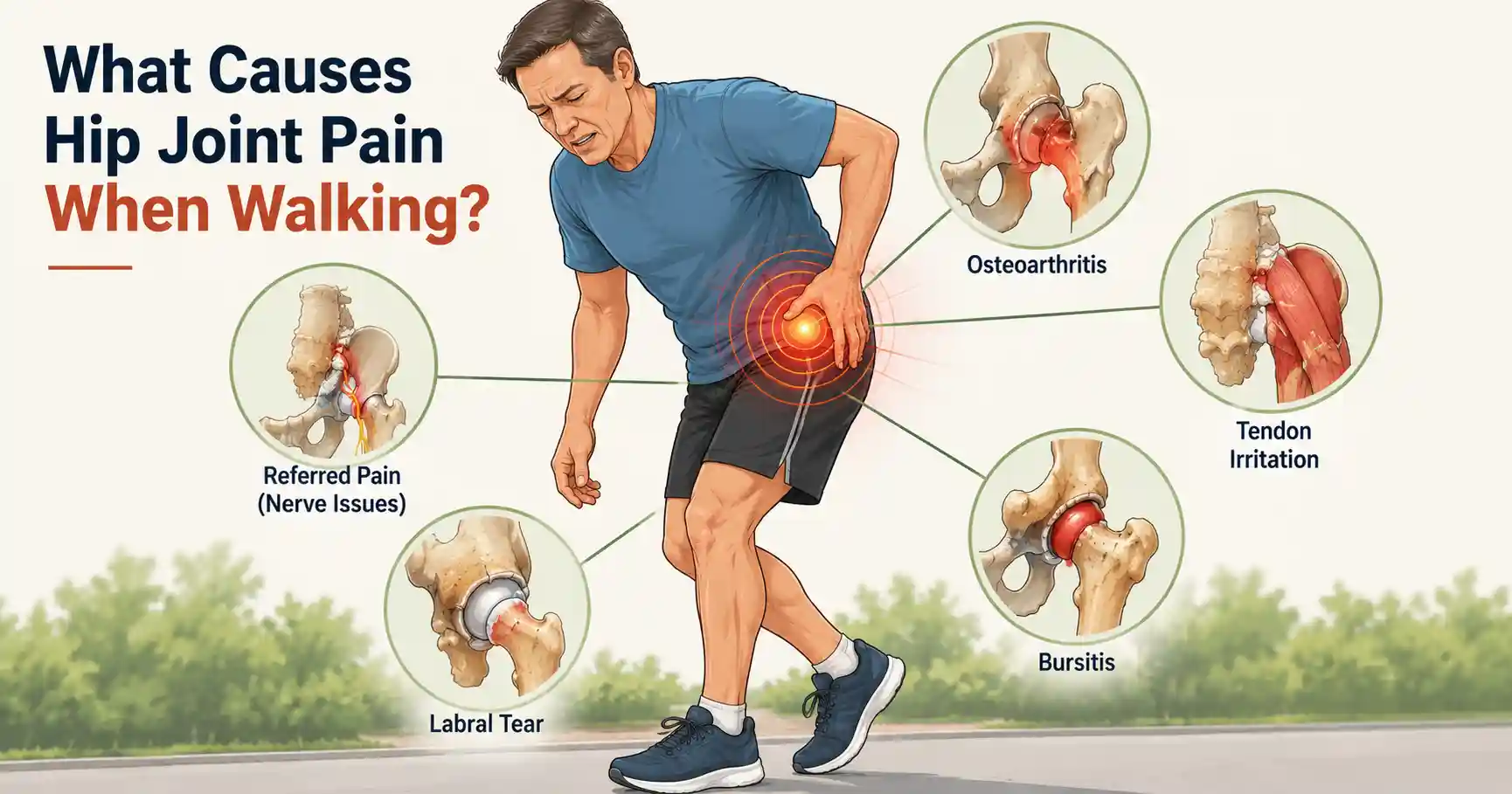
Osteoarthritis
Hip osteoarthritis is one of the most common causes in adults over 45. The cartilage inside the joint gradually breaks down, leading to stiffness and pain.
The classic pattern:
- pain in the groin
- stiffness after sitting
- discomfort during walking
- reduced range of motion
Research published in Osteoarthritis and Cartilage (2023) found that inactivity-related stiffness remains one of the strongest functional signs of hip OA. Many people notice the first few steps hurt most, then improve slightly after moving.
That temporary improvement confuses people. They think walking is “fixing” the issue. Usually, the joint is simply warming up.
Gluteal Tendinopathy
This is badly misunderstood online.
Many cases diagnosed as “hip bursitis” are actually gluteal tendon problems. Studies in the Journal of Orthopaedic & Sports Physical Therapy have repeatedly shown that tendon irritation around the side of the hip is extremely common, especially in women over 40.1Gluteal Tendinopathy: Pathomechanics and Implications for Assessment and Management, ResearchGate.
Typical signs:
- pain in the outer hip
- pain walking uphill
- worse climbing stairs
- tenderness when lying on that side
Aggressive stretching often makes this worse. That advice still appears everywhere online for some reason.
Hip Impingement and Labral Problems
Hip impingement happens when bone shapes inside the joint create abnormal friction during movement. Over time, this may irritate the labrum, which is cartilage lining the socket.
Pain usually appears:
- during bending
- getting out of cars
- deep sitting
- twisting movements
Running may aggravate symptoms more than normal walking.
Referred Pain From the Back
Not all hip pain comes from the hip itself.
Lower back nerve irritation can mimic hip joint pain surprisingly well. Burning pain, numbness, tingling, or pain traveling down the leg increases the chance that the spine is involved.
This is where many self-diagnoses fall apart.





Why Does Hip Pain Get Worse After Sitting or Standing Up?
Hip pain after sitting commonly happens because tissues stiffen during inactivity. The first few steps reload the joint and surrounding muscles suddenly.
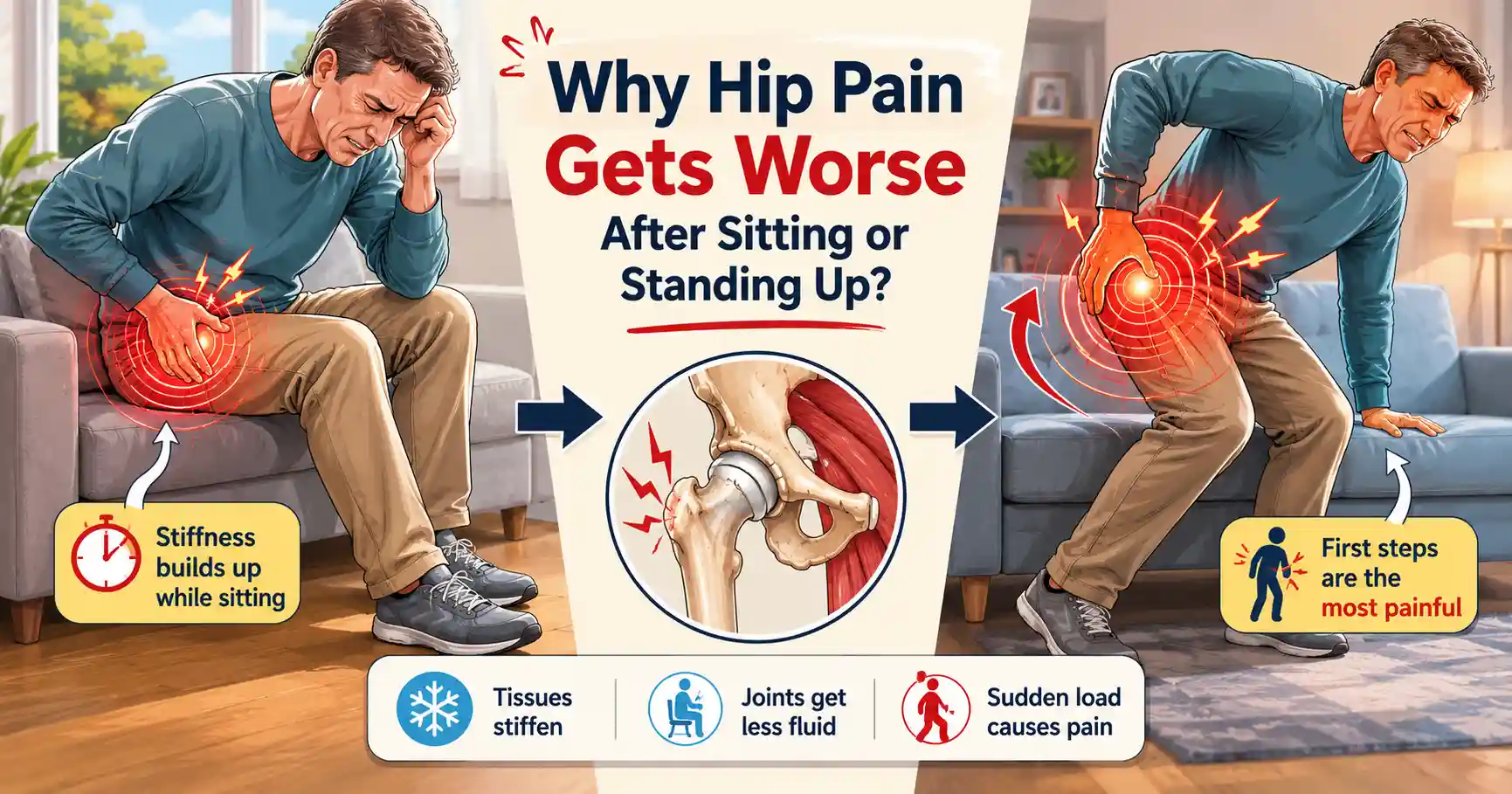
This pattern is especially common in:
- osteoarthritis
- hip flexor tightness
- joint stiffness
- tendon irritation
People often describe:
“It loosens after a few minutes.”
That detail matters clinically.
Standing up from a chair also increases compressive force through the hip. Weak glute muscles make this transition harder because the body shifts more load into the joint itself.
A lot of “hip strengthening” advice online focuses on random exercises without explaining why. The goal is not simply stronger muscles. The goal is better load distribution during movement.
Why Does Hip Pain Hurt More When Walking Down Stairs?
Walking downstairs places a higher force through the hip than level walking. The hip muscles must control body weight while lowering the body downward.
That eccentric muscle control stresses:
- gluteal tendons
- arthritic joints
- irritated cartilage
- weak stabilizing muscles
People with gluteal tendinopathy often notice:
- side hip pain
- pain descending stairs
- pain carrying weight
- discomfort walking on uneven ground
Hip arthritis may also worsen during stairs because joint compression increases significantly.
Some biomechanical studies estimate that stair climbing can place forces several times body weight through the hip joint. That does not mean stairs are harmful for everyone. It means irritated hips notice the extra demand quickly.
What Does the Location of Hip Pain Tell You?
Pain location is not perfect for diagnosis, but it is still useful.
Front or Groin Hip Pain
More commonly linked to:
- osteoarthritis
- labral tears
- hip impingement
This pain often feels deep inside the joint.
Side Hip Pain
Usually linked to:
- gluteal tendinopathy
- bursitis
This is the pattern most often mistaken for “arthritis.”
Buttock or Back Hip Pain
More associated with:
- sciatica
- sacroiliac dysfunction
- referred spinal pain
Sharp Pain During Movement
May suggest:
- impingement
- labral irritation
- tendon overload
Stiff, Achy Pain
More commonly seen in:
- osteoarthritis
- inactivity-related stiffness
Hip Joint Pain Location Chart
| Pain Location | Possible Cause | Common Trigger |
|---|---|---|
| Groin/front hip | Arthritis, labral tear | Walking, standing |
| Outer hip | Tendinopathy, bursitis | Stairs, side sleeping |
| Buttock | Sciatica, SI joint | Sitting, prolonged walking |
| Deep joint ache | OA, impingement | Long walks |
| Sharp side pain | Tendon irritation | Running, hills |
What Can One Do to Relieve Hip Pain While Walking?
The best treatment depends on the actual cause. Generic advice fails because different conditions respond differently.
What Usually Helps
- Reducing sudden activity spikes
- Improving glute strength gradually
- Walking shorter distances temporarily
- Supportive footwear
- Weight management, if appropriate
- Targeted physical therapy
What Often Makes It Worse
- aggressive stretching
- pushing through sharp pain
- sudden high-volume walking programs
- ignoring weakness around the hip
- only treating inflammation without fixing movement problems
This is where wellness content often becomes misleading. Pain relief and long-term improvement are not always the same thing.
Some people feel temporary relief from complete rest, but worsen overall because muscles weaken further.
The American Academy of Orthopaedic Surgeons and the Arthritis Foundation both continue to recommend controlled movement rather than prolonged inactivity for many chronic hip conditions.2Exercise Benefits for Hip Osteoarthritis, Arthritis Foundation.
Which Treatments Actually Help Hip Pain Long Term?
Long-term treatment depends heavily on the diagnosis and severity.
Physical Therapy
Strong evidence supports physical therapy for:
- osteoarthritis
- gluteal tendinopathy
- movement dysfunction
The best programs focus on:
- strength
- walking mechanics
- gradual loading
- balance
- hip stability
Not endless stretching.
Anti-Inflammatory Medication
NSAIDs may help reduce symptoms in the short term, especially during flare-ups. They do not repair damaged tissue.
Injections
Corticosteroid injections sometimes help temporarily, especially with severe inflammation. Results vary a lot.
Repeated injections are not always ideal. Some evidence suggests excessive use may negatively affect tendon health over time.
Surgery
Surgery is sometimes appropriate for:
- severe arthritis
- advanced structural damage
- persistent labral tears
But many people improve without surgery, especially when the issue is muscle weakness or tendon overload rather than advanced joint destruction.
When Should Hip Pain While Walking Be Checked by a Doctor?
Seek medical evaluation if you have:
- severe pain
- sudden inability to bear weight
- fever
- visible swelling
- numbness or weakness
- night pain
- unexplained weight loss
- pain after trauma
Persistent pain lasting more than several weeks also deserves evaluation, especially if walking ability is worsening.
One mistake people make is assuming all hip pain is “normal aging.” Some age-related changes are common. Losing basic walking tolerance is not something to ignore indefinitely.
Conclusion
Hip joint pain when walking is not one single condition. The movement that triggers the pain, the exact location, and how symptoms behave after sitting, stairs, or activity usually provide better clues than the pain alone. Understanding those patterns is often the difference between generic advice and actually improving the problem.
FAQs
Why does my hip hurt more after walking?
Hip pain after walking usually happens because irritated joints, tendons, or muscles become overloaded during movement. Osteoarthritis, gluteal tendinopathy, and hip impingement are common causes. Pain that builds gradually during activity often points toward load sensitivity rather than a sudden injury.
Can walking make hip arthritis worse?
Walking does not automatically worsen hip arthritis. Controlled movement is often recommended because it helps maintain joint mobility and muscle strength. Excessive walking during flare-ups may increase symptoms temporarily, especially if walking volume rises too quickly or supportive muscles are weak.
Why does hip pain improve after moving around?
Hip pain sometimes improves after movement because stiffness decreases once tissues warm up. This pattern is common in osteoarthritis and mild joint irritation. The first few steps may hurt most, then ease slightly as circulation and joint lubrication improve during activity.
Is side hip pain different from groin hip pain?
Yes. Side hip pain is more commonly linked to gluteal tendon problems or bursitis, while groin pain is more associated with hip joint conditions like arthritis or labral irritation. Pain location alone cannot confirm a diagnosis, but it provides useful clues.
Should you keep walking with hip pain?
Mild movement is often helpful, but pushing through severe or sharp pain is usually not smart. Many chronic hip conditions respond better to gradual activity adjustment rather than complete rest. Persistent pain, limping, or worsening symptoms should be evaluated medically.
Scientific References
- 1Gluteal Tendinopathy: Pathomechanics and Implications for Assessment and Management, ResearchGate. ↩︎
- 2Exercise Benefits for Hip Osteoarthritis, Arthritis Foundation. ↩︎
