
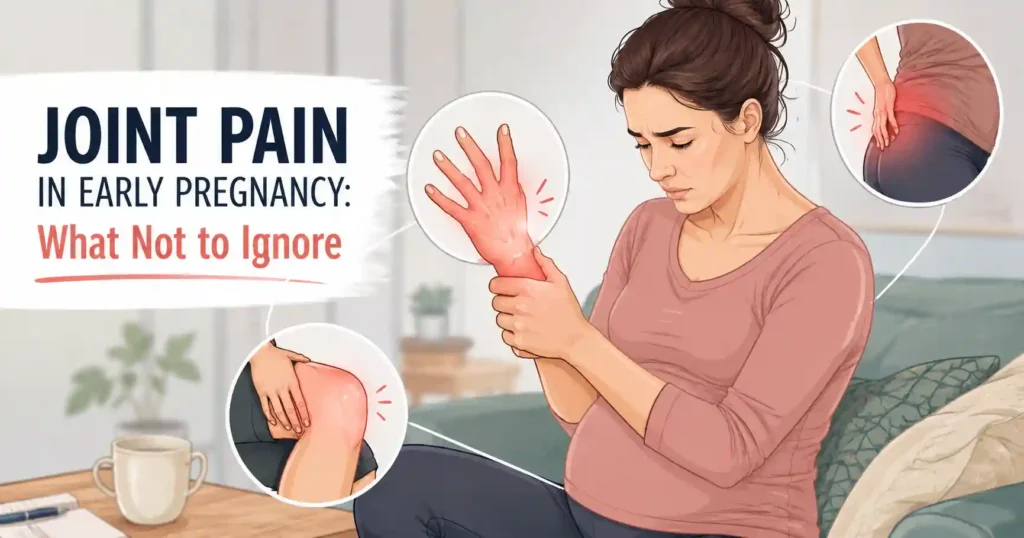
Joint pain in early pregnancy can happen because hormonal shifts, fluid retention, and ligament changes begin affecting the body very early. Many people notice aching hips, stiff fingers, sore knees, or painful hands before the second trimester starts. Severe swelling, redness, fever, or one-sided pain should not be ignored, especially if symptoms worsen quickly.
Pregnancy advice online tends to flatten everything into “hormones.” That is technically true, but also incomplete. Joint pain during pregnancy is not one single thing. Finger swelling behaves differently from pelvic pain. Morning stiffness is different from nerve compression. And some symptoms deserve medical attention faster than most articles admit.
- Joint pain in early pregnancy is common, especially in the hips, hands, knees, and fingers.
- Hormones are only part of the explanation. Fluid retention and nerve compression matter too.
- Painful, swollen hands during pregnancy are often linked to swelling or carpal tunnel symptoms.
- Severe redness, heat, weakness, or rapidly worsening swelling should not be ignored.
- Finger joint pain and morning stiffness are underexplained in most pregnancy content online.
- The pattern of pain matters more than the pain alone.
Why Do Joints Hurt in Early Pregnancy?
Joint pain in early pregnancy usually starts because hormones begin changing connective tissue and fluid balance almost immediately after conception.
The hormone relaxin is the main reason most articles mention. It helps loosen ligaments and prepare the pelvis for childbirth. But relaxin does not only affect the pelvis. Ligaments throughout the body can become slightly less stable, which changes how joints absorb pressure.
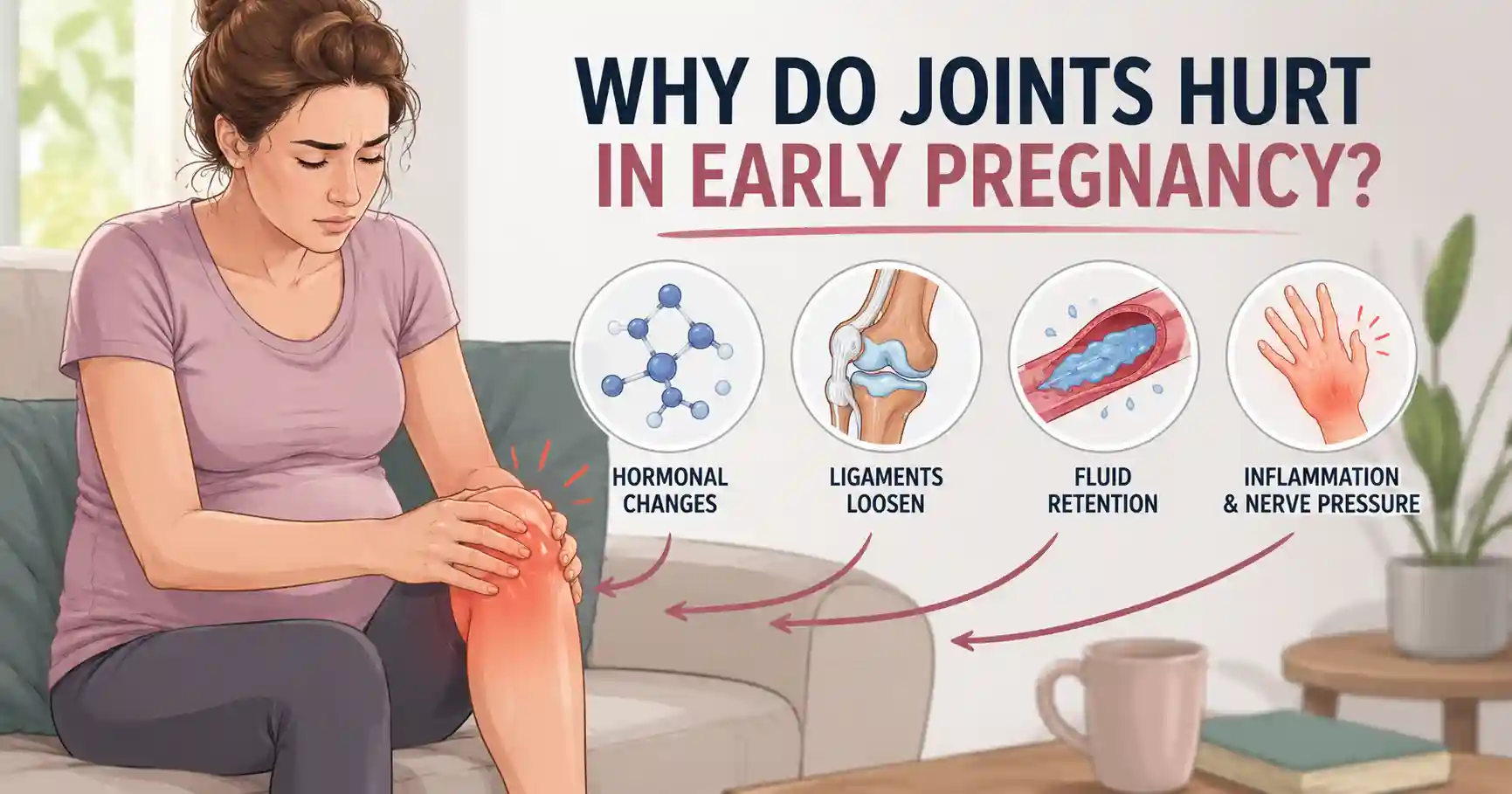
That shift can create:
- aching knees
- sore hips
- lower back stiffness
- finger joint discomfort
- foot pain
- wrist soreness
Fluid retention also starts earlier than many people realize. Some people develop mild swelling in the hands and fingers during the first trimester, especially overnight or in the morning.
Current research as of 2026 suggests pregnancy-related inflammation may also increase pain sensitivity in some people, even without visible swelling. That part gets overlooked constantly.
Weight gain is usually blamed too early online. In reality, significant weight-related joint strain tends to become more noticeable later in pregnancy, not during the earliest weeks.
A 2021 review in BMC Pregnancy and Childbirth noted that musculoskeletal pain during pregnancy is influenced by hormonal, biomechanical, and inflammatory factors together, not just ligament loosening alone.
Quick Takeaway: Early pregnancy joint pain is usually driven more by hormonal and fluid changes than by weight gain.
What Does Joint Pain In Early Pregnancy Feel Like?
Joint pain in early pregnancy often feels like stiffness, aching, pressure, or swelling rather than sharp injury pain.
The pattern matters more than many people think.
Some people describe:
- stiff fingers after waking up
- aching hips while sleeping
- sore knees after sitting
- hand tightness in the morning
- dull wrist pain
- swollen knuckles
Others feel mild burning or tingling. That can happen when swelling compresses nearby nerves.
| Symptom Pattern | More Likely Cause |
|---|---|
| Morning finger stiffness | Fluid retention or inflammation |
| Tingling/numb hands | Nerve compression |
| Deep hip ache | Ligament strain |
| Sharp one-sided swelling | Needs medical evaluation |
| Warm/red joints | Possible inflammatory issue |
Pain location also matters.
Hip and pelvic pain are common because the pelvis is adapting mechanically. Finger pain is different. Finger joints usually hurt because of swelling, inflammation, or nerve pressure rather than ligament instability.
Can Pregnancy Cause Painful Swollen Hands And Finger Joints?
Yes. Pregnancy can cause painful, swollen hands and finger joints, sometimes even during the first trimester.
Swollen hands during pregnancy are usually linked to:
- fluid retention
- circulation changes
- inflammation
- pressure on nerves in the wrist
- worsening carpal tunnel syndrome
The swelling often becomes worse:
- overnight
- early morning
- after salty meals
- during hot weather
- after repetitive hand movement
Some people notice that rings suddenly feel tight. Others wake up unable to fully close their hands for several minutes.
Finger joint pain during pregnancy is often confused with arthritis. Sometimes it actually is arthritis. Pregnancy can temporarily worsen autoimmune conditions like rheumatoid arthritis in certain cases, although symptoms improve for others. That variability matters.
The American College of Rheumatology has noted that autoimmune symptoms can shift unpredictably during pregnancy, depending on the condition.
Pregnancy-related carpal tunnel syndrome can feel like joint pain even when the joint itself is not the main problem.
Typical signs include:
- numb thumbs or fingers
- burning sensation
- nighttime hand pain
- weakness when gripping objects
Stretching alone does not fix this reliably. Wrist positioning during sleep often matters more.
Quick Takeaway: Painful finger joints during pregnancy are common, but numbness, severe swelling, or loss of grip strength deserve closer attention.





What Causes Left Hand Pain During Pregnancy?
Left-hand pain during pregnancy is usually related to swelling, nerve compression, posture, or repetitive strain, but severe one-sided symptoms should be checked.
Most one-sided hand pain is not dangerous. But asymmetry changes the conversation slightly.
Common causes include:
- Sleeping position pressure
- Wrist swelling compressing nerves
- Poor circulation
- Muscle strain
- Carpal tunnel syndrome
Pregnancy changes sleeping posture dramatically. Side sleeping can place unusual pressure on shoulders, wrists, and elbows for hours every night.
Still, there are symptoms people should not brush off.
Seek medical care sooner if left-hand pain comes with:
- chest pain
- severe swelling
- sudden weakness
- shortness of breath
- redness or warmth
- severe headaches
- vision changes
Some pregnancy complications involving blood pressure can initially show up through swelling and circulation symptoms. Most hand pain is harmless. Not all of it is.
That balance is missing from a lot of wellness-style pregnancy content online. Everything gets treated as either “totally normal” or “panic immediately.” Reality is usually somewhere between those extremes.
What Joint Pain Symptoms Should You Not Ignore During Pregnancy?
Joint pain during pregnancy should not be ignored if it becomes severe, suddenly worsens, or appears with swelling, redness, fever, or neurological symptoms.
This is the section that many barely explain.
Symptoms that deserve medical attention:
- severe swelling in one joint
- redness or heat
- fever
- inability to walk normally
- sudden hand swelling with headaches
- numbness worsening rapidly
- chest pain
- joint deformity
- loss of hand strength
- severe calf pain or swelling
Some swelling is common in pregnancy. Sudden aggressive swelling is different.
Persistent morning stiffness lasting over an hour can also point toward inflammatory conditions rather than ordinary pregnancy discomfort.
A 2020 review in American Family Physician noted that inflammatory joint pain tends to present with prolonged morning stiffness and visible swelling rather than brief soreness alone.
Another commonly missed issue: Some people assume severe pain must be normal because pregnancy changes the body.
That assumption delays care more often than people realize.
Quick Takeaway: Mild aching is common in pregnancy. Severe swelling, redness, weakness, or rapidly worsening pain is not something to self-diagnose online.
What Actually Helps Joint Pain During Pregnancy?
The best relief strategies depend on the type of joint pain.
Generic advice online treats all pain the same. That is why some people feel like nothing works.
What may help ligament-related pain
- supportive footwear
- pelvic support belts
- gentle walking
- side-sleep support pillows
What may help swollen finger joints
- elevating hands
- reducing repetitive hand strain
- wrist-neutral sleeping positions
- compression gloves
- cold therapy
What may help nerve compression symptoms
- Wrist braces at night
- Reducing prolonged wrist bending
- Posture correction
Interestingly, aggressive stretching sometimes makes swelling-related pain worse. Many pregnancy blogs recommend stretching for everything. That advice is too broad.
Hydration matters, but not in the simplistic “drink more water and swelling disappears” way wellness content often suggests. Fluid balance, sodium intake, circulation, and hormones all interact together.
The Cleveland Clinic recommends low-impact activity during pregnancy because completely avoiding movement can increase stiffness over time.
| Strategy | Best For | Often Overhyped? |
|---|---|---|
| Gentle movement | Stiffness | No |
| Aggressive stretching | Swelling pain | Sometimes |
| Compression gloves | Hand swelling | Underrated |
| Total bed rest | Mild joint pain | Yes |
| Heat therapy | Muscle tension | Moderate benefit |
Joint Pain During Pregnancy: Normal Changes vs Possible Medical Problems
Most pregnancy joint pain is harmless, but symptom patterns can help separate normal discomfort from possible medical issues.
| Likely Normal Pregnancy Changes | Possible Warning Signs |
|---|---|
| Mild swelling | Sudden severe swelling |
| Aching hips | Red hot joints |
| Morning stiffness, improving with movement | Stiffness lasting hours |
| Mild finger soreness | Significant weakness |
| Occasional numbness | Progressive numbness |
| Mild pelvic instability | Fever with joint pain |
This is where nuance matters.
A lot of online content accidentally teaches readers to ignore symptoms because pregnancy discomfort is common. Common does not automatically mean insignificant.
At the same time, every ache is not an emergency either.
That middle ground is where good medical education should live.
FAQs
Is joint pain normal in early pregnancy?
Yes. Mild joint pain can happen early in pregnancy because hormones, fluid retention, and ligament changes begin affecting the body quickly. Many people notice stiffness or aching in the hips, knees, fingers, or lower back during the first trimester. Severe swelling or redness is different and should be evaluated.
Can pregnancy cause finger joint pain?
Yes. Pregnancy can cause finger joint pain because swelling and fluid retention increase pressure in the hands and wrists. Some people also develop pregnancy-related carpal tunnel syndrome, which can mimic joint pain. Morning stiffness and tight rings are common early signs.
Why do my hands hurt during pregnancy?
Hand pain during pregnancy is often caused by swelling, nerve compression, circulation changes, or repetitive wrist strain. Symptoms may feel worse overnight or early in the morning. Numbness, weakness, or worsening swelling deserve medical attention, especially if symptoms become severe.
When should I worry about joint pain during pregnancy?
You should contact a healthcare professional if joint pain comes with fever, redness, severe swelling, weakness, chest pain, or difficulty walking. Sudden swelling in the hands or face alongside headaches can also signal pregnancy complications that need evaluation.
Can joint pain happen before a missed period?
Possibly. Some people report mild joint aching or stiffness before realizing they are pregnant. Hormonal and fluid changes begin very early after conception. Still, joint pain alone is not considered a reliable standalone pregnancy symptom.
Final Thoughts
Joint Pain In Early Pregnancy is often normal, but the details matter more. Mild stiffness, aching hips, or swollen fingers are common. Severe swelling, numbness, weakness, or inflammatory-looking joints deserve more attention than wellness blogs usually give them.
A lot of pregnancy content online tries too hard to reassure people. That creates the opposite problem: symptoms that should be evaluated sometimes get dismissed as “just hormones.” That is not always a safe assumption.
