
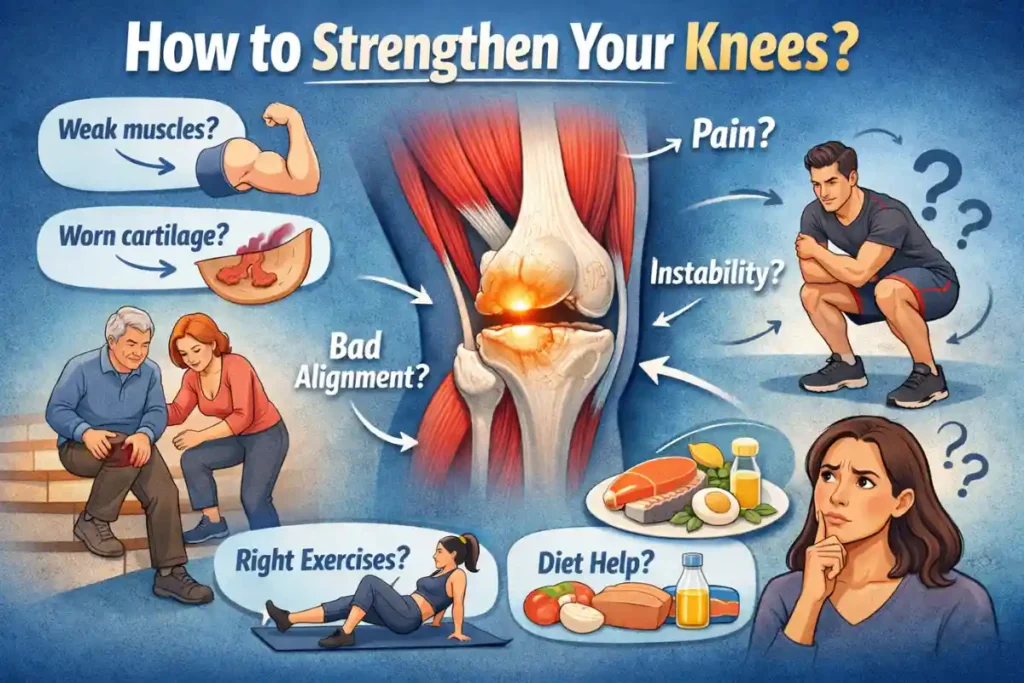
Answer: Strengthening your knees means building the muscles around the joint, especially the quadriceps, hamstrings, and glutes, to improve stability and reduce stress. These muscles control how the knee moves and absorbs force during daily activities. Stronger support muscles lead to less pain, better balance, and lower injury risk.
What does it mean to strengthen your knees?
Definition: Knee strengthening = improving the muscles that support and control the knee joint.
The knee itself cannot be strengthened directly. It has no muscle. It relies entirely on surrounding structures.
Those include:
- Quadriceps (front thigh) → control knee extension
- Hamstrings (back thigh) → stabilize backward motion
- Glutes (hips) → control alignment and reduce inward collapse
Most articles blur this. That’s why people keep doing random “knee exercises” with no results.
A 2014 study in the Journal of Orthopaedic & Sports Physical Therapy found that stronger quadriceps reduce knee pain and improve function. That’s not theory. That’s mechanical load distribution.
What are the signs of weak knees?
Weak knees show up as instability, pain, or poor control during movement.
You don’t need a diagnosis to spot it.
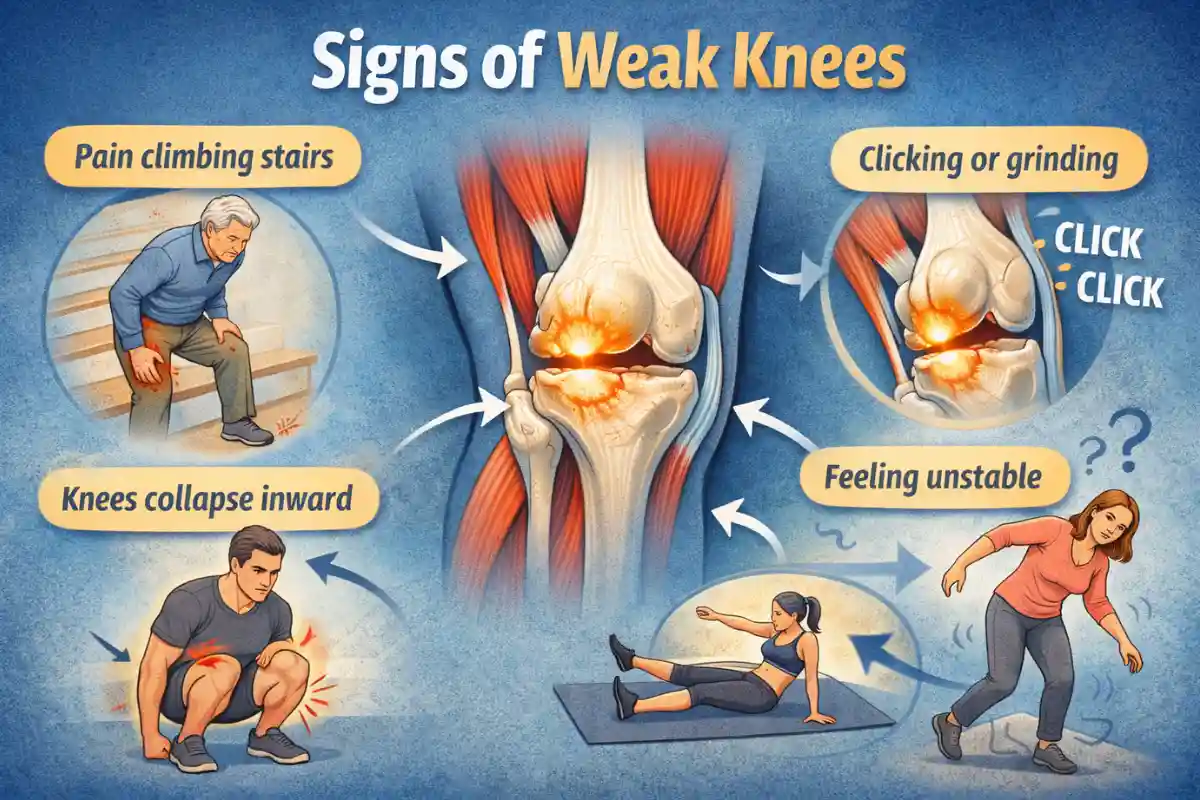
Common signs of weak knees:
- Pain while climbing stairs
- Knees collapsing inward during squats
- Clicking or grinding under load
- Difficulty standing up from sitting
- Feeling unstable when walking fast
Here’s what most people misunderstand: Pain ≠ damage. In many cases, it’s a control problem, not a structural one. That distinction changes how you fix it.
What is the #1 mistake for bad knees?
The #1 mistake is training the knee instead of the system around it.
People isolate the knee. That’s the problem.
Here’s the actual chain:
- Weak glutes → poor hip control
- Poor hip control → knee moves inward
- Knee misalignment → joint stress increases
And then people blame the knee.
Another major mistake: Jumping straight into squats, lunges, or running without base strength
That’s not progression. That’s overload.
-
 Home Remedies for Gout Flare Up: What Works and What Fails
 -
Joint Genesis Review (2026): An Evidence-Based Analysis.
-
Joint Genesis Reviews 2026: What Complaints Real Users Have!
-
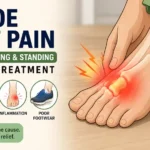
Big Toe Joint Pain Walking, Bending & Standing: Causes & Treatment
-
Can Gluten Cause Joint Pain? Causes & Symptoms Explained




What exercises actually strengthen knees?
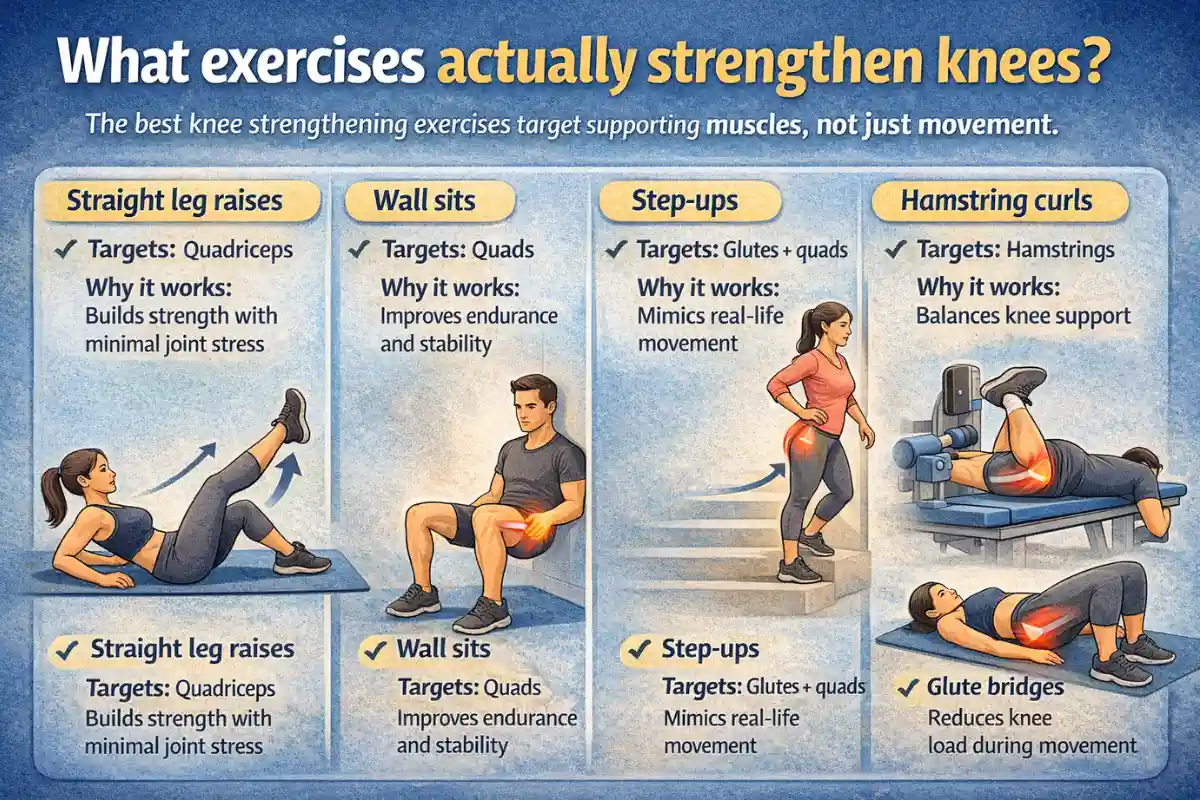
The best knee strengthening exercises target supporting muscles, not just movement.
Here are the most effective ones:
| Exercise | Targets | Why it works |
|---|---|---|
| Straight leg raises | Quadriceps | Builds strength with minimal joint stress |
| Wall sits | Quads | Improves endurance and stability |
| Step-ups | Glutes + quads | Mimics real-life movement |
| Hamstring curls | Hamstrings | Balances knee support |
| Glute bridges | Glutes | Reduces knee load during movement |
Non-obvious insight: Most people don’t get results because they don’t increase difficulty over time.
Same reps. Same weight. Same results.
How to strengthen knees at home safely?
You can strengthen your knees at home by following a simple 3-stage progression.
Step-by-step approach:
1. Start with low-load exercises
- Straight leg raises
- Seated knee extensions
2. Move to controlled strength
- Wall sits
- Partial squats
3. Progress to functional strength
- Step-ups
- Lunges (only if pain-free)
Rules that actually matter:
- No sharp pain during movement
- Slow, controlled reps
- Train 3–4 times per week
The Mayo Clinic (2025) confirms that controlled strengthening improves joint stability and reduces injury risk.
Why do knee strengthening exercises sometimes not work?
Knee exercises fail when they don’t address the real limitation. This is where most content online becomes useless.
Common reasons knee strengthening fails:
- You’re training the wrong muscles
- You’re not increasing resistance
- You’re inconsistent
- You’re ignoring body weight and load
Here’s the uncomfortable part: Body weight matters more than most people admit. The Arthritis Foundation (2022) reports that even small weight loss significantly reduces knee stress. Exercises help. But they don’t cancel physics.
How to strengthen knee ligaments and cartilage?
You cannot directly strengthen knee ligaments or regrow cartilage through exercise. That claim is everywhere—and it’s misleading.
What you can do:
- Improve joint stability through muscle strength
- Reduce stress on ligaments
- Support cartilage through better movement patterns
Clarification:
- Ligaments adapt slowly, not like muscles
- Cartilage has a very limited regeneration ability
Some studies suggest collagen and certain nutrients may support joint health, but results are inconsistent and not strong enough to rely on alone.
What foods help support knee strength?
Food supports knee function indirectly by improving muscle and joint health.
Best foods for knee support:
- Protein-rich foods → muscle repair (eggs, chicken)
- Omega-3 fats → reduce inflammation (fish, walnuts)
- Vitamin D + Calcium → bone support (dairy, sunlight)
Reality check: No food will rebuild damaged knees.
If your training is wrong, diet won’t fix it.
Key Takeaways
- ✔ Knees depend on muscles, not magic fixes
- ✔ Glute weakness is a hidden cause of knee pain
- ✔ Progression is the missing piece for most people
- ✔ Pain often signals poor control, not damage
- ✔ Weight and load directly affect knee stress
FAQs
How do I make my knees stronger?
You make your knees stronger by training the muscles around them, especially the quadriceps, hamstrings, and glutes. Consistent strength training improves stability and reduces stress on the joint. Results usually appear within a few weeks, but long-term improvement requires progressive overload and proper movement patterns.
What are the best knee-strengthening exercises at home?
The best exercises include straight leg raises, wall sits, step-ups, and glute bridges. These build strength without excessive joint stress. The key is to start with low-impact movements and gradually increase difficulty as strength improves over time.
Can weak knees be cured?
Weak knees can improve significantly with consistent strength training and movement correction. While not a “condition” that gets cured, function and stability can return to near-normal levels in many cases when the underlying muscle weakness is addressed properly.
What is the best vitamin for weak knees?
Vitamin D and calcium support bone health, while omega-3 fatty acids help with inflammation. However, vitamins alone do not strengthen knees. They support the system, but real improvement comes from exercise and load management.
How to strengthen knees after 40?
After 40, focus on low-impact strength training, consistency, and gradual progression. Muscles still respond well to training, but recovery takes longer. Controlled exercises like step-ups and supported squats are safer and more effective than high-impact activities.
Final Thought
If you remember one thing: Your knees don’t fail first—your support system does.
Fix that, and most knee problems start to improve.
