
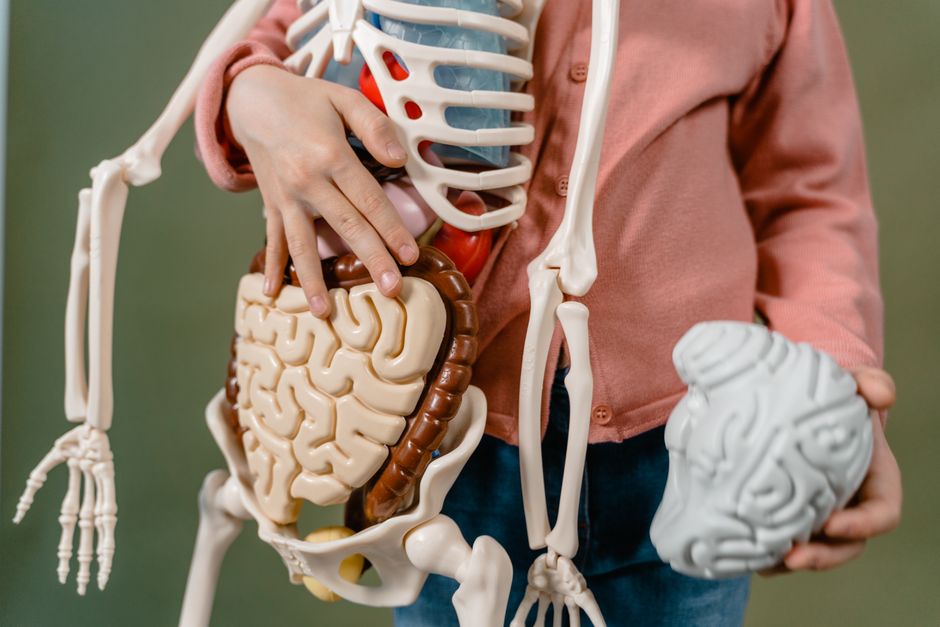
Your digestive system is a long, organized tube that runs from your mouth to your other end. Its main job is to take the food you eat and break it down into tiny pieces your body can actually use. Think of it as a demolition crew followed by a delivery service — it smashes food into nutrients, then ships those nutrients into your bloodstream to fuel every cell in your body.
What Are the Six Main Functions of the Digestive System?
The digestive system performs six core jobs. Each one depends on the one before it. If any step fails, the whole process suffers.
Ingestion is the first step. This is simply putting food into your mouth. It sounds obvious, but how you eat matters. Chewing thoroughly is part of ingestion, and it is one of the most underrated steps in digestion.
Propulsion moves food through the system. Your esophagus and intestines use wave-like muscle contractions called peristalsis. This happens automatically. You do not control it. Food moves forward even if you are standing on your head.
Mechanical digestion physically breaks food into smaller pieces. Chewing does this. So does the churning in your stomach. Smaller pieces mean more surface area for enzymes to work on.
Chemical digestion uses enzymes and acids to break food down at the molecular level. Your stomach acid and pancreatic enzymes do this work. Carbohydrates become simple sugars. Proteins become amino acids. Fats become fatty acids.
Absorption is where nutrients actually leave the digestive tract and enter your body. Most absorption happens in the small intestine. The lining of your small intestine is covered in tiny finger-like projections called villi. They dramatically increase the surface area so nutrients can pass into your blood.
Elimination removes what your body cannot use. Fiber, water, and dead cells travel to the large intestine and leave as stool. This is not a waste of time — it clears the system so the next meal can be processed.
How Does the Mouth Start the Digestive Process?
Digestion begins the second food touches your tongue. Your teeth tear and grind food into smaller pieces. This is mechanical digestion, and it is critical. Food that enters your stomach in large chunks takes longer to break down and can cause bloating.
Your saliva contains an enzyme called amylase. Amylase starts breaking starches into simple sugars right in your mouth. This is chemical digestion in action before food even reaches your stomach. Saliva also moistens food so it slides down your esophagus easily.
Chewing signals your stomach to prepare for incoming food. Your stomach starts producing acid before you swallow. Skipping this step by gulping food whole confuses your digestive system and forces it to work harder than it needs to.
What Happens in the Stomach During Digestion?
Your stomach is a muscular sac that acts like a food blender. It churns food into a semi-liquid paste called chyme. This churning is mechanical digestion at its most intense. The stomach wall has three layers of muscle that squeeze and relax in different directions.
Your stomach lining secretes hydrochloric acid and pepsin. Hydrochloric acid is strong enough to kill most bacteria you swallow. It also uncoils proteins so enzymes can break them apart. Pepsin is the enzyme that actually starts digesting proteins into smaller chains.
The stomach does not absorb many nutrients. It absorbs some water, alcohol, and certain medications. Most absorption happens later in the small intestine. The stomach’s main job is to turn a solid meal into liquid chyme and release it slowly into the small intestine.
Your stomach protects itself from its own acid with a thick mucus layer. When this mucus layer breaks down, acid burns the stomach lining. That is what causes ulcers. As of 2026, current research suggests most ulcers are caused by H. pylori bacteria or NSAID painkillers, not stress or spicy food.




Why Is the Small Intestine So Important for functions in the digestive system?
The small intestine is where the real work happens. It is about twenty feet long but only an inch wide. Despite its name, it is the longest part of your digestive tract. Almost all nutrient absorption occurs here.
The small intestine has three sections: the duodenum, jejunum, and ileum. The duodenum receives chyme from the stomach along with digestive juices from the pancreas and liver. The pancreas sends enzymes that break down fats, proteins, and carbohydrates. The liver sends bile, which emulsifies fats so enzymes can reach them.
The lining of the small intestine is not smooth. It is covered in villi and microvilli, which look like tiny fingers under a microscope. These structures increase the surface area of your small intestine to about the size of a tennis court. That massive surface allows nutrients to pass efficiently into your bloodstream.
Carbohydrates and proteins enter blood capillaries in the villi. Fats enter lymphatic vessels called lacteals. This difference matters because fats take a slower route through your body before reaching your bloodstream. That is one reason high-fat meals can leave you feeling full longer.
What Role Does the Large Intestine Play in Digestion?
The large intestine is about five feet long and wider than the small intestine. Its main job is to absorb water and electrolytes from the leftover material that the small intestine could not digest. Without this step, you would lose several liters of water per day in your stool.
Your large intestine is home to trillions of bacteria. This is your gut microbiome. These bacteria ferment undigested fiber and produce short-chain fatty acids that your colon cells use for energy. They also produce vitamin K and some B vitamins that your body absorbs.
Fiber is crucial here because it feeds your gut bacteria. A diet low in fiber starves these bacteria and can lead to a less diverse microbiome. Some studies suggest a lack of dietary fiber is linked to higher rates of colon inflammation and disease.
The large intestine also forms stool by compacting waste and absorbing excess water. When stool moves too slowly through the colon, too much water is absorbed and constipation results. When it moves too fast, not enough water is absorbed and diarrhea results.
Here is a simple comparison of the two intestines:
| Feature | Small Intestine | Large Intestine |
|---|---|---|
| Length | About 20 feet | About 5 feet |
| Main job | Digestion and nutrient absorption | Water absorption and waste formation |
| Surface area | Tennis court size | Smooth with some folds |
| Bacteria | Fewer bacteria | Trillions of bacteria |
| Digestive enzymes | Many from pancreas and lining | Few to none |
What Happens When the Digestive System Does Not Work Properly?
Digestive problems are common. About 40 percent of people worldwide have some form of digestive issue at any given time. The symptoms vary depending on which part of the system is affected.
Problems in the esophagus often cause heartburn or trouble swallowing. Acid reflux happens when the valve between the esophagus and stomach does not close properly. Stomach acid backs up and burns the sensitive lining of the esophagus. Chronic reflux can damage the esophagus over time.
Stomach issues often show up as bloating, nausea, or pain. Gastritis is inflammation of the stomach lining. It can be caused by infection, alcohol, or certain medications. Gastroparesis is a condition where the stomach empties too slowly. It causes feeling full after only a few bites.
Small intestine problems can lead to malabsorption. That means nutrients pass through without being absorbed. Celiac disease is one example. The immune system attacks the villi when gluten is eaten. This flattens the villi and dramatically reduces nutrient absorption. People with untreated celiac disease can become deficient in iron, calcium, and B vitamins.
Large intestine issues include irritable bowel syndrome and inflammatory bowel disease. IBS affects how the colon moves and senses things. It causes cramping, bloating, and changes in bowel habits without visible damage to the colon. IBD includes Crohn’s disease and ulcerative colitis, which cause visible inflammation and ulcers in the digestive tract.
Some people report that probiotics help with bloating and irregularity, though strong evidence is limited for most specific strains. What is well established is that a diet rich in whole foods and fiber supports a healthier gut microbiome and more regular digestion.
Common Misconceptions About Digestion
One common myth is that digestion happens mostly in the stomach. In reality, the stomach does very little absorption. The small intestine does the heavy lifting. The stomach is more of a mixer and sterilizer than a nutrient processor.
Another myth is that you need to detox your digestive system. Your liver and kidneys already remove waste from your blood. Your colon eliminates solid waste. There is no evidence that juice cleanses or colon hydrotherapy remove toxins that your body cannot handle on its own. Some colon cleansing procedures can actually cause harm by disrupting your gut bacteria or damaging your intestinal lining.
A third misconception is that spicy food causes ulcers. Research has shown that spicy food can irritate existing ulcers but does not cause them. The main causes are H. pylori infection and overuse of NSAID pain relievers like ibuprofen and naproxen.
Many people also believe that chewing gum stays in your stomach for years if swallowed. This is false. Gum passes through your digestive system like most other food. It may take slightly longer because it is not fully digestible, but it does not stick around for years.
Frequently Asked Questions About functions in the digestive system
How long does it take to fully digest food?
Total digestion time ranges from 24 to 72 hours depending on the person and what was eaten. High-fiber meals pass faster while high-fat meals take longer.
Can stress really affect my digestion?
Yes, stress can slow or speed up digestion through the gut-brain connection. Chronic stress is linked to IBS symptoms and reduced nutrient absorption.
What is the most important organ in the digestive system?
The small intestine is often considered the most important because it absorbs nearly all nutrients. Without it, the rest of the system cannot deliver fuel to your body.
Does drinking water with meals help digestion?
Water helps dissolve nutrients and softens stool, but drinking too much during meals can dilute stomach acid. Moderate sips are fine for most people.
