
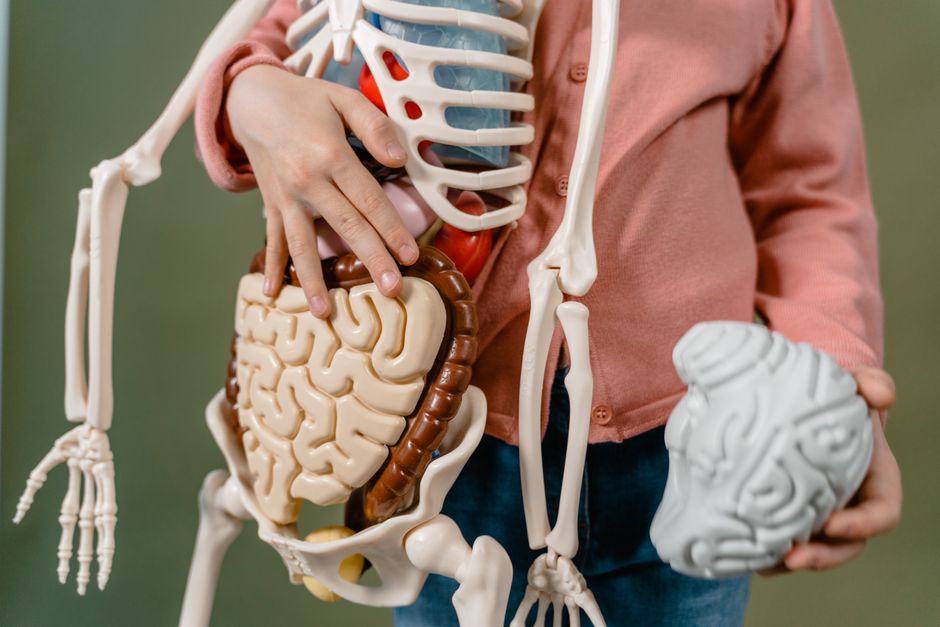
The digestive system is your body’s food processing plant. Its main job is to break down the food you eat into tiny pieces your body can use for energy, growth, and cell repair. Think of it as a disassembly line that turns a sandwich into fuel and building blocks your cells actually recognize.
What Are the Main Functions of the Digestive System?
The digestive system has four main jobs. It takes food in, breaks it down physically and chemically, absorbs the useful parts into your bloodstream, and gets rid of what your body cannot use.
Ingestion is just the act of eating. Everything after that is where the real work happens. Mechanical digestion starts in your mouth when you chew. Your teeth tear and grind food into smaller pieces. This increases the surface area so digestive enzymes can work faster.
Chemical digestion uses enzymes and acids to break food down at a molecular level. Starches become simple sugars. Proteins become amino acids. Fats become fatty acids and glycerol. This process happens all along the digestive tract but mostly in the stomach and small intestine.
Absorption is where the nutrients actually enter your body. This happens mainly in the small intestine. The lining of your small intestine has tiny finger-like projections called villi that grab nutrients and pass them into your blood.
Elimination is the final step. Whatever your body cannot digest or absorb passes through the large intestine and leaves as stool. This is not waste management. It is a critical process that removes toxins and undigested materials your body does not need.
How Does the Digestive System Break Down Food?
The process starts before you even take a bite. Your brain signals your salivary glands to produce saliva when you see or smell food. Saliva contains an enzyme called amylase that starts breaking down starches right in your mouth.
Once you swallow, food travels down the esophagus through a series of muscle contractions called peristalsis. This is how food moves through your entire digestive tract. It does not rely on gravity. You could eat standing on your head and food would still reach your stomach.
Your stomach is a muscular sac that churns food into a liquid mixture called chyme. Stomach acid is strong enough to dissolve metal. It kills bacteria and activates pepsin, an enzyme that breaks down proteins. The stomach lining protects itself by producing a thick layer of mucus. Without that mucus, your stomach would digest itself.
The small intestine is where most digestion and absorption happen. The pancreas releases enzymes into the small intestine that break down carbohydrates, proteins, and fats. The liver produces bile, which is stored in the gallbladder and helps digest fats. Bile is not an enzyme. It acts like soap, breaking fat globules into smaller droplets so enzymes can reach them.
What Is the Role of the Small Intestine in Digestion?
The small intestine is the star of the digestive system. It is about 20 feet long. Despite its name, it is longer than the large intestine. It is called small because it is narrower.
The inner surface of the small intestine is not smooth. It is covered in millions of tiny folds and finger-like projections called villi. Each villus is covered in even smaller projections called microvilli. This structure increases the surface area of the small intestine by about 600 times. If you flattened it out, it would cover a tennis court.
Nutrients pass through the villi into your bloodstream. Simple sugars and amino acids go directly into the blood. Fats take a different route. They enter the lymphatic system first before eventually reaching the bloodstream. This is why fatty foods take longer to digest.
The small intestine also completes the digestion process. It finishes breaking down any food that was not fully digested in the stomach. By the time food leaves the small intestine, almost all usable nutrients have been extracted.




How Does the Large Intestine Support Digestive Function?
The large intestine is about 5 feet long. Its main job is to absorb water and electrolytes from the remaining indigestible food matter. It also processes waste material for elimination.
The large intestine is home to trillions of bacteria. This is called your gut microbiome. These bacteria ferment undigested carbohydrates and produce vitamins like vitamin K and some B vitamins. They also produce short-chain fatty acids that feed the cells lining your colon.
Current research suggests the gut microbiome plays a much larger role in health than we used to think. Some studies suggest it affects your immune system, mood, and even your weight. As of 2026, scientists are still figuring out exactly how the microbiome influences overall health. What is clear is that a diverse microbiome is generally a healthy one.
The large intestine also stores stool until it is ready to be eliminated. The longer stool sits in the colon, the more water gets absorbed. This is why constipation leads to hard, dry stool. Fiber helps by holding water in the stool and keeping things moving.
What Happens When the Digestive System Does Not Function Properly?
Digestive problems are common. Most are temporary and not serious. But some can indicate underlying issues that need attention.
Heartburn happens when stomach acid flows back into the esophagus. The esophagus does not have the same protective lining as the stomach. That burning sensation is acid irritating the esophageal tissue. Occasional heartburn is normal. Frequent heartburn may be GERD, which can damage the esophagus over time.
Bloating and gas are often caused by swallowing air or eating foods your body struggles to digest. Beans, lentils, and cruciferous vegetables like broccoli contain complex carbohydrates that some people cannot fully break down. The bacteria in your colon ferment these undigested carbs and produce gas.
Constipation affects about 20 percent of Americans. It is usually caused by a lack of fiber, not drinking enough water, or ignoring the urge to go. Some medications can also cause constipation. Moving more and eating more fiber usually helps.
Diarrhea happens when the colon does not absorb enough water. This can be caused by infections, food intolerances, or stress. Most diarrhea resolves on its own within a few days. The main risk is dehydration, so drinking fluids is important.
What Foods Support Healthy Digestive Function?
Fiber is the most important nutrient for digestive health. There are two types. Soluble fiber dissolves in water and forms a gel that helps soften stool. It is found in oats, apples, carrots, and beans. Insoluble fiber does not dissolve. It adds bulk to stool and helps food pass more quickly through the stomach and intestines. It is found in whole grains, nuts, and vegetables.
Fermented foods contain beneficial bacteria that can support your gut microbiome. Yogurt, kefir, sauerkraut, kimchi, and kombucha are examples. Some studies suggest these foods can improve digestion and reduce symptoms of bloating and gas. The evidence is stronger for some fermented foods than others. Yogurt with live cultures has the most research behind it.
Water is essential for digestion. It helps dissolve nutrients so they can be absorbed. It also softens stool and prevents constipation. Most people do not drink enough water. A general rule is to drink when you are thirsty and more when you are active or in hot weather.
Processed foods, excessive alcohol, and fried foods can slow digestion and cause discomfort. They are not harmful in moderation. But a diet heavy in these foods can stress the digestive system over time.
Common Misconceptions About Digestive Function
A common myth is that detox diets and colon cleanses are necessary for digestive health. Your digestive system has its own built-in detoxification system. The liver filters toxins from your blood. The kidneys remove waste through urine. The colon eliminates solid waste. There is no clinical evidence that colon cleansing improves health or removes toxins that your body cannot handle on its own.
Another myth is that you need to eat every few hours to keep your metabolism running. Your digestive system does not need constant fuel to function. It is designed to handle periods without food. Intermittent fasting has become popular, and some studies suggest it may have health benefits. But eating regular meals is not necessary for digestive health.
Some people believe that spicy foods cause ulcers. This is false. Most ulcers are caused by a bacterial infection called H. pylori or by long-term use of NSAID pain relievers like ibuprofen. Spicy foods can irritate an existing ulcer and make symptoms worse, but they do not cause ulcers.
Frequently Asked Questions About function of digestive system
How long does it take to digest food?
Digestion takes between 24 and 72 hours from the moment you eat until waste leaves your body. The exact time depends on what you ate and your individual digestive system.
What is the most important organ in the digestive system?
The small intestine is the most important organ for digestion because it absorbs almost all nutrients. Without it, your body would not get the fuel and building blocks it needs.
Can stress affect digestive function?
Yes, stress directly affects digestion by altering gut motility and reducing blood flow to the digestive organs. This can cause symptoms like stomach pain, bloating, and changes in bowel habits.
Does chewing food more help digestion?
Chewing food thoroughly does help digestion by breaking food into smaller pieces and mixing it with saliva. This gives digestive enzymes a head start and reduces the work your stomach has to do.
