
How to relieve nerve pain in the leg depends on what is irritating the nerve, but home treatment usually starts with reducing pressure on the nerve, improving movement, and calming inflammation.
Walking, position changes, heat or cold therapy, and specific stretches often help more than complete rest. Nerve pain that causes weakness, worsening numbness, or loss of bladder control needs medical evaluation quickly.
Leg nerve pain is one of those symptoms people often misread at first. Many assume it is a pulled muscle, poor circulation, or simple aging. Then the burning, tingling, or electric-shock feeling starts moving down the calf or into the foot, especially at night. That pattern matters.
A lot of online advice treats all nerve pain the same. It is not. A compressed sciatic nerve behaves differently from diabetic neuropathy. A pinched nerve in the lower back behaves differently from irritation near the knee or ankle. That distinction changes what actually helps.
As of 2026, current research still supports movement-based treatment for many common nerve pain conditions. Total bed rest usually backfires.
⚡ Quick Verdict
- Nerve pain usually burns, tingles, shoots, or travels down the leg.
- Movement often helps more than complete bed rest.
- Nighttime pain commonly worsens because of positioning and inactivity.
- Gentle nerve glides work better than aggressive stretching during flare-ups.
- Sciatica and peripheral neuropathy are not the same condition.
- Weakness or severe numbness needs medical evaluation.
What does nerve pain in the leg actually feel like?
Nerve pain in the leg usually feels sharp, burning, tingling, electric, numb, or radiating rather than dull and sore.
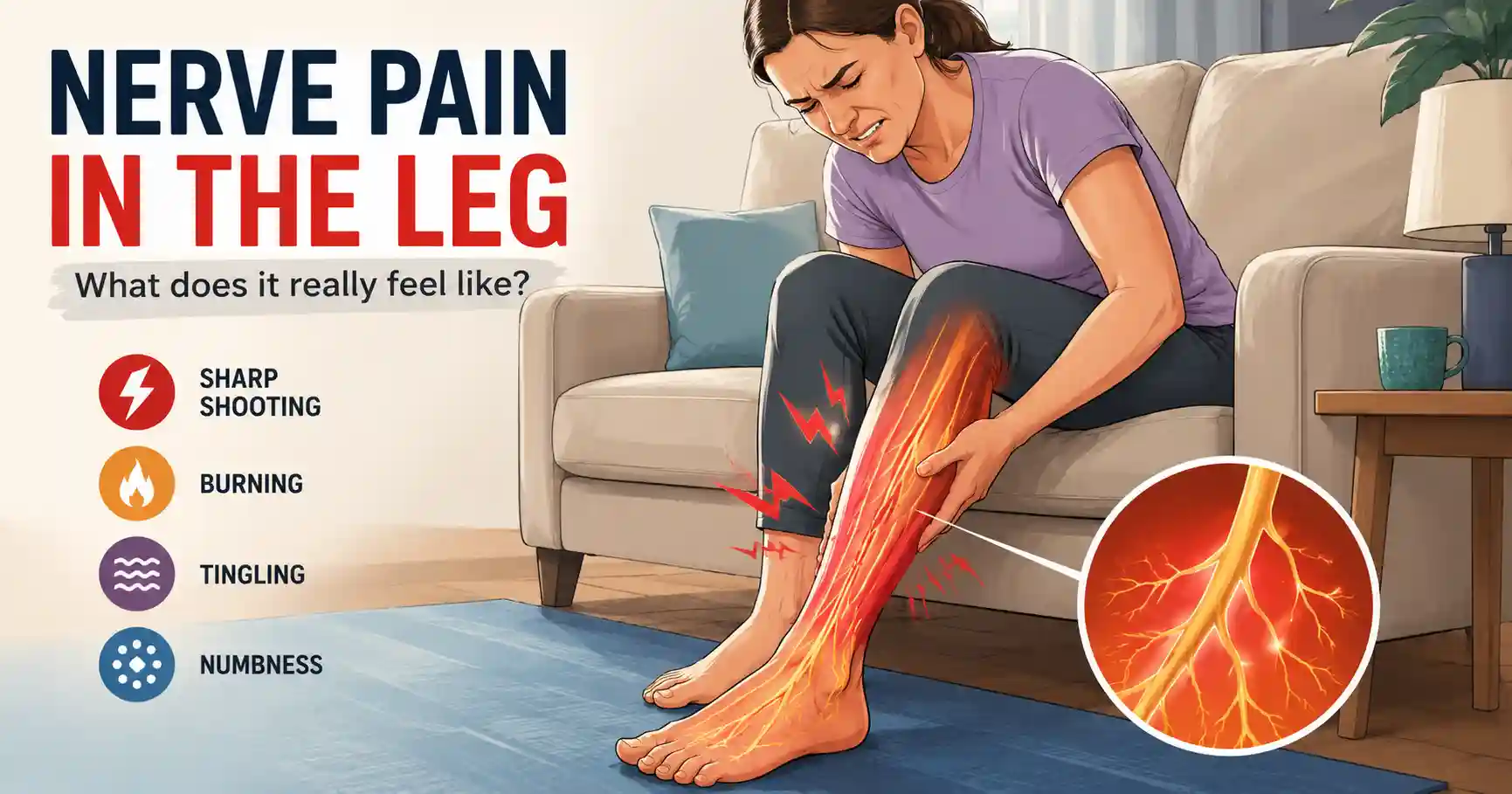
Muscle pain tends to stay localized. Nerve pain travels. It often moves:
- from the lower back into the leg,
- from the buttock into the calf,
- or from the calf into the foot.
Some people describe it as:
- “pins and needles”
- “hot electricity”
- “buzzing”
- “deep burning”
- or sudden stabbing pain during certain movements.
A major clue is that nerve pain often changes with posture. Sitting, bending, driving, or lying in certain ways may worsen it quickly.
Common symptom patterns
| Symptom Pattern | More Likely Cause |
|---|---|
| Burning feet at night | Peripheral neuropathy |
| Pain from the lower back into the calf | Sciatica |
| Tingling after sitting | Nerve compression |
| Sharp pain with coughing/sneezing | Disc-related nerve irritation |
| Numb toes or foot drop | More serious nerve involvement |
| Pain only during walking | Sometimes spinal stenosis |
Quick Takeaway: Burning, tingling, shooting, or traveling pain is more typical of nerve irritation than muscle strain.
Other Helpful Nerve Pain Posts
- How to Relieve Nerve Pain in Leg While Sleeping? What You Need to Know

- What Vitamin Deficiency Cause Sciatic Nerve Pain? What to Know
- Can Varicose Veins Cause Neuropathy? Here’s What to Know
- What Are Good Shoes for Neuropathy? A Simple Explanation
- Does Elevating Feet Help Neuropathy? Here’s What to Know
- Is Tiger Balm Good for Nerve Pain? The Short Answer






What causes nerve pain in the leg and foot?
Nerve pain in the leg happens when a nerve becomes compressed, irritated, inflamed, or damaged.
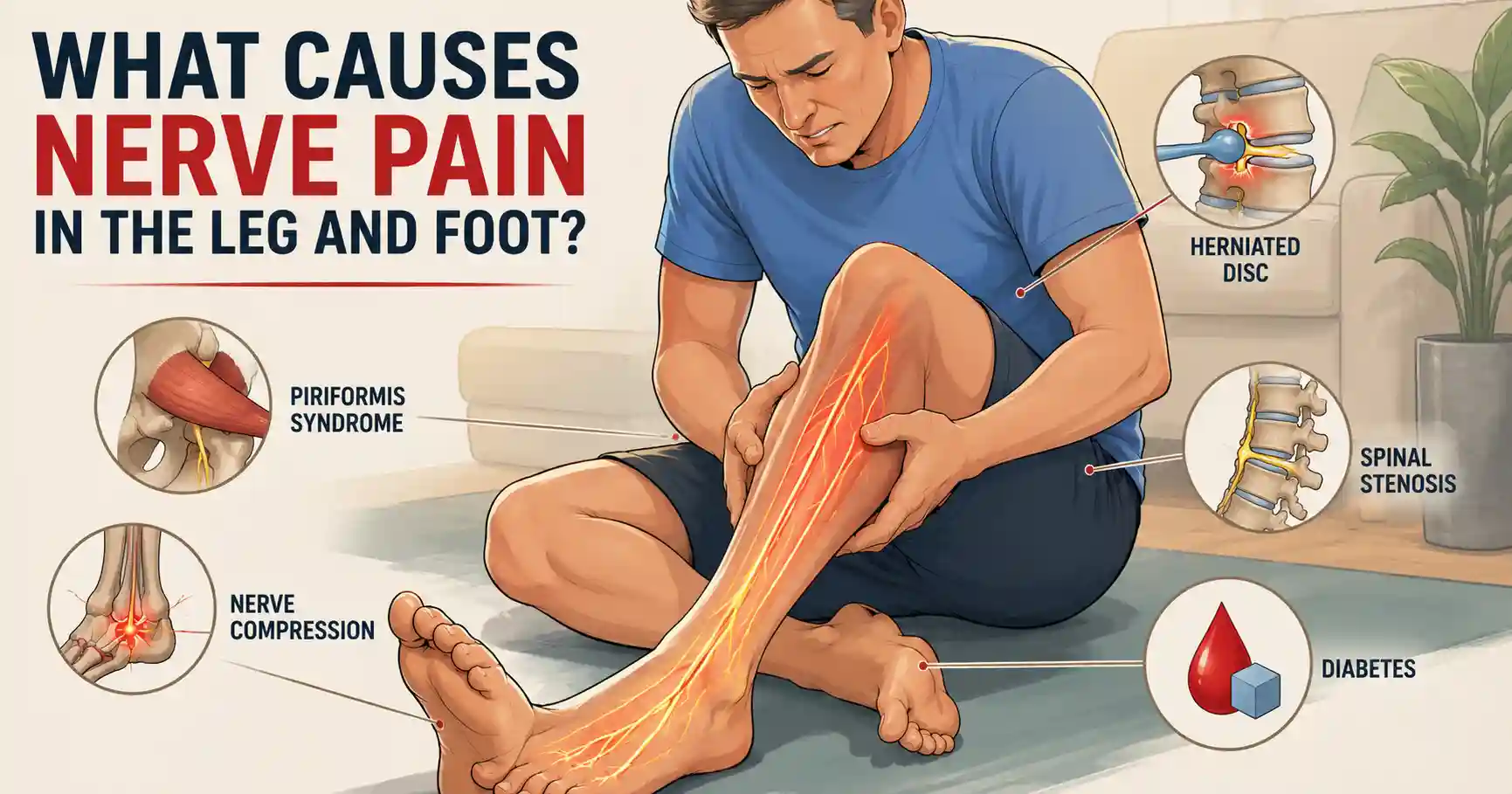
The most common causes include:
- Sciatica
- Herniated discs
- Peripheral neuropathy
- Spinal stenosis
- Diabetes-related nerve damage
- Pinched nerves near joints
- Poor posture and prolonged sitting
Sciatica is often misunderstood
Many people think sciatica is a diagnosis by itself. It is really a symptom pattern.
The sciatic nerve is the largest in the body. When compressed or irritated, pain may travel:
- through the buttock,
- down the back of the leg,
- and into the foot.
That does not always mean a severe spinal injury. Sometimes, prolonged sitting, tight hip muscles, or disc irritation is enough.
Peripheral neuropathy behaves differently
Peripheral neuropathy often starts gradually in the feet first. Symptoms may include:
- burning,
- numbness,
- balance problems,
- or hypersensitivity to touch.
According to the National Institute of Neurological Disorders and Stroke, diabetes is one of the most common causes of peripheral neuropathy.
This is where wellness articles often oversimplify things. Turmeric tea and foot soaks are not fixing nerve damage from uncontrolled blood sugar.
Compression changes everything
A compressed nerve usually responds better to:
- position changes,
- walking,
- spinal mobility,
- and reducing prolonged pressure.
Inflamed neuropathy may respond more to:
- blood sugar control,
- sleep management,
- and medication support.
Those are not interchangeable problems.
How to relieve nerve pain in the leg at home
Home treatment works best when it focuses on reducing nerve irritation instead of simply masking pain.
1. Stop staying in one position too long
Long sitting periods are one of the biggest triggers for leg nerve pain.
Many people actually worsen symptoms by:
- sitting in recliners for hours,
- crossing legs,
- or lying down all day trying to “rest.”
Nerves dislike prolonged compression.
Try:
- standing every 30–45 minutes,
- short walks,
- gentle movement,
- and changing positions frequently.
Research published in Pain Medicine (2021) found prolonged inactivity often increased pain sensitization in chronic nerve-related conditions.
2. Use heat or cold strategically
Heat helps more with:
- muscle tightness,
- stiffness,
- and chronic compression.
Cold helps more with:
- sharp flare-ups,
- swelling,
- or sudden irritation.
A mistake people make is using intense heat nonstop. Too much heat can sometimes increase inflammation temporarily.
3. Walk more than you think you should
This surprises people. For many compression-related nerve problems, gentle walking helps more than strict rest.
Walking:
- improves circulation,
- reduces stiffness,
- and changes spinal loading patterns.
4. Sleep with better positioning
Sleep posture matters more than most articles admit.
Try:
- A pillow between the knees when side sleeping,
- Or a pillow under the knees when on your back.
Both positions reduce lower-back nerve tension for many people. Sleeping on the stomach often worsens lumbar compression.
5. Reduce pressure on irritated areas
Sometimes the trigger is mechanical and surprisingly simple:
- tight shoes,
- compressed knees,
- heavy wallets,
- poor desk setup,
- or long driving sessions.
That sounds minor until symptoms improve dramatically after changing them.
Quick Takeaway: The best home treatments usually reduce nerve compression and keep the body moving gently instead of completely resting.





Why is nerve pain in the leg worse at night?
Nerve pain in the leg often feels worse at night because movement decreases, inflammation becomes more noticeable, and certain sleep positions increase nerve pressure.
This is one of the biggest unanswered questions in competitor articles.
Several things happen at night:
- Fewer distractions increase pain awareness,
- Spinal discs absorb fluid and slightly expand,
- And poor sleep positions can increase nerve tension.
For people with neuropathy, blood sugar swings overnight may also worsen symptoms.
Nighttime pain triggers that people overlook
Common triggers include:
- sleeping with twisted hips,
- curled sleeping positions,
- soft sagging mattresses,
- and sleeping too long in one position.
Some people also unknowingly tighten muscles during sleep due to stress or guarding.
What may help at night
Try this order:
- Short walk before bed
- Gentle stretching
- Warm shower or heating pad
- Pillow support for knees
- Avoid long evening sitting sessions
One thing worth saying clearly: severe nighttime burning in both feet is more suggestive of neuropathy than sciatica.
Which stretches help nerve pain in the leg?
Certain stretches may help nerve pain by reducing pressure around irritated nerves and improving mobility.
But some stretches absolutely make symptoms worse. Most generic articles avoid saying that.
Stretches that often help
Gentle sciatic nerve glide
This movement aims to mobilize the nerve without aggressively stretching it.
- Sit upright
- Extend one leg slowly
- Pull toes upward gently
- Lower again
The motion should feel mild, not intense.
Hip mobility stretches
Tight hip muscles can increase sciatic irritation.
Helpful options include:
- Figure 4 stretch,
- seated piriformis stretch,
- gentle hamstring mobility work.
Calf stretching
Helpful when nerve tension affects the lower leg or foot.
Stretches that commonly backfire
Avoid aggression:
- toe-touching,
- ballistic hamstring stretching,
- or deep twisting during flare-ups.
People often assume “more stretch equals more relief.” With irritated nerves, that logic fails fast. The nerve usually needs reduced irritation first, not aggressive pulling.
Quick Takeaway: Gentle mobility usually helps nerve pain more than deep stretching.
What makes leg nerve pain worse?
Certain habits repeatedly aggravate nerve pain even when people are trying to recover.
Common aggravators
| Habit | Why It Worsens Symptoms |
|---|---|
| Sitting for hours | Increases nerve compression |
| Poor sleep posture | Raises spinal tension |
| Aggressive stretching | Irritates inflamed nerves |
| Heavy lifting during flare-ups | Increases pressure on discs |
| Tight footwear | Compresses foot nerves |
| Complete inactivity | Increases stiffness and sensitization |
One non-obvious problem is fear-based immobility. Some people become so worried about triggering pain that they stop moving almost entirely. That often leads to worse stiffness and greater pain sensitivity over time.
When is leg nerve pain a warning sign?
Some nerve pain symptoms need medical evaluation instead of continued home treatment.
Seek medical care quickly if you have:
- progressive weakness,
- loss of bladder or bowel control,
- sudden foot drop,
- severe numbness,
- fever with back pain,
- or rapidly worsening symptoms.
According to the Mayo Clinic, loss of bladder or bowel control with leg nerve symptoms can signal severe nerve compression requiring urgent care.
Persistent numbness deserves more attention than many articles suggest. Pain alone is unpleasant. Progressive neurological loss is different.
What treatments help when home remedies stop working?
Persistent nerve pain sometimes needs medical treatment, especially when symptoms continue beyond several weeks.
Common medical options include:
- physical therapy,
- prescription nerve-pain medications,
- epidural steroid injections,
- or treatment of underlying conditions like diabetes.
Research published in The Lancet Neurology (2020) noted that neuropathic pain treatment often requires combined approaches rather than a single therapy.
That part gets lost online. People search for one magic fix. Nerve pain rarely works that way.
Sometimes the goal is:
- reducing irritation,
- restoring function,
- and preventing worsening,
not eliminating every symptom immediately.
FAQs
How to relieve nerve pain in the leg naturally
Natural approaches that may help include walking, gentle stretching, improving sleep posture, heat therapy, and reducing prolonged sitting. Some people also find anti-inflammatory eating patterns helpful. Natural methods work best for mild-to-moderate irritation, not severe nerve compression or advanced neuropathy.
How to relieve nerve pain in the leg and foot at home
Home treatment usually focuses on movement, pressure reduction, sleep positioning, and symptom control. Walking, heat therapy, nerve glides, and avoiding long sitting sessions often help. If symptoms include weakness, worsening numbness, or balance problems, home treatment alone may not be enough.
How to relieve pain in the leg from the sciatic nerve
Sciatic nerve pain often improves with gentle walking, spinal position changes, and reducing prolonged sitting. Sleeping with a pillow between the knees may reduce nerve tension at night. Aggressive stretching sometimes worsens irritated sciatic nerves during flare-ups.
Pinched nerve causing leg pain
A pinched nerve can cause sharp, burning, tingling, or radiating pain down the leg. Symptoms often worsen with sitting or certain movements. Mild cases sometimes improve with movement, posture correction, and reduced pressure, but severe compression may require medical treatment.
Stretches to relieve nerve pain in the leg
Gentle nerve glides, hip mobility work, and light calf stretching may help reduce nerve irritation. Deep aggressive stretching is not always better and may worsen symptoms during flare-ups. The goal is controlled mobility, not forcing flexibility.
Nerve pain in the leg is frustrating, partly because the symptoms move, change, and behave unpredictably. But the biggest mistake is treating every type of nerve pain the same way. Understanding whether the issue is compression, irritation, or neuropathy changes what actually helps — and that is usually where real relief for nerve pain in the leg starts.
