

Heat is usually better for chronic nerve pain linked to muscle tightness or stiffness, while ice works better for fresh inflammation, swelling, or sharp flare-ups. The right choice depends on what is irritating the nerve and how long the symptoms have been present. For many people, the mistake is not choosing the “wrong” therapy once, but it is using the same therapy for every type of nerve pain.
Nerve pain does not behave like regular muscle soreness. A pinched nerve in the neck, burning feet from neuropathy, and sciatica after lifting something heavy can respond very differently to heat or cold.
- Ice usually helps fresh inflammation and sharp nerve flare-ups.
- Heat usually helps relieve stiffness and muscle tightness around irritated nerves.
- Chronic neuropathy may respond differently from pinched nerves or sciatica.
- Temporary pain relief does not always mean the nerve is healing.
- Heat can sometimes worsen active inflammation or swelling.
- Alternating heat and ice may help some people during recovery phases.
Is Heat or Ice Better for Nerve Pain?
Ice is generally better during the first 24–48 hours of a nerve flare-up, especially when swelling or sharp inflammation is involved. Heat is usually more helpful later, when stiffness, muscle guarding, or reduced mobility become the bigger problem.
A nerve itself does not always hurt because it is inflamed. Sometimes the surrounding muscles tighten and compress it. Sometimes blood flow changes. Sometimes the nervous system becomes overly sensitive after months of irritation.
That is why two people with “nerve pain” may react completely differently to the same heating pad.
Here is the practical version most people actually need:
| Symptom Pattern | Usually Better |
|---|---|
| Sharp pain after a sudden injury | Ice |
| Burning with visible swelling | Ice |
| Tight muscles around the nerve | Heat |
| Chronic stiffness without swelling | Heat |
| Pain worsens after activity | Ice first |
| Morning stiffness and nerve tension | Heat |
| Numbness after an acute strain | Often ice initially |
| Long-term sciatica with muscle tightness | Often heat |
Others feel numb after ice because the area temporarily loses sensation. Relief matters, but it is not the same as healing.
Why Nerve Pain Reacts Differently Than Muscle Pain
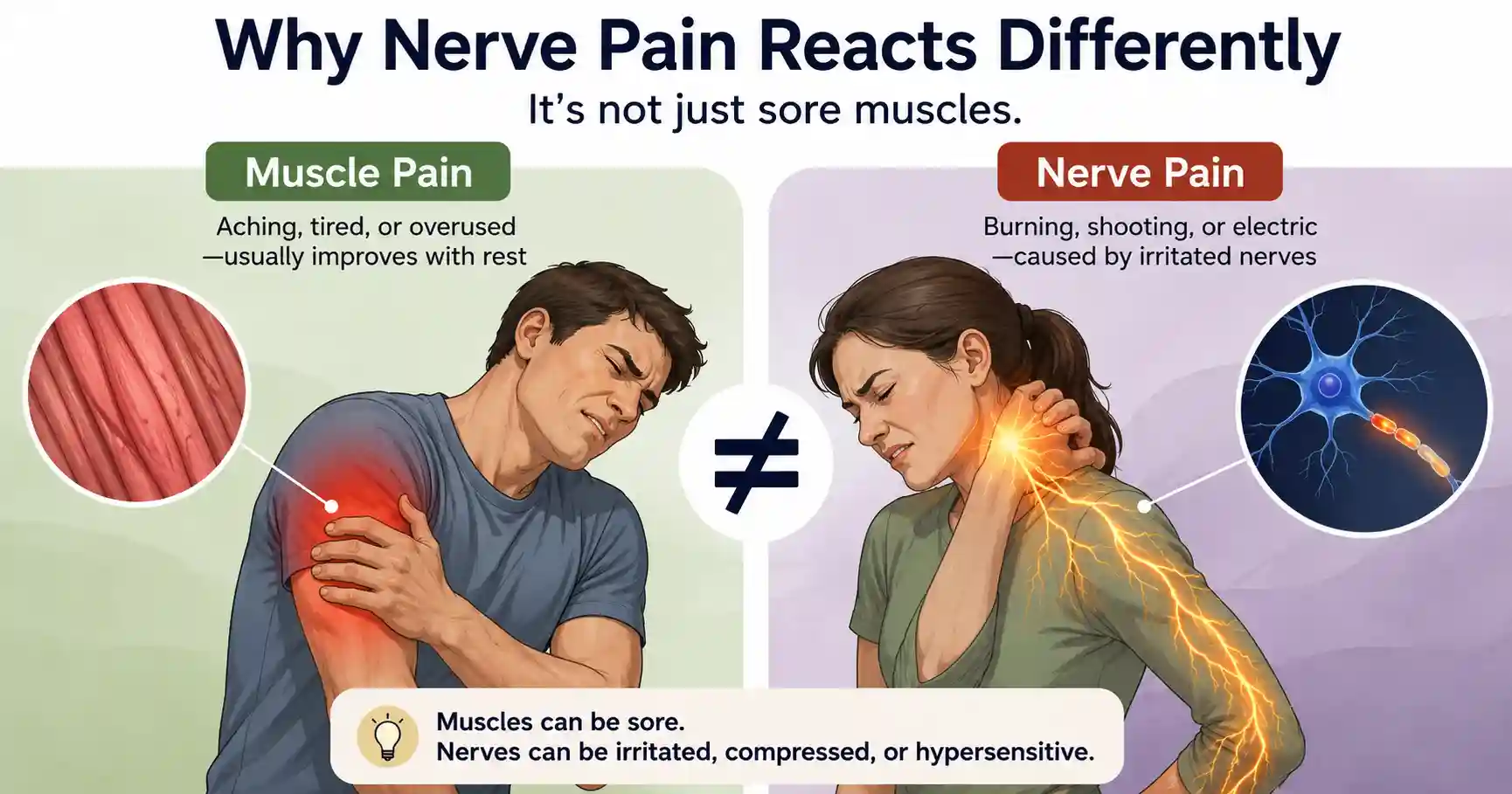
Nerve pain is not just “pain in a different location.” The mechanism is different.
Muscle soreness usually responds predictably:
- inflammation
- tension
- overuse
- microtears
Nerve pain is more complicated because nerves can become:
- compressed
- chemically irritated
- hypersensitive
- poorly supplied with blood
- mechanically stretched
That changes how temperature therapy feels.
For example, cold therapy narrows blood vessels. That can reduce swelling around a pinched nerve. But prolonged icing may also increase stiffness around nearby muscles, which sometimes worsens nerve compression afterward.
Heat has the opposite problem. Heat increases circulation and relaxes muscles. That can reduce pressure on the nerve. But if active inflammation is present, too much heat may increase throbbing or swelling.
This is why generic advice online often fails. People search:
“is heat or ice better for nerve pain in back”
But the answer changes depending on whether:
- The nerve is freshly irritated
- Muscles are spasming
- Inflammation is active
- The condition is chronic neuropathy
Those are not small differences.
When Ice Works Better for Nerve Pain
Ice works best when inflammation is actively irritating the nerve.
This commonly happens:
- after lifting injuries
- after a sudden back strain
- during acute sciatica flare-ups
- after repetitive overuse
- during fresh pinched nerve symptoms
Cold therapy reduces blood flow temporarily. That may help reduce:
- swelling
- inflammatory signaling
- sharp pain intensity
A 2015 review in the Journal of Athletic Training found cold therapy can reduce pain perception and tissue metabolism temporarily, though evidence quality varies depending on the condition studied.1Mechanisms and efficacy of heat and cold therapies for musculoskeletal injury, PubMed Central.
People often misuse ice in two ways:
- icing too long
- icing chronic pain without inflammation
A numb, burning foot from neuropathy is not always helped by aggressive icing. In some neuropathy patients, cold sensitivity is already increased. More cold can make the nerve feel worse afterward. That nuance gets skipped constantly online.
Signs Ice May Help More
- sudden shooting pain
- visible swelling
- pain after activity
- hot/inflamed feeling
- recent injury
- sharp nerve irritation
How to Use Ice Safely
- 15–20 minutes at a time
- Never directly on the skin
- Allow normal skin temperature between sessions
- Stop if numbness worsens significantly
-
 Nerve Calm Reviews 2026: Good For Pain Relief & Neuropathy?
 -
Sciatic Nerve Pain. What It Really Feels, Why It Travels, & What Can Help?
-
Arialief Reviews 2026: Does It Really Work For Nerve Pain?
-
Best Thing For Sciatic Nerve Pain: At Home What Really Work?
-
Nerve Calm Reviews & Complaints. Does It really Work? FACTS!





When Heat Helps More Than Ice
Heat works best when tight muscles or stiffness are increasing pressure around the nerve.
This is common with:
- Chronic neck nerve pain
- Long-term sciatica
- Lower back nerve irritation
- Muscle guarding around compressed nerves
Heat improves circulation temporarily and often relaxes protective muscle tension.
That last part matters more than most articles admit. Many people think heat “heals” the nerve itself. Usually, it does not. What it often does is relax the tissues surrounding the irritated nerve enough to reduce pressure and improve movement.
That is still useful. A 2021 review in Pain Medicine found superficial heat therapy may help short-term pain relief and flexibility in musculoskeletal conditions, though direct evidence for nerve-specific disorders remains limited.
Signs Heat May Help More
- Stiffness
- Tight muscles
- Symptoms worse in the morning
- Chronic aching
- Limited mobility
- Pain improves with movement
Heat Mistakes People Commonly Make
- Using high heat for too long
- Sleeping on heating pads
- Applying heat to fresh injuries
- Assuming more heat equals better results
It doesn’t. Too much heat may increase inflammation in some acute nerve compression injuries.
Read More Nerve Pain Related Posts
- How to Relieve Nerve Pain in Leg While Sleeping? What You Need to Know

- What Vitamin Deficiency Cause Sciatic Nerve Pain? What to Know
- Can Varicose Veins Cause Neuropathy? Here’s What to Know
- What Are Good Shoes for Neuropathy? A Simple Explanation
- Does Elevating Feet Help Neuropathy? Here’s What to Know
- Is Tiger Balm Good for Nerve Pain? The Short Answer






Is Heat or Ice Better for a Pinched Nerve?
Ice is usually better early in a pinched nerve flare-up. Heat often becomes more helpful later, once muscle tightness becomes the bigger issue.
That progression matters. A pinched nerve often starts with inflammation. The surrounding tissues swell slightly and irritate the nerve root. Ice may calm that initial irritation.
A few days later, muscles around the area may tighten defensively. That is where heat often helps more.
Pinched Nerve by Location
| Location | Often Helps Most Initially |
|---|---|
| Neck pinched nerve | Ice first, then heat |
| Lower back pinched nerve | Depends on swelling vs stiffness |
| Sciatic nerve irritation | Ice during flare, heat later |
| Shoulder nerve compression | Often ice early |
| Chronic cervical tightness | Often heat |
People searching “pinched nerve hot or cold” are usually looking for a single universal answer. There isn’t one. The timeline matters more than the label.
Is Heat or Ice Better for Nerve Pain in the Back, Neck, Legs, or Feet?
Back Nerve Pain
Back-related nerve pain often involves both inflammation and muscle spasm. Ice may help after a sudden strain. Heat often helps with ongoing stiffness.
Neck Nerve Pain
Neck nerve irritation frequently includes tight surrounding muscles. Many people respond better to gentle heat after the acute phase passes.
Leg Nerve Pain
Sciatica-type symptoms can respond to either therapy depending on whether the nerve is inflamed or mechanically compressed by tight tissues.
Foot Nerve Pain
Foot neuropathy is different. Some people with diabetic neuropathy become highly temperature-sensitive. Aggressive icing can sometimes worsen discomfort instead of helping it.
This is one of the biggest weaknesses in competitor articles. They lump all nerve pain together as if the body reacts identically everywhere.
It doesn’t.
Why Heat Sometimes Makes Nerve Pain Worse
Heat can worsen nerve pain if active inflammation or swelling is still present.
This confuses people because heat often feels good immediately. Temporary comfort does not always mean the condition has improved.
Heat expands blood vessels. That can increase circulation, but it may also increase:
- swelling
- throbbing
- pressure in confined spaces
In a tightly compressed nerve area, extra swelling may increase irritation temporarily.
People often notice:
- more throbbing afterward
- increased burning
- worsening symptoms at night
That does not mean heat is “bad.” It means the timing may be wrong.
Can You Alternate Heat and Ice for Nerve Pain?
Yes. Some people benefit from alternating heat and ice, especially during recovery phases where both stiffness and inflammation exist. This is sometimes called contrast therapy.
A simple approach:
- Ice for 10–15 minutes
- Wait briefly
- Heat for 10–15 minutes
The theory is:
- Cold calms inflammation
- Heat restores mobility and circulation
Evidence is mixed. There is surprisingly little strong research specifically on alternating therapy for nerve pain itself. Still, many clinicians use it pragmatically during subacute recovery periods.
This is one area where online wellness content tends to sound more certain than the actual evidence supports.
Common Mistakes People Make With Heat and Ice
- 1. Treating All Nerve Pain the Same: Neuropathy and pinched nerves are not identical problems.
- 2. Using Ice Too Long: Excessive cold may increase stiffness and sensitivity afterward.
- 3. Applying Heat to Fresh Injuries: This may increase inflammation early on.
- 4. Ignoring Movement: Sometimes, gentle movement helps more than either therapy alone.
- 5. Chasing Temporary Relief: Numbness reduction does not always mean recovery is happening.
That last one matters. A lot.
What Current Research Says About Heat and Cold Therapy
Research on heat and cold therapy is stronger for general pain than for nerve-specific conditions.
Still, several patterns appear consistently:
- Cold therapy may reduce acute inflammation temporarily
- Heat may improve mobility and muscle relaxation
- Evidence for chronic neuropathy remains mixed
- Individual response matters significantly
The Cochrane Database has repeatedly noted that many studies on heat and cold therapy are small or methodologically weak. That does not mean these therapies are useless. It means people online often sound more confident than the actual evidence deserves.
The safest interpretation is probably this:
- Both heat and ice can help with symptoms
- Neither is a cure
- The underlying cause of nerve pain matters most
FAQs
Is heat or ice better for nerve pain in the back?
Ice is usually better during the first stage of a back nerve flare-up, especially after lifting injuries or sudden inflammation. Heat often becomes more useful later when stiffness and muscle tension start limiting movement. The best choice depends more on symptom pattern than body location alone.
Does heat help pinched nerve pain?
Heat may help pinched nerve pain when muscle tightness increases pressure around the nerve. It often works better after the initial inflammation phase has settled. During fresh flare-ups with swelling or sharp irritation, ice may be more helpful at first.
Is ice or heat better for sciatica?
Ice often helps acute sciatica flare-ups because inflammation around the sciatic nerve can increase pain sensitivity. Heat may help later by reducing muscle tightness in the lower back and hips. Many people end up using both at different stages of recovery.
Does heat relieve nerve pain in the feet?
Sometimes, but not always. Chronic foot neuropathy can react unpredictably to temperature therapy. Some people find warmth soothing, while others become more sensitive. Aggressive heat or cold exposure may irritate already sensitive nerves in the feet.
Can heat make nerve pain worse?
Yes. Heat may worsen nerve pain if active inflammation or swelling is still present. Some people notice increased throbbing or burning after prolonged heat exposure. That does not mean heat is harmful universally, but timing and symptom type matter.
The bottom line is simple: whether heat or ice is better for nerve pain depends less on the word “nerve pain” and more on what is actually irritating underneath. Generic advice misses that distinction constantly.
Scientific References
- 1Mechanisms and efficacy of heat and cold therapies for musculoskeletal injury, PubMed Central. ↩︎
