
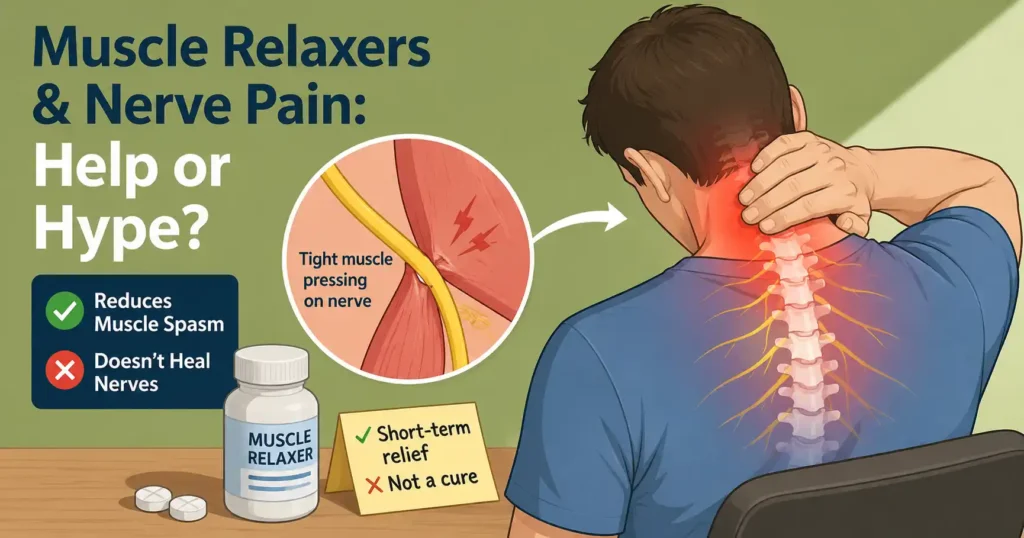
Do muscle relaxers help with nerve pain? Sometimes — but usually indirectly. Muscle relaxers mainly reduce muscle spasms and tension, which can lower pressure around irritated nerves in conditions like sciatica or pinched nerves. They do not directly treat damaged nerve signaling the way medications like gabapentin or pregabalin do.
Muscle relaxers work best when tight muscles are causing the nerve irritation worse. They tend to work poorly for burning, tingling, or chronic neuropathy-related nerve pain.
What Is Nerve Pain?
Nerve pain happens when nerves become damaged, irritated, compressed, or inflamed. Unlike normal muscle soreness, nerve pain often feels sharp, burning, electric, tingling, or shooting.
A strained muscle in your back may ache. A compressed nerve in your lower spine may send pain down your leg.
That difference matters because muscle relaxers were not created to treat nerve signaling problems. They were created to reduce muscle spasms.
This is where many online articles become misleading. They lump all pain together as if muscle pain and nerve pain are basically the same thing. They are not.
Common causes of nerve pain include:
- Herniated discs
- Sciatica
- Pinched nerves in the neck
- Diabetic neuropathy
- Shingles nerve damage
- Post-surgical nerve irritation
- Spinal stenosis
Some conditions involve both muscle tension and nerve irritation at the same time. That is usually where muscle relaxers make the most sense.
Quick Takeaway: Muscle relaxers may help nerve pain when muscle spasms are part of the problem, but they do not directly repair damaged nerves.
How Do Muscle Relaxers Work?
Muscle relaxers reduce involuntary muscle tightness and spasms. Different medications work differently, but most slow nerve activity in the central nervous system.
Common muscle relaxers include:
- Cyclobenzaprine
- Baclofen
- Tizanidine
- Methocarbamol
Some mainly cause sedation. Others reduce muscle signaling more directly.
For example, cyclobenzaprine works somewhat like certain antidepressants and mainly calms muscle spasm activity through the brain and spinal cord. It does not specifically target damaged peripheral nerves.
This distinction gets skipped constantly online.
If your nerve pain is coming from a compressed nerve surrounded by inflamed, tightened muscles, relaxing those muscles may reduce pressure and pain. But if the pain comes from damaged nerve fibers themselves, the effect is often limited.
According to the Cleveland Clinic, muscle relaxers are generally intended for short-term use because side effects increase with longer use. Current guidance usually limits them to around two to three weeks for acute conditions.
Some people feel major relief after the first dose. Others mainly feel sleepy.
That inconsistency is real. The response depends heavily on the actual cause of the pain.
Do Muscle Relaxers Help With Nerve Pain?
Yes, but mostly in situations where muscle spasms are worsening nerve irritation.
This is the simplest way to think about it:
| Type of Pain | Muscle Relaxers Usually Help? | Why |
|---|---|---|
| Pinched nerve with muscle spasm | Often yes | Reduced muscle tension lowers pressure |
| Sciatica with back tightness | Sometimes | Helps surrounding muscle guarding |
| Diabetic neuropathy | Usually no | Nerve damage is the main issue |
| Burning foot nerve pain | Usually limited | Not primarily muscle-related |
| Shingles nerve pain | Often, a weak effect | Viral nerve damage is different |
| Acute neck spasm with nerve irritation | Often yes | Relaxes tightened muscles |
Many people misunderstand this point: muscle relaxers often help the body’s reaction to nerve pain more than the nerve pain itself.
That is why someone with a pinched nerve in the neck may feel better after taking cyclobenzaprine, while someone with diabetic burning foot pain feels almost no difference.
A 2024 review published in JAMA Network Open found mixed evidence for long-term muscle relaxer use in chronic pain conditions. The strongest benefit appeared in short-term musculoskeletal situations rather than chronic neuropathic pain disorders.
Quick Takeaway: Muscle relaxers work best when muscle spasms and nerve irritation happen together.




Do Muscle Relaxers Help With Pinched Nerves in the Back, Neck, or Legs?
Sometimes they do — especially during the early inflammatory phase.
When a nerve becomes irritated in the spine, nearby muscles often tighten defensively. Doctors sometimes call this “muscle guarding.” The body is basically trying to protect the injured area.
The problem is that excessive tightness can increase pressure and stiffness even more.
This creates a cycle:
- Nerve irritation starts
- Muscles tighten
- Tight muscles increase pain
- Pain causes more tightening
Muscle relaxers may interrupt that cycle temporarily.
This is why medications like cyclobenzaprine are commonly prescribed for:
- Acute lower back pain
- Sciatica
- Cervical radiculopathy
- Pinched nerves with severe tightness
But there is a limit.
If the main issue is a severely compressed nerve from a large disc herniation or spinal stenosis, muscle relaxers will not “fix” the compression itself.
That is where some online advice becomes unrealistic. These drugs are symptom-management tools, not structural solutions.
Current spine care guidelines still prioritize:
- Physical therapy
- Activity modification
- Anti-inflammatory strategies
- Movement-based recovery
Medication alone rarely solves persistent compression problems.
Do Muscle Relaxers Help Burning Nerve Pain in the Feet?
Usually not very well.
Burning nerve pain in the feet is commonly linked to:
- Diabetic neuropathy
- Peripheral neuropathy
- Vitamin deficiencies
- Alcohol-related nerve damage
These conditions involve abnormal nerve signaling rather than muscle spasm.
This is why medications such as:
- Gabapentin
- Pregabalin
- Duloxetine
They are often used more frequently than muscle relaxers for chronic neuropathy.
Harvard Health noted in 2024 that nerve pain medications work by altering how nerves transmit pain signals rather than relaxing muscles.
People sometimes confuse temporary sedation with pain relief. A muscle relaxer may help someone sleep through discomfort, but that does not necessarily mean the nerve pain itself has improved.
That distinction matters more than most articles admit.
Quick Takeaway: Muscle relaxers usually have limited benefit for chronic burning nerve pain in the feet because the problem is nerve signaling, not muscle tension.
Cyclobenzaprine for Pinched Nerve: What It Actually Does
Cyclobenzaprine is one of the most commonly prescribed muscle relaxers for back and neck problems.
It may help:
- Reduce muscle spasms
- Improve sleep during acute flare-ups
- Lower stiffness around irritated nerves
- Reduce painful guarding
It does not:
- Heal damaged nerves
- Remove disc herniations
- Reverse neuropathy
- Directly block nerve pain signals
People often expect it to work like a nerve medication. That expectation causes disappointment.
The medication also causes significant drowsiness in many adults. Some people describe feeling “knocked out” more than pain-free.
Older adults need extra caution because sedation increases:
- Fall risk
- Confusion
- Driving impairment
The American Geriatrics Society has repeatedly warned against long-term use of several muscle relaxers in older patients because of these risks.
Muscle Relaxers vs Nerve Pain Medications
The two categories work differently.
| Medication Type | Main Target | Common Examples | Best Use |
|---|---|---|---|
| Muscle Relaxers | Muscle spasms | Cyclobenzaprine, Tizanidine | Acute tightness and spasm |
| Nerve Pain Medications | Nerve signaling | Gabapentin, Pregabalin, Duloxetine | Neuropathy and chronic nerve pain |
| Anti-Inflammatories | Inflammation | Ibuprofen, Naproxen | Swelling and irritation |
| Steroids | Severe inflammation | Prednisone | Acute nerve inflammation |
This is another area where online health content becomes sloppy.
People search:
“strongest nerve pain medication”
But “strongest” depends entirely on the cause of the pain.
A drug helping sciatica may fail for shingles-related nerve damage.
Different mechanisms. Different treatments.
What Are the Side Effects of Muscle Relaxers?
Drowsiness is the biggest one.
Other common side effects include:
- Dizziness
- Dry mouth
- Fatigue
- Blurred vision
- Brain fog
- Poor coordination
Some medications also carry dependency concerns with prolonged use.
Alcohol makes these risks worse. This is especially relevant for adults over 50 because sedation-related falls become more dangerous with age.
As of 2026, most clinical guidance still recommends using muscle relaxers short-term rather than continuously for chronic pain management.
Some people feel emotionally “flattened” or cognitively slower on these medications. That effect can matter a lot for work, driving, and concentration.
When Muscle Relaxers Make Sense — and When They Usually Don’t
Muscle relaxers may make sense when:
- A pinched nerve triggers severe muscle spasm
- Back pain causes guarding and stiffness
- Neck pain limits movement
- Sleep becomes difficult due to acute spasm pain
- Symptoms are short-term
They usually work poorly when:
- Burning neuropathy is the main problem
- Nerve damage is chronic
- Pain comes from the shingles nerve injury
- Tingling and numbness dominate without spasm
- Structural compression is severe
This is probably the clearest summary of the whole topic:
Muscle relaxers help secondary muscle tension better than primary nerve dysfunction.
That single distinction explains why patient experiences vary so wildly.
FAQs
Can cyclobenzaprine help a pinched nerve?
Cyclobenzaprine may help reduce muscle spasms surrounding a pinched nerve, especially in the neck or lower back. It does not remove the nerve compression itself, but some people feel less pain because the surrounding muscles relax and movement becomes easier for a short period.
Do muscle relaxers help shingles nerve pain?
Muscle relaxers usually have limited benefit for shingles nerve pain because shingles damages nerve tissue directly. They may help with sleep or muscle tightness caused by discomfort, but medications targeting nerve signaling are typically more effective for postherpetic neuralgia.
Are nerve pain medications stronger than muscle relaxers?
They are different types of medications rather than stronger versions of each other. Nerve pain medications target abnormal nerve signaling, while muscle relaxers reduce spasms and muscle tightness. The better option depends on the actual source of the pain.
Can muscle relaxers help sciatica?
They sometimes help sciatica when severe lower back tightness or muscle guarding is present. The effect is usually temporary and works best alongside movement, physical therapy, and inflammation management rather than as a standalone treatment.
How long do muscle relaxers take to work?
Some muscle relaxers begin working within 30 minutes to a few hours. Sedation often appears before meaningful pain relief. Short-term use is generally preferred because side effects and tolerance become more likely with longer use.
Final Take
Muscle relaxers do help with nerve pain in some situations, especially when muscle spasms increase pressure around irritated nerves. But they are not true nerve pain treatments in the way many people assume. For chronic neuropathy, burning pain, or damaged nerve signaling, the evidence and real-world results are much less impressive.
