
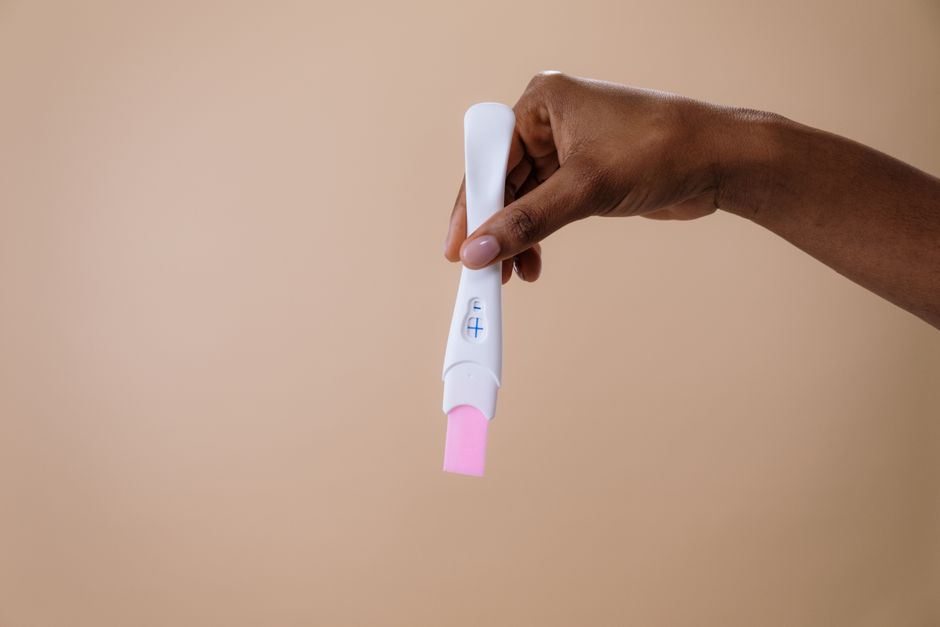
A pregnancy test can be positive with an ectopic pregnancy. In fact, a positive test is expected in most ectopic pregnancies, because the test detects a hormone the body makes once a fertilized egg implants — and in an ectopic pregnancy, implantation still happens, just in the wrong place.
What a pregnancy test cannot do is tell you where that pregnancy is growing. A positive result only confirms that pregnancy tissue is present and producing hCG. It says nothing about location, which is why ectopic pregnancy cannot be ruled out by a home test alone.
That distinction matters. An ectopic pregnancy is a medical emergency that can become life-threatening, and the early warning signs are easy to miss or mistake for a normal early pregnancy.
Will a Pregnancy Test Be Positive With Ectopic Pregnancy?
Yes. A home pregnancy test will almost always be positive in an ectopic pregnancy, because these tests detect human chorionic gonadotropin (hCG), a hormone produced by the cells that form the placenta.
Those cells develop wherever the fertilized egg implants — whether in the uterus or outside it. In an ectopic pregnancy, the egg most often implants in a fallopian tube. The placental tissue still grows and still releases hCG into the bloodstream. The hormone reaches the urine, and the test turns positive.
This is the part many people find confusing. A positive test feels like confirmation that everything is fine. It is not. It confirms pregnancy. It does not confirm a healthy pregnancy, and it does not confirm the pregnancy is in the uterus.
There is one important exception worth knowing. In some ectopic pregnancies, hCG levels rise more slowly than in a typical intrauterine pregnancy. If a test is taken very early, the amount of hCG in urine may be too low to register, producing a negative result. A negative test does not rule out ectopic pregnancy, especially if symptoms are present.
Why Does hCG Rise Differently in an Ectopic Pregnancy?
In a typical early pregnancy, hCG roughly doubles every two days during the first weeks. In an ectopic pregnancy, that rise is often slower.
The reason is not fully understood, but it appears related to where the tissue is implanted. The fallopian tube has a thinner lining and a more limited blood supply than the uterus. The developing placental tissue may not grow or function as efficiently in that environment, so it produces less hCG over the same period.
This slower rise is a pattern, not a rule. Some ectopic pregnancies produce hCG that rises normally, at least early on. Some intrauterine pregnancies — particularly those that are not developing normally — also show a slow rise. Because of this overlap, hCG patterns alone cannot reliably distinguish an ectopic pregnancy from a failing intrauterine one.
That is why doctors do not diagnose ectopic pregnancy from a single hormone level. They use a combination of serial hCG measurements, ultrasound, and symptoms. The pattern is a clue, not a verdict.
What Are the Early Symptoms of an Ectopic Pregnancy?
Early symptoms can be mild or absent, which is what makes ectopic pregnancy so dangerous. Many people feel nothing unusual at first and assume the pregnancy is progressing normally.
When symptoms do appear, they often include:
- Pelvic or abdominal pain, sometimes sharp and sometimes cramping
- Vaginal bleeding or spotting that differs from a normal period
- Pain on one side of the lower belly
- Shoulder tip pain, which can signal internal bleeding irritating the diaphragm
- Dizziness, lightheadedness, or fainting
- Pain with bowel movements or urination
Shoulder tip pain is a specific warning sign that is easy to dismiss. It does not come from the shoulder itself. It comes from blood in the abdomen irritating nerves that share a pathway with the shoulder. When it appears alongside a positive pregnancy test, it needs urgent attention.
Severe abdominal pain, heavy bleeding, fainting, or a racing heartbeat are signs of a ruptured ectopic pregnancy. This is a life-threatening emergency. Emergency care should be sought immediately — not scheduled for the next day.





How Is an Ectopic Pregnancy Diagnosed?
Diagnosis relies on tracking hCG levels over time and using ultrasound to look for the pregnancy’s location.
Two findings together are strongly suggestive. First, a positive pregnancy test with hCG above a certain level — often described as the discriminatory zone — combined with an ultrasound that shows no pregnancy inside the uterus. Second, an ultrasound that directly visualizes a mass or gestational sac outside the uterus.
In practice, diagnosis is often less clear-cut. Early in pregnancy, an ectopic may be too small to see on ultrasound. Doctors then repeat hCG measurements every couple of days to watch the trend. If the level is not rising as expected, and no intrauterine pregnancy is visible, ectopic pregnancy becomes a leading concern.
Some pregnancies fall into an uncertain category sometimes called a pregnancy of unknown location. The hCG is positive, but no pregnancy can be seen anywhere. These cases require close follow-up, because the pregnancy could be early and normal, or it could be ectopic.
Can a Home Test Tell the Difference?
No. A home pregnancy test cannot distinguish an ectopic pregnancy from an intrauterine one. Both produce hCG, and the test simply detects its presence.
Some home tests are marketed as showing how far along a pregnancy is based on hCG levels. Even these cannot detect location. A darker line or a higher reading does not mean the pregnancy is in the right place.
This is a genuine limitation of home testing, and it is worth being clear about it. The only way to confirm the location of a pregnancy is through medical evaluation with ultrasound and, often, blood tests.
What Should You Do If You Have a Positive Test and Symptoms?
If you have a positive pregnancy test along with pelvic pain, bleeding, or shoulder tip pain, seek medical care promptly. Do not wait to see if symptoms improve on their own.
If you have a positive test but no symptoms, routine early prenatal care is still the right step. An early ultrasound — often done between 6 and 8 weeks — can confirm the pregnancy is in the uterus. For someone with risk factors for ectopic pregnancy, doctors may recommend earlier evaluation.
Risk factors include a previous ectopic pregnancy, prior fallopian tube surgery, pelvic inflammatory disease, endometriosis, and some fertility treatments. Having a risk factor does not mean an ectopic pregnancy will occur. It means the possibility deserves earlier and closer attention.
It is also worth knowing that a positive test followed by a negative one — or fading lines — does not confirm anything about location. It may suggest a miscarriage or a pregnancy that is not developing, but it can also occur with ectopic pregnancy. Any concerning pattern deserves a medical evaluation rather than a guess.
Frequently Asked Questions
Can you have a positive pregnancy test with an ectopic pregnancy?
Yes. An ectopic pregnancy almost always produces a positive test because the placental tissue still releases hCG. A positive result confirms pregnancy but says nothing about where it is located.
Can an ectopic pregnancy give a negative pregnancy test?
It can, if the test is taken very early when hCG levels are still too low to detect. A negative test does not rule out ectopic pregnancy, especially when symptoms are present.
How do I know if my pregnancy is ectopic or normal?
You cannot tell from a home test. Confirming the location requires medical evaluation with ultrasound and, often, blood hCG measurements over time.
Does a faint line on a pregnancy test mean ectopic pregnancy?
No. A faint line usually reflects how early the test was taken or how dilute the urine was, not the location of the pregnancy. Only medical testing can assess location.
