
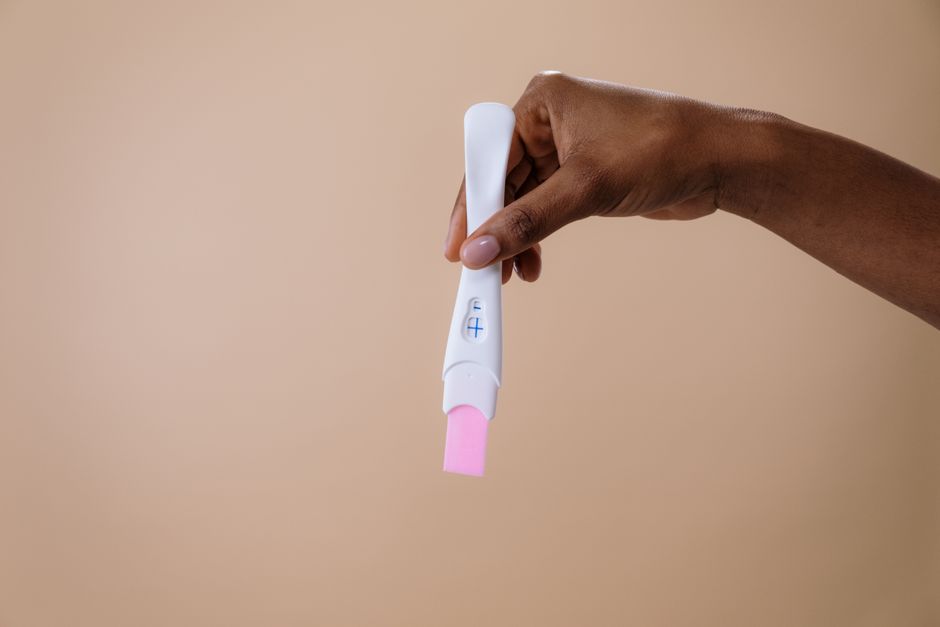
Pregnancy tests work by detecting a hormone called human chorionic gonadotropin (hCG) in your urine or blood. This hormone is produced by cells that form the placenta shortly after a fertilized egg attaches to the uterine lining. The test’s accuracy depends on when you take it, how you follow the instructions, and what medication you may be taking. Most home urine tests claim to be over 99% accurate when used correctly from the day of your missed period, but real-world factors can lower that number.
How Does a Pregnancy Test Actually Detect hCG?
The science is straightforward. Pregnancy tests use antibodies that are designed to bind specifically to hCG. When you dip the test stick in urine or apply urine to it, the liquid travels up the strip. If hCG is present, it binds to the antibodies and triggers a chemical reaction that produces a visible line, a plus sign, or a digital reading.
Most home tests use a technique called lateral flow immunochromatography. It is the same basic technology used in rapid strep tests and COVID-19 home tests. There is a control line that always appears to show the test worked. Then there is a test line that only appears when hCG is detected.
Blood tests done at a doctor’s office are more sensitive. They can detect much lower levels of hCG and can confirm pregnancy earlier. But for most women, a home urine test is reliable enough if you wait until after your missed period.
When Is the Best Time to Take a Pregnancy Test?
Timing matters more than almost anything else. hCG levels double roughly every 48 to 72 hours in early pregnancy. If you test too early, your hCG level may be too low for the test to detect.
The most accurate result comes from testing on the first day of your missed period. Testing earlier increases your chance of a false negative. Some tests claim to detect pregnancy up to six days before your missed period, but the accuracy is much lower that early. Research shows that testing four or five days before your missed period detects only about half of pregnancies.
Morning urine is best because it is more concentrated. Your hCG level is highest in the morning after you have not urinated for several hours. If you test later in the day, your urine may be too diluted to show a positive result, especially in very early pregnancy.
What Affects the Accuracy of a Pregnancy Test?
Several factors can give you a wrong result. The most common issue is testing too early. This leads to false negatives more often than people realize. If you get a negative result but still have not gotten your period, wait a few days and test again.
Medications can also interfere. Fertility treatments that contain hCG, like some injections used during ovulation induction, can cause a false positive. But most over-the-counter medications, including birth control pills and antibiotics, do not affect pregnancy test results. As of 2026, current research suggests that only medications containing hCG are a real concern.
Evaporation lines cause confusion. If you read a test after the recommended time window, the urine can dry and leave a faint line that looks positive. Always read the test within the time specified in the instructions, usually three to five minutes.
Medical conditions can rarely cause false positives. Some ovarian tumors, pituitary disorders, or kidney problems can produce hCG-like substances. This is uncommon but worth knowing if you get a positive result that you do not expect.



How Do Different Test Types Compare in Accuracy?
Not all pregnancy tests are the same. The table below shows how common types compare. The key difference is sensitivity, which is the lowest level of hCG a test can detect.
| Test Type | Typical Sensitivity | When It Works Best |
|---|---|---|
| Standard strip test (dip) | 25 mIU/mL | Day of missed period or later |
| Midstream test (plastic stick) | 20-25 mIU/mL | Day of missed period or later |
| Digital test | 25 mIU/mL | Day of missed period or later |
| Early detection test | 10-15 mIU/mL | Up to 6 days before missed period |
| Blood test (lab) | 1-2 mIU/mL | As early as 8-10 days after ovulation |
Early detection tests are more sensitive, but that does not mean they are more accurate overall. They simply detect lower levels of hCG. The trade-off is a higher chance of false negatives if you test too early. For most women, a standard test taken after the missed period is just as reliable and costs less.
What About False Positives and False Negatives?
False negatives are much more common than false positives. A false negative means the test says you are not pregnant when you actually are. This usually happens because you tested too early, your urine was too diluted, or you did not follow the instructions correctly.
A false positive is rare. It means the test says you are pregnant when you are not. Possible causes include a recent miscarriage or abortion where hCG is still in your system, certain fertility medications, or a medical condition that produces hCG. Some studies suggest that very rare chemical pregnancies, where a fertilized egg implants but does not develop, can also cause a brief positive result.
If you get a positive result, it is almost certainly correct. False positives are uncommon enough that you should assume the test is accurate. If you get a negative result but still suspect pregnancy, wait two to three days and test again with morning urine.
Common Misconceptions About Pregnancy Tests
A lot of misinformation circulates online. Here are a few things that are not true.
Alcohol does not affect the result. Drinking alcohol does not change your hCG levels. It will not cause a false positive or a false negative. But if you are pregnant, you should not drink alcohol for other health reasons.
Birth control pills do not interfere. Hormonal birth control works by preventing ovulation. It does not produce hCG and does not affect a pregnancy test. If you get a positive result while on birth control, you may be pregnant.
Food and drinks do not matter. Eating certain foods or drinking coffee does not change hCG levels. The only thing that matters is how concentrated your urine is. That is why morning urine is recommended.
Soap and water on the test stick can ruin it. Do not touch the test window or the absorbent tip. Contaminants can interfere with the chemical reaction and cause a faulty reading. Handle the test by the plastic handle only.
Frequently Asked Questions
Can a pregnancy test be wrong if taken at night?
Yes, it can. Your urine is more diluted later in the day, which can lower the concentration of hCG and cause a false negative. Morning urine is the most reliable.
How long after implantation can I test positive?
Implantation usually happens 6 to 12 days after ovulation. hCG becomes detectable in urine about 2 to 3 days after implantation. Testing on the day of your missed period is the safest bet.
Can medications like antihistamines affect a pregnancy test?
No, common medications like antihistamines, pain relievers, and antibiotics do not affect pregnancy test results. Only medications that contain hCG, such as some fertility treatments, can interfere.
Does the brand of pregnancy test matter for accuracy?
Not significantly. All FDA-approved home pregnancy tests are highly accurate when used correctly. More expensive digital tests offer convenience but not better accuracy than basic strip tests.
