
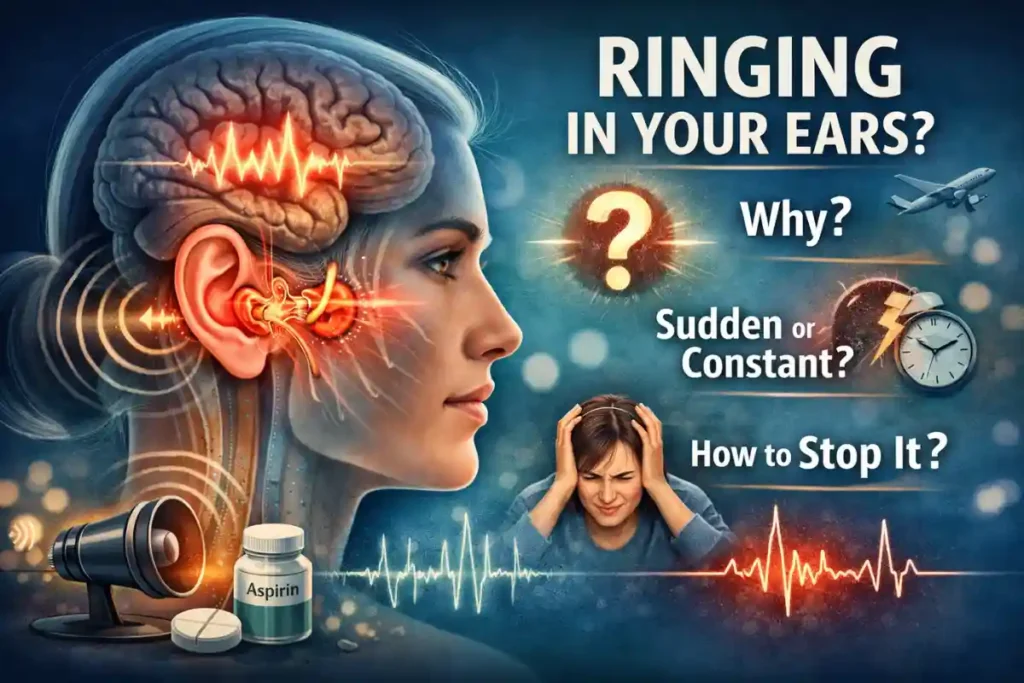
Tinnitus happens when the brain interprets abnormal signals from the ear or auditory nerves as sound.
It is usually linked to hearing loss, ear damage, or nerve disruption rather than an external noise. It can feel constant or come and go depending on triggers like stress, sleep, and noise exposure.
Key Takeaways
- Tinnitus is a brain–ear signal problem, not just an ear issue
- Most cases are linked to hearing damage or nerve changes
- It can come and go due to triggers like stress and sleep
- Home strategies help reduce perception, not eliminate it
- Long-term improvement comes from brain adaptation, not quick fixes
What Does Tinnitus Actually Mean?
Tinnitus is the perception of sound without an external source. People describe it as ringing, buzzing, hissing, or even pulsing. It is not a disease on its own. It is a symptom of something else going wrong in the hearing system.
Most cases start in the inner ear. Tiny hair cells inside the cochlea normally convert sound waves into electrical signals. When these cells are damaged, they send irregular signals. The brain tries to “fill in the gap,” and that becomes the sound you hear.
A detail many articles skip: tinnitus is not just an ear problem. It’s partly a brain adaptation problem. That’s why two people with similar ear damage can experience very different levels of tinnitus.
Why Does Tinnitus Happen?
Tinnitus happens when normal sound processing is disrupted.
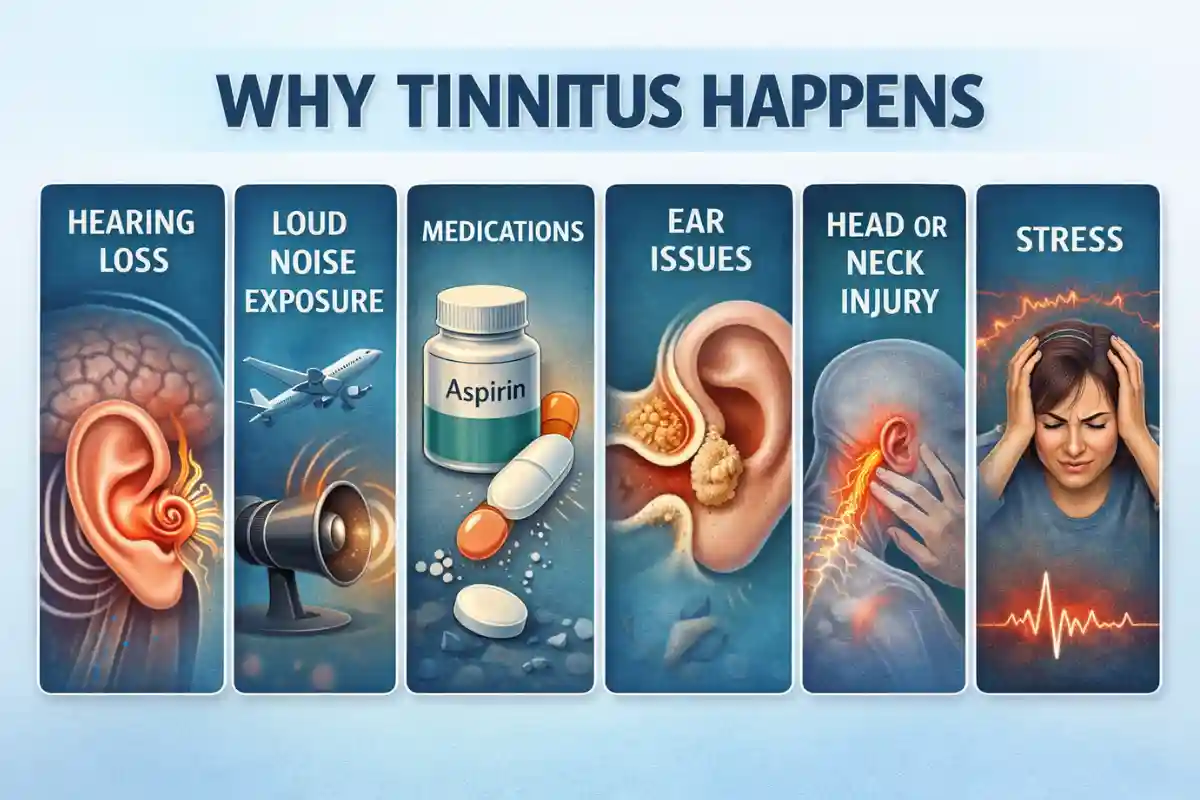
The most common causes include:
- Hearing loss (age-related or noise-induced)
- Exposure to loud sounds (concerts, machinery, headphones)
- Earwax blockage or infections
- Medications that affect nerve signaling
- Head or neck injuries
The shows users also search heavily for medication and age-related causes. That matters because these are often ignored in “home remedy” content.
What research actually says:
- A study in The Lancet Neurology (2024)1Tinnitus prevalence, associated characteristics, and related healthcare use in the United States: a population-level analysis, The Lancet. linked most chronic tinnitus cases to sensorineural hearing loss
- The National Institute on Deafness (NIDCD, 2022) confirms that tinnitus often begins with damage to inner ear hair cells. (Read the research paper here.)
Can Tinnitus Come On Suddenly?
Yes, tinnitus can start suddenly.
This usually happens after:
- A loud noise exposure (like a blast or concert)
- Sudden hearing loss
- A medication reaction
- Acute stress or anxiety spikes
But here’s what people misunderstand: “Sudden” doesn’t always mean “temporary.”
Some sudden cases fade. Others don’t. The difference often comes down to whether the underlying damage is reversible.





Why Does Tinnitus Come and Go?
Tinnitus that comes and goes is usually driven by triggers, not new damage.
Common triggers include:
- Stress → increases brain sensitivity to internal signals
- Poor sleep → reduces the brain’s ability to filter noise
- Caffeine or stimulants → may temporarily amplify perception
- Silence → makes tinnitus more noticeable
- Blood flow changes (especially in pulsatile tinnitus)
One pattern stands out: People often think tinnitus is “getting worse” when it’s actually becoming more noticeable.
That distinction matters.
What Makes Tinnitus Worse?
This is where most content gets lazy. They list obvious things. But the real drivers are more subtle.
Common worsening factors:
| Factor | What Actually Happens |
|---|---|
| Chronic stress | Keeps the brain in a hyper-alert state |
| Silence | Removes external masking sounds |
| Sleep deprivation | Weakens noise filtering in the brain |
| Over-monitoring symptoms | Trains the brain to focus on tinnitus |
| Excessive ear protection | Makes ears more sensitive over time |
That last one surprises people. Wearing earplugs all the time can increase sensitivity, not reduce tinnitus.
How To Help Tinnitus At Home
Home strategies don’t “fix” tinnitus. They help you manage perception and reduce intensity.

What tends to help
- Sound therapy
Use background noise like white noise, fans, or nature sounds. This reduces contrast between silence and tinnitus. - Sleep improvement
Consistent sleep lowers brain sensitivity. This alone can reduce perceived loudness. - Stress reduction
Techniques like breathing exercises or light activity help calm the nervous system. - Limit extreme noise exposure
Protect your ears, but don’t overdo it. - Routine consistency
The brain adapts better when daily patterns are stable.
What people get wrong
They expect fast results.
Most improvements happen gradually as the brain learns to ignore the signal. This process is called habituation.
What Actually Works vs What Doesn’t
| Approach | Reality |
|---|---|
| Supplements | Weak evidence for most |
| Ear drops | Only useful if a blockage exists |
| “Detox” methods | No scientific basis |
| Sound therapy | Often helpful |
| Stress management | Consistently useful |
| Hearing aids | Helpful if hearing loss is present |
A review in JAMA Otolaryngology (2020) found that behavioral and sound-based approaches show the most consistent benefit. Supplements were inconsistent. (Read the research paper here.)
Can Tinnitus Go Away?
Tinnitus can go away, but not always.
- Temporary tinnitus (after a loud noise) often fades
- Chronic tinnitus usually persists but becomes less noticeable
That’s how most people improve.
Watch: Simple explanation of why tinnitus happens

When Should You See a Doctor?
You should get medical advice if you have tinnitus:
- Starts suddenly without a clear cause
- Is only in one ear
- Comes with hearing loss or dizziness
- Sounds like a heartbeat (pulsatile tinnitus)
These can signal underlying issues that need evaluation.
FAQs
Does tinnitus start suddenly?
Yes, tinnitus can start suddenly, often after loud noise exposure, stress, or a medication change. In some cases, it fades within days, but if it continues beyond a few weeks, it may be linked to underlying hearing or nerve changes that need evaluation.
Can tinnitus be intermittent?
Yes, tinnitus can be intermittent. Many people experience it only during certain conditions like stress, fatigue, or silence. This does not always mean the condition is worsening, but rather that perception is changing based on internal and external triggers.
Where does tinnitus originate?
Tinnitus usually originates in the inner ear, where damaged hair cells send abnormal signals. However, the brain plays a major role in interpreting these signals, which is why tinnitus perception varies widely between individuals.
What age group gets tinnitus the most?
Tinnitus is more common in adults over 50 due to age-related hearing loss. However, younger people can also develop it, especially with frequent exposure to loud sounds or prolonged headphone use.
What medications can trigger tinnitus?
Some medications can trigger or worsen tinnitus, including certain antibiotics, high doses of aspirin, and some diuretics. The effect varies by person and dosage, and symptoms often improve after stopping the medication under medical guidance.
Final Thought
Why does tinnitus happen? Because the hearing system stops sending clean signals, the brain tries to compensate.
That’s the part most articles avoid. And once you understand that, the “solutions” start to make more sense.
Scientific References
- 1Tinnitus prevalence, associated characteristics, and related healthcare use in the United States: a population-level analysis, The Lancet. ↩︎
