
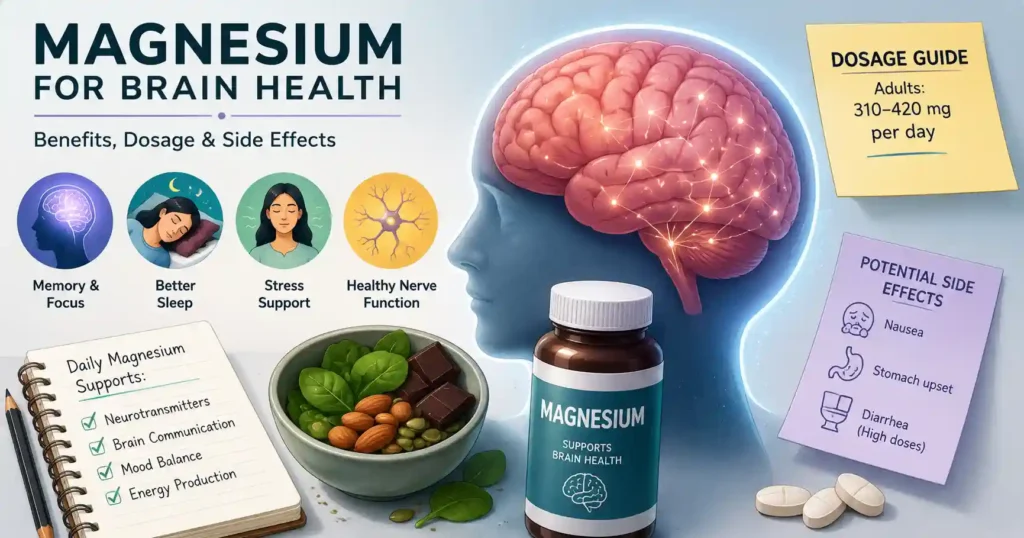
Magnesium for brain health refers to the mineral’s role in supporting nerve signaling, sleep, stress regulation, and normal cognitive function. The brain uses magnesium to help regulate neurotransmitters, synaptic activity, and communication between nerve cells. Current research also suggests magnesium status may influence memory, mood, sleep quality, and age-related cognitive decline.
A lot of wellness content treats magnesium like a miracle “brain booster.” The actual research is more nuanced than that. Magnesium matters for the brain, but the biggest benefits usually happen in people who are deficient, sleep-deprived, chronically stressed, older, or dealing with poor diet quality.
What Does Magnesium Do for the Brain?
Magnesium helps regulate communication between brain cells. It affects neurotransmitters, nerve signaling, and something called synaptic plasticity, which is the brain’s ability to adapt and form connections.
One of magnesium’s most important jobs involves the NMDA receptor, which helps control learning and memory processes. Too much NMDA activity can overstimulate neurons. Magnesium acts almost like a gatekeeper here. It helps regulate that activity instead of letting nerve cells fire uncontrollably.
Research also links magnesium to:
- Sleep quality
- Stress response
- Mood regulation
- Nerve function
- Energy production inside brain cells
That last part gets overlooked constantly. Brain cells burn massive amounts of energy. Magnesium helps support mitochondrial function, which is partly why deficiency can sometimes feel like mental fatigue or “brain fog.”
A 2024 review published through ScienceDirect discussed magnesium’s role in neuroinflammation, oxidative stress, and neuronal signaling in aging and neurological health.
Still, people constantly overstate the evidence online. There is a difference between:
- supporting normal brain function
- dramatically enhancing cognition in healthy adults
Those are not the same thing.
Quick Takeaway: Magnesium supports normal nerve signaling, sleep, stress regulation, and brain cell function, but evidence for major “brain enhancement” effects in healthy people remains limited.
Does Magnesium Affect Cognitive Health?
Yes, magnesium appears to affect cognitive health, especially when deficiency is present.
Low magnesium intake has been associated with:
- Poor sleep
- Higher stress levels
- Fatigue
- Reduced concentration
- Mood changes
Some observational studies have linked lower magnesium levels with increased risk of cognitive decline in older adults. But observational research cannot prove cause and effect. People with healthier diets often have healthier lifestyles overall.
That matters. A lot of articles skip that distinction entirely.
Current evidence is strongest in these areas:
| Area | Evidence Strength |
|---|---|
| Magnesium deficiency affects brain function | Strong |
| Sleep support | Moderate-to-strong |
| Stress regulation | Moderate |
| Migraine support | Moderate |
| Direct memory enhancement in healthy adults | Weak-to-mixed |
| Dementia prevention | Limited |
One reason magnesium gets tied to “brain health” is that better sleep and lower stress can indirectly improve mental performance. Some people interpret that as direct cognitive enhancement.
Sometimes it is. Sometimes it isn’t. The NIH Office of Dietary Supplements notes that magnesium is involved in hundreds of enzymatic reactions throughout the body, including nerve and muscle function.
As of 2026, research suggests that magnesium status matters more than megadosing magnesium supplements. If someone already has adequate intake, taking large doses may not suddenly improve focus or memory.
What Is the Best Magnesium for Brain Health?
Different magnesium forms behave differently in the body. No single form is “best” for everyone.
Here are the most common forms associated with brain-related benefits:
| Magnesium Type | Common Use | Notes |
|---|---|---|
| Magnesium Glycinate | Stress, sleep | Gentle on the stomach, commonly used at night |
| Magnesium L-Threonate | Memory and cognition | Marketed for brain penetration, evidence is still developing |
| Magnesium Citrate | Constipation + general supplementation | Better absorption than oxide, but may cause diarrhea |
| Magnesium Oxide | Cheap supplementation | Poor absorption |
| Magnesium Taurate | Cardiovascular + calming support | Less research available |
The internet has become obsessed with magnesium L-threonate because early animal research suggested it may raise magnesium levels in the brain more effectively.
That does not automatically mean it transforms memory in humans. Human studies are still relatively limited and often small. Some findings are promising, particularly in older adults with cognitive complaints, but this is nowhere near the level of evidence many supplement marketers imply.
For many people, magnesium glycinate is the more practical option because:
- It is widely tolerated
- Commonly used for sleep and relaxation
- Less likely to cause digestive problems
Meanwhile, magnesium oxide keeps showing up in cheap supplements because it costs less, not because it works better.
Quick Takeaway: Magnesium glycinate is often preferred for sleep and stress support, while magnesium L-threonate is more researched for cognition but still lacks strong long-term human evidence.





Magnesium Glycinate vs Magnesium L-Threonate
This comparison deserves its own section because most readers searching for “best magnesium for brain health” eventually land here.
Magnesium Glycinate
Magnesium glycinate combines magnesium with glycine, an amino acid associated with calming effects.
People usually choose it for:
- sleep support
- stress management
- muscle relaxation
- long-term supplementation
It is also less likely to trigger diarrhea compared to citrate.
Magnesium L-Threonate
Magnesium L-threonate was specifically developed to improve magnesium delivery to the brain potentially.
Some small studies suggest it may support:
- working memory
- attention
- cognitive processing in older adults
But the evidence is still early.
L-threonate supplements often contain less elemental magnesium than other forms.1A Magtein®, Magnesium L-Threonate -Based Formula Improves Brain Cognitive Functions in Healthy Chinese Adults, NIH. People see a fancy name and assume they are getting more magnesium overall. Often they are not.
That nuance matters.
If your primary issue is:
- stress
- poor sleep
- tension
- nighttime restlessness
…glycinate may honestly make more practical sense.
If the focus is:
- age-related memory concerns
- experimental cognitive support
- targeted nootropic use
…L-threonate is the more researched option, even if evidence remains mixed.
What Does Current Research Say About Magnesium and Memory?
Research on magnesium and memory is promising but inconsistent.
Some studies suggest magnesium supplementation may help certain groups:
- older adults
- people with inadequate intake
- individuals with sleep issues
- people under chronic stress
But results are not universally strong.
A review in the journal Nutrients discussed magnesium’s role in neuroprotection, inflammation control, and synaptic signaling.2Neuroprotective effects of magnesium: implications for neuroinflammation and cognitive decline, NIH.
Researchers noted that magnesium deficiency may contribute to neurological dysfunction, though clinical supplementation results remain inconsistent across populations.3Magnesium: Health Effects, Deficiency Burden, and Future Public Health Directions, https://doi.org/10.3390/nu17223626
This inconsistency is exactly what many commercial articles avoid discussing.
Here is the uncomfortable reality: If someone sleeps 5 hours nightly, eats poorly, drinks heavily, and barely exercises, magnesium alone will not “fix brain health.”
Supplements work best when they solve an actual deficiency or support a broader lifestyle change.
Reddit discussions about magnesium for brain health reflect this, too. Many users report:
- better sleep
- calmer mood
- less nighttime anxiety
Far fewer report dramatic memory transformation. That pattern actually aligns reasonably well with current research.
Quick Takeaway: Current evidence supports magnesium’s role in normal neurological function, but claims about major memory enhancement remain ahead of the science.
How Much Magnesium Should You Take for Brain Health?
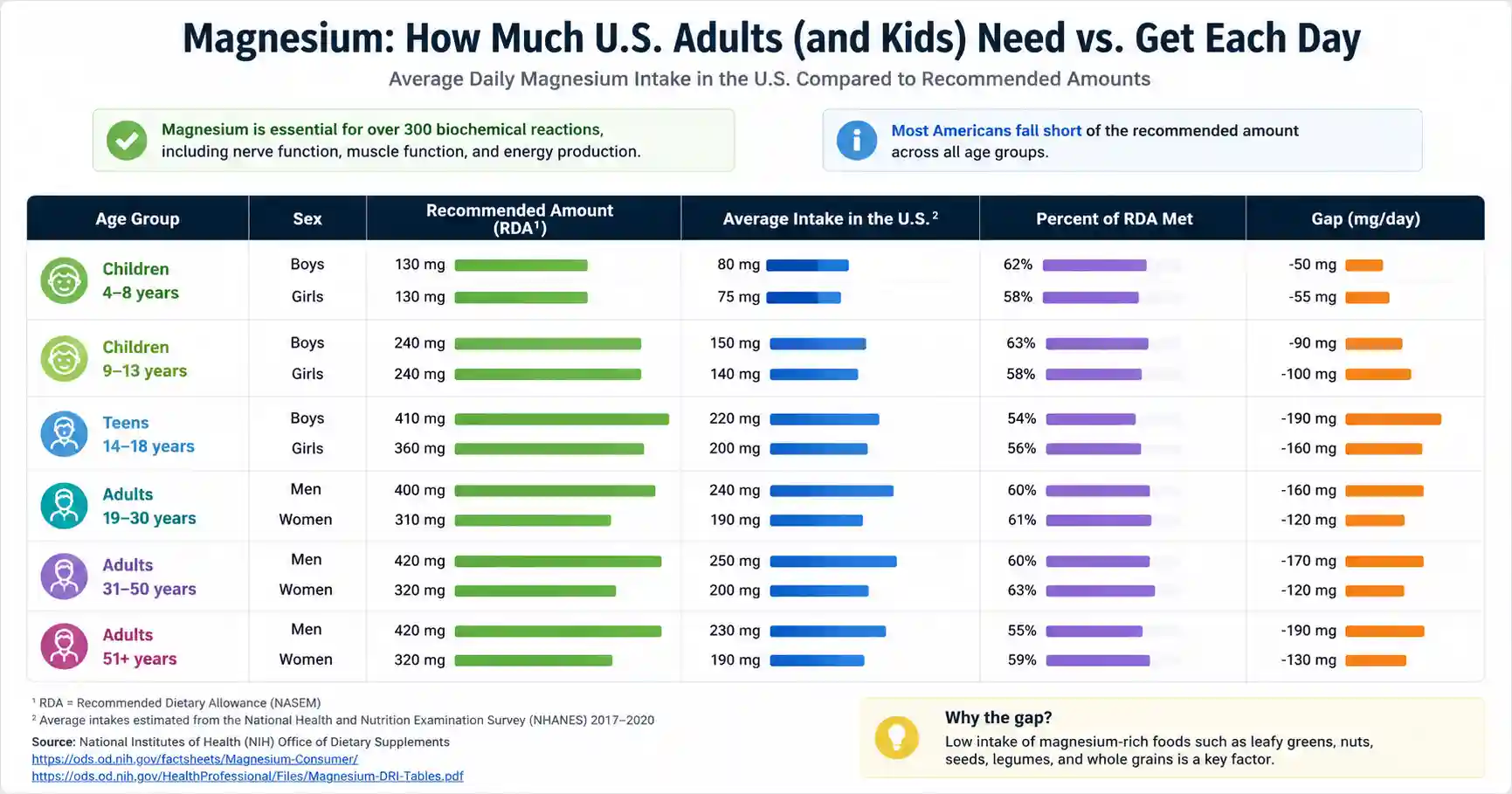
The recommended dietary allowance (RDA) for magnesium depends on age and sex.
For most adults:
- Men: around 400–420 mg daily
- Women: around 310–320 mg daily
Not all of this needs to come from supplements.
Foods high in magnesium include:
- Pumpkin seeds
- Spinach
- Almonds
- Black beans
- Dark chocolate
- Avocados
Supplement doses commonly range from:
- 100–350 mg daily
Higher doses increase the risk of digestive side effects. The tolerable upper intake level from supplements alone is generally considered around 350 mg daily for adults unless medically supervised.
One mistake people make: taking massive doses because they assume “more magnesium = more brain power.”
Biology rarely works that cleanly.
What Are the Side Effects of Magnesium Supplements?
Most magnesium side effects involve digestion.
Common side effects include:
- diarrhea
- nausea
- stomach cramps
- bloating
Magnesium citrate and oxide are more likely to cause GI issues. People with kidney disease should be especially careful, as impaired kidneys may struggle to properly clear excess magnesium.
Extremely high magnesium levels can become dangerous, though this is uncommon from standard supplementation alone.
Signs of excessive magnesium may include:
- low blood pressure
- weakness
- irregular heartbeat
- confusion
This is another area where supplement marketing gets reckless sometimes. “Natural” does not automatically mean harmless.
Why Magnesium Deficiency Can Feel Like Brain Fog
Magnesium deficiency affects multiple systems at once:
- sleep
- stress response
- muscle function
- nerve signaling
- energy production
That combination can absolutely feel like mental exhaustion.
Early deficiency symptoms may include:
- fatigue
- irritability
- poor sleep
- headaches
- reduced concentration
But “brain fog” itself is vague. It can also stem from:
- sleep deprivation
- depression
- medication effects
- thyroid issues
- poor diet
- chronic stress
Some people assume magnesium deficiency because TikTok told them to. That is not a diagnosis. Still, dietary magnesium intake in the US is often lower than ideal, especially in older adults and on highly processed diets.
FAQs
How does magnesium help the brain?
Magnesium helps regulate neurotransmitters, nerve signaling, and synaptic activity inside the brain. It also supports sleep quality and stress regulation, which can indirectly affect concentration and cognitive performance. Research suggests magnesium deficiency may impair neurological function, though supplementation effects vary between individuals.
What is the best magnesium for brain health?
Magnesium glycinate and magnesium L-threonate are the forms most commonly discussed for brain health. Glycinate is widely used for sleep and stress support, while L-threonate is researched more specifically for cognition and memory. Evidence for L-threonate is still developing and not universally conclusive.
Does magnesium affect cognitive health?
Magnesium appears to influence cognitive health through nerve signaling, sleep quality, inflammation control, and energy metabolism. Research links deficiency with poorer neurological function, but supplementation does not guarantee major cognitive improvement in healthy adults with adequate magnesium intake already.
Can magnesium help with memory loss?
Some studies suggest magnesium may support memory function in older adults or people with low magnesium intake. However, current evidence is mixed, and magnesium should not be viewed as a standalone treatment for memory disorders or dementia-related conditions.
What are the side effects of magnesium supplements?
The most common magnesium supplement side effects are digestive, especially diarrhea and stomach discomfort. Magnesium citrate and oxide are more likely to cause GI symptoms. Very high magnesium intake may become dangerous in people with kidney disease or impaired magnesium clearance.
Scientific References
- 1
- 2
- 3Magnesium: Health Effects, Deficiency Burden, and Future Public Health Directions, https://doi.org/10.3390/nu17223626 ↩︎
