

Blood pressure changes hour by hour, so when you measure it matters as much as how you measure it. For most people, the best time is in the morning before taking medications or drinking coffee, and again in the evening. A single reading is just one snapshot, and it is normal for numbers to shift throughout the day.
When To Take Blood Pressure for the Most Reliable Reading
Morning and evening are the two windows most clinicians point to. The reason is practical: these are the times people can measure consistently, day after day, under similar conditions.
Morning readings should be taken before you eat breakfast, before caffeine, before smoking, and before any blood pressure medication. Evening readings should be taken before dinner or at least a couple of hours after eating, and before any evening medication dose.
Why does timing matter so much? Blood pressure follows a daily rhythm. It tends to be higher in the morning as your body wakes up and lower in the evening. For most people, blood pressure drops during sleep, a pattern called nocturnal dipping. If you measure at random times each day, you are comparing apples to oranges, and the numbers become hard to interpret.
Taking readings at roughly the same times each day gives you and your doctor a consistent picture. That is more useful than any single measurement.
How Should You Sit and Prepare Before Measuring?
Position and preparation affect readings by amounts that matter. A few simple steps make the difference between a usable number and a misleading one.
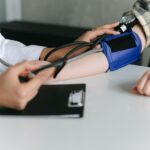
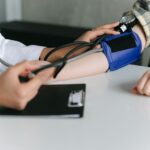
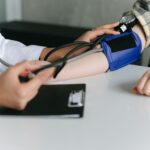
Sit quietly for about five minutes before the first reading. During that time, do not talk, scroll on your phone, or move around. Sit in a chair with your back supported, both feet flat on the floor, and legs uncrossed. Rest your arm on a table so the cuff sits at roughly heart level. If your arm is hanging down or held too high, the reading shifts.
Roll up your sleeve or wear short sleeves. A cuff over thick fabric can affect the result. Use the correct cuff size for your arm. A cuff that is too small tends to read high, and one that is too large tends to read low. If you are unsure which size fits, ask your pharmacist or doctor to check.
Empty your bladder first. A full bladder can raise a reading. Avoid caffeine, smoking, and exercise for at least 30 minutes beforehand. These all push blood pressure up temporarily.
Take two or three readings one minute apart and average them. The first reading is often the highest, and averaging gives a more stable estimate.
What Numbers Should You Expect?
A normal resting blood pressure for most adults is below 120/80 mmHg. The top number is systolic pressure, the force when your heart contracts. The bottom number is diastolic pressure, the pressure between beats when your heart relaxes and refills.
Categories help put a single number in context. These thresholds come from widely used clinical guidelines.
| Category | Systolic (mmHg) | Diastolic (mmHg) |
|---|---|---|
| Normal | Below 120 | Below 80 |
| Elevated | 120–129 | Below 80 |
| Stage 1 hypertension | 130–139 | 80–89 |
| Stage 2 hypertension | 140 or higher | 90 or higher |
These are general reference ranges for adults. A single high reading does not mean you have high blood pressure. Diagnosis usually requires multiple elevated readings over time, often confirmed with measurements taken at home or with a 24-hour monitor.
One thing people often miss: readings taken at home tend to run slightly lower than readings taken in a clinic. This is not a flaw in your monitor. Being in a medical setting can raise blood pressure for some people, a pattern known as white coat hypertension. The reverse also happens, where blood pressure is normal in the clinic but high at home. Home monitoring can catch patterns that a single office visit misses.
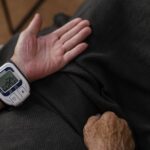
Does It Matter Which Arm You Use?
Use the same arm each time so your readings are comparable. For a first measurement, many clinicians check both arms. A small difference between arms is common and usually not concerning.
If the difference is consistently large, mention it to your doctor. A meaningful and repeated difference between arms can sometimes point to a vascular issue, so it is worth having checked rather than ignored.
How Often Should You Check Your Blood Pressure?
How often you measure depends on why you are measuring. There is no single schedule that fits everyone.
- If your blood pressure is normal and you have no related conditions, occasional checks are generally enough.
- If you have high blood pressure, your doctor may ask for regular home readings to track how well treatment is working.
- If you recently started or changed a blood pressure medication, more frequent readings are often helpful in the first weeks.
Follow the schedule your doctor gives you. If you do not have one, ask. The value of home monitoring comes from a series of readings taken the same way over time, not from checking constantly.
Keep a simple log with the date, time, and both numbers. Bring it to appointments. A written record is far more useful than trying to remember numbers from weeks ago.
What Can Throw Off a Reading?
Many everyday things push blood pressure up or down for a short time. Knowing them helps you avoid misreading a normal fluctuation as a problem.
Things that can raise a reading include caffeine, nicotine, recent exercise, stress, a full bladder, talking during the measurement, and a cuff that is too small. Cold temperatures can also raise it. Pain and illness can do the same.
Things that can lower a reading include resting for a while, a recent meal, dehydration, and some medications. Blood pressure also tends to be lower in the evening for many people.
Because of all these factors, do not react to any single reading. One high number is not a diagnosis. One low number is not automatically a problem either. Look at the pattern over days and weeks.
If you get a reading that seems far outside your usual range, especially if you feel unwell, do not ignore it. Very high readings combined with symptoms such as chest pain, severe headache, shortness of breath, or vision changes need urgent medical attention.
Which Monitor Should You Use?
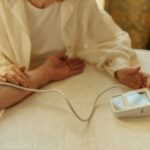
An automatic upper-arm monitor is generally the most reliable option for home use. Wrist and finger monitors are more sensitive to position and tend to be less accurate, so they are usually not recommended for home tracking.
Look for a monitor that has been validated for accuracy. Many countries keep lists of validated devices, and your pharmacist can often point you to one. Bring your monitor to a doctor’s visit once so you can compare its reading against a clinic measurement. This confirms your device is working correctly.
Replace the cuff and tubing if they become damaged, and follow the manufacturer’s guidance on calibration. A monitor that reads consistently off by a fixed amount will mislead you over time.
Why Timing and Consistency Matter More Than Any Single Number
Blood pressure is not a fixed value. It is a moving target that responds to your body’s rhythms, your activity, and your environment. That is why the goal of home monitoring is not to find one perfect number, but to build a trustworthy pattern.
Measure at consistent times, in a consistent position, with a consistent device. Average your readings. Write them down. Then let your doctor interpret the trend. This approach gives a far clearer picture than any single measurement taken at a random moment.
Frequently Asked Questions
What is the best time of day to take blood pressure?
Morning, before medications, food, caffeine, or smoking, and again in the evening are the two most useful windows. Measuring at the same times each day gives the most consistent and interpretable results.
Should I take blood pressure before or after eating?
Take it before eating, or wait at least 30 minutes after a meal. Digestion and the timing of meals can shift readings, so measuring on an empty stomach keeps things consistent.
Can I take my blood pressure right after waking up?
Yes, but sit quietly for about five minutes first. Measuring immediately after waking, while still lying down or rushing around, tends to give a less reliable number.
How many times should I take my blood pressure in one sitting?
Take two or three readings about one minute apart and average them. The first reading is often the highest, so averaging gives a more stable estimate.
