
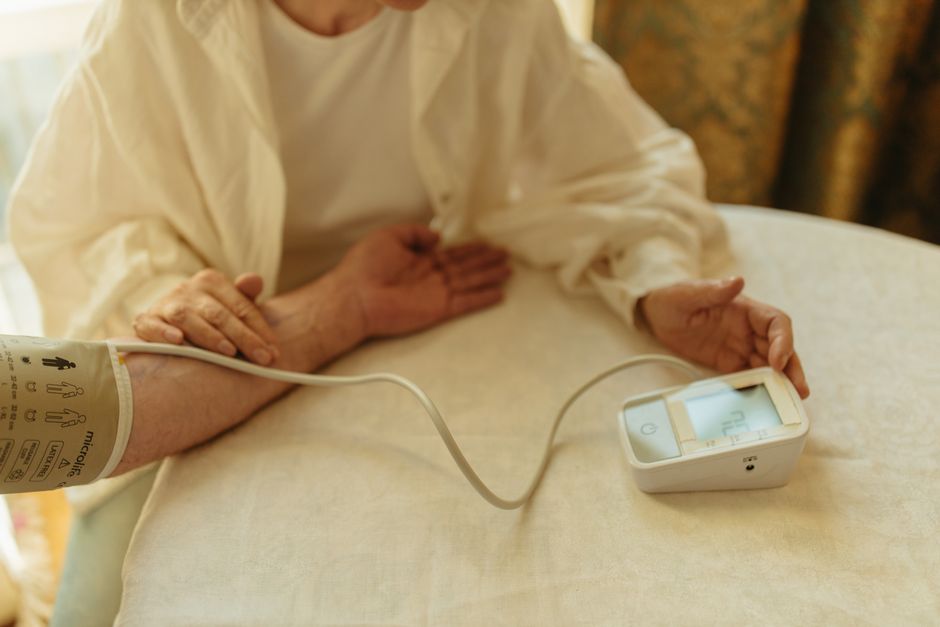
Reading a blood pressure cuff is mostly about knowing which number is which and getting a clean measurement in the first place. The top number is systolic pressure, the force in your arteries when your heart beats. The bottom number is diastolic pressure, the pressure that remains between beats. If your reading is 120/80, the 120 is systolic and the 80 is diastolic, measured in millimeters of mercury (mm Hg).
Getting those numbers right depends less on the device and more on how you sit, where the cuff sits, and how still you are. A cuff that is the wrong size or a few inches off can shift your reading enough to matter. This guide covers how to read the numbers, what they mean, and the mistakes that quietly change your results.
What Do the Two Numbers on a Blood Pressure Cuff Mean?
The two numbers measure two different phases of your heartbeat, and they are not interchangeable. Systolic pressure, the top number, reflects the peak force when your heart contracts and pushes blood out. Diastolic pressure, the bottom number, reflects the resting pressure in your arteries while your heart refills between beats.
Both numbers carry information. A high systolic reading points to how hard your heart is pushing against your artery walls. A high diastolic reading points to how much resistance your smaller arteries are offering between beats. Clinicians look at both, not just the top number.
On a manual cuff with a gauge, you read the numbers as the needle falls. The first tapping sound you hear through the stethoscope marks the systolic pressure. When the tapping stops, that marks the diastolic pressure. On a digital monitor, the numbers appear on the screen and you do not need to listen for sounds.
One detail people miss: the units matter. Blood pressure is measured in millimeters of mercury, written as mm Hg. That unit is a holdover from the mercury gauges still used in many clinics, but the numbers on a digital monitor mean the same thing.
What Is a Normal Blood Pressure Reading?
For most adults, a normal reading is below 120/80 mm Hg. This is the range where the heart is pushing blood without excessive force and the arteries are not under unusual strain between beats.
Blood pressure is classified into categories based on how high the numbers are. The categories below reflect the ranges widely used in US clinical practice.
| Category | Systolic (mm Hg) | Diastolic (mm Hg) |
|---|---|---|
| Normal | Less than 120 | Less than 80 |
| Elevated | 120–129 | Less than 80 |
| High blood pressure, stage 1 | 130–139 | 80–89 |
| High blood pressure, stage 2 | 140 or higher | 90 or higher |
| Hypertensive crisis (seek care) | Higher than 180 | Higher than 120 |
When systolic and diastolic fall into different categories, the higher category is the one that applies. A reading of 135/85, for example, counts as stage 1 because the systolic number lands there.
A single high reading does not mean you have high blood pressure. Blood pressure moves throughout the day. Clinicians generally confirm a pattern over multiple readings before making a diagnosis. If a reading is higher than 180/120 and you also have chest pain, shortness of breath, weakness, or trouble speaking, that is a medical emergency and you should seek care right away.
How Do You Position the Cuff Correctly?
The cuff goes on your bare upper arm, not over clothing and not on your forearm. Roll up your sleeve or remove your shirt so the cuff sits directly against your skin. A cuff placed over a sleeve can read higher than your true pressure.
The bottom edge of the cuff should sit about one inch above the bend of your elbow. The center of the cuff bladder should line up with the artery running down the inside of your arm. If the cuff is too low or too high, the reading can be off.
Cuff size matters more than most people realize. A cuff that is too small for your arm will give a falsely high reading. A cuff that is too large can give a falsely low one. The cuff should wrap around roughly 80 percent of your upper arm. If the velcro barely closes or the cuff feels tight before it inflates, it is probably too small.
Most home monitors come with a standard adult cuff that fits an arm circumference in the range of about 9 to 13 inches. If your arm is larger or smaller than that range, you may need a different size. Check the markings on the cuff itself or the manual that came with the device.





How Do You Take a Reading at Home Step by Step?
Preparation changes your numbers more than the device does. A few minutes of quiet rest before you measure can lower a reading by a meaningful amount compared with measuring right after activity.
- Sit quietly for five minutes before you start.
- Keep your back supported and your feet flat on the floor.
- Rest your arm on a table so the cuff is level with your heart.
- Do not talk, and do not look at your phone, during the reading.
- Avoid caffeine, exercise, and smoking for 30 minutes beforehand.
- Empty your bladder first, since a full bladder can raise the reading.
Take two or three readings about one minute apart and write them down. The average of those readings is more reliable than any single number. Measure at the same times each day so you are comparing like with like.
One thing worth knowing: your reading is often higher at the doctor’s office than at home. This is common enough that it has a name, white coat hypertension. The reverse also happens, where pressure runs higher at home than in the clinic. This is why home readings and clinic readings are often looked at together rather than in isolation.
Why Does Your Blood Pressure Reading Change So Much?
Blood pressure is not a fixed number. It shifts minute to minute with posture, stress, temperature, and even the act of having your pressure taken. A cuff that inflates can itself nudge the reading upward in some people.
Common reasons a reading comes out higher than expected include:
- Talking during the measurement
- An arm hanging below heart level
- A cuff that is too small
- A full bladder
- Caffeine or nicotine within the past 30 minutes
- Stress or anxiety about the reading itself
Because of this natural variation, one number rarely tells the whole story. A pattern over days or weeks is far more useful than a single measurement, whether it is high or normal.
Should You Use a Manual or Digital Cuff?
Digital monitors are the practical choice for most people measuring at home. They inflate on their own, show the numbers on a screen, and do not require you to hear faint sounds through a stethoscope. Manual cuffs with a gauge and stethoscope take practice and are mostly used by clinicians.
Not all home monitors are equal. Upper-arm monitors tend to be more reliable than wrist or finger monitors. Wrist devices are sensitive to position, and if your wrist is not exactly at heart level, the reading can be off. Finger monitors are generally not recommended for home use.
Validation matters. Some monitors have been tested against a standard reference and shown to be accurate, while others have not. When choosing a device, look for one that has been independently validated rather than relying on brand reputation alone.
Even a good monitor needs occasional checking. Bringing your home device to a clinic visit and comparing it against the office reading is a simple way to confirm it is still working accurately.
What If Your Numbers Do Not Match Your Symptoms?
Blood pressure often causes no symptoms at all, even when it is high. That is the main reason it is called a silent condition. Many people feel completely normal with readings well into the high range.
This cuts both ways. Feeling fine does not mean your pressure is normal, and feeling unwell does not mean your pressure is the cause. Headaches, dizziness, and nosebleeds are commonly blamed on blood pressure, but they are not reliable signs of it. If you have these symptoms, the reading itself is what tells you whether pressure is involved.
If you are tracking your own numbers and they are consistently above the normal range, that pattern is worth bringing to a clinician. Do not adjust any medication on your own based on home readings. Changes to treatment should come from the person managing your care.
Frequently Asked Questions
What is the top number and bottom number on a blood pressure cuff?
The top number is systolic pressure, the force when your heart beats, and the bottom number is diastolic pressure, the pressure between beats. A reading of 120/80 means a systolic of 120 and a diastolic of 80.
What is a normal blood pressure reading for adults?
For most adults, normal is below 120/80 mm Hg. Readings of 130/80 or higher fall into the high blood pressure range and are usually confirmed over multiple measurements.
Does the cuff size affect the reading?
Yes. A cuff that is too small can give a falsely high reading, and one that is too large can give a falsely low reading. The cuff should wrap around roughly 80 percent of your upper arm.
Can I trust a wrist blood pressure monitor?
Wrist monitors are more sensitive to position than upper-arm monitors and can be less reliable if your wrist is not exactly at heart level. Upper-arm monitors are generally preferred for home use.
