
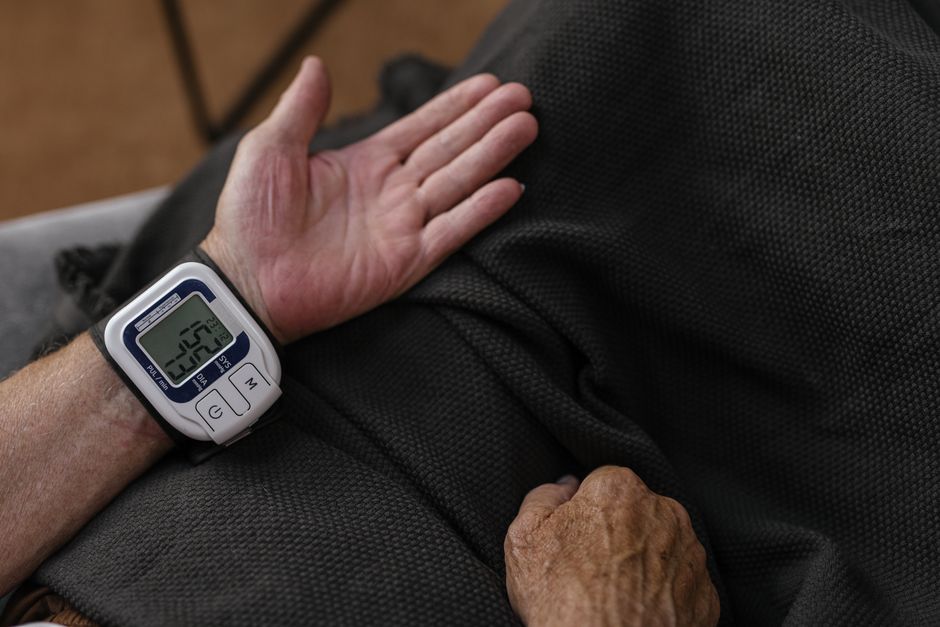
Your blood pressure reading is two numbers that describe two different moments in your heart’s work: the pressure while your heart squeezes, and the pressure while it rests between beats. A normal reading is below 120/80 mmHg. The top number is called systolic pressure and the bottom number is diastolic pressure. Both matter, and both are measured in millimeters of mercury.
That is the simple answer. What makes blood pressure worth understanding is that the numbers rarely mean anything on their own. One high reading is not a diagnosis. One perfect reading does not mean your arteries are healthy. Context decides what the numbers are telling you.
What Do the Two Numbers Actually Measure?
The top number, systolic pressure, is the peak force against your artery walls each time your heart contracts and pushes blood out. The bottom number, diastolic pressure, is the pressure that remains while your heart relaxes and refills.
Systolic pressure tends to rise with age as large arteries stiffen. Diastolic pressure often reflects the resistance in smaller blood vessels. That is why the two numbers do not always move together, and why a reading where only one number is high still deserves attention.
Blood pressure is written as systolic over diastolic. A reading of 118/76 means a systolic pressure of 118 and a diastolic pressure of 76.
What Do the Different Blood Pressure Categories Mean?
Blood pressure categories come from the American Heart Association and the American College of Cardiology. They apply to adults who are not taking blood pressure medication and who are not acutely ill.
| Category | Systolic (mmHg) | Diastolic (mmHg) | |
|---|---|---|---|
| Normal | Less than 120 | and | Less than 80 |
| Elevated | 120–129 | and | Less than 80 |
| Stage 1 hypertension | 130–139 | or | 80–89 |
| Stage 2 hypertension | 140 or higher | or | 90 or higher |
| Hypertensive crisis | Higher than 180 | and/or | Higher than 120 |
Notice the word “or” in the hypertension rows. A person with a systolic of 135 and a diastolic of 70 still falls into stage 1 hypertension because only one number needs to be elevated. This is a common point of confusion.
A reading above 180/120 is considered a hypertensive crisis. If you get a reading that high, wait five minutes and test again. If it is still that high, seek emergency medical care. If you also have chest pain, shortness of breath, numbness, weakness, trouble speaking, or vision changes, call emergency services immediately.
Why One Reading Is Never Enough
Blood pressure fluctuates constantly. It rises when you speak, when you stand, when your bladder is full, when you are stressed, and when you drink coffee. It falls when you sleep and when you relax.
Because of this natural variation, a single high reading does not mean you have high blood pressure. Diagnosis generally requires multiple elevated readings taken on separate occasions, ideally using proper technique. Many clinicians also use at-home monitoring or a 24-hour ambulatory monitor to get a fuller picture.
This is where a genuinely useful distinction comes in. There is a difference between white coat hypertension — readings that are high in a clinic but normal at home — and masked hypertension — readings that look normal in a clinic but are high during normal daily life. Both are real. Both can lead to the wrong conclusion if only one setting is measured.


How Should You Measure Blood Pressure at Home?
Home readings often reflect your true blood pressure better than a single clinic measurement, but only if you follow the technique.
- Sit quietly for five minutes before measuring.
- Keep your back supported and both feet flat on the floor.
- Rest your arm on a table so the cuff is at heart level.
- Use a cuff that fits your arm. A cuff that is too small can read falsely high.
- Do not talk during the measurement.
- Avoid caffeine, exercise, and smoking for 30 minutes beforehand.
- Empty your bladder first.
- Take two or three readings one minute apart and average them.
Measure at the same times each day, often morning and evening. Write the numbers down or store them in the device. A log is far more useful to a clinician than a single number remembered from weeks ago.
When Should You Be Concerned About a Reading?
Persistent readings in the stage 1 or stage 2 range are the main concern. Over time, sustained high blood pressure damages arteries throughout the body. It raises the risk of heart attack, stroke, heart failure, kidney disease, and vision loss. This damage usually develops silently over years, which is why high blood pressure is often called a silent condition.
Low blood pressure is a different situation. There is no single cutoff that defines it, because what is low for one person may be normal for another. A reading of 90/60 may be perfectly fine for a healthy young adult and a warning sign for someone else. What matters more is whether low readings come with symptoms such as dizziness, fainting, blurred vision, nausea, or fatigue. Symptomatic low blood pressure should be evaluated by a clinician.
Age changes the picture too. In older adults, a high systolic number with a normal diastolic number is common because arteries stiffen over time. That pattern still carries risk and still warrants medical attention.
What Actually Moves Your Blood Pressure Numbers?
Blood pressure is the product of how much blood your heart pumps and how much resistance your arteries provide. Anything that changes either factor changes your reading.
Factors that raise blood pressure include excess body weight, physical inactivity, high sodium intake, heavy alcohol use, smoking, chronic stress, poor sleep, and certain medications such as some decongestants and nonsteroidal anti-inflammatory drugs. Some of these are within your control. Some are not.
Factors that lower blood pressure include regular physical activity, a diet rich in vegetables, fruits, and whole grains, reduced sodium intake, limited alcohol, not smoking, and adequate sleep. Some people also have genetic or medical causes, such as kidney disease or hormonal conditions, that require specific treatment.
Lifestyle changes can meaningfully lower blood pressure for some people. They are also not a substitute for medication when medication is needed. The two often work together.
Does a Normal Reading Mean You Are Fine?
A normal reading is a good sign, but it is a snapshot. It tells you what your blood pressure was at that moment under those conditions.
Blood pressure tends to rise gradually with age, so a normal reading today does not guarantee a normal reading in five years. Regular monitoring is what catches a trend early, when it is easiest to address.
It is also worth knowing that blood pressure can be normal at rest and elevated during daily life. That is the masked hypertension pattern mentioned earlier. If your clinic readings are consistently normal but you have risk factors or symptoms, it may be worth discussing home monitoring with a clinician.
What Should You Do With Your Numbers?
Track them. Bring your log to medical appointments. Ask what your target range should be, because it can differ based on age and other health conditions.
If your readings are consistently in the elevated or hypertension range, that is a conversation to have with a clinician rather than something to manage on your own. If they are normal, keep monitoring periodically. Blood pressure is one of the few major health risks you can measure at home, for free, in under five minutes.
Frequently Asked Questions
What is a dangerously high blood pressure reading?
A reading higher than 180/120 mmHg is considered a hypertensive crisis. If a repeat reading five minutes later is still that high, seek emergency care, and call emergency services immediately if you also have chest pain, shortness of breath, numbness, weakness, or vision changes.
Can one high blood pressure reading mean I have hypertension?
No. A single high reading is not a diagnosis because blood pressure naturally fluctuates throughout the day. Diagnosis generally requires multiple elevated readings on separate occasions, often confirmed with at-home or 24-hour monitoring.
Which number is more important, systolic or diastolic?
Both matter, and either one being elevated can indicate a problem. After about age 50, systolic pressure tends to be the stronger predictor of cardiovascular risk, but diastolic pressure still carries important information at every age.
Can blood pressure be high at the doctor’s office but normal at home?
Yes. This pattern is called white coat hypertension, and it is common. The reverse also happens, where readings look normal in a clinic but are elevated during daily life, which is called masked hypertension.
