
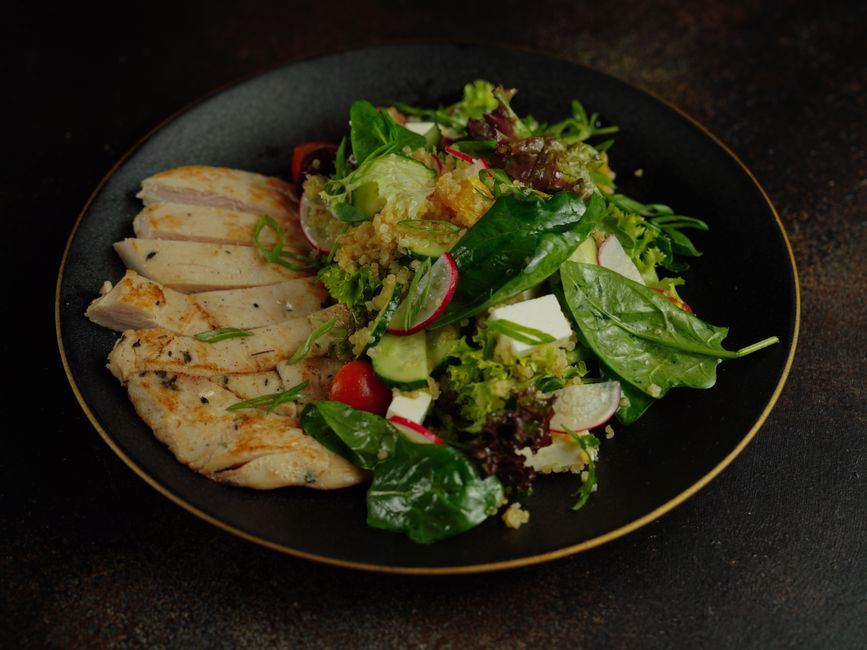
Chicken needs to reach 165°F in the oven. That is the internal temperature, not the oven setting. The oven itself should be set to 350°F to 425°F depending on the cut and the recipe. A whole roasted chicken typically does well at 375°F to 425°F. Boneless breasts and thighs usually work at 375°F to 400°F. The number that matters most is the one you read on a meat thermometer, not the dial on your oven.
Many people confuse oven temperature with doneness temperature. They are two different things. The oven setting controls how fast and how evenly the meat cooks. The internal temperature tells you when the chicken is safe to eat. Getting both right is what produces chicken that is fully cooked without being dry.
What Temp To Cook Chicken In Oven?
The oven temperature depends on the cut. The internal temperature does not. All chicken — white meat, dark meat, ground chicken, whole birds — must reach 165°F internally to be considered safely cooked.
Here is how common cuts are usually handled:
- Whole chicken (3–4 lbs): Oven at 375°F to 425°F. Roast until the breast and thigh both hit 165°F. This often takes 1 hour 15 minutes to 1 hour 45 minutes, but time is a rough guide only. Use a thermometer.
- Boneless, skinless breasts: Oven at 375°F to 400°F. Cook until the thickest part reads 165°F. This commonly takes 20 to 30 minutes depending on thickness.
- Bone-in thighs and legs: Oven at 375°F to 400°F. Dark meat is more forgiving and some cooks prefer it cooked to a slightly higher internal temperature for texture, but 165°F is the safety minimum.
- Chicken wings: Oven at 400°F to 425°F. Cook until 165°F at the thickest part, away from bone.
- Ground chicken or chicken meatloaf: Oven at 350°F to 375°F. Must reach 165°F throughout.
The 165°F figure comes from food safety guidance established by the USDA. It reflects the temperature at which Salmonella and other common bacteria are killed almost instantly. That instant-kill standard is why 165°F is the number to remember.
Why Is 165°F The Magic Number for Chicken?
Bacteria like Salmonella and Campylobacter are common on raw poultry. Cooking kills them. The relationship between temperature and time is what determines safety.
At 165°F, these bacteria are destroyed almost immediately. At lower temperatures, they can also be killed, but only if the meat stays at that temperature for a longer period. For example, chicken held at 150°F for several minutes can reach the same level of safety. This is sometimes called pasteurization by time and temperature.
Home cooks are not usually set up to hold chicken at a precise lower temperature for a measured time. That is why public health guidance points to 165°F. It is a simple, reliable target that works without special equipment.
One detail people miss: the thermometer must be inserted into the thickest part of the meat, avoiding bone and fat. Bone conducts heat differently and can give a false reading. Check more than one spot, especially on a whole bird.
Does the Oven Temperature Change How the Chicken Turns Out?
Yes. Oven temperature affects texture, browning, and how evenly the meat cooks. It does not change the internal temperature the chicken must reach.
A higher oven temperature — 400°F to 425°F — produces crisper skin and faster cooking. It also raises the risk of the outside browning before the inside is done. A lower oven temperature — 325°F to 350°F — cooks more gently and can keep lean white meat moister, but it takes longer and may not brown the skin well.
For whole birds, many cooks start at a higher temperature to brown the skin, then reduce the heat. Others roast at a steady 375°F the whole time. Both approaches work as long as the internal temperature reaches 165°F.
Convection ovens run hotter and faster than conventional ovens. If your oven has a convection setting, you may need to reduce the temperature by about 25°F from what a standard recipe calls for. Check the manufacturer’s guidance for your specific oven.





How Do You Know When Chicken Is Done Without a Thermometer?
You do not, reliably. Visual cues and clear juices are not safe indicators of doneness.
Many people rely on the color of the meat or the clarity of the juices. These signs can be misleading. Chicken can look white and still harbor bacteria. Juices can run clear before the meat is fully cooked. The only dependable way to confirm safety is a food thermometer.
If you do not own one, a basic instant-read thermometer costs very little and is one of the most useful tools in a kitchen. It removes the guesswork from cooking poultry, pork, and ground meats.
Some people also worry about slightly pink meat near the bone. In young chickens, this pinkness can come from the bone marrow and is not necessarily a sign of undercooking. The thermometer reading is what settles the question.
What Happens If You Cook Chicken to the Wrong Temperature?
Undercooking chicken is a genuine food safety risk. Salmonella and Campylobacter infections cause diarrhea, fever, and stomach cramps. Most people recover without treatment, but some cases are severe, especially in young children, older adults, pregnant women, and people with weakened immune systems.
The CDC estimates that Salmonella causes a substantial number of foodborne illnesses in the United States each year. Poultry is a common source. Proper cooking is one of the most effective ways to prevent infection at home.
Overcooking is not a safety issue, but it is a quality issue. Chicken cooked well past 165°F becomes dry and tough, especially lean breast meat. Pulling the chicken from the oven as soon as it reaches 165°F helps preserve moisture.
Resting the meat for a few minutes after it comes out of the oven allows the juices to redistribute. During this rest, the internal temperature often rises a few degrees. This carryover cooking means you can pull the chicken at exactly 165°F and it will stay safe.
Does the Type of Chicken Change the Target Temperature?
No. Whether it is a whole roaster, a package of thighs, or ground chicken, the safety target is the same 165°F. What changes is the oven temperature and the cooking time.
Dark meat has more connective tissue and fat. It tolerates longer cooking and higher internal temperatures without drying out. Some cooks prefer thighs cooked to 175°F or higher for a more tender texture, but this is a preference, not a safety requirement.
White meat is leaner and dries out faster. It benefits from being pulled close to 165°F and not overcooked. This is why spatchcocking — removing the backbone and flattening the bird — is popular. It helps the breast and thighs cook more evenly so the white meat does not dry out while waiting for the dark meat to finish.
Ground chicken is a special case. Bacteria that live on the surface of whole cuts get mixed throughout during grinding. That means the entire portion must reach 165°F, not just the outside. The same applies to chicken sausages and patties.
Common Mistakes When Cooking Chicken in the Oven
Several habits lead to undercooked or overcooked chicken. Knowing them helps.
- Trusting the pop-up timer. These devices are not always accurate. Use a separate thermometer to confirm.
- Checking the temperature too early. Opening the oven repeatedly lets heat escape and extends cooking time. Wait until the chicken is close to done based on time estimates.
- Measuring near the bone. Bone heats differently and can give a false low or high reading. Aim for the thickest part of the meat.
- Not letting the chicken rest. Resting helps the juices settle and the temperature equalize.
- Assuming clear juices mean safe. They do not. Only a thermometer confirms doneness.
Cooking chicken safely is not complicated. Set the oven to the right temperature for your cut. Cook until the thickest part reads 165°F. Let it rest. That is the whole process.
Frequently Asked Questions
What temperature should I set the oven to for chicken?
Most recipes use 375°F to 425°F for whole chickens and 375°F to 400°F for pieces. The oven setting affects browning and timing, but the chicken must always reach 165°F internally.
Is 165°F really necessary for chicken?
Yes. The USDA set 165°F as the temperature at which common bacteria like Salmonella are killed almost instantly. Lower temperatures can work with longer holding times, but 165°F is the simple, reliable standard for home cooking.
Can I cook chicken at 350°F instead of 400°F?
Yes. A 350°F oven cooks chicken more gently and may keep lean white meat moister, but it takes longer. The chicken still needs to reach 165°F internally regardless of the oven setting.
How long does chicken take to cook in the oven?
Time varies widely by cut, thickness, and oven temperature, so it is not a reliable way to judge doneness. A whole chicken often takes over an hour, while boneless breasts may take 20 to 30 minutes. Always confirm with a thermometer.
