
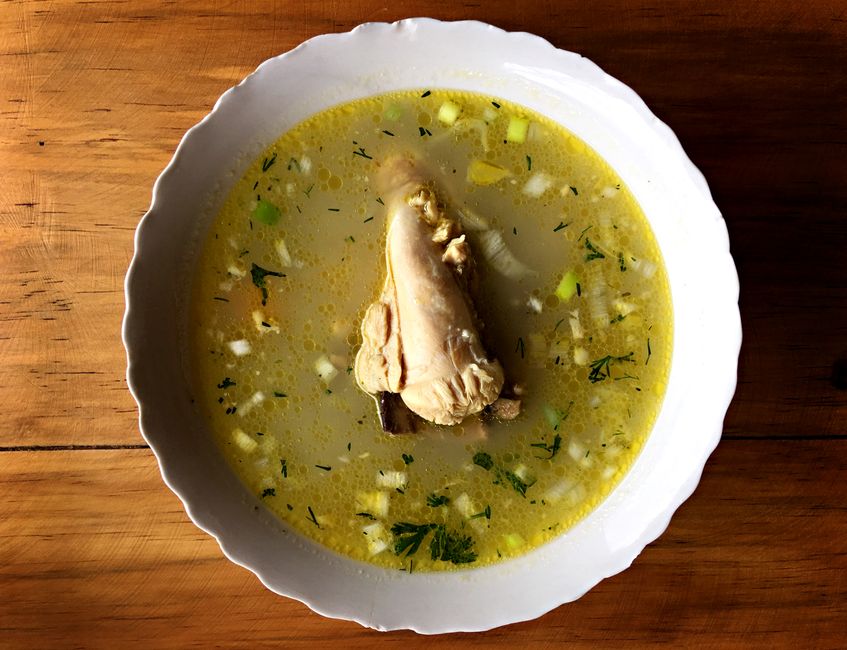
Chicken broth contains very little protein. A typical cup of homemade or store-bought broth has roughly 1 to 3 grams, and some clear broths have less than 1 gram. That is far less than the 20 to 30 grams in a single chicken breast. Broth is mostly water, and the protein it does contain comes from collagen and other compounds that leach out of bones and connective tissue during long simmering.
If you are drinking broth mainly for protein, the numbers matter. This article breaks down what is actually in the bowl, why the protein content is so low, and what to look for on a label if protein is your goal.
How Much Protein Is in a Cup of Chicken Broth?
Most chicken broth falls in the range of 1 to 3 grams of protein per cup. Boxed and canned broths sold in US grocery stores commonly list 1 gram or less per cup on the Nutrition Facts panel. Homemade broth simmered for hours from bones may land somewhat higher, but rarely above a few grams per cup.
To put that in context:
- One cup of chicken broth: about 1 to 3 grams of protein
- One large egg: about 6 grams
- One cup of whole milk: about 8 grams
- Three ounces of cooked chicken breast: about 26 grams
The gap is not small. You would need to drink several cups of broth to match a single egg, and many cups to match a modest serving of meat. Broth is a warm, hydrating, low-calorie liquid. It is not a protein source in any practical sense.
Why Does Chicken Broth Have So Little Protein?
Protein does not dissolve easily in water. When you simmer chicken bones, meat, and skin, what leaches into the liquid is mostly water-soluble material: minerals, some amino acids, gelatin from collagen, and flavor compounds. The bulk of the actual muscle protein stays in the meat.
Collagen from bones and connective tissue does break down into gelatin during long cooking, and gelatin is a protein. But the amount that ends up in the liquid is small relative to the volume of water. A pot of broth might contain several quarts of water with only a few grams of dissolved protein per cup.
This is also why broth does not thicken much on its own. Gelatin needs concentration to set into a gel. A broth that gels in the refrigerator has more dissolved collagen than one that stays liquid, but even a gelled broth is still mostly water by weight.
Does Bone Broth Have More Protein Than Regular Broth?
Bone broth is usually simmered longer and may use more bones, so it often has slightly more protein than a quick stock. But the difference is modest. Many commercial bone broths list 8 to 10 grams of protein per cup, while standard broths list 1 to 2 grams.
That higher number is worth reading carefully. Some bone broth products add extra protein from sources like collagen peptides or added gelatin to boost the label number. That is not the same as protein naturally extracted from bones. Check the ingredient list: if collagen peptides, gelatin, or protein isolate appear, the protein is fortified, not inherent to the bones.
Even at 8 to 10 grams per cup, bone broth is still a light protein source compared to meat, eggs, dairy, or legumes. It can contribute to daily intake, but it will not carry it.
What About the Collagen in Broth?
The protein in broth is largely collagen and gelatin, not the complete protein found in muscle meat. Collagen is low in one essential amino acid, tryptophan, and lacks enough of another, cysteine, to be considered a complete protein on its own.
That does not make it useless. Collagen provides glycine and proline, amino acids the body uses for connective tissue. But the body can make glycine and proline itself, and it does not require dietary collagen to do so.
Claims that broth collagen rebuilds joints, skin, or gut lining are not well supported by large human trials. Some small studies on collagen supplements suggest possible effects on skin elasticity or joint discomfort, but those studies used concentrated collagen peptides, not broth. The amounts in a cup of broth are far lower than what those studies used. No clinical evidence currently confirms that drinking broth produces those same effects.
How to Read a Chicken Broth Label for Protein
The Nutrition Facts panel is the fastest way to know what you are getting. Look at the protein line and note the serving size, which is usually 1 cup. Then check the ingredients.
A short ingredient list — chicken, water, salt, maybe vegetables and herbs — tells you the protein is coming from the chicken itself. A longer list with collagen, gelatin, yeast extract, or protein isolates means some of the protein is added.
Watch for these label details:
- Serving size: Some brands list a smaller serving, which makes the protein number look lower or higher than expected per cup.
- Sodium: Broth can be high in sodium. Regular broths often have several hundred milligrams per cup. Low-sodium versions exist if that matters for you.
- “Bone broth” vs. “broth”: These terms are not tightly regulated, so the protein content varies widely between brands.
- Added protein: Collagen peptides or gelatin boost the number on the label without changing what the bones contributed.
If protein is your goal, the label is more reliable than the name on the carton.
When Broth Protein Actually Matters
There are situations where the small amount of protein in broth is meaningful. During illness or recovery, when appetite is low, broth can be one of the few things a person tolerates. In those cases, even 1 to 3 grams per cup adds up over several servings and contributes to hydration and comfort.
Broth also matters for people following very low-calorie or liquid diets, where every gram counts. And it can help someone who struggles to eat solid food meet a minimum intake.
For most healthy adults, though, broth is a minor player. The daily protein target for a typical adult is roughly 0.8 grams per kilogram of body weight, which works out to around 50 to 60 grams per day for many people. Athletes and older adults often need more. A cup of broth covers a small fraction of that.
If you are trying to hit a protein target, build meals around eggs, poultry, fish, dairy, beans, lentils, tofu, or Greek yogurt. Broth can round out a meal or add flavor and moisture to soups and grains. It is not the foundation.
Is Drinking Broth for Protein Worth It?
Broth is worth drinking for what it is: a warm, hydrating, low-calorie liquid that can be soothing and flavorful. It is not worth drinking as a primary protein strategy.
The evidence for broth as a protein source is straightforward — the amount is small. The evidence for broth as a joint, skin, or gut remedy is weak or absent in large human trials. Some people find broth comforting when they are sick, which is a real benefit even if it is not a nutritional one.
If you enjoy broth, keep enjoying it. Just do not count on it to meet your protein needs. Pair it with foods that actually deliver.
Frequently Asked Questions
How much protein is in one cup of chicken broth?
Most chicken broth has about 1 to 3 grams of protein per cup. Some commercial bone broths list 8 to 10 grams, but that often includes added collagen or gelatin.
Is bone broth a good source of protein?
Bone broth has more protein than standard broth but still far less than meat, eggs, or dairy per serving. It can contribute to daily intake but cannot carry it.
Does chicken broth have complete protein?
No. The protein in broth is mostly collagen and gelatin, which are low in certain essential amino acids and do not qualify as complete protein.
Can I meet my protein needs with broth alone?
No. Meeting daily protein needs from broth alone would require drinking an impractical number of cups, and the protein would still be incomplete.
