
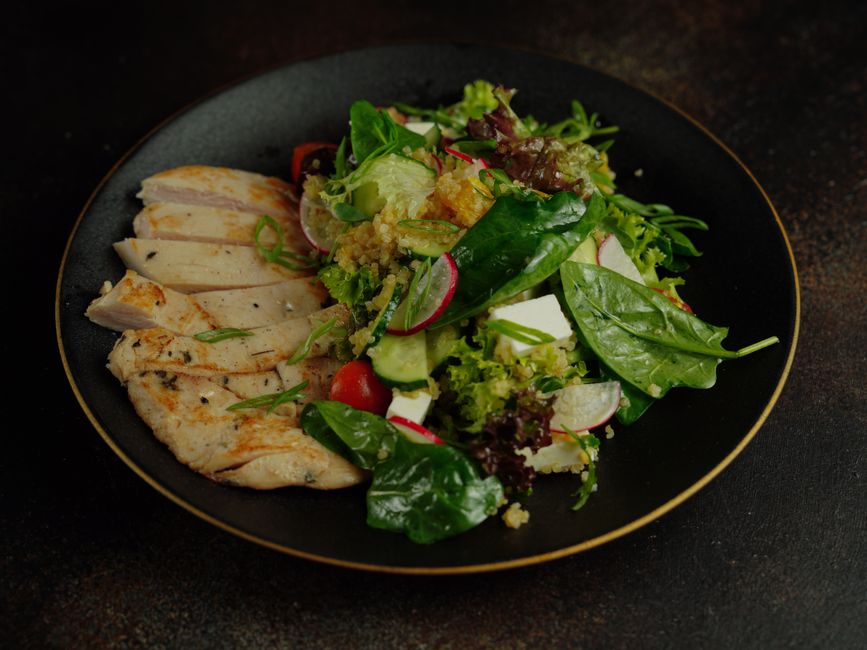
Chicken must reach an internal temperature of 165°F (74°C) to be considered safely cooked. That number comes from the USDA and applies to all parts of the bird — breasts, thighs, wings, and ground chicken. At that temperature, bacteria like Salmonella and Campylobacter are killed quickly enough to make the meat safe to eat.
But 165°F is not the only temperature at which chicken becomes safe. It is the temperature at which safety happens almost instantly. Lower temperatures can also work if the meat stays there long enough. That distinction matters for anyone who has pulled a dry, chalky chicken breast out of the oven and wondered what went wrong.
What Temp Should Cooked Chicken Be According to the USDA?
The USDA Food Safety and Inspection Service sets the minimum safe internal temperature for all poultry at 165°F (74°C). This applies to whole chickens, individual cuts, and ground poultry. The temperature should be measured in the thickest part of the meat, avoiding bone and fat, which can give inaccurate readings.
The 165°F figure is not arbitrary. It reflects the temperature at which Salmonella — the most common bacterial concern in poultry — is destroyed in a fraction of a second. Other pathogens like Campylobacter and Listeria are also eliminated at this temperature. For home cooks who want a single, simple rule, 165°F is it.
Ground chicken deserves special mention. Because grinding distributes bacteria throughout the meat rather than leaving them mostly on the surface, ground poultry must also reach 165°F. There is no rare or medium ground chicken.
Is 165°F Really Necessary or Can Chicken Be Safe at Lower Temperatures?
Chicken can be safely cooked at lower temperatures if it is held there long enough. This is basic food science, not a loophole. Bacterial death is a function of both temperature and time.
At 165°F, Salmonella is killed almost instantly — within seconds. At 150°F (65.5°C), the same bacteria require roughly 3 minutes of continuous exposure to reach the same level of safety. At 145°F (63°C), it takes closer to 9 minutes. These figures come from established pasteurization research and are widely cited in food science literature.
This is why some chefs and food scientists prefer cooking chicken breasts to 150°F and holding them there for a few minutes. The result is noticeably juicier meat that is still safe. However, this approach requires a reliable thermometer and careful timing. It is not a casual shortcut.
For most home cooks, 165°F remains the simplest and most reliable target. The margin for error at lower temperatures is smaller.
Why Does Chicken Need to Reach a Specific Temperature?
Raw chicken commonly carries Salmonella, Campylobacter, and occasionally other harmful bacteria. These organisms live in the intestinal tract of birds and can contaminate the meat during processing. They do not make the chicken itself sick, but they can cause serious illness in humans.
Foodborne illness from undercooked chicken typically causes diarrhea, vomiting, fever, and abdominal cramps. Symptoms usually appear within hours to a few days after eating contaminated food. Most people recover without treatment, but young children, older adults, pregnant women, and people with weakened immune systems can develop severe or life-threatening infections.
Heat destroys these bacteria by denaturing their proteins and disrupting their cell membranes. The internal temperature of the meat must reach a point where this happens throughout, not just on the surface. That is why a browned exterior does not guarantee safety.

How Should You Check Chicken Temperature Correctly?
Use a digital instant-read thermometer. Insert it into the thickest part of the meat, avoiding bone, fat, and gristle. For a whole chicken, check the innermost part of the thigh and the thickest part of the breast. For pieces, check the center of the thickest section.
Wipe the probe with a clean cloth or paper towel between checks if you are testing multiple pieces. Cross-contamination from a probe that touched raw meat can reintroduce bacteria to cooked food.
Let the chicken rest for a few minutes after removing it from heat. The internal temperature may continue to rise slightly — a phenomenon called carryover cooking — which adds a small safety margin. Resting also allows juices to redistribute, improving texture.
What About Color and Juice Clarity?
Color is not a reliable indicator of doneness. Cooked chicken can still look pink near the bone, especially in younger birds, because of pigments in the bone marrow. Clear juices are a helpful sign but not a guarantee. Only a thermometer confirms safety.
Does the Type of Chicken Cut Change the Safe Temperature?
No. The safe minimum internal temperature is 165°F for all chicken cuts — white meat, dark meat, ground, and whole birds. What changes is how long each cut takes to reach that temperature and how it responds to cooking.
White meat like breasts is lean and dries out quickly above 165°F. Dark meat like thighs and legs contains more connective tissue and benefits from longer cooking at higher temperatures, often up to 175°F or beyond, which breaks down collagen and makes the meat more tender.
This is a texture preference, not a safety requirement. Dark meat is safe at 165°F. It simply may be chewier at that temperature than at 175°F.
Common Mistakes That Lead to Undercooked or Overcooked Chicken
The most common mistake is relying on time and appearance instead of a thermometer. Oven temperatures vary, chicken thickness varies, and starting temperature varies. A recipe that says “bake for 25 minutes” is a guideline, not a guarantee.
Another frequent error is checking the temperature too early and repeatedly opening the oven. This slows cooking and makes timing harder to predict. Wait until the chicken looks close to done, then check.
Overcooking is also a problem, though not a safety one. Chicken cooked well beyond 165°F becomes dry and tough. If you frequently overcook chicken, try pulling it from the heat at 160°F and letting it rest. The temperature will likely rise to 165°F during resting.
Does Resting Time Affect Safety?
Yes, in a helpful way. Carryover cooking can raise the internal temperature by a few degrees after the chicken leaves the oven or pan. If you pull chicken at 160°F and it rests for 5 to 10 minutes, it may reach 165°F on its own.
This is not a reliable strategy for raw or partially cooked chicken. It works best when the chicken is already close to the target temperature. Always verify with a thermometer before serving.
What About Microwave and Sous Vide Cooking?
Microwave cooking can heat unevenly, leaving cold spots where bacteria survive. If you cook chicken in a microwave, check the temperature in multiple places and continue cooking until every spot reaches 165°F.
Sous vide cooking uses precise temperature control to cook chicken at lower temperatures for longer periods. This method can produce safe, juicy chicken at temperatures as low as 140°F if held long enough — often 30 minutes or more, depending on thickness. However, sous vide requires equipment and attention to time-temperature tables. It is not a technique to improvise.
How Should You Store and Reheat Cooked Chicken?
Refrigerate cooked chicken within 2 hours of cooking, or within 1 hour if the room temperature is above 90°F. Store it in shallow containers so it cools quickly. Cooked chicken keeps in the refrigerator for 3 to 4 days.
When reheating, bring the chicken back to 165°F. This ensures any bacteria that may have grown during storage are destroyed. Reheat only the portion you plan to eat, and avoid reheating multiple times.
Frequently Asked Questions
What temperature should chicken be cooked to?
Chicken should reach an internal temperature of 165°F (74°C) to be considered safely cooked. This applies to all cuts, including ground chicken and whole birds.
Can I eat chicken at 150°F if I hold it there?
Yes, chicken held at 150°F for about 3 minutes is considered safe by food science standards. However, this requires a reliable thermometer and careful timing, so most home cooks should stick to 165°F.
Is it safe to eat chicken that is slightly pink?
Pink color alone does not mean the chicken is undercooked. Young birds often have pinkish meat near the bone even when fully cooked. Only a thermometer can confirm safety.
How long should chicken rest after cooking?
Let chicken rest for 5 to 10 minutes after removing it from heat. This allows the temperature to equalize and juices to redistribute, improving texture.
