
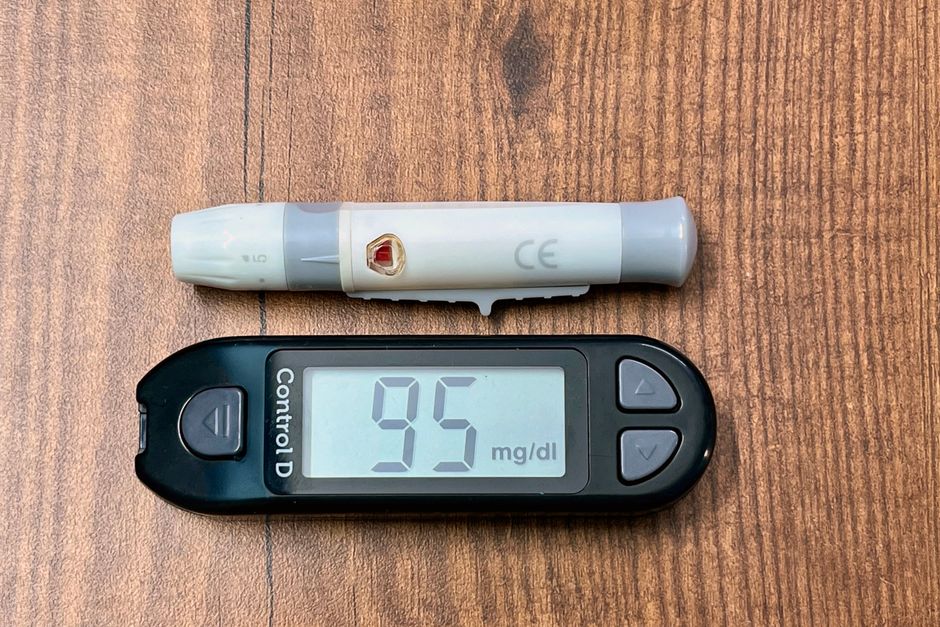
A newborn’s normal blood sugar range is lower than an adult’s, and it changes fast in the first hours and days of life. For most healthy full-term babies, blood glucose is considered normal between about 40 and 60 mg/dL in the first hours after birth, then settles into roughly 50 to 80 mg/dL by the end of the first day. These numbers are lower than the adult fasting range of 70 to 99 mg/dL, and that difference is expected, not a sign of illness.
Newborn blood sugar is one of the most misunderstood numbers in medicine. Parents see a reading of 45 mg/dL and panic, not realizing that a healthy newborn can sit there comfortably. Others assume a low number is always harmless, when in some babies it needs prompt attention. The truth sits in the middle, and it depends heavily on the baby.
What Is The Normal Blood Sugar Level For A Newborn Baby?
Normal newborn blood sugar depends on the baby’s age in hours, whether they were born full-term or premature, their size, and whether they have any underlying condition. There is no single universal cutoff that applies to every baby at every moment.
For a healthy full-term baby, clinicians generally treat blood glucose above roughly 45 to 50 mg/dL as acceptable once feeding is established. In the first one to two hours after birth, values can dip as low as the 30s to 40s mg/dL in some babies and still be considered part of normal transition, provided the baby is feeding, active, and otherwise well.
Premature babies, babies who are small for their gestational age, and babies born to mothers with diabetes are held to different standards. For these infants, clinicians often aim to keep glucose above about 45 to 50 mg/dL and will treat lower values more aggressively because the risk of complications is higher.
Two things are worth separating here. There is the statistical range seen in healthy newborns, and there is the treatment threshold clinicians use to decide whether to intervene. These are not the same thing. A number can be within the range seen in healthy babies and still prompt closer monitoring in a baby who looks unwell.
Why Are Newborn Blood Sugar Levels Lower Than Adults?
A newborn’s glucose regulation system is brand new and still switching on. During pregnancy, the baby received a steady supply of glucose through the placenta. At birth, that supply is cut off. The baby now has to manage its own blood sugar for the first time.
The hormones that raise blood sugar when it drops, such as glucagon and cortisol, do kick in. But a newborn has limited stores of glycogen, the form of glucose stored in the liver. Those stores are small and get used up quickly, especially in the first 24 hours. The baby also has a relatively high brain-to-body weight ratio, meaning the brain uses a large share of available glucose.
On top of that, newborns are still building the enzymes needed to make glucose from other sources, a process called gluconeogenesis. This takes time to mature. The result is that blood sugar naturally runs lower than in older children and adults, and it can swing more sharply.
This is why feeding matters so much in the first days. Colostrum and early milk provide glucose and help stabilize the system while the baby’s own regulation matures.
What Causes Low Blood Sugar In A Newborn?
Low blood sugar, called neonatal hypoglycemia, has several well-established causes. The most common is simply being born and having limited fuel reserves, which is why it is more frequent in certain groups.
- Prematurity. Babies born early have smaller glycogen stores and less mature enzyme systems.
- Small for gestational age. Babies who grew slowly in the womb have fewer reserves to draw on.
- Infant of a diabetic mother. If the mother had diabetes, the baby’s insulin levels may be high at birth, driving glucose down quickly.
- Large for gestational age. Very large babies can also have trouble regulating glucose after birth.
- Perinatal stress. Difficult delivery, low oxygen, or infection can increase glucose use.
- Feeding problems. A baby who is not feeding well has less glucose coming in.
Less common causes include rare metabolic disorders and certain hormone deficiencies. These are usually suspected when hypoglycemia is severe, persistent, or does not respond to feeding.


What Are The Signs Of Low Blood Sugar In A Newborn?
The tricky part about newborn hypoglycemia is that many babies show no obvious signs at all. This is one reason hospitals screen babies who are at higher risk rather than waiting for symptoms.
When signs do appear, they tend to be subtle and non-specific. They can include:
- Jitteriness or tremors
- Irritability or unusual fussiness
- Poor feeding or refusing to feed
- Low energy, floppiness, or sleeping too much
- Fast breathing or pauses in breathing
- A low body temperature
- In more serious cases, seizures
None of these signs is unique to low blood sugar. A jittery baby might be cold, hungry, or simply adjusting to life outside the womb. That overlap is exactly why a blood test, not a visual assessment, is used to confirm hypoglycemia. Parents who notice any of these signs should tell a nurse or doctor rather than wait.
How Is Newborn Blood Sugar Measured And Monitored?
Blood sugar in a newborn is measured with a small blood sample, usually taken from the heel. The sample is tested with a bedside glucose meter or, when accuracy matters more, in a laboratory. Bedside meters are quick but can be less precise at very low values, so a low reading is often confirmed with a lab test.
Not every baby needs routine screening. Guidelines generally recommend checking blood sugar in babies who are at higher risk, including those born premature, small for gestational age, large for gestational age, or to mothers with diabetes. Some hospitals also screen babies who are unwell or showing signs.
For babies being monitored, checks are typically done before feeds. The exact schedule depends on the baby’s risk level and the hospital’s protocol. The general direction from clinical guidance is to feed early and often, and to check glucose until values are stable and the baby is feeding well.
One clarification that surprises many parents: a single low reading is not automatically a diagnosis. Clinicians look at the trend, the baby’s overall condition, and whether the number responds to feeding. A brief dip that corrects after a feed is a very different situation from a persistently low value.
When Does Low Blood Sugar Need Treatment?
Treatment decisions rest on the glucose value, the baby’s age in hours, their risk factors, and how they look and feed. There is no single number that triggers treatment for every baby.
For many healthy at-risk babies, the first step is feeding. Early and frequent feeding, whether breast milk or formula, often brings glucose up on its own. Skin-to-skin contact and keeping the baby warm also help.
If feeding does not raise glucose enough, or if the baby cannot feed, clinicians may give glucose directly. This can be done through an intravenous line or, in some cases, with a glucose gel placed in the baby’s mouth. Glucose gel has become more common in recent years as a way to treat milder cases and reduce the need for IV lines and separation from the mother, though practices vary between hospitals.
Persistent or severe hypoglycemia needs a more thorough evaluation. This is where clinicians look for underlying causes such as metabolic or hormonal conditions. These cases are uncommon, but they are the reason some babies need longer monitoring.
Can Low Blood Sugar Harm A Newborn?
Brief, mild hypoglycemia that responds to feeding is common and generally does not cause lasting harm in otherwise healthy babies. The concern is with prolonged or repeated low glucose, which can affect the developing brain.
The brain depends on glucose for energy. When glucose stays low for an extended period, especially in a baby who is already vulnerable, there is a risk of neurological effects. This is why screening and prompt treatment exist in the first place.
The evidence on long-term outcomes is not fully settled. Some studies suggest that severe or prolonged neonatal hypoglycemia is linked to later learning and developmental differences, while milder and quickly corrected cases generally do not show the same association. The honest position is that the risk scales with how low the glucose goes, how long it stays low, and how vulnerable the baby is. Preventing prolonged low glucose is the goal, and that is what monitoring is designed to do.
What Should Parents Watch For After Going Home?
Most babies who had their glucose monitored in the hospital are stable before discharge. Once home, the main things to watch are feeding and behavior.
A baby who feeds well, wakes for feeds, has normal energy, and is gaining weight is generally doing fine. A baby who is very sleepy, hard to wake for feeds, feeding poorly, or showing jitteriness or unusual movements should be checked by a doctor promptly.
Parents of babies who were in a higher-risk group may be given specific feeding instructions before leaving the hospital. Those instructions should be followed closely. If anything seems off, calling the pediatrician is always reasonable, and it is far better to ask than to wait.
Frequently Asked Questions
What is a normal blood sugar level for a newborn baby?
For most healthy full-term newborns, blood glucose is considered normal around 40 to 60 mg/dL in the first hours after birth, settling to roughly 50 to 80 mg/dL by the end of the first day. Babies at higher risk are often held to a slightly higher threshold of about 45 to 50 mg/dL.
Is 45 mg/dL too low for a newborn?
For a healthy full-term baby who is feeding and active, a value around 45 mg/dL is often acceptable and may not require treatment. For a premature or otherwise at-risk baby, the same number may prompt closer monitoring or treatment.
How long does low blood sugar last in a newborn?
In many healthy at-risk babies, low blood sugar corrects within the first 24 to 48 hours as feeding becomes established and the baby’s own glucose regulation matures. Persistent low glucose beyond this window may need further evaluation for an underlying cause.
Can a newborn have low blood sugar without symptoms?
Yes. Many babies with low blood sugar show no obvious signs at all, which is why at-risk babies are screened with a blood test rather than checked by appearance alone. When signs do appear, they are often subtle, such as jitteriness, poor feeding, or low energy.
