
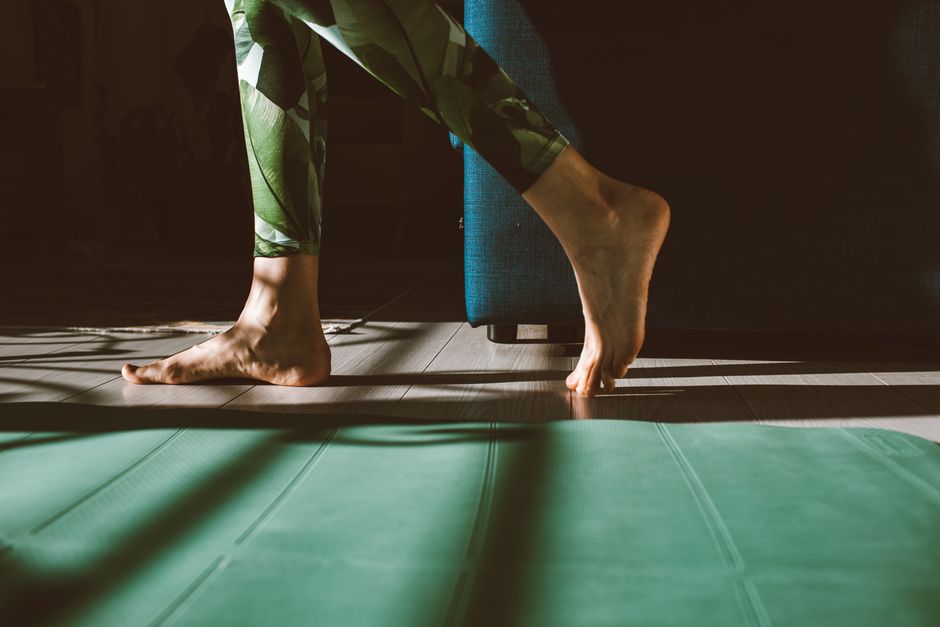
Blood pooling in the legs happens when veins have trouble pushing blood back up to the heart. Gravity pulls blood down, and the one-way valves inside your leg veins struggle to keep it moving upward. The result is a collection of blood in the lower legs that can feel heavy, achy, tight, or swollen. Many people describe it as a dull, deep pressure that gets worse as the day goes on and improves when they lie down or elevate their legs.
What Does Blood Pooling In The Legs Feel Like?
The most common feeling is a heavy, tired ache in the calves and feet. Your legs may feel like they are filled with lead. Some people describe a sensation of tightness or fullness, especially around the ankles and lower calves. The skin can feel warm to the touch, and your legs may look visibly swollen by the end of the day.
Other people report a throbbing or pulsating feeling, particularly after standing for long periods. Some feel a burning sensation along the shins or behind the knees. The discomfort usually builds gradually over hours of sitting or standing and fades within minutes of lying flat with your legs raised above heart level.
If blood pooling becomes chronic, the skin itself changes. It may look shiny, tight, or discolored — often taking on a reddish-brown or bluish tint around the ankles. These skin changes are a sign that blood has been pooling for a long time and the tissues are not getting the oxygen they need.
Why Does Blood Pool In The Legs?
Your leg veins work against gravity to return blood to your heart. They rely on three main things: the calf muscles squeezing as you walk, one-way valves inside the veins, and the natural pressure difference between your legs and your chest.
When you stand or sit for long stretches, the calf muscles stay still. Without that muscle pump action, blood moves more slowly. The one-way valves, which normally snap shut to prevent backflow, can become stretched or damaged over time. When those valves fail, blood flows backward and collects in the lower leg. This condition is called chronic venous insufficiency.
Age plays a major role. Vein walls naturally lose elasticity as you get older. Pregnancy also increases the risk because the growing uterus presses on the veins in the pelvis, and hormonal changes relax vein walls. Excess weight adds pressure on the leg veins, and a family history of vein problems raises your chances of developing them.
How Is Blood Pooling Different From Normal Leg Fatigue?
Normal leg fatigue after a long walk or workout feels like muscle tiredness. It typically resolves with rest and does not involve visible swelling. Blood pooling feels different because it is tied directly to position and time spent upright.
If you stand at a counter for four hours and your ankles swell noticeably, that is blood pooling. If you sit at a desk all day and your legs feel heavy but your shoes fit fine, that may be blood pooling at a milder level. The key clue is that elevation helps. Raising your legs above heart level for 15 to 20 minutes should noticeably reduce the heavy, achy feeling if blood pooling is the cause.
Leg fatigue from exercise usually involves the muscles themselves. Blood pooling involves the veins and the fluid around them. The two can overlap, but they are not the same problem.



When Should You Be Concerned About Blood Pooling?
Occasional leg heaviness after a long day is common and usually not dangerous. But certain symptoms warrant medical attention. If one leg is swollen, painful, and warm while the other leg is normal, that could be a blood clot — specifically deep vein thrombosis. This requires urgent medical evaluation.
Other concerning signs include skin that breaks down or forms ulcers near the ankles, bleeding from a vein, or a sudden increase in swelling that does not improve with elevation. Hard, painful lumps along a vein, or red streaks spreading up the leg, also need prompt evaluation.
Chronic blood pooling that goes untreated can lead to skin changes, tissue damage, and venous ulcers. These are slow-healing wounds that typically form around the inner ankle. They are a sign of advanced venous disease and require professional care.
What Can You Do To Relieve Blood Pooling?
Movement is the most effective simple remedy. Walking uses the calf muscle pump to push blood upward. Even brief walks every hour can make a meaningful difference if you work at a desk or stand in one place all day.
Elevation is another reliable tool. Lying down with your legs raised above heart level for 15 to 30 minutes helps gravity work in your favor. This is most effective when done at the end of the day or during breaks.
Compression stockings are the standard treatment for chronic blood pooling. These specially fitted stockings apply graduated pressure — tightest at the ankle and looser higher up — which helps veins push blood upward. They are not the same as ordinary support socks sold in drugstores. Medical-grade compression stockings require proper fitting and come in different pressure levels. Some clinicians recommend them for people who stand or sit for long periods, but you should talk to a doctor about whether they are right for you and what pressure level you need.
Staying hydrated and reducing salt intake may help with swelling, though these habits alone will not correct vein valve problems. Regular exercise, maintaining a healthy weight, and avoiding prolonged sitting or standing are the most practical long-term strategies.
Are There Medical Treatments For Blood Pooling?
When lifestyle measures and compression stockings are not enough, several medical procedures can help. These treatments target the underlying vein problem rather than just the symptoms.
Endovenous ablation is a common procedure. A thin catheter delivers heat or laser energy inside the affected vein, sealing it shut. Blood then reroutes through healthier veins. This is an outpatient procedure with a relatively quick recovery.
Sclerotherapy involves injecting a solution into smaller veins, causing them to collapse and fade. It is often used for spider veins and smaller varicose veins. Larger veins may require surgical removal, though this is less common now that less invasive options exist.
These procedures are generally considered safe and effective for chronic venous insufficiency. But they are not for everyone. A vascular specialist can evaluate your specific vein function and recommend an appropriate treatment plan. No single procedure is right for all cases.
Can Blood Pooling Be Prevented?
You cannot change your genetics or your age, but you can reduce your risk factors. The most important preventive measure is avoiding prolonged stillness. If your job requires standing, shift your weight frequently, walk a few steps every 20 to 30 minutes, and consider a footrest to keep your calf muscles gently active.
If your job requires sitting, stand up and walk regularly. Avoid crossing your legs for long periods, which can compress veins and reduce blood flow. When flying or taking long car trips, walk the aisle or stop every couple of hours and do calf raises at your seat.
Regular exercise that strengthens the calf muscles — walking, cycling, swimming — improves the muscle pump function that helps veins push blood upward. Maintaining a healthy weight reduces pressure on the veins. These habits do not guarantee you will never develop blood pooling, but they meaningfully lower your risk.
Frequently Asked Questions
Does blood pooling in the legs go away on its own?
Mild blood pooling from a long day of standing usually resolves with rest and elevation. Chronic blood pooling from damaged vein valves will not resolve on its own and typically requires ongoing management.
Can blood pooling in the legs cause a blood clot?
Chronic blood pooling is a risk factor for deep vein thrombosis, but most people with blood pooling never develop a clot. Sudden one-sided swelling, pain, and warmth require urgent medical evaluation.
Are compression stockings worth trying for blood pooling?
Compression stockings are the most widely recommended non-surgical treatment for chronic blood pooling. They require proper fitting and a prescription for higher pressure levels, so talk to a doctor before buying them on your own.
How long does it take for leg swelling from blood pooling to go down?
With elevation above heart level, mild swelling typically improves within 15 to 30 minutes. More significant swelling may take several hours or overnight to resolve.
