
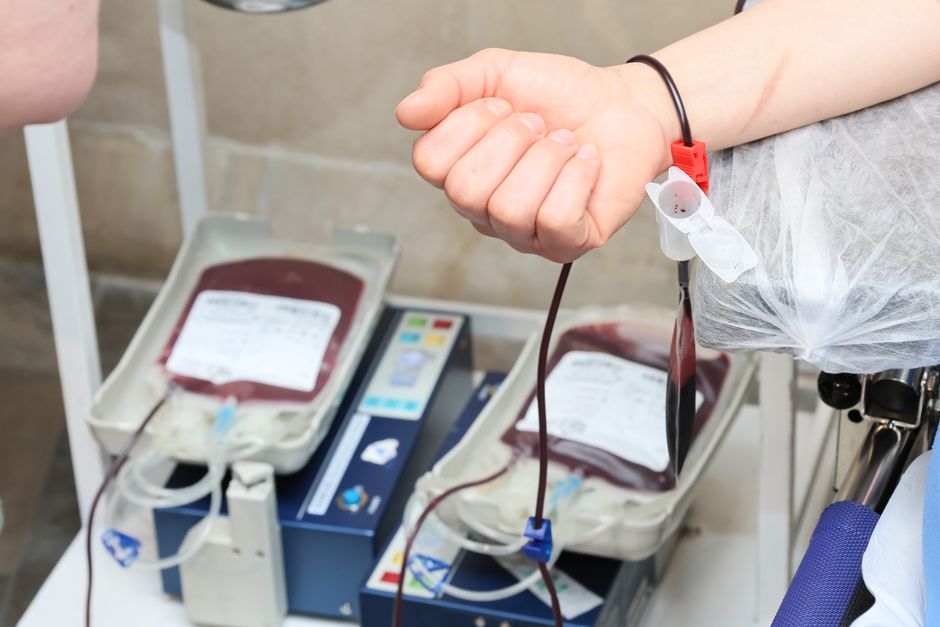
Blood type compatibility comes down to two separate systems: the ABO group and the Rh factor. In the ABO system, type A blood is incompatible with type B and type AB blood, and type B blood is incompatible with type A and type AB blood. Type O blood is incompatible with A, B, and AB blood. For the Rh factor, Rh-positive blood is incompatible with Rh-negative blood — a negative recipient cannot safely receive positive blood.
Those rules matter most in two situations: blood transfusions and pregnancy. The rules are not identical for both. A person’s immune system reacts to markers on the surface of red blood cells it does not recognize, and that reaction can range from mild to life-threatening.
What Makes Two Blood Types Incompatible?
Red blood cells carry proteins and sugars on their surface called antigens. Your immune system treats antigens it does not recognize as foreign invaders and builds antibodies against them.
The ABO system has two main antigens — A and B. If you have type A blood, your red cells carry the A antigen and your plasma contains antibodies against the B antigen. If you have type B blood, the reverse is true. Type AB blood carries both antigens and has neither antibody. Type O blood carries neither antigen and has antibodies against both A and B.
This is why the wrong match triggers a reaction. If a type A patient receives type B blood, the anti-B antibodies in their plasma attack the incoming cells. The result is called a hemolytic transfusion reaction. Red blood cells break apart, releasing their contents into the bloodstream. This can cause fever, chills, back pain, kidney damage, and in severe cases, death.
The Rh system works differently. Rh-positive blood carries the D antigen. Rh-negative blood does not. Unlike ABO antibodies, which everyone develops naturally, anti-D antibodies typically only form after an Rh-negative person is exposed to Rh-positive blood. That usually happens through transfusion or pregnancy.
What Blood Types Are Incompatible With Each Other in Transfusions?
The core ABO incompatibilities are straightforward.
- Type A cannot receive type B or type AB blood.
- Type B cannot receive type A or type AB blood.
- Type AB can receive any ABO type — it is the universal recipient.
- Type O cannot receive A, B, or AB blood — but type O negative is the universal donor for red cells.
Then the Rh factor adds a second layer. An Rh-negative person should not receive Rh-positive red blood cells. An Rh-positive person can receive either Rh-positive or Rh-negative blood without an Rh-related reaction.
When you combine both systems, the safest match is always the recipient’s own type. In practice, blood banks crossmatch donor and recipient blood before transfusion to confirm compatibility beyond these general rules.
Why Is Type O Negative Called the Universal Donor?
Type O negative red cells carry neither A nor B antigens and no Rh D antigen. That means a recipient’s immune system has nothing to recognize as foreign, regardless of their own blood type.
This makes O negative blood essential in emergencies. When there is no time to determine a patient’s blood type — after a major accident, for example — O negative red cells can be given safely to almost anyone. Emergency departments and trauma centers depend on a steady supply of it.
Type AB positive is the mirror image. People with AB positive blood have both A and B antigens and the Rh D antigen, so they can receive red cells from any ABO type and either Rh status. They are called universal recipients.
One important distinction: “universal donor” applies to red blood cells. Plasma works in reverse. Type AB plasma contains no anti-A or anti-B antibodies, which makes AB plasma the universal donor for plasma transfusion. Type O plasma, by contrast, contains both antibodies.





How Does Blood Type Incompatibility Affect Pregnancy?
ABO incompatibility between mother and baby is common and usually mild. If a mother is type O and her baby is type A or B, some of the baby’s red cells can be attacked by the mother’s antibodies. This can cause mild jaundice in the newborn. In most cases it requires monitoring rather than treatment.
Rh incompatibility is the more serious concern, and it works differently. It matters when the mother is Rh-negative and the baby is Rh-positive, which happens when the father is Rh-positive.
During a first pregnancy, the mother’s immune system is usually not yet sensitized to the D antigen. Problems typically arise in a subsequent pregnancy. If the mother developed anti-D antibodies after a previous delivery, miscarriage, or other exposure to Rh-positive blood, those antibodies can cross the placenta and attack the red blood cells of an Rh-positive baby. This condition is called hemolytic disease of the newborn. It can cause severe anemia, jaundice, and in serious cases, heart failure.
This is largely preventable. Rh immune globulin — often called RhoGAM — is given to Rh-negative mothers during pregnancy and after delivery. It prevents the mother from forming anti-D antibodies in the first place. Because of this treatment, hemolytic disease of the newborn from Rh incompatibility has become uncommon in countries where the injection is standard care.
Rh immune globulin is a preventive treatment with well-established clinical guidelines. Timing and dosing should always follow the direction of a healthcare provider.
Can a Person’s Blood Type Change?
A person’s ABO and Rh blood type is set by genetics and does not change over a lifetime. What can change is how that type is measured.
Certain conditions can temporarily affect blood test results. Severe infections, some cancers, and bone marrow transplants can alter the antigens present on red blood cells. After a bone marrow transplant, a patient’s blood type can actually shift to match the donor’s, because the donor’s stem cells now produce the blood cells.
Pregnancy, recent transfusions, and some medications can also complicate test results. This is one reason blood banks run confirmatory tests before any transfusion rather than relying on a single prior record.
What Happens During an Incompatible Transfusion?
Symptoms of an acute hemolytic reaction can begin within minutes of the transfusion starting. They include fever, chills, a feeling of impending doom, pain at the infusion site, lower back pain, dark urine, and a drop in blood pressure.
This is a medical emergency. Treatment involves stopping the transfusion immediately and providing supportive care, which may include fluids, medications to support blood pressure, and monitoring of kidney function.
Delayed reactions are also possible. They can occur days to weeks after a transfusion and often present as unexplained anemia or jaundice. These are usually milder but still require medical evaluation.
Because of these risks, blood banks follow strict identification, typing, and crossmatching procedures. The chance of receiving the wrong blood type in a properly regulated hospital setting is very low.
Does Blood Type Matter for Organ Transplants?
Yes. ABO compatibility rules apply to organ transplants much as they do to blood transfusions. A donor organ carries the same ABO antigens on its blood vessel linings, and the recipient’s antibodies can attack them.
In most cases, transplant programs match donors and recipients by ABO type. In some situations — particularly for certain organs and in specific patient groups — transplant teams use expanded criteria or desensitization protocols. These are specialized decisions made by transplant teams and are not general rules.
Can Diet or Lifestyle Change Your Blood Type?
No. Blood type is determined by genetics and cannot be changed through diet, supplements, or any lifestyle habit.
The “blood type diet” — a popular eating plan built around the idea that different blood types should eat different foods — is not supported by clinical evidence. No large studies have confirmed that eating according to blood type produces health benefits. The concept is a marketing claim, not an established medical approach.
How Do You Find Out Your Blood Type?
A simple blood test determines your ABO type and Rh status. This is typically done at a doctor’s office, a blood donation center, or a lab.
If you donate blood, your type is usually recorded and often available to you. Home blood-typing kits exist, but their accuracy varies. A clinical lab test is the most reliable option.
Knowing your blood type is useful in emergencies and for pregnancy planning. It is not something that changes, so a single confirmed test result is generally sufficient for personal records.
Frequently Asked Questions
What blood types can O negative receive?
O negative can only receive O negative blood. Any other ABO type or Rh-positive blood could trigger an immune reaction.
Can a mother and baby have incompatible blood types without problems?
Yes, in most cases. ABO incompatibility often causes only mild jaundice in newborns, and Rh incompatibility is largely prevented with Rh immune globulin injections during pregnancy.
Is type AB compatible with type O blood?
Type AB can receive type O blood, but type O cannot receive type AB blood. This is because type O plasma contains antibodies against both A and B antigens.
Can two people with the same blood type be incompatible?
No, matching ABO and Rh types are compatible for transfusion. Other rare blood group systems exist, but these are checked by crossmatching before any transfusion.
