
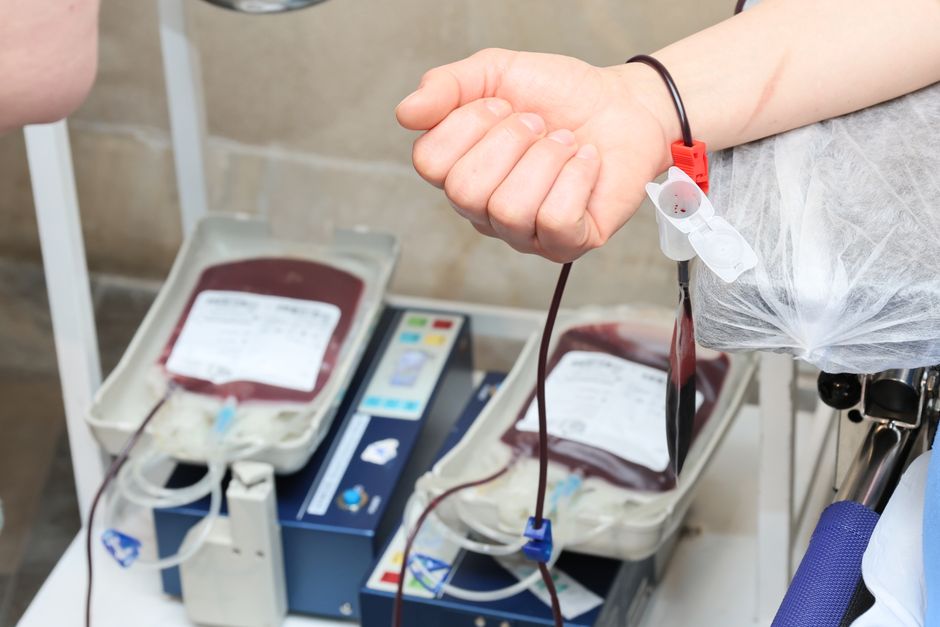
A tuberculosis blood test checks for an infection caused by the bacteria Mycobacterium tuberculosis. Unlike the older skin test, this blood test measures how your immune system responds to TB bacteria. There are two main types: the QuantiFERON-TB Gold Plus and the T-SPOT.TB test. Both are more reliable than the skin test for people who have received the BCG vaccine.
How Does a TB Blood Test Work?
A TB blood test, also called an IGRA (Interferon-Gamma Release Assay), looks at your immune system’s memory. When your blood is mixed with TB proteins in a lab, your immune cells release a substance called interferon-gamma if they have encountered TB before. The test measures this release.
This is different from the TB skin test, which requires you to return to a clinic 48 to 72 hours later for a reading. The blood test needs only one visit. A lab technician draws blood from your arm, similar to any routine blood draw. Results typically come back in 24 to 48 hours.
Research published in the Annals of Internal Medicine found that IGRAs are more specific than the skin test. This means they are less likely to give a false positive result, especially in people who have received the BCG vaccine, which is common in many countries outside the United States.
What Are the Two Types of TB Blood Tests?
The CDC currently approves two IGRA tests for use in the United States. Both are accurate, but they work slightly differently.
| Test Name | How It Works | Key Difference |
|---|---|---|
| QuantiFERON-TB Gold Plus (QFT-Plus) | Measures interferon-gamma in the blood plasma | Uses two tubes of blood to detect both active and latent TB |
| T-SPOT.TB Test | Counts the number of immune cells that release interferon-gamma | Uses a single tube of blood and counts individual cell responses |
The QuantiFERON test is more widely used because it is automated and easier to run in large batches. The T-SPOT test may be slightly more sensitive in people with weakened immune systems, such as those on chemotherapy or with HIV. A 2019 review in Chest found that both tests have similar accuracy for detecting latent TB infection, with sensitivity around 80 to 90 percent.
Your doctor will choose based on lab availability, cost, and your specific health situation. Neither test is clearly better for everyone.
What Do TB Blood Test Results Mean?
Results come back as positive, negative, or indeterminate. A positive result means you have been infected with TB bacteria at some point. It does not tell you if the infection is active or dormant. That distinction requires additional tests like a chest X-ray or sputum culture.
A negative result means your immune system did not react to the TB proteins. This usually means you do not have a TB infection. However, false negatives can happen in people with severely weakened immune systems. If your doctor still suspects TB, they may repeat the test or order a skin test.
An indeterminate result means the test could not give a clear answer. This happens in about 2 to 5 percent of tests. It is more common in young children, older adults, and people with immune suppression. Your doctor will likely repeat the test or use another method.



How Accurate Are TB Blood Tests Compared to Skin Tests?
TB blood tests are more accurate than skin tests in several important ways. The CDC states that IGRAs have a specificity of over 95 percent. This means fewer than 5 out of 100 people without TB will get a false positive. The skin test has a specificity of about 80 to 90 percent, meaning it gives more false positives.
The biggest advantage of the blood test is for people who have received the BCG vaccine. The skin test often reacts to the vaccine and gives a false positive. The blood test does not react to BCG, so it is the preferred test for anyone vaccinated against TB.
There is one area where the skin test may still be better. For children under five years old, the skin test is often recommended because the blood test has less data in this age group. The American Academy of Pediatrics suggests using the skin test for children under two unless the child has a known exposure to TB.
What Happens If Your TB Blood Test Is Positive?
A positive TB blood test does not mean you are sick or contagious. It means the bacteria is in your body. About 90 percent of people with a positive test have latent TB infection. This means the bacteria is alive but inactive. You cannot spread it to others, and you have no symptoms.
The remaining 10 percent have active TB disease. This means the bacteria is multiplying and causing symptoms like a persistent cough, fever, night sweats, and weight loss. Active TB is contagious and requires immediate treatment.
If your blood test is positive, your doctor will order a chest X-ray. If the X-ray looks normal, you likely have latent TB. You may still need treatment to prevent the infection from becoming active later. The CDC estimates that without treatment, 5 to 10 percent of people with latent TB will develop active disease at some point in their lives.
Treatment for latent TB usually involves taking one or two medications for three to nine months. The most common regimen is isoniazid and rifapentine taken once a week for 12 weeks. This is called the 3HP regimen and has high completion rates.
Who Should Get a TB Blood Test?
The CDC recommends TB testing for people at higher risk of exposure. This includes people who have spent time with someone who has active TB disease. It also includes people born in or who have lived in countries where TB is common, such as parts of Asia, Africa, and Latin America.
Healthcare workers and people who live or work in crowded settings like prisons, nursing homes, or homeless shelters should also be tested. People with weakened immune systems due to HIV, organ transplants, or long-term steroid use are at higher risk and should discuss testing with their doctor.
Routine testing is not recommended for people with low risk. The CDC advises against testing people who have no known exposure and no risk factors. Unnecessary testing can lead to false positives and unnecessary treatment. Your doctor should assess your risk before ordering the test.
- People with symptoms of active TB: cough lasting more than three weeks, chest pain, coughing up blood, fever, night sweats, weight loss
- People with known exposure to someone with active TB
- People born in countries with high TB rates
- Healthcare workers with ongoing exposure risk
- People with HIV or other immune-suppressing conditions
Common Misconceptions About TB Blood Tests
One widespread myth is that a positive TB blood test means you have active TB and are contagious. This is false. As explained earlier, most people with a positive test have latent infection and cannot spread it. Only active TB in the lungs is contagious.
Another misconception is that the BCG vaccine makes the blood test unreliable. This is also false. The blood test was specifically designed to avoid cross-reaction with BCG. If you received the BCG vaccine, the blood test is actually the preferred option because the skin test will likely be positive for life.
Some people believe that once you test positive for TB, you will always test positive. This is mostly true. The immune system retains memory of the bacteria, so a repeat test will likely remain positive even after successful treatment. For this reason, doctors do not repeat the test after treatment. They use chest X-rays and symptom checks to monitor you instead.
There is also a claim that TB blood tests are painful or dangerous. The test is a standard blood draw. Some people feel a brief sting or develop a small bruise. Serious complications are extremely rare. The risks are the same as any routine blood test.
Frequently Asked Questions
Can a TB blood test tell the difference between latent and active TB?
No. The blood test only tells you if you have been infected with TB bacteria. It cannot distinguish between latent infection and active disease. Your doctor needs a chest X-ray and other tests to make that determination.
How long does it take to get TB blood test results?
Results are usually available within 24 to 48 hours after the lab receives your blood sample. Some labs may take up to three days depending on their workload and shipping schedules.
Do I need to fast before a TB blood test?
No. You do not need to fast or make any special preparations. You can eat and drink normally before the test. Just tell the lab technician if you have any bleeding disorders or are taking blood thinners.
Can a TB blood test give a false positive if I had the BCG vaccine?
No. This is one of the main advantages of the blood test over the skin test. The blood test uses proteins that are specific to TB and do not cross-react with the BCG vaccine. A positive result in a vaccinated person indicates true TB infection.
