
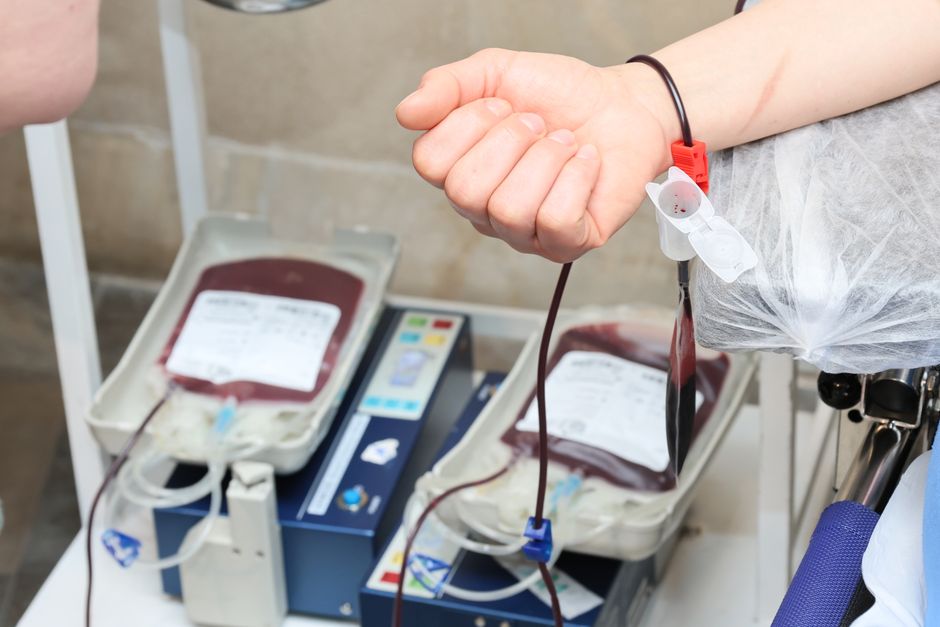
Your blood type is determined by the presence or absence of specific molecules on the surface of your red blood cells. These molecules, called antigens, create the major blood group systems: ABO and Rh. The frequency of each blood type varies across the world, but the global distribution is clear. O positive is the most common blood type, found in about 38% of the population. The rarest is AB negative, which occurs in less than 1% of people. These numbers change depending on where you live and your ethnic background.
What Is the Exact Frequency of Each Blood Type Globally?
Research from blood donor organizations and medical studies gives us a reliable picture of blood type distribution worldwide. The table below shows the approximate percentages for the eight main blood types. These numbers come from data collected by the American Red Cross and the Stanford School of Medicine.
| Blood Type | Global Frequency |
|---|---|
| O positive | 38% |
| O negative | 7% |
| A positive | 28% |
| A negative | 6% |
| B positive | 9% |
| B negative | 2% |
| AB positive | 3% |
| AB negative | 1% |
These percentages are averages. In the United States, the distribution is similar but not identical. The American Red Cross reports that O positive is still the leader at about 38%, followed by A positive at 27%. AB negative remains the rarest at less than 1% in the US as well.
How Does Blood Type Frequency Vary by Ethnicity and Region?
Blood type frequencies shift dramatically when you look at specific populations. This is not random. It is the result of human migration, genetic drift, and natural selection over thousands of years. The numbers below are based on data from the National Institutes of Health and published studies in journals like Transfusion.
In people of European descent, O positive is common at about 37%, and A positive is also high at 33%. B positive is lower, around 9%. For people of African descent, O positive is even more common, reaching 47%. B positive also appears more often, at 18%. Asian populations, particularly those from East Asia, show a different pattern. B positive is significantly higher, around 25%, while O positive is lower at about 39%. In Hispanic populations, O positive dominates at roughly 53%, with A positive at 29%.
These differences matter for blood banks. A hospital in a region with a large Asian population needs more B positive blood. A blood drive in a predominantly Hispanic area must stock more O positive. The rarest blood type, AB negative, stays below 1% across all ethnic groups, but it is slightly more common in people of European descent.
What Determines Your Blood Type Genetically?
Your blood type is inherited from your parents through a single gene on chromosome 9. This gene, called the ABO gene, has three versions: A, B, and O. You inherit one version from each parent. The combination determines your ABO blood type. If you get an A from one parent and an O from the other, your blood type is A. If you get B and O, it is B. If you get A and B, it is AB. If you get O from both, it is O.
The Rh factor is controlled by a separate gene. The RhD gene determines whether you are positive or negative. If you inherit at least one copy of the RhD gene, you are Rh positive. If you inherit two copies without it, you are Rh negative. This is why O negative is rarer than O positive. About 85% of people are Rh positive, while only 15% are Rh negative.
This genetic inheritance explains why blood type frequencies stay stable within populations. If two O positive parents have children, all of them will be O positive. If an A positive parent and a B positive parent have children, the kids could be A, B, AB, or O. The frequency of each type in a population reflects how common each gene version is in that group.





Does Blood Type Affect Health or Disease Risk?
Some studies suggest a link between blood type and certain health conditions. Research published in the Journal of the American Medical Association found that people with type O blood have a lower risk of blood clots and heart disease. The same study showed that people with type A, B, or AB have a slightly higher risk. The reason may involve how blood type affects clotting factors.
Other research has connected blood type to stomach cancer risk. People with type A blood appear to have a higher risk of developing stomach cancer compared to type O. This was noted in a large study from the Karolinska Institute in Sweden. The association is real but modest. It does not mean that having type A guarantees cancer.
COVID-19 also showed a blood type connection. Early studies from 2020 found that people with type O blood were less likely to get severely ill from the virus. Type A blood was linked to a higher risk of severe disease. The evidence is not strong enough to change medical advice, but it is consistent across multiple studies.
It is important to be clear about what these studies mean. Blood type does not determine your health. It is one small factor among many. Lifestyle, genetics, and environment play much larger roles. No one should change their diet or behavior based on their blood type alone.
What Are Common Misconceptions About Blood Type Frequencies?
One widespread myth is that blood type O is a “universal donor” and can be given to anyone. This is true for red blood cells, but it is not the whole story. Type O negative blood is the universal donor for red blood cells because it has no A, B, or Rh antigens. Type O positive can only be given to Rh positive recipients. The myth that O negative is common is also wrong. It is rare, at only 7% of the population.
Another misconception is that blood type frequencies are the same everywhere. They are not. In some parts of the world, like parts of South America, O positive makes up over 80% of the population. In other regions, like parts of India, B positive is more common than A positive. These differences are not trivial. They affect blood supply planning and transfusion safety.
A third myth is that blood type changes over time. It does not. Your blood type is fixed from birth. It can only change in rare medical situations, such as a bone marrow transplant from a donor with a different blood type. Even then, the change is temporary and limited to the transplanted cells.
Finally, some people believe that blood type determines your personality or diet needs. This idea comes from a popular book from the 1990s called “Eat Right for Your Type.” There is no clinical evidence to support this. The American Red Cross and the National Institutes of Health do not endorse any blood type diet. The claims are based on anecdote, not science.
How Is Blood Type Frequency Used in Blood Banking and Transfusions?
Blood banks rely on knowing the frequency of each blood type to maintain a safe supply. When a patient needs a transfusion, the hospital must match the donor blood to the recipient’s blood type. Giving the wrong type can cause a serious immune reaction. The most common type, O positive, is always in high demand because it can be given to any Rh positive patient.
O negative is even more critical. It is the only blood type that can be given to anyone in an emergency when the patient’s blood type is unknown. Trauma centers keep a stock of O negative for this reason. Because only 7% of the population has O negative, supplies are always limited. Blood drives often prioritize O negative donors.
AB positive is the universal plasma donor. Plasma from AB positive blood can be given to any patient regardless of their blood type. This is because AB positive plasma contains no anti-A or anti-B antibodies. Despite being rare in the general population, AB positive donors are valuable for plasma donation.
Blood banks also use frequency data to predict what they will need. If a region has a high percentage of B positive people, the blood bank will recruit more B positive donors. The American Red Cross publishes annual reports on blood type distribution to help hospitals plan. This data saves lives by ensuring the right blood is available when it is needed.
Frequently Asked Questions
What is the rarest blood type in the world?
AB negative is the rarest blood type, occurring in less than 1% of the global population. It is slightly more common in people of European descent.
What is the most common blood type in the United States?
O positive is the most common blood type in the United States, found in about 38% of the population. A positive is the second most common at 27%.
Can your blood type change over time?
No, your blood type is genetically determined and stays the same for life. Only a bone marrow transplant from a donor with a different blood type can temporarily change it.
Does blood type frequency affect blood donation needs?
Yes, blood banks need more O negative and O positive blood because they are the most commonly needed. Rare types like AB negative are always in short supply.
