
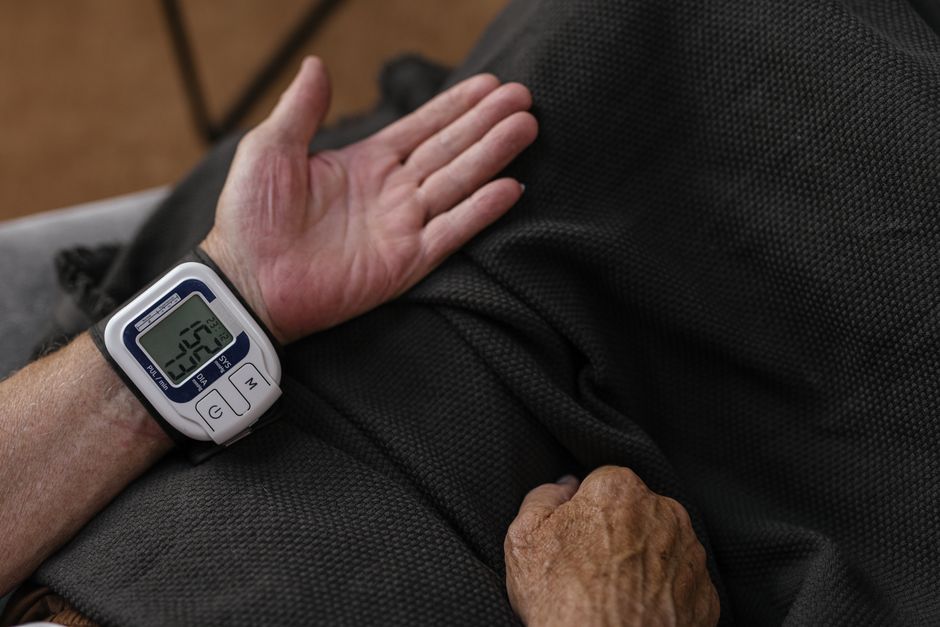
Blood glucose is measured in two main units depending on where you live: milligrams per deciliter (mg/dL) and millimoles per liter (mmol/L). In the United States, mg/dL is the standard unit. Most other countries, including the UK, Canada, and Australia, use mmol/L. Both units measure the same thing — the concentration of sugar in your blood — but they use different scales, so the numbers look very different.
What Are The Units For Measuring Blood Glucose?
The two units for measuring blood glucose are mg/dL and mmol/L. The abbreviation mg/dL stands for milligrams per deciliter. It tells you how many milligrams of glucose are in one deciliter of blood. A deciliter is one-tenth of a liter, roughly half a cup.
The abbreviation mmol/L stands for millimoles per liter. A mole is a chemistry unit that counts the number of molecules. A millimole is one-thousandth of a mole. This unit measures the number of glucose molecules in a liter of blood.
Neither unit is more accurate than the other. They are simply different ways of expressing the same concentration. Think of it like temperature — 32 degrees Fahrenheit and 0 degrees Celsius describe the same freezing point of water. The unit you use depends on where you live and which system your healthcare team follows.
Why Does the United States Use mg/dL?
The United States adopted the metric system for most scientific work but kept customary units for daily life. Blood glucose measurement followed this pattern. The American healthcare system standardized on mg/dL decades ago, and it remains the standard for labs, glucose meters, and clinical guidelines in the US.
Most of the rest of the world adopted the International System of Units (SI), which uses mmol/L for blood glucose. This is why a US patient and a UK patient can have the same blood sugar level but report very different numbers. A fasting glucose of 90 mg/dL in the US equals 5.0 mmol/L in the UK.
If you travel internationally or use a glucose meter purchased abroad, check which unit your device displays. Many modern meters allow you to switch between the two. If you are unsure, the manual will show you how to change the setting.
How Do You Convert Between mg/dL and mmol/L?
Conversion is straightforward once you know the factor. To convert from mg/dL to mmol/L, divide by 18. To convert from mmol/L to mg/dL, multiply by 18.
For example, a fasting glucose of 100 mg/dL divided by 18 equals approximately 5.6 mmol/L. A reading of 7.0 mmol/L multiplied by 18 equals 126 mg/dL. The factor 18 comes from the molecular weight of glucose, which is about 180 grams per mole. Dividing by 18 converts the mass-based unit to the molecule-count-based unit.
Here is a quick reference table for common blood glucose values:
| mg/dL | mmol/L | Context |
|---|---|---|
| 70 | 3.9 | Lower end of normal fasting range |
| 100 | 5.6 | Upper end of normal fasting range |
| 126 | 7.0 | Diagnostic threshold for diabetes (fasting) |
| 180 | 10.0 | Common post-meal target |
| 200 | 11.1 | Diagnostic threshold for diabetes (random) |
These values come from widely used clinical guidelines. If you see a glucose reading in one unit and need it in the other, divide or multiply by 18. Round to one decimal place for mmol/L and to the nearest whole number for mg/dL.



Which Unit Do Glucose Meters and Labs Use?
Glucose meters in the US are programmed to display mg/dL. Meters sold in Europe, Australia, and most of Asia display mmol/L. Some meters sold internationally show both units and let the user select a preference. The same is true for continuous glucose monitors (CGMs) — most allow you to choose the display unit in the settings menu.
Laboratory results follow the convention of the country where the lab operates. A US lab report will show glucose in mg/dL. A lab in France will show it in mmol/L. If you are reading an old lab report or a report from another country, always check the unit column before interpreting the number. A glucose of 5.6 is normal in mmol/L but dangerously low in mg/dL.
Healthcare providers in the US are trained to interpret mg/dL values. If you bring a foreign lab report to a US doctor, they will likely convert the values themselves or ask the lab to re-run the test. Do not assume your doctor will know the conversion by heart for every value.
Why Does the Difference Matter for Daily Diabetes Management?
For people with diabetes, the unit matters because treatment decisions depend on the number. Insulin doses, carbohydrate counting, and target ranges are all calibrated to a specific unit. Mixing up units can lead to serious dosing errors.
Consider this example. A person with type 1 diabetes sees a glucose reading of 200 on their meter. In mg/dL, that is a high reading that may warrant a correction dose of insulin. But if the meter is actually set to mmol/L, a reading of 200 mmol/L is not just high — it is incompatible with life. No glucose meter would display such a value, but the example shows why unit awareness matters.
A more realistic risk is misreading a target range. A typical fasting target for many adults with diabetes is 80–130 mg/dL. In mmol/L, that same range is 4.4–7.2. If someone looks up their target online and finds the wrong unit, they may aim for the wrong number. Always confirm which unit your target range is expressed in.
What About HbA1c — Is That a Glucose Unit?
HbA1c is not a direct measure of blood glucose, but it is closely related. It measures the percentage of hemoglobin in your red blood cells that has glucose attached to it. The result reflects your average blood glucose over the past two to three months.
HbA1c is reported as a percentage in most countries. In the US, it is reported as a percentage, such as 6.5%. Some countries also report an estimated average glucose (eAG) in mg/dL or mmol/L. The eAG converts the HbA1c percentage into the same units used for daily glucose monitoring.
This matters because your daily glucose readings and your HbA1c are related but not identical. Daily readings show your glucose at a single moment. HbA1c shows the average over time. Both are useful, but they answer different questions about your glucose control.
How Do You Know Which Unit Your Results Use?
Check the label on your lab report or the display on your meter. The unit will be printed next to the value — either mg/dL or mmol/L. If you cannot find it, ask your healthcare provider or the lab that ran the test.
For glucose meters, the unit is usually shown on the display screen, sometimes in small print. Check the user manual if you are unsure. For continuous glucose monitors, the unit setting is typically found in the app or device settings under a menu labeled “units” or “measurement.”
If you use a meter purchased in another country, verify the unit before your first reading. Some devices default to the unit of the country where they were sold, and the setting may not be obvious. Taking a reading with the wrong unit can lead to confusion and potentially unsafe decisions.
Frequently Asked Questions
What is the normal blood glucose range in mg/dL?
A normal fasting blood glucose range is 70–99 mg/dL. Fasting glucose of 100–125 mg/dL indicates prediabetes, and 126 mg/dL or higher on two separate tests indicates diabetes.
What is the normal blood glucose range in mmol/L?
A normal fasting blood glucose range is 3.9–5.5 mmol/L. Fasting glucose of 5.6–6.9 mmol/L indicates prediabetes, and 7.0 mmol/L or higher on two separate tests indicates diabetes.
How do I convert my blood glucose reading from mg/dL to mmol/L?
Divide the mg/dL value by 18 to get mmol/L. For example, 126 mg/dL divided by 18 equals 7.0 mmol/L.
Why do US and European glucose meters show different numbers?
US meters display mg/dL, while most other countries use mmol/L. Both units measure the same glucose concentration, just on different scales, so the numerical values differ even though the actual blood sugar is identical.
