
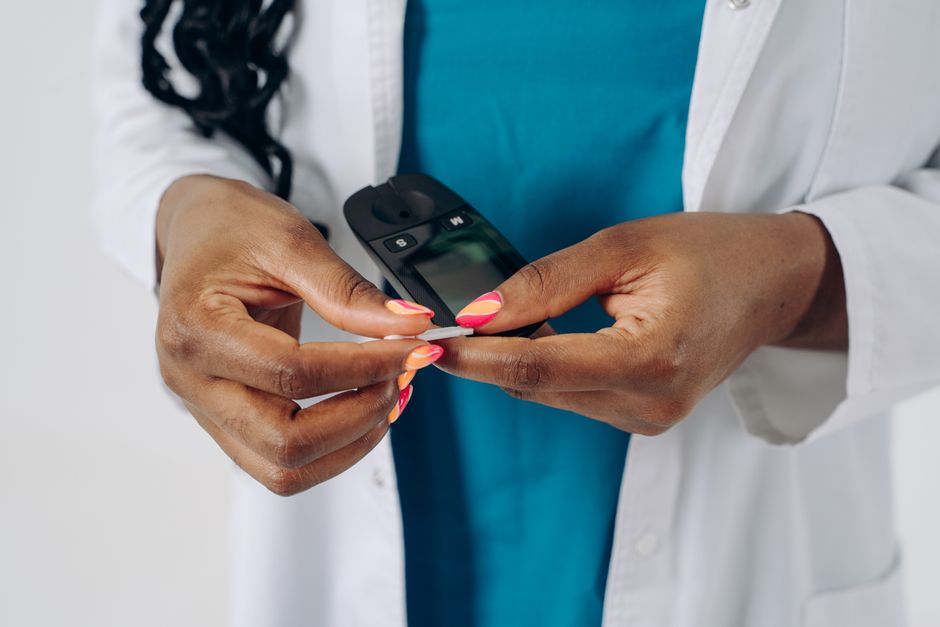
A glucose meter is a small device that tells you how much sugar is in your blood at that exact moment. It works by reading a tiny drop of blood, usually from a fingertip, that you place on a disposable test strip. The strip goes into the meter, and within seconds the screen shows your blood sugar level in milligrams per deciliter (mg/dL). This number tells you whether your blood sugar is low, normal, or high right now.
How Does a Glucose Meter Actually Measure Blood Sugar?
The science behind a glucose meter is based on a chemical reaction. The test strip contains an enzyme called glucose oxidase. When your blood touches the strip, this enzyme reacts with the glucose in your blood.
This reaction creates a tiny electrical current. The meter measures that current. The stronger the current, the more glucose is in your blood. The meter then converts that electrical reading into a number you can understand.
This type of measurement is called electrochemical testing. It is the standard technology used in most home glucose meters today. Some older meters used a different method that measured reflected light from a color change on the strip, but electrochemical testing is now the industry standard.
What Do the Numbers on a Glucose Meter Mean?
Your blood sugar level changes throughout the day. It goes up after you eat and comes back down as your body uses or stores the sugar.
For most adults without diabetes, a normal fasting blood sugar is between 70 and 99 mg/dL. Fasting means you have not eaten for at least 8 hours.
If you have diabetes, your doctor will set target ranges specific to you. These targets depend on your age, how long you have had diabetes, your medications, and other health conditions.
The American Diabetes Association generally recommends these target ranges for most nonpregnant adults with diabetes:
- Before a meal: 80 to 130 mg/dL
- One to two hours after the start of a meal: less than 180 mg/dL
Your personal targets may be different. Always follow the numbers your healthcare provider gives you.
Why Do People Use Glucose Meters?
People with diabetes use glucose meters to manage their condition. Checking blood sugar regularly helps them understand how food, exercise, stress, and medication affect their levels.
This information guides daily decisions. Someone might check their blood sugar before driving to make sure it is not too low. They might check after a meal to see how that food affected them. They might check when they feel unwell to know if their blood sugar is dangerously high or low.
People with type 1 diabetes typically check their blood sugar multiple times a day. People with type 2 diabetes may check less often, depending on their treatment plan. Some people without diabetes also use glucose meters to track how their bodies respond to different foods, though this practice is not supported by strong evidence for improving health outcomes in people without diabetes.



How to Use a Glucose Meter Correctly
Getting an accurate reading depends on using the device properly. The steps are simple but each one matters.
First, wash your hands with soap and warm water. Dry them completely. Residual food or lotion on your fingers can contaminate the blood sample and give a false reading.
Insert a test strip into the meter. Use the lancet device to prick the side of your fingertip, not the pad. The side of the finger has more blood vessels and tends to hurt less.
Squeeze your finger gently to form a small drop of blood. Touch the edge of the test strip to the blood drop. The strip will pull the blood in automatically. Do not smear blood on the strip.
Wait for the meter to count down. Most meters display a result within 5 seconds.
Fingertip testing is the most accurate. Some meters allow testing on alternate sites like the forearm or palm. These readings can lag behind fingertip readings when your blood sugar is changing rapidly, such as after a meal or during exercise.
What Can Make a Glucose Meter Reading Wrong?
Glucose meters are accurate when used correctly, but several factors can cause errors.
Test strips must be stored properly. They are sensitive to heat, moisture, and air. Keep them in their original container with the lid tightly closed. Do not use expired strips. Expired strips can give inaccurate readings because the chemicals on them break down over time.
Extreme temperatures affect meter performance. Do not leave your meter in a hot car or in freezing conditions. Most meters work best at room temperature.
Not enough blood on the strip is a common problem. The strip needs a full sample to react properly. If the blood drop is too small, the meter may give an error message or an inaccurate reading.
Hand lotion, food residue, or dirt on your fingers can interfere with the chemical reaction. This is why washing your hands before testing is so important.
Anemia or dehydration can affect readings. If your blood is thicker or thinner than normal, the meter may show a result that does not match your true glucose level.
Things That Can Interfere With Glucose Meter Accuracy
Certain substances in your blood can interfere with the measurement. High levels of vitamin C, uric acid, or other compounds can affect some meters.
If you take certain medications, your readings could be affected. Some meters are more sensitive to these interferences than others.
Altitude and temperature changes can also affect readings. If you travel to a high-altitude location or experience extreme weather, your readings may be less accurate.
If you are concerned about accuracy, you can check your meter against a lab test. Bring your meter to a doctor’s appointment and test at the same time the lab draws your blood. Compare the results. The meter reading should be within 15 percent of the lab value.
Continuous Glucose Monitors vs. Traditional Glucose Meters
A traditional glucose meter requires a finger prick each time you test. A continuous glucose monitor (CGM) is different. It uses a tiny sensor inserted under the skin that measures glucose in the fluid around your cells, called interstitial fluid.
CGM systems provide glucose readings every few minutes, around the clock. They can show trends and alert you to rising or falling glucose levels before they become dangerous.
CGMs are more expensive than traditional meters. Many people use both: a CGM for trend information and a fingerstick meter to confirm readings before making important decisions.
Traditional glucose meters remain the standard for accuracy in home testing. CGM readings can lag behind actual blood glucose levels, especially when your sugar is changing quickly.
How Often Should You Check Your Blood Sugar?
There is no single answer that fits everyone. How often you test depends on your type of diabetes, your medications, and your doctor’s recommendations.
People with type 1 diabetes often check before meals, before bed, and sometimes in the middle of the night. People taking insulin for type 2 diabetes usually check at least twice a day. People with type 2 diabetes managed by oral medications may check once a day or a few times a week.
Your doctor may recommend checking more often during illness or when you start a new medication. Illness can cause blood sugar to rise unexpectedly. Medication changes require close monitoring to see how your body responds.
Whatever your testing schedule, consistency matters more than frequency. Regular testing at the same times gives you and your doctor useful patterns to work with.
Frequently Asked Questions
Does a glucose meter hurt?
The finger prick causes a brief sting that lasts a second or two. Using the side of your fingertip and a fresh lancet reduces the discomfort.
Can I use the same test strip twice?
No. Test strips are single-use only. Using a strip more than once gives inaccurate results and can introduce infection.
How long do glucose meter test strips last?
Most test strips are good until the expiration date printed on the container. Using expired strips can give incorrect readings, so always check the date before testing.
Is a glucose meter the same as a continuous glucose monitor?
No. A glucose meter requires a finger prick for each reading. A continuous glucose monitor uses a sensor under the skin to measure glucose continuously throughout the day and night.
