
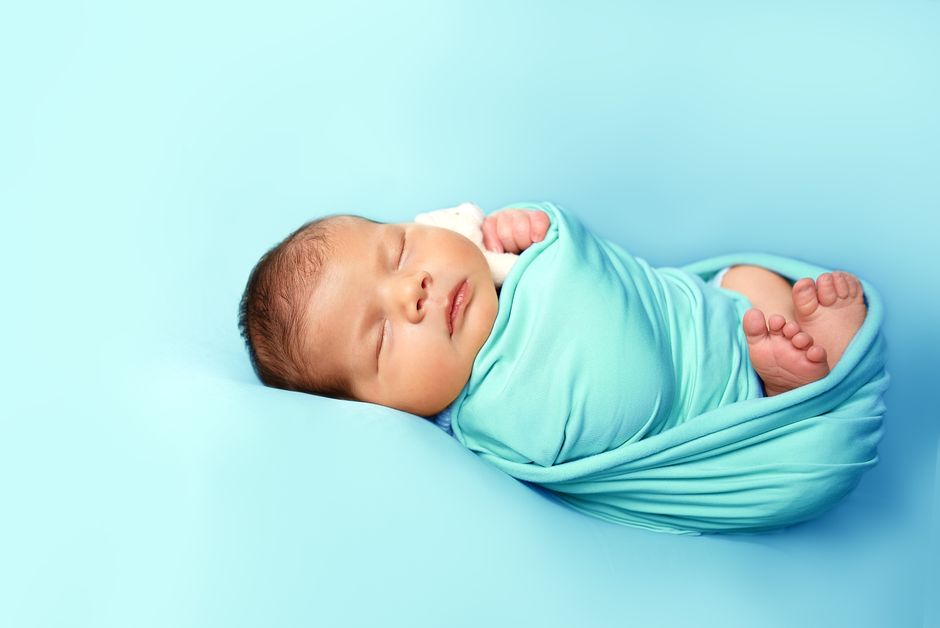
No. It is not safe for newborns to sleep on their tummy. Placing a baby to sleep on the back for every sleep period is one of the most strongly supported recommendations in pediatric medicine, and it is linked to a substantially lower risk of sudden infant death syndrome (SIDS). Tummy time while the baby is awake and supervised is a different activity entirely, and it is good for them.
Is It Safe For Newborns To Sleep On Their Tummy?
For sleep, no. Back sleeping is the recommended position from birth through the first year, and this guidance has not changed.
The reason is not a matter of opinion. Since the early 1990s, public health campaigns in the United States and other countries have urged parents to put babies on their backs to sleep. As back sleeping became common, deaths from SIDS fell sharply. Researchers have continued to study the link, and the finding holds: babies placed on their stomachs to sleep face a higher risk.
Some parents worry that a baby who spits up during sleep might choke while on the back. This is a common and understandable concern, but it is not supported by the anatomy. In a healthy baby, the airway sits above the esophagus. When a baby lies on the back, spit-up has to work against gravity to reach the airway, and protective reflexes help clear it. On the stomach, the opposite is true.
The one exception is medical. Some babies with specific health conditions are placed on their stomachs by clinicians for a defined reason. That is a decision made by a doctor, not a general rule for healthy newborns.
Why Does Sleep Position Matter So Much?
The exact causes of SIDS are still not fully understood, and researchers continue to study it. What is clear is that certain sleep conditions raise the risk, and stomach sleeping is one of them.
Several factors seem to connect stomach sleeping to a higher risk:
- Breathing mechanics. A baby on the stomach may rebreathe their own exhaled air, which can lower oxygen levels and raise carbon dioxide levels.
- Arousal. Babies sleeping on the back wake more easily and more often. That sounds like a downside, but easier arousal appears to be protective.
- Airway position. The weight of the head and the position of the jaw can affect how open the airway stays.
- Heat. Stomach sleeping can trap more heat around the face, and overheating is a known risk factor.
None of these alone explains every death. Together they help explain why the sleep position matters so much in the first months of life, when a baby’s ability to regulate breathing and waking is still developing.
When Can A Baby Sleep On Their Tummy?
The recommendation to place a baby on the back applies to all sleep, including naps, until the baby turns 1 year old. That is the standard guidance from major pediatric organizations, and it has been consistent for years.
There is a natural question here. Once a baby can roll over on their own, in both directions, do you have to keep flipping them back? Generally, no. Once a baby can roll from back to stomach and back again, they have the strength and coordination to change position themselves. If they roll onto their stomach during sleep, most guidance says you do not need to keep turning them over.
But the setup still matters. The baby should still be placed on the back to start. The crib should be free of pillows, blankets, bumper pads, stuffed animals, and anything soft. A firm mattress with a fitted sheet is the goal.
Rolling usually begins somewhere around 4 to 6 months, but every baby is different. Some roll earlier, some later. The milestone, not the calendar, is what matters.





What Is Tummy Time, And Why Does It Matter?
Tummy time is supervised awake time on the stomach. It is not the same as stomach sleeping, and it is genuinely good for a baby.
When a baby spends time on their tummy while awake and watched, they build strength in the neck, shoulders, and arms. That strength supports rolling, sitting, crawling, and other motor milestones. Tummy time also helps prevent a flat spot on the back of the head, which can develop when a baby spends too much time on their back.
Here is the part some parents miss. Back sleeping and tummy time are not in conflict. They work together. Back sleeping protects during sleep. Tummy time builds the muscles that let a baby move and eventually roll. A baby who never gets tummy time may be slower to develop the strength that makes rolling safe.
Some practical points:
- Start early. Short sessions in the first weeks are fine.
- Keep it short at first. A few minutes at a time is enough for a newborn.
- Do it when the baby is awake and alert, not drowsy or just fed.
- Stay within arm’s reach the entire time.
- If the baby fusses, try again later. A little at a time adds up.
If a baby strongly resists tummy time, or seems to have trouble lifting their head as they get older, that is worth mentioning to a pediatrician. It can be a sign of a motor issue that benefits from early support.
What About Choking, Spit-Up, And Reflux?
This is the concern that leads many parents to try stomach sleeping, so it deserves a direct answer.
For most healthy babies, back sleeping does not increase the risk of choking on spit-up. As noted earlier, the airway sits above the food pipe, and gravity plus reflexes help keep spit-up out of the airway. Babies also have a strong gag and cough reflex.
Babies with reflux or frequent spit-up are still generally placed on the back to sleep. If a baby has a diagnosed condition that affects breathing or swallowing, a doctor may give specific instructions. Those instructions come from the clinician, not from a general rule.
One thing to avoid: propping a baby up to sleep, such as on a pillow or a wedge. This is not a safe substitute for back sleeping on a flat, firm surface, and it is not recommended.
What Else Lowers The Risk Of SIDS?
Sleep position is the single most talked-about factor, but it is not the only one. Several other steps are well supported and worth doing together.
- Place the baby on a firm sleep surface, such as a crib mattress with a fitted sheet.
- Keep the sleep space free of soft items, including blankets, pillows, and toys.
- Share a room with the baby, but not the same bed, for the first months.
- Keep the room at a comfortable temperature and avoid overdressing the baby.
- Offer a pacifier at sleep time once breastfeeding is established.
- Keep the baby away from smoke, both during pregnancy and after birth.
- Follow the recommended schedule for well-baby visits and vaccines.
Breastfeeding is also associated with a lower risk in many studies, though the reasons are complex and the evidence is not as clean as it is for sleep position.
One clarification that surprises some parents: bed sharing, meaning the baby sleeps in the same bed as an adult, is not the same as room sharing, where the baby sleeps in the same room in their own space. Room sharing is recommended. Bed sharing is not, because it raises the risk of suffocation and other sleep-related deaths.
What If A Baby Rolls Onto Their Stomach During Sleep?
Once a baby can roll both ways on their own, they can usually be left in whatever position they settle into. The key is that they got there themselves, and that the sleep space is safe.
Before a baby can roll both ways, if they end up on their stomach, gently return them to their back. You do not need to hover over the crib all night. Place them on the back at the start of every sleep, and let normal development take its course.
If you are ever unsure whether your baby’s rolling is typical, or whether their sleep setup is safe, ask your pediatrician. That is exactly the kind of question they answer every day, and there is no such thing as a silly one when it comes to a newborn’s sleep.
Frequently Asked Questions
Is it ever okay for a newborn to sleep on their tummy?
Only if a doctor has specifically instructed it for a medical reason. For healthy newborns, back sleeping is recommended for every sleep period through the first year.
What if my baby sleeps better on their tummy?
Better sleep does not make stomach sleeping safe, and the position is linked to a higher risk of SIDS. Keep placing your baby on their back, and talk with your pediatrician if sleep is a struggle.
Can a baby choke on spit-up while sleeping on their back?
For most healthy babies, back sleeping does not increase choking risk because the airway sits above the food pipe. Babies with a diagnosed swallowing or breathing condition should follow their doctor’s specific guidance.
When can a baby safely sleep on their stomach?
Once a baby can roll both from back to stomach and back again on their own, they can be left in the position they choose. Always place them on their back to start, and keep the sleep space free of soft items.
