
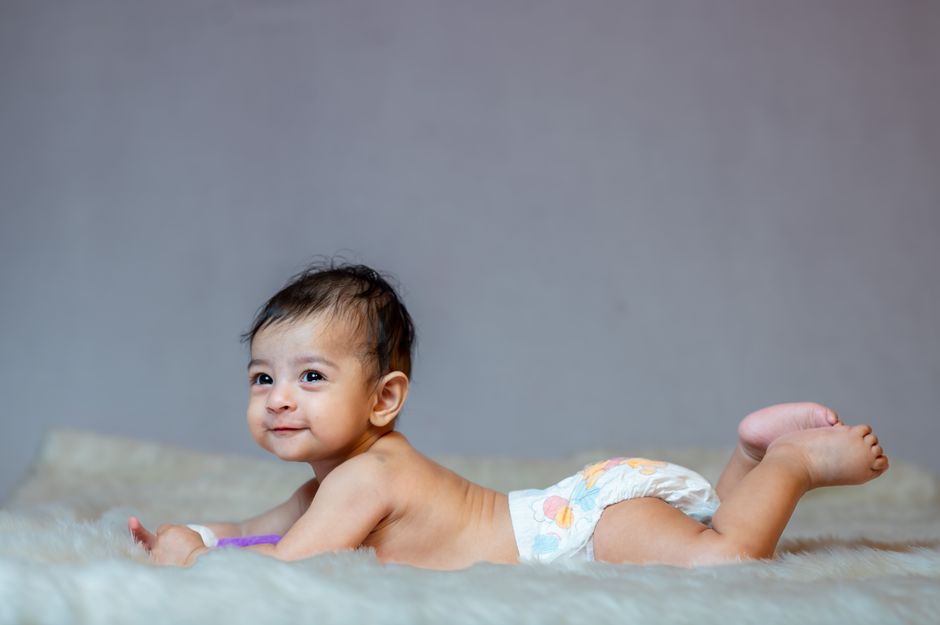
Your baby’s face scrunches into a smile in the middle of a nap, eyes closed, fast asleep. It looks like a happy dream. And in a way, it is. Infant sleep smiles are a normal part of brain development. They happen because a sleeping baby’s brain is busy building connections, and smiling is one of the earliest reflexes to appear.
Newborns smile in their sleep long before they can smile on purpose. Those early sleep smiles are not a response to you, a joke, or a happy thought. They are a sign that the nervous system is maturing on schedule.
Why Do Infants Smile In Their Sleep?
Sleep smiles come from the brainstem, the oldest and most automatic part of the brain. During sleep, this region sends small bursts of activity through the nerves that control the face. The result is a quick smile, sometimes a frown or a pout, and often a twitch of the arms or legs.
Researchers call this spontaneous activity. It happens without any outside trigger. Your baby is not reacting to anything. The brain is simply running through its own circuits.
This kind of activity is not random noise. It appears to help the developing brain organize and strengthen nerve pathways. A sleeping infant brain is far from idle. It is doing some of its most important work.
So the short answer to why infants smile in their sleep is this: the brain is practicing. Smiling is one of the movements it rehearses before your baby can do it on purpose while awake.
Is It Different From a Social Smile?
Yes, and the difference matters. A social smile is a real milestone. Your baby looks at you, recognizes your face, and smiles back. That is communication.
Sleep smiles are not communication. They are reflexes. This is why they show up so early, often in the first days and weeks of life.
The social smile usually arrives later. Many babies begin smiling in response to a familiar face somewhere around six to eight weeks of age. Some reach it a little sooner, some a little later. A wide range is normal.
Here is the part that surprises many parents. The sleep smile comes first, and the social smile comes second. That order is expected. It reflects how the brain develops, from automatic reflex toward deliberate, social behavior.
If your newborn smiles in their sleep but not yet at you, nothing is wrong. You are watching the earlier stage.
What Is Happening in a Baby’s Brain During Sleep?
Infants spend a large share of their sleep in active sleep, the stage that resembles REM sleep in adults. During active sleep, brain activity is high, and the body may twitch and move.
This stage is thought to play a big role in brain development. It is when the brain sorts through new information and builds connections between nerve cells. For a newborn, almost everything is new information.
Sleep smiles often appear during this active sleep stage. So do the little jerks and startles you may notice. These movements are a normal part of how the sleeping brain wires itself.
One detail worth knowing: infants cycle through sleep stages differently than adults. They move between active sleep and quiet sleep more often, and their sleep cycles are shorter. That is one reason babies wake so frequently. It is also why you may catch several sleep smiles in a single nap.





When Do Babies Start Smiling in Their Sleep?
Sleep smiles can appear in the first weeks of life, sometimes within days of birth. Some parents notice them even earlier.
These early smiles are not under your baby’s control. They come and go on their own. You might see one during a nap, then not see another for a while.
Over the following weeks, the smiles become more frequent and easier to spot. As your baby’s nervous system matures, the automatic movements smooth out and give way to more purposeful ones.
By the time the social smile shows up, usually around six to eight weeks, you will likely be seeing both kinds. The sleep smiles continue, but now they share the stage with smiles meant just for you.
Do Sleep Smiles Mean My Baby Is Happy or Dreaming?
This is one of the most common questions parents ask, and the honest answer is no. A sleep smile does not mean your baby is having a happy dream.
Newborns are not thought to dream in the way older children and adults do. Dreaming involves complex brain activity and memory that a very young infant’s brain is still developing. The smile is a reflex, not a feeling.
This does not make the moment any less lovely. It just means the smile is not a window into your baby’s thoughts. It is a window into their developing brain.
As your baby grows, sleep smiles may start to blend with real emotions. A toddler can smile in sleep for reasons closer to dreaming. But in early infancy, the smile is automatic.
Should I Worry If My Baby Does Not Smile in Sleep?
No. Not every baby shows obvious sleep smiles, and some show them rarely. That alone is not a cause for concern.
What matters more is the social smile and your baby’s overall development. Most babies begin smiling in response to people around six to eight weeks of age.
If your baby is not smiling at people by around two to three months, or if you have any concern about their development, talk with your pediatrician. Early questions are always reasonable. Your doctor can tell you whether what you are seeing is within the normal range.
Sleep smiles are not a milestone you need to track. They are a pleasant side effect of a busy, growing brain.
What Else Happens During Infant Sleep?
Smiling is just one of many things you might notice while your baby sleeps. The list can look surprising the first time you see it.
- Twitching of the arms, legs, or face
- Brief startles or jerky movements
- Frowning, pouting, or sucking motions
- Eyes moving under closed lids
- Irregular breathing that speeds up and slows down
All of these are common in healthy infants, especially during active sleep. They reflect a nervous system that is active and developing, not one that is in trouble.
It helps to know the difference between normal sleep movements and something that needs attention. Normal movements are brief and stop on their own. If you ever see movements that seem unusual or that you cannot explain, ask your pediatrician rather than guessing.
A Note on Safe Sleep
While we are on the subject of sleep, the basics of safe sleep are worth repeating. They are well established and they matter.
Place your baby on their back to sleep, on a firm surface, in their own sleep space. Keep the sleep area free of soft bedding, pillows, bumpers, and toys. These steps are recommended by major health organizations to lower the risk of sleep-related infant deaths.
Room-sharing without bed-sharing is often advised for the first months. If you have questions about your baby’s sleep setup, your pediatrician is the right person to ask.
Sleep smiles are a sweet and normal part of infancy. They are a small sign that your baby’s brain is growing exactly as it should.
Frequently Asked Questions
Why do babies smile in their sleep?
Sleep smiles come from automatic brain activity in the brainstem, not from happy thoughts or dreams. They are a normal reflex that appears as the nervous system develops.
At what age do babies start smiling in their sleep?
Sleep smiles can appear in the first days and weeks of life, often before a baby can smile on purpose. The social smile, which is a real response to people, usually arrives around six to eight weeks.
Do sleep smiles mean my baby is dreaming?
Newborns are not thought to dream the way older children do, so a sleep smile is not a sign of a happy dream. It is a reflex, not an emotion.
Should I be worried if my baby does not smile in their sleep?
No, not every baby shows clear sleep smiles, and that alone is not a concern. Talk with your pediatrician if your baby is not smiling at people by around two to three months or if you have any developmental worries.
