
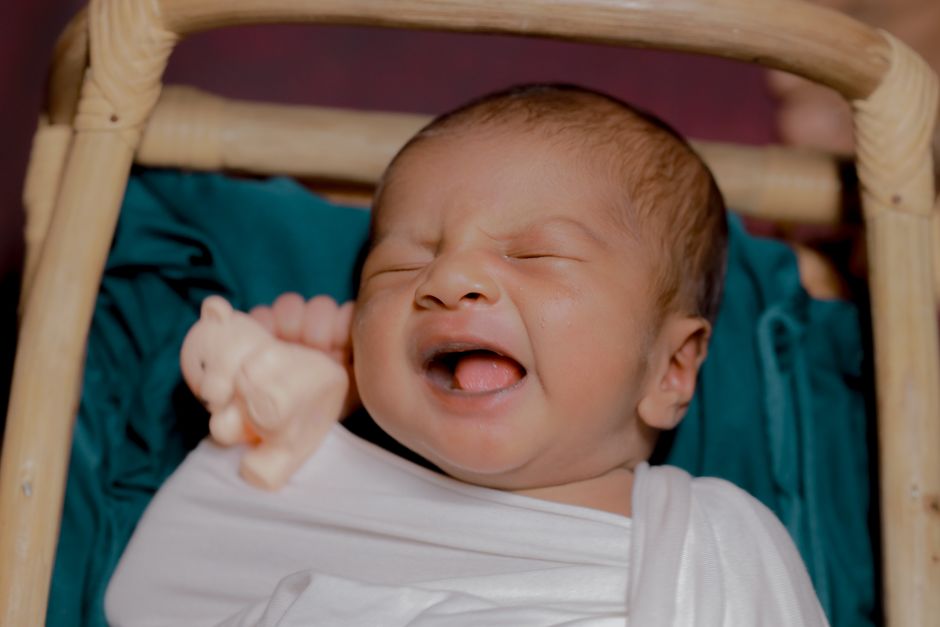
No. Babies should not sleep on their side. Every major pediatric and safe-sleep authority recommends that infants be placed on their back for every sleep until they turn one year old. Side sleeping is not a safe middle ground between back and stomach — it carries real risks, and it is one of the more common mistakes well-meaning parents make.
The reason comes down to both anatomy and reflexes. A baby placed on their side can roll onto their stomach far more easily than a baby placed on their back, and once on the stomach, the risk of sudden infant death syndrome (SIDS) and accidental suffocation rises. This is not a small detail. It is one of the clearest findings in infant health research over the past three decades.
Why Is Side Sleeping Unsafe for Babies?
Side sleeping is unstable. An infant placed on their side tends to tip onto their stomach, and the stomach position is the one linked to the highest risk.
When a baby sleeps face-down, they re-breathe their own exhaled air. That air is higher in carbon dioxide and lower in oxygen than fresh room air. For adults this is uncomfortable but manageable. For infants, whose arousal reflexes and breathing control are still developing, it can be dangerous. The stomach position also makes it harder for a baby to cool themselves and to rouse if breathing becomes irregular.
There is a second issue. Babies placed on their side are not starting from a stable position. A slight movement — a leg kick, a stretch, a startle reflex — can roll them forward onto the stomach. From the back, a young infant who cannot yet roll has no easy path to the stomach. That difference matters most in the first months of life, when SIDS risk is highest.
The evidence behind back sleeping is not based on a single study. It comes from population data across many countries showing that SIDS rates fell sharply after back-sleep campaigns began in the 1990s. The American Academy of Pediatrics has recommended back sleeping for every sleep since 1992, and that guidance has been reaffirmed in every policy statement since.
What About the Risk of Choking or Spitting Up?
This is the worry that leads many parents to try side sleeping. It is understandable — and the concern is based on a misunderstanding of infant anatomy.
Babies have a naturally protective airway shape. Their windpipe sits slightly higher and more forward than an adult’s, and the opening to the lungs is positioned so that spit-up tends to pool in the upper part of the throat and drain back down the esophagus rather than into the airway. When a baby is on their back, gravity actually helps this process.
On the stomach, the opposite happens. The airway opening sits below the esophagus, so spit-up can pool near the entrance to the lungs. This is one reason stomach sleeping is riskier, not safer, even for babies who spit up often.
If your baby has reflux or spits up frequently, that is not a reason to change sleep position. It is a reason to talk to your pediatrician about feeding and positioning during waking hours.
Can Babies Sleep On Their Side If They Roll There Themselves?
Once a baby can roll from back to stomach and back again on their own, they may choose their own sleep position. At that point, the risk profile changes.
The key phrase is both directions. A baby who can only roll onto their stomach but cannot yet roll back is still at higher risk and should be returned to their back if you notice them on their side or stomach. A baby who can roll both ways has the motor control to reposition themselves, and the evidence suggests the risk of SIDS is lower for these infants.
Even then, the recommendation is to place the baby on their back at the start of every sleep. What they do after that is up to them. You do not need to keep flipping a mobile baby back over all night.
This distinction trips up a lot of parents. “My baby rolls onto their side in their sleep” is different from “I put my baby down on their side.” The first is a developmental milestone. The second is a sleep practice that should be avoided.





What Does Safe Sleep Actually Look Like?
Back sleeping is one part of a larger set of practices. Each one addresses a different risk.
- Place on the back for every sleep — naps and nighttime, every time.
- Use a firm, flat surface that meets current safety standards, with a fitted sheet only.
- Keep the sleep space clear — no pillows, blankets, bumper pads, stuffed animals, or positioners.
- Share a room, not a bed. The AAP recommends room-sharing without bed-sharing, ideally for the first six months.
- Avoid overheating. Dress your baby in one more layer than you would wear in the same room.
- Offer a pacifier at sleep time once breastfeeding is well established.
- Keep up with well-baby visits and follow your pediatrician’s guidance on immunizations.
Some parents worry that back sleeping will flatten the back of the baby’s head. This is a real concern called positional plagiocephaly, and it is manageable. Plenty of supervised tummy time while the baby is awake, plus alternating the direction the baby faces in the crib, usually helps. Tummy time also builds the neck and shoulder strength a baby needs to roll and eventually sit up.
Do Sleep Positioners or Wedges Help?
No. Sleep positioners — the foam wedges and inclined cushions sold to keep babies on their side or back — have been linked to infant deaths, and federal regulators have warned against their use.
These products create a false sense of security. They promise to hold a baby in a “safe” position, but they can trap a baby’s face against the padding or allow them to roll into a dangerous spot. The FDA has never approved any sleep positioner as safe for preventing SIDS, and the agency has issued repeated warnings about them.
If you already own one, the safest choice is to stop using it. A plain, firm mattress with a fitted sheet is all a baby needs.
What If My Baby Seems to Prefer Sleeping on Their Side?
Newborns do not really have a sleep position preference. What they have is a habit formed by how they are placed. If a baby is routinely put down on their side, they may get used to it — but that does not mean it is safe.
Some babies are more restless on their back at first. This usually settles within a few nights. If your baby seems uncomfortable, check for common issues: a room that is too warm, a wet diaper, or hunger. None of these require a change in sleep position.
If your baby has a medical condition that affects breathing, feeding, or muscle tone, ask your pediatrician about positioning. In rare cases, a clinician may recommend a specific approach. That guidance should come from your baby’s care team, not from a general rule of thumb.
When Should You Stop Worrying About Sleep Position?
The back-sleeping recommendation applies until a baby turns one year old. After that, the risk of SIDS drops dramatically and sleep position becomes far less of a concern.
That said, most toddlers move around constantly in their sleep anyway. By the time a child is walking and talking, sleep position is not something parents need to manage.
The window that matters most is the first six months. That is when SIDS risk is highest and when a baby’s ability to reposition themselves is most limited. During that period, consistency matters more than almost anything else. Every caregiver — grandparents, babysitters, daycare staff — should know and follow the same rule.
Frequently Asked Questions
Can babies sleep on their side?
No. Babies should be placed on their back for every sleep until they turn one year old. Side sleeping is unstable and can lead to the stomach position, which carries the highest risk of SIDS and suffocation.
What if my baby rolls onto their side during sleep?
If your baby can roll both onto their stomach and back again on their own, they can choose their own sleep position. If they can only roll one way, gently return them to their back.
Is side sleeping safer than stomach sleeping?
Neither is safe for sleep. Side sleeping is less risky than stomach sleeping, but it is still not recommended because babies can easily roll from their side onto their stomach.
Do sleep positioners keep babies safe on their side?
No. Sleep positioners have been linked to infant deaths and are not approved for SIDS prevention. A firm, flat mattress with a fitted sheet is the safest sleep surface.
