
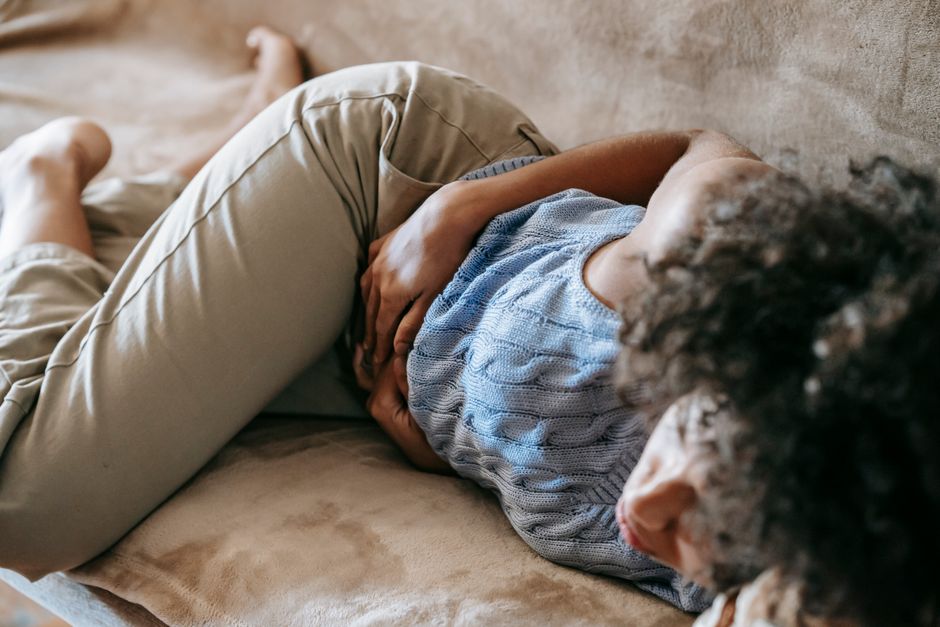
Yes, cramping during ovulation is normal for many people. The medical term is mittelschmerz, which is German for “middle pain.” It happens around the middle of your menstrual cycle when an egg is released from an ovary. Most people who experience it describe a brief, sharp pain or a dull ache on one side of the lower belly.
It is not dangerous. It is not a sign of a problem. But it can be uncomfortable, and it can be confusing if you do not know what is happening. Understanding why it happens can help you tell the difference between a normal ovulation cramp and something that needs a doctor’s attention.
Why Does Ovulation Cause Cramping?
Each month, a follicle in one of your ovaries matures. This follicle is a small fluid-filled sac that holds an egg. When the egg is ready, the follicle swells and stretches the surface of the ovary. That stretching can cause a sharp or dull pain.
Eventually the follicle ruptures to release the egg. The release sends a small amount of fluid and sometimes a little blood into your abdominal cavity. This fluid can irritate the lining of your abdomen, which causes mild pain. The pain usually stays on the side where the egg was released.
Your fallopian tube also moves and contracts to help pick up the egg. That movement can add to the cramping sensation. All of this is normal physiology. It is your body doing exactly what it is designed to do.
What Does Ovulation Cramping Feel Like?
People describe ovulation pain in different ways. Some feel a sudden sharp twinge that lasts only a few seconds. Others feel a dull, aching pressure that lasts a few hours. A small number of people feel a cramp that lasts a day or two.
Common descriptions include:
- A sharp stab on one side of the lower belly
- A dull ache that comes and goes
- A feeling of pressure or fullness on one side
- Light spotting that lasts a short time
The pain is usually mild. It rarely stops you from doing normal activities. It can alternate sides from month to month because ovulation typically alternates between ovaries. Some people only notice it occasionally, and some people never notice it at all.
When Does Ovulation Cramping Happen?
Ovulation happens about 14 days before your next period starts. If you have a regular 28-day cycle, that is around day 14. If your cycle is longer or shorter, the timing shifts.
The cramp happens at the moment of ovulation or very close to it. Some people feel it a few hours before the egg is released, as the follicle stretches. Others feel it right as the follicle ruptures. The pain usually resolves within a few hours, though it can last up to 24 to 48 hours in some cases.
Tracking your cycle can help you recognize the pattern. If you notice the same mild pain around the same time each month, it is likely ovulation cramping.


Is It Normal To Cramp During Ovulation? How Common Is It?
It is normal, but not everyone gets it. Research suggests that roughly 40 percent of people who menstruate experience mittelschmerz at some point in their lives. Some people feel it every month. Others feel it only occasionally. Some never feel it.
Having ovulation cramps does not mean anything is wrong with your fertility. It does not mean you are more fertile or less fertile. It is simply a variation of normal reproductive function. The absence of ovulation cramping is also normal.
If you are trying to conceive, ovulation pain can be a helpful sign. It tells you that ovulation is occurring. But it is not a precise method of timing intercourse. Ovulation tests that measure luteinizing hormone are more reliable for predicting your fertile window.
How To Relieve Ovulation Cramping
Most ovulation cramps do not need treatment. They are brief and mild. But if the pain bothers you, there are safe options.
Over-the-counter pain relievers can help. Ibuprofen or acetaminophen taken at the labeled dose can reduce the discomfort. Always follow the dosing instructions on the package. Do not take more than the recommended amount.
A heating pad on the lower belly can relax the muscles and ease the ache. Warm baths work too. Gentle movement, like walking, can sometimes help more than resting. There is no strong evidence that any particular home remedy works better than another, so choose what feels comfortable for you.
Hormonal birth control is another option. Birth control pills, patches, and rings prevent ovulation. If you do not ovulate, you cannot have ovulation pain. This is a common approach for people whose ovulation cramps are severe enough to interfere with daily life.
When To See A Doctor
Ovulation cramps are mild and short-lived. If your pain is severe, lasts longer than a couple of days, or happens outside your expected fertile window, it may not be ovulation pain.
See a doctor if you have:
- Pain that is severe enough to interrupt normal activities
- Pain lasting more than two or three days
- Fever, nausea, or vomiting with the pain
- Heavy bleeding or bleeding that is not light spotting
- Pain during urination or bowel movements
- Dizziness or fainting
These symptoms can point to other conditions. Ovarian cysts, endometriosis, pelvic inflammatory disease, appendicitis, and ectopic pregnancy can all cause lower abdominal pain. They are less common than ovulation cramps, but they are serious. If your pain does not match the typical pattern of mittelschmerz, get it checked.
Ovulation Cramping vs. Implantation Cramping
People who are trying to conceive sometimes confuse ovulation cramps with implantation cramps. They happen at different times and feel different.
Ovulation cramps happen about two weeks before your next period. Implantation cramping, if it happens at all, occurs about six to ten days after ovulation. That is when a fertilized egg attaches to the lining of the uterus. Implantation cramps are usually very mild and brief, more like a light pulling sensation than a real cramp.
Timing is the clearest way to tell them apart. If you feel pain at mid-cycle, it is almost certainly ovulation. If you feel a faint twinge closer to when your period is due, it could be implantation. But implantation cramping is not something everyone feels, and its absence means nothing.
Can Ovulation Cramping Change With Age?
Ovulation cramping can change over time. Some people notice it becomes more noticeable in their late 20s and 30s. Others find it fades. There is no strong research explaining why these changes happen, but it likely relates to natural shifts in hormone levels and cycle patterns.
As you approach menopause, cycles often become irregular. Ovulation may not happen every month. You might notice ovulation cramps some months but not others. This is normal. If you are in your 40s and your cycles are becoming unpredictable, ovulation pain may become harder to predict too.
If you have had pelvic surgery, an infection, or endometriosis, scar tissue can change how ovulation pain feels. The pain may be sharper or last longer. This is not necessarily a problem, but it is worth mentioning to your doctor if it is new for you.
Frequently Asked Questions
How long does ovulation cramping last?
Most ovulation cramps last from a few minutes to a few hours. Some people feel a dull ache for up to 24 to 48 hours, which is still within the normal range.
Can ovulation cramping be on both sides?
Usually it is on one side only, because ovulation typically releases one egg from one ovary per cycle. Rarely, both ovaries release eggs in the same cycle, which can cause pain on both sides.
Does ovulation cramping mean you are ovulating?
It usually does, but not always. The pain strongly suggests ovulation is happening, but it is not a guarantee. If you need to know for certain, ovulation test strips or tracking basal body temperature are more accurate.
Is severe ovulation pain normal?
No. Mild to moderate pain is normal, but severe pain is not. If the pain is intense, lasts more than a few days, or comes with other symptoms, see a doctor to rule out other conditions.
