
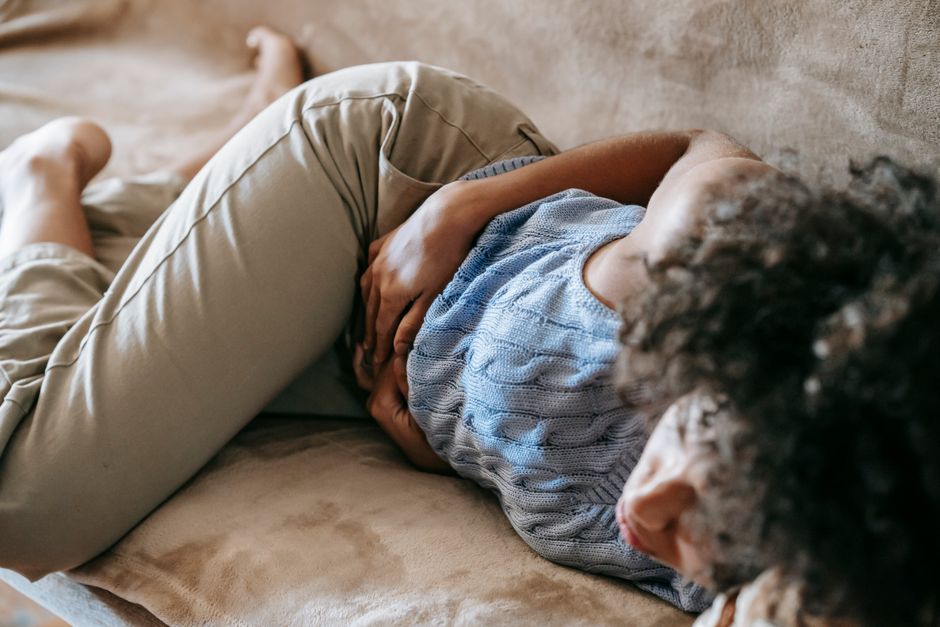
Ovulation pain, also called mittelschmerz, is usually felt on one side of the lower belly. The side can change from month to month, but it is not random. The pain typically appears on the side of the ovary that released the egg that month. For most women, this alternates between the right and left sides, though some women feel it on the same side for several cycles in a row.
What Side Is Ovulation Pain Usually On?
Ovulation pain can occur on either the right or left side. There is no “usual” side that applies to most women. The side depends entirely on which ovary releases the egg in that particular cycle.
Many women assume the ovaries take turns ovulating each month. That is not how it works. The ovary that releases an egg is determined by hormonal signals and local conditions within each ovary. Some research suggests the right ovary may ovulate slightly more often than the left, but the difference is small and not clinically meaningful for predicting pain location.
If you track your pain over several cycles, you may notice a pattern. Some women consistently feel pain on the same side for months at a time. Others alternate regularly. Both patterns are normal.
Why Does Ovulation Cause Pain?
Ovulation happens when a mature egg is released from a follicle inside the ovary. Before release, the follicle stretches and grows. This stretching can irritate the outer surface of the ovary, which is sensitive to pressure and pain.
When the follicle ruptures to release the egg, a small amount of fluid and sometimes a little blood spills into the abdominal cavity. This fluid can irritate the lining of the abdomen, called the peritoneum. The irritation causes a sharp, brief pain that may last a few minutes to a few hours.
For some women, the pain lingers as a dull ache for a day or two. This happens when the released fluid slowly absorbs into the body. The pain is not caused by the egg itself. The egg is microscopic and cannot be felt.
What Does Ovulation Pain Feel Like?
Most women describe ovulation pain as a sharp twinge or a sudden cramp on one side of the lower belly. Others describe it as a dull, aching pressure that builds slowly and fades over several hours.
The pain is usually mild and does not interfere with daily activities. Some women barely notice it. Others find it uncomfortable enough to mention to their doctor, though it is rarely severe.
Ovulation pain can also be accompanied by other signs. Some women notice light spotting, a small amount of vaginal discharge, or a temporary increase in sensitivity in the breast on the same side. These symptoms are normal and do not require treatment.
If the pain is severe, lasts more than a few days, or is accompanied by fever, nausea, or heavy bleeding, seek medical attention. Severe pelvic pain can be a sign of conditions unrelated to ovulation, such as ovarian cysts, appendicitis, or ectopic pregnancy.





How Long Does Ovulation Pain Last?
Ovulation pain is typically brief. Most women feel it for a few minutes to a few hours. In some cases, the pain can last up to 24 to 48 hours as a dull ache.
The timing is predictable for many women. Ovulation usually occurs about 14 days before the start of the next menstrual period. For a woman with a regular 28-day cycle, that places ovulation around day 14. For women with longer or shorter cycles, the timing shifts accordingly.
Tracking your cycle can help you predict when ovulation pain is likely to occur. Many women use calendar apps, basal body temperature tracking, or ovulation predictor kits to identify their fertile window. The pain itself can also serve as a natural sign of fertility.
Can Ovulation Pain Be on Both Sides?
Some women report feeling pain on both sides at the same time. This is uncommon but possible. It can happen when both ovaries release an egg in the same cycle, which is rare but not impossible.
More often, bilateral pain is caused by something else. The pain from one ovary can be felt on both sides because pelvic pain is not always precisely localized. The nerves in the pelvis can make it difficult to tell exactly where the pain originates.
If you consistently feel pain on both sides, or if the pain is severe, talk to your doctor. Persistent bilateral pelvic pain may indicate a condition that needs evaluation.
Ovulation Pain vs. Other Pelvic Pain
Ovulation pain is one of many causes of pelvic pain. It is important to distinguish it from other conditions that can cause similar symptoms.
Conditions that can mimic ovulation pain include:
- Ovarian cysts that rupture or twist
- Endometriosis
- Pelvic inflammatory disease
- Appendicitis, which causes pain on the right side
- Ectopic pregnancy, which is a medical emergency
- Irritable bowel syndrome or other digestive issues
Ovulation pain follows a predictable pattern tied to your cycle. It occurs mid-cycle, lasts a short time, and resolves on its own. Pain that is constant, worsening, or unrelated to your cycle warrants a medical evaluation.
If you are trying to conceive, ovulation pain can help you identify your fertile window. The pain occurs around the time the egg is released, and the egg survives for about 12 to 24 hours after ovulation. Sperm can survive in the reproductive tract for up to five days, so having intercourse in the days leading up to ovulation is when conception is most likely.
How to Manage Ovulation Pain
Most ovulation pain does not require treatment. It is a normal physiological event, not a medical condition.
If the pain is uncomfortable, simple measures can help. Applying a heating pad to the lower belly can relax the muscles and ease the ache. Over-the-counter pain relievers such as ibuprofen or acetaminophen can also reduce discomfort. Always follow the dosing instructions on the label.
Some women find that resting for a short time helps. Others prefer gentle movement, such as walking, which can relieve pelvic pressure. There is no evidence that any specific supplement or dietary change reduces ovulation pain.
Hormonal birth control is an option for women who find ovulation pain disruptive. Birth control pills, patches, and rings suppress ovulation, which eliminates the pain at its source. This is a decision to make with your doctor, especially if you are trying to conceive.
When to See a Doctor
Ovulation pain is normal, but not all pelvic pain is ovulation pain. See a doctor if you experience any of the following:
- Pain that is severe enough to interfere with daily activities
- Pain that lasts more than two or three days
- Fever, chills, nausea, or vomiting
- Heavy vaginal bleeding or bleeding between periods
- Pain during intercourse or urination
- Dizziness, fainting, or shoulder pain, which can signal internal bleeding
Sudden, sharp pain on one side, especially if it is accompanied by dizziness or fainting, can indicate a ruptured ovarian cyst or an ectopic pregnancy. Both require immediate medical attention.
Tracking your symptoms over several cycles can help you and your doctor determine whether your pain follows an ovulation pattern. A pain diary that notes the date, duration, and severity of pain can be useful during an evaluation.
Frequently Asked Questions
Can ovulation pain switch sides from month to month?
Yes, ovulation pain can switch sides from month to month. The side depends on which ovary releases the egg that cycle, and this can alternate or stay the same for several cycles.
Is ovulation pain a sign of pregnancy?
Ovulation pain itself is not a sign of pregnancy. It indicates that an egg was released, which is necessary for pregnancy, but it does not confirm that conception occurred.
How can I tell if my pelvic pain is ovulation pain?
Ovulation pain occurs mid-cycle, lasts less than two days, and is mild. Pain that is severe, persistent, or accompanied by fever or heavy bleeding is not typical ovulation pain and should be evaluated by a doctor.
Does ovulation pain mean I am fertile?
Ovulation pain suggests that ovulation is occurring, which means you are fertile at that time. The fertile window includes the days leading up to and including the day of ovulation.
