

Waiting to test for pregnancy can feel like the longest part of the journey. If you are tracking ovulation, you want to know the earliest moment a test will give you a reliable answer. Most sensitive home pregnancy tests can detect a pregnancy about 10 to 12 days past ovulation, but the most dependable result comes at 14 days past ovulation or later. Testing too early often leads to a false negative, which means the test says “not pregnant” when you actually are.
What Happens in Your Body After Ovulation
Understanding the timeline starts with the biology. After the egg is released, it travels down the fallopian tube. If sperm is present and fertilization happens, the fertilized egg continues toward the uterus. This journey takes several days.
Implantation — when the embryo attaches to the uterine lining — typically occurs between 6 and 10 days past ovulation. The embryo must implant before your body starts producing the pregnancy hormone, human chorionic gonadotropin (hCG).
hCG is the hormone that home pregnancy tests detect. It is not present in any meaningful amount before implantation. Even after implantation, hCG levels start very low and rise quickly, roughly doubling every 48 to 72 hours in early pregnancy.
When Can You Test After Ovulation?
The earliest a home pregnancy test can detect hCG is about 10 days past ovulation. At this point, hCG levels may be high enough for the most sensitive tests to pick up. However, not every pregnancy has detectable hCG at day 10. Some women will not see a positive result until day 12 or day 14.
Testing at 14 days past ovulation gives the most accurate result. By this time, the vast majority of pregnancies will produce enough hCG for a home test to detect. A negative test at 14 days past ovulation is highly reliable.
If you have irregular cycles or are unsure about ovulation timing, the safest approach is to wait until the first day of your missed period. This is the standard recommendation from test manufacturers. It avoids the confusion of uncertain ovulation dates.
Why Testing Too Early Causes False Negatives
A false negative happens when hCG levels are too low for the test to detect. This is not a faulty test. It simply means the hormone has not reached the test’s sensitivity threshold yet.
Consider the math. If implantation happens at 9 days past ovulation, hCG starts at a very low level. Two days later, at 11 days past ovulation, it has only doubled once or twice. Many tests require a minimum level of hCG to show a positive line. Testing before that level is reached produces a negative result.
Testing early and seeing a negative result can also cause unnecessary stress. The emotional toll of a false negative is real. Waiting a few extra days gives you a clearer answer and reduces the chance of confusion.


How Sensitive Are Home Pregnancy Tests?
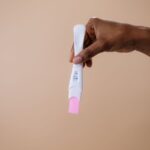
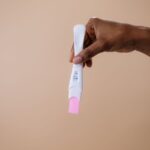
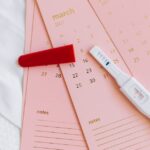
Home pregnancy tests vary in sensitivity. Most standard tests detect hCG at levels of 25 mIU/mL or higher. Some newer “early detection” tests claim sensitivity at 10 mIU/mL.
These early tests can sometimes detect pregnancy a day or two before a standard test. But the word “sometimes” matters. Even with a sensitive test, hCG levels at 10 days past ovulation may still be below the detection threshold.
The type of test you use matters less than the timing. A highly sensitive test taken too early can still be negative. A standard test taken at the right time is more trustworthy than an early test taken too soon.
Blood Tests vs. Home Urine Tests
Blood tests for pregnancy are done in a doctor’s office or lab. They measure hCG directly in your blood and are more sensitive than urine tests. A blood test can detect pregnancy as early as 6 to 8 days past ovulation.
There are two types of blood tests. A qualitative test simply says yes or no to the presence of hCG. A quantitative test, often called a beta hCG test, measures the exact level of the hormone. This can be useful for tracking how a pregnancy is progressing in early weeks.
Most women do not need a blood test. Home urine tests are highly accurate when used at the right time. Blood tests are typically reserved for situations where early confirmation is medically necessary, such as a history of ectopic pregnancy or fertility treatment monitoring.
What If You Get a Negative Test at 14 Days Past Ovulation?
A negative test at 14 days past ovulation strongly suggests you are not pregnant. But it is not an absolute guarantee. If your ovulation date was estimated incorrectly, you may have tested earlier than you thought.
If your period does not arrive within a few days of a negative test, test again. Sometimes a late ovulation or a miscalculated cycle shifts the timeline. A repeat test a few days later can clarify the situation.
If you continue to get negative tests and your period still does not come, see a healthcare provider. There are other reasons for a missed period that have nothing to do with pregnancy, including stress, hormonal imbalances, thyroid conditions, or changes in weight.
Signs of Implantation vs. Early Pregnancy Symptoms
Some women track implantation bleeding or cramping as a sign to test. Light spotting around 6 to 10 days past ovulation can be implantation bleeding. Mild cramping can also occur. But these symptoms are not reliable indicators.
Many women experience implantation-like symptoms and are not pregnant. Others have no symptoms at all and are pregnant. The body does not follow a uniform script.
Early pregnancy symptoms like breast tenderness, fatigue, and nausea are caused by rising hormone levels. These symptoms typically appear after implantation, around the same time a test could detect hCG. If you feel symptoms before 10 days past ovulation, they are more likely related to normal cycle changes than pregnancy.
Frequently Asked Questions
Can a pregnancy test be positive at 8 days past ovulation?
It is very unlikely. Implantation usually has not happened yet by 8 days past ovulation, and hCG production starts only after implantation. Most tests will not detect pregnancy this early.
Is a negative test at 12 days past ovulation definitive?
No, it is not definitive. Some pregnancies produce detectable hCG a bit later, so a negative at day 12 could still turn positive in the next few days. Testing again at 14 days past ovulation gives a more reliable answer.
Does a faint line mean early pregnancy?
A faint line usually means hCG is present but at a low level, which is common in early pregnancy. If the line appears within the test’s read window, it is generally considered a positive result. Repeat the test in two days to see if the line becomes darker.
When is the best time of day to take a pregnancy test?
First morning urine has the highest concentration of hCG and gives the most accurate early result. If you test later in the day, try to hold your urine for a few hours beforehand to allow hCG levels to build up.
Testing for pregnancy is a balance of patience and timing. The biology is clear: implantation must occur first, and then hCG must rise to detectable levels. Testing at 10 to 12 days past ovulation can give you an early answer, but 14 days past ovulation is the point where a negative result is most trustworthy. If you test negative and your period does not come, test again or speak with your healthcare provider.
