
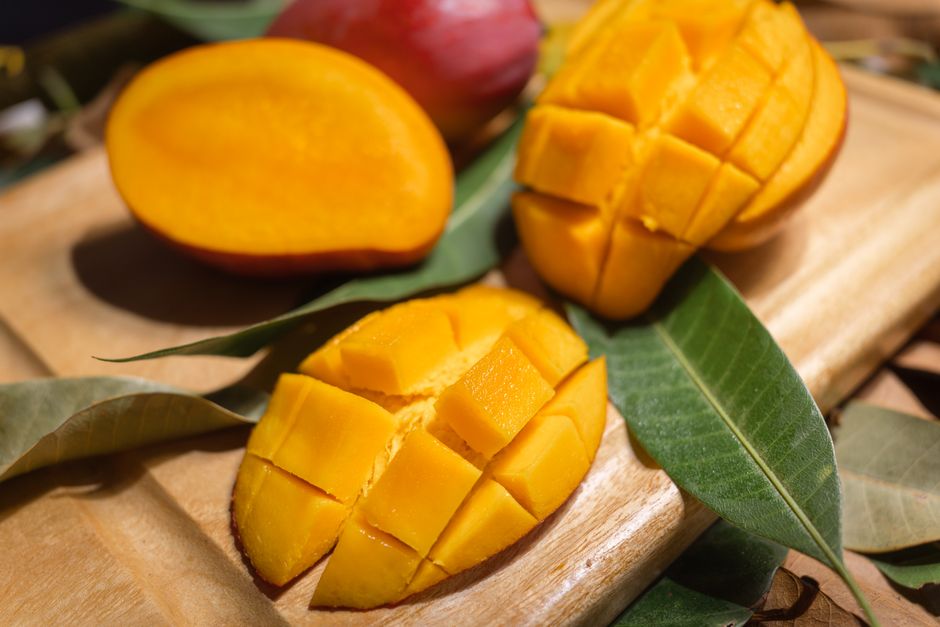
Mango pulp is simple to make: peel ripe mangoes, cut the flesh away from the pit, and blend or mash it until smooth. How long it stays fresh depends almost entirely on how you store it. Refrigerated in a clean, airtight container, homemade pulp keeps about three to four days. Frozen, it holds good quality for roughly six to twelve months.
Most people lose their pulp to two things. One is oxidation, which turns the surface brown. The other is spoilage from microbes that were never given a chance to grow because the fruit was clean and the container was sealed. Both are manageable with basic kitchen steps.
What Kind Of Mangoes Make The Best Pulp?
Ripe mangoes make pulp. Underripe ones make a tart, fibrous paste that never quite smooths out.
A ripe mango gives slightly to gentle pressure near the stem end. The skin smells sweet. Color alone is a poor guide, because different varieties ripen to different shades. Ataulfo mangoes turn deep golden yellow. Tommy Atkins often keep a red blush even when fully ripe. Kent and Haden are also common in US markets.
Fiber content varies a lot by variety. Ataulfo and Kent tend to be smoother and less stringy than Tommy Atkins, which has more fiber near the pit. If you want a silky pulp for drinks or desserts, those smoother varieties save you effort.
One clarification worth knowing: the “mango pulp” sold in cans and frozen packs at stores is usually processed from specific varieties and often has sugar or preservatives added. Homemade pulp is just fruit. That difference matters if you are watching added sugar.
How To Make Mango Pulp And Keep It Fresh Longer: Step By Step
Clean hands, clean tools, and clean fruit do most of the work. Spoilage organisms come from your hands, your knife, and the skin of the mango, not from the flesh inside a sound fruit.
Start by washing the whole mango under running water. Cut a thin slice off the stem end first. This gives you a flat, stable base and lets you see whether the fruit is sound inside.
Stand the mango upright and cut down along each side of the pit. You will get two large “cheeks” and a center section with the pit. Score the cheek flesh in a grid and scoop it out with a spoon, or run a knife along the skin.
Cut away any flesh still clinging to the pit. Discard any soft, dark, or fermented-smelling spots. A little bruising is fine to trim. A fruit that smells like alcohol or has mold is not salvageable, and cutting off the moldy part does not make the rest safe.
Blend the flesh until smooth. A blender gives the finest texture. A food processor works but leaves slightly more grain. For a thinner pulp, add a small splash of water or lime juice. Lime juice also adds acidity, which slows browning and microbial growth a little.
If you want a smoother result, push the blended pulp through a fine mesh strainer to remove fibrous bits.
How Long Does Mango Pulp Last In The Fridge?
Homemade mango pulp keeps about three to four days in the refrigerator. That range reflects general food safety guidance for fresh pureed fruit, not a precise laboratory threshold.
Store it in a clean container with a tight lid. Glass or hard plastic both work. Fill the container close to the top to limit the air space above the pulp, since oxygen drives browning.
Press a piece of plastic wrap directly onto the surface of the pulp before sealing the lid. This blocks air contact and slows the brown discoloration that shows up within hours otherwise.
Keep it in the coldest part of the fridge, not in the door. Door shelves warm up every time the fridge opens.
Browning on its own is not spoilage. It is an enzyme reaction with oxygen, and it is harmless. What tells you the pulp has actually gone bad is different: a sour or fermented smell, a fizzy or slimy texture, visible mold, or liquid separating with an off odor. If any of those appear, throw it out. Do not taste it to check.





Can You Freeze Mango Pulp?
Yes, and freezing is the best way to keep mango pulp for months rather than days. Frozen at a steady temperature, homemade pulp holds good eating quality for about six to twelve months.
Freeze in portions you will actually use. Thawing and refreezing degrades texture and raises the risk of contamination.
- Ice cube trays work well for small portions you can drop into smoothies.
- Freezer bags laid flat freeze quickly and stack neatly.
- Small rigid containers with tight lids protect the pulp from freezer burn.
Leave a little headspace in rigid containers because pulp expands as it freezes. Press out as much air as possible from bags before sealing.
Some browning at the surface is normal after freezing. It does not mean the pulp is spoiled. Thaw it in the refrigerator, not on the counter, and use it within a couple of days once thawed.
Freezing does change texture. Water in the fruit forms ice crystals that break cell walls, so thawed pulp can look thinner or slightly grainy. It works fine in smoothies, sauces, and cooked dishes. For eating straight from the bowl, fresh pulp is better.
Does Adding Lime Juice Or Sugar Help It Last?
Lime or lemon juice helps a little, mostly by slowing browning. The acid lowers the surface pH, which slows the enzyme that turns pulp brown. It is a modest effect, not a preservative in the food-safety sense.
Sugar is a different story. Adding sugar does not preserve mango pulp at home. In high enough concentrations, sugar can draw water out of microbial cells and slow their growth. The amounts used in home recipes are nowhere near that level. A sweetened pulp can actually spoil faster in some cases, because sugar feeds yeasts.
Neither lime juice nor sugar replaces refrigeration or freezing. Treat them as flavor and color helpers, not preservation methods.
What does help, according to general food safety practice, is heat. Commercial canned and bottled mango pulp is pasteurized, which is why it sits on a shelf for a year or more. Home canning of fruit purees is a different matter, and US food safety guidance treats pureed fruit as a low-acid product that requires pressure canning rather than a boiling water bath. If you want shelf-stable pulp, follow tested pressure-canning instructions for your altitude rather than improvising.
Common Mistakes That Shorten Shelf Life
Most spoilage traces back to a handful of avoidable errors.
- Using overripe or damaged fruit. Bruised, fermented, or moldy mangoes carry more microbes from the start.
- Leaving the pulp out at room temperature. Two hours is the general limit before bacteria multiply quickly.
- Storing in a wide, half-empty container. More air space means faster browning and more oxygen for spoilage organisms.
- Dipping a used spoon back into the container. Saliva introduces bacteria that shorten the life of the whole batch.
- Thawing on the counter. Thaw in the fridge so the pulp never sits in the temperature range where bacteria grow fastest.
One point that surprises people: the brown layer on top of stored pulp is not a sign of spoilage by itself. Scrape it off if you like, or stir it in. Judge freshness by smell, texture, and any sign of mold, not by color alone.
How To Use Mango Pulp Before It Goes Bad
If you have more pulp than you can finish in a few days, freeze it in recipe-sized portions. That way you thaw only what you need.
Mango pulp works in smoothies, lassi, marinades, salad dressings, and desserts like mousse or sorbet. It also blends into sauces for chicken or fish, where its sweetness pairs with lime, chili, or ginger.
When you cook with thawed pulp, expect a softer set in desserts that rely on the fruit’s natural pectin. Fresh pulp gels more reliably than frozen.
Frequently Asked Questions
How long does homemade mango pulp last in the fridge?
About three to four days in a clean, airtight container kept in the coldest part of the refrigerator. Discard it sooner if you notice a sour smell, slimy texture, or mold.
Can you freeze mango pulp?
Yes, and freezing is the best way to keep it long term. Stored at a steady freezer temperature, homemade pulp holds good quality for roughly six to twelve months.
Why does my mango pulp turn brown?
Browning is an enzyme reaction with oxygen, and it is harmless. Pressing plastic wrap onto the surface and adding a little lime juice slows it down.
Does adding sugar make mango pulp last longer?
No, not at the amounts used in home recipes. Sugar at those levels does not preserve the pulp and can feed yeasts, so refrigeration or freezing is still required.
