
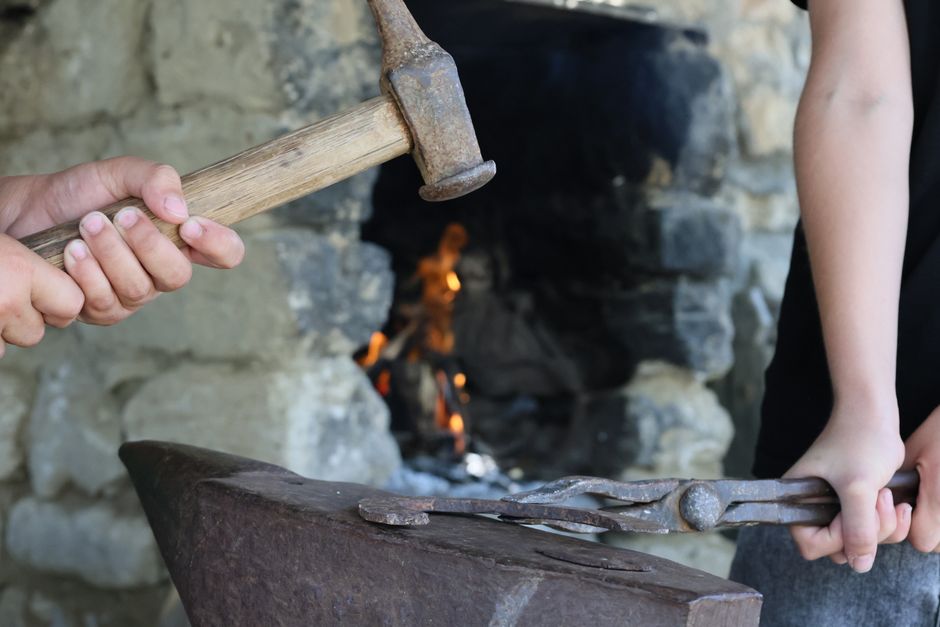
Hardened steel can be softened without a furnace by heating it with a torch or in a hot fire until it reaches a specific color, then letting it cool very slowly. This process is called annealing. It works because the slow cooling allows the steel’s internal structure to relax, removing the internal stress that made it hard and brittle.
What Does It Mean To Soften Hardened Steel?
Steel becomes hardened through heat treatment. When steel is heated to a high temperature and then quenched—cooled quickly in water or oil—it becomes very hard but also brittle. The fast cooling traps carbon atoms in a stressed, rigid structure.
Softening reverses that process. The goal is to remove the internal stress and allow the steel to become machinable or workable again. In metallurgy, this is called annealing. The steel is heated and then cooled slowly, usually over several hours, so the internal structure can rearrange into a softer, more stable form.
You do not need an industrial furnace to do this at home or in a small shop. A propane torch, a charcoal forge, or even a wood fire can generate enough heat. The key is controlling the cooling rate, not just reaching the temperature.
How To Soften Hardened Steel Without A Furnace
Start by identifying the type of steel you have. High-carbon steel and tool steel respond well to annealing. Mild steel is already soft and does not need this treatment. Stainless steel requires different handling and is harder to anneal at home.
Use a torch or a hot fire to heat the steel evenly. Move the flame across the entire piece so no single spot gets hotter than another. Heat until the steel reaches a dull red color, around 1300°F to 1400°F. Do not heat it to bright orange or white, which means you are burning the steel.
Once the steel is uniformly red, remove it from the heat and bury it in a container of dry sand, vermiculite, or lime. You can also wrap it in ceramic fiber blanket and place it in a bucket of ash. The point is to slow the cooling as much as possible. Leave it there until it reaches room temperature, which can take several hours or overnight.
Do not quench it in water. Quenching is the opposite of what you want. Slow cooling is the entire mechanism that softens the steel.
Why Slow Cooling Changes The Steel
Steel is an alloy of iron and carbon. When it is heated high enough, the carbon dissolves into the iron structure. Fast cooling traps that carbon in a distorted crystal lattice. That distortion is what makes the steel hard and brittle.
Slow cooling gives the carbon time to move out of the distorted structure and form softer compounds like pearlite. Pearlite is a layered mixture of ferrite and cementite. It is much softer and more machinable than the hardened structure.
This is not guesswork. Metallurgists have understood this transformation for over a century. The process is predictable and repeatable with the right temperature and cooling rate.
One common mistake is cooling too fast even when using a fire. If you pull the steel out and leave it on a concrete floor, it will cool too quickly and may remain hard. The insulation material matters as much as the heating.





Can You Use A Propane Torch Instead Of A Fire?
Yes, a propane torch can work for small pieces. The limitation is heat output. A standard handheld propane torch may struggle to heat a thick piece of steel evenly. A MAP gas torch or a dual-head torch works better.
For larger pieces, you need a more substantial heat source. A charcoal grill with a blower, a homemade forge, or a coal fire can reach the necessary temperatures. Wood fires can work but are less predictable because they are harder to control.
Heat color is your best guide. In a dimly lit area, you can see the steel glow. A dull cherry red is the target. If you cannot see the color clearly, you risk overheating or underheating the steel. Work in shade or at dusk if you need to see the glow accurately.
How Do You Know The Steel Is Soft Enough?
After the steel cools completely, test it with a file. A sharp file should bite into the steel and remove material easily. If the file skates across the surface without cutting, the steel is still hard.
You can also try machining or drilling it. Softened steel should drill cleanly with standard high-speed steel drill bits. Hardened steel will dull drill bits quickly and produce little to no chips.
If the steel is still too hard, repeat the process. Heat it again, hold it at temperature longer, and cool it even slower. Some steels, especially high-alloy tool steels, may need multiple cycles to soften fully.
Keep in mind that annealing softens the entire piece, not just the surface. If you only need to soften one area, you still need to heat the whole piece to avoid creating new stress points at the boundary between hot and cold zones.
What About Tempering Instead Of Annealing?
Tempering is different from annealing. Tempering reduces hardness slightly while keeping the steel tough and springy. Annealing removes hardness almost entirely.
If you need to drill or file the steel, you want annealing. If you need the steel to remain somewhat hard but less brittle, tempering is the right choice. Tempering uses lower temperatures, typically between 350°F and 500°F, and does not require slow cooling.
Many people confuse the two because both involve heating steel. The temperature range and cooling method are completely different. Annealing uses high heat and slow cooling. Tempering uses moderate heat and air cooling.
Safety Precautions When Heating Steel At Home
Heating steel to red-hot temperatures is dangerous if you are not careful. Wear heavy leather gloves and safety glasses. The steel will be hot enough to cause severe burns instantly.
Work in a well-ventilated area. Some steels have coatings or contain alloys that produce toxic fumes when heated. If the steel has paint, oil, or plating, remove it before heating. Galvanized steel produces zinc fumes that can cause metal fume fever.
Keep a fire extinguisher nearby. You are working with open flames and hot materials. Sand or vermiculite containers will be hot for hours after you place the steel inside. Mark them clearly so no one touches them accidentally.
Do not anneal springs, safety-critical parts, or anything that will bear heavy loads unless you fully understand the material properties. Annealing makes steel soft and weak. A softened part can fail in service.
When It Is Not Worth Doing At Home
Some steels are not practical to anneal without a furnace. Air-hardening tool steels, like A2 or D2, require precise cooling rates that are difficult to achieve at home. They may harden even when cooled slowly in air.
Large pieces of steel hold heat unevenly. A thick bar may reach temperature on the outside while the core stays cooler. This creates inconsistent results. If the piece is too large for your heat source to heat evenly, take it to a professional heat treatment shop.
Precision parts with tight tolerances may distort during annealing. The heat and slow cooling can change dimensions slightly. For critical components, professional vacuum heat treatment is the safer option.
Frequently Asked Questions
Can I soften hardened steel with just a propane torch?
Yes, for small or thin pieces, a propane torch can work if you heat the steel to a dull red color and cool it slowly in sand or vermiculite. Larger pieces need a hotter, more even heat source like a forge or charcoal fire.
How long does it take to soften hardened steel at home?
Heating takes a few minutes, but the cooling process takes several hours. The steel must cool slowly to room temperature, so plan to leave it buried in insulating material overnight.
What temperature do I need to soften hardened steel?
You need to reach approximately 1300°F to 1400°F, which appears as a dull cherry red glow in a dimly lit area. Do not heat beyond bright orange, as that can damage the steel.
Can I use a wood fire to anneal steel?
A wood fire can work if it is hot enough and you can maintain even heat across the piece. Charcoal fires are more reliable because they burn hotter and more consistently than wood.
