
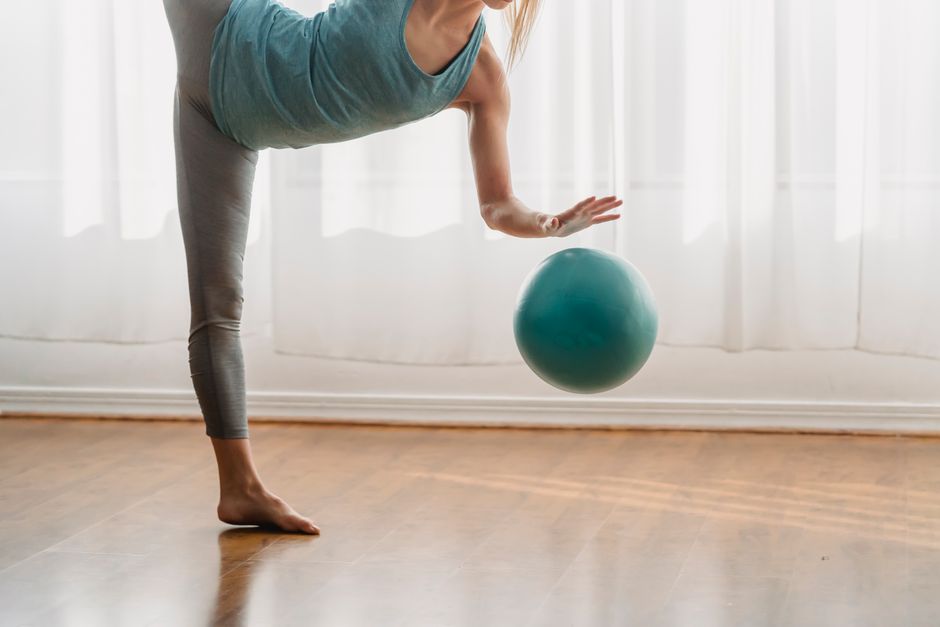
If you want to improve your stability, the exercises that work best are those that challenge your body’s ability to maintain control while standing on a changing or unstable surface. Single-leg stands, heel-to-toe walks, and movements that combine balance with strength training like squats on a foam pad are backed by the strongest evidence. These exercises force your brain and muscles to work together in real time, which is exactly what prevents falls. The key is consistency and progression, not fancy equipment or complicated routines.
What Causes Poor Balance and Stability in Adults Over 35?
Balance is not just about your feet. It is a complex system involving your eyes, your inner ear, and the sensors in your muscles and joints. As people age past 35, muscle mass naturally declines. This is called sarcopenia. Weaker leg and core muscles mean your body has less ability to correct itself when you start to tip.
Another major factor is the decline of the vestibular system, which is your inner ear’s balance center. Many people do not realize that chronic health conditions like diabetes can damage nerves in the feet. When you cannot feel the ground properly, your brain gets less information about where your body is in space. This is a very common but often overlooked cause of poor stability.
Sedentary habits also play a huge role. If you sit for most of the day, your glutes and hip muscles become weak and forget how to fire quickly. Your brain also gets less practice at balancing. Like any skill, balance gets worse if you do not use it. Research shows that even two weeks of inactivity can measurably reduce stability in older adults.
How To Improve Stability Balance Exercises That Work: The Core Exercises
The single best exercise for stability is the single-leg stand. Stand behind a sturdy chair and lift one foot off the ground. Try to hold for 30 seconds without touching the chair. Do this on each leg three times. This exercise directly trains the ankle stabilizers and the hip abductors, which are the muscles that keep you upright when you trip.
The heel-to-toe walk is another highly effective exercise. Walk in a straight line placing the heel of your front foot directly against the toes of your back foot. Look straight ahead, not at your feet. This challenges your dynamic balance and mimics real-world walking on uneven ground. Studies have found that practicing this for just five minutes a day improves gait stability within weeks.
You should also include squats and lunges, but with a balance challenge. Start with a bodyweight squat on a firm floor. Once that is easy, do it on a foam pad or a folded towel. This small change forces your core and leg muscles to work much harder to keep you stable. The same goes for lunges. Progress from forward lunges to side lunges and then to walking lunges.
| Exercise | Difficulty Level | Primary Benefit |
|---|---|---|
| Single-leg stand | Beginner | Ankle and hip stability |
| Heel-to-toe walk | Beginner | Dynamic balance and gait |
| Squat on foam pad | Intermediate | Core and leg strength under instability |
| Walking lunge | Advanced | Multi-plane balance and power |
What Does the Research Say About Balance Training Frequency?
Research shows that balance training needs to be done at least three times per week to see real improvement. A 2021 systematic review in the British Journal of Sports Medicine found that programs lasting 30 to 45 minutes per session, done three times a week for eight weeks, significantly reduced fall risk in adults over 40. The gains were strongest in people who also did strength training alongside the balance work.
Consistency matters more than intensity. Doing five minutes of balance work every day is far better than one long session once a week. The reason is that balance is a neural skill. Your brain needs repeated practice to build new pathways that control muscle activation. A study from the University of Michigan showed that daily balance practice for four weeks improved postural sway by 20 percent in participants aged 45 to 65.
Current research suggests that combining balance exercises with cognitive tasks, like counting backwards while standing on one leg, can boost results even more. This is called dual-task training. It mimics real life where you are often distracted while moving. As of 2026, dual-task training is considered one of the most effective ways to prevent falls in community-dwelling adults.




What Equipment Do You Actually Need for Balance Exercises?
You do not need expensive equipment. The most effective tool is your own body weight. A sturdy chair is essential for safety when starting out. You can use a wall for support as well. A foam pad, which costs about fifteen dollars, is the single best investment for progression. It creates instability without being dangerous.
Balance boards and wobble boards are popular but not necessary. They can be effective for advanced training, but many people rush onto them too quickly and learn bad movement patterns. A 2019 study in the Journal of Strength and Conditioning Research found that simple foam pad training was just as effective as wobble board training for improving static balance in middle-aged adults.
Resistance bands are useful for adding strength work that directly supports balance. Banded side steps, for example, strengthen the gluteus medius, a muscle that is critical for lateral stability. Weak glute medius muscles are a major predictor of ankle sprains and falls. A simple band and a foam pad cover almost all your needs.
Common Mistakes People Make When Trying to Improve Balance
The biggest mistake is holding onto something too tightly. Many people grip a chair or wall with their hands, which gives their brain a false sense of security. Your body learns that the support is there and does not activate your stabilizing muscles properly. Instead, use only your fingertips for light touch. This gives you just enough safety without cheating the exercise.
Another common error is looking down at your feet. Your vestibular system works best when your head is level and your eyes are looking forward. Looking down disrupts your inner ear’s sense of orientation and actually makes balancing harder. Keep your gaze fixed on a spot at eye level on the wall in front of you.
People also progress too fast. They try to stand on one leg with their eyes closed before they can hold a single-leg stand for 30 seconds with eyes open. This is a recipe for falling. You must master the stable version before adding any challenge. The progression should be: stable surface with eyes open, stable surface with eyes closed, unstable surface with eyes open, then unstable surface with eyes closed.
Frequently Asked Questions
How long does it take to improve balance with exercise?
Most people see noticeable improvement in four to six weeks of consistent practice three times per week. Significant changes in fall risk typically require eight to twelve weeks.
Can balance exercises be done every day?
Yes, daily practice is safe and beneficial as long as you are not feeling pain. Balance is a skill, so short daily sessions are more effective than long weekly ones.
What is the best balance exercise for seniors over 60?
The single-leg stand using a chair for light support is the safest and most effective starting point. Progress to the heel-to-toe walk once you can stand on one leg for 20 seconds.
Do you need special shoes for balance training?
No, bare feet or flat shoes with thin soles are best. Thick cushioned running shoes reduce your ability to feel the ground and make balancing harder.
