
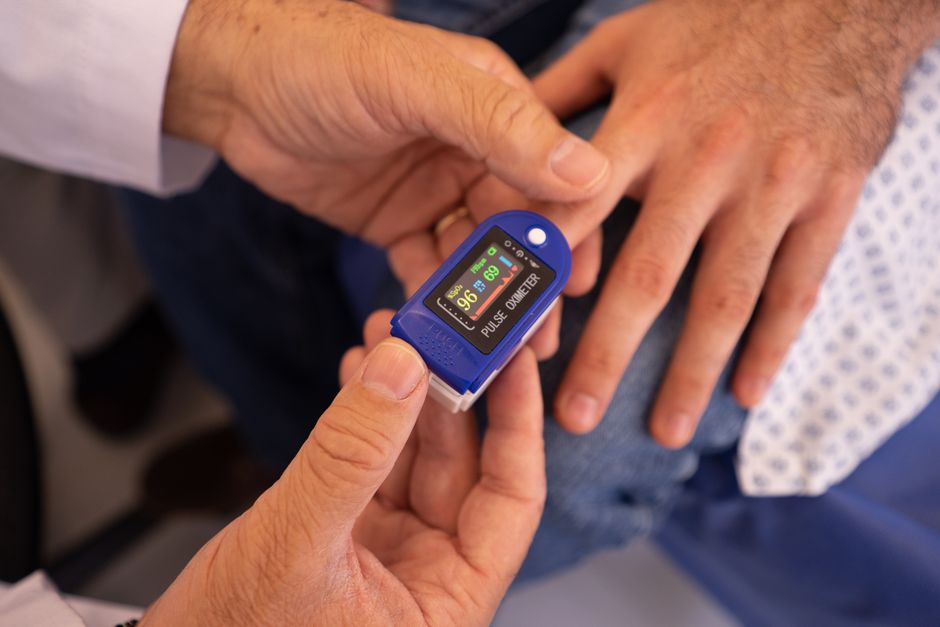
Every cell in your body needs oxygen to make energy. Without a steady supply, your organs would stop working in minutes. The process of getting oxygen from the air you breathe all the way to your tissues is a remarkable chain of events. It starts in your lungs, moves through your bloodstream, and ends deep inside your cells. Here is how it actually works.
Oxygen enters your blood through tiny air sacs in your lungs called alveoli. From there, it binds to hemoglobin inside red blood cells. Your heart pumps this oxygen-rich blood through arteries to every part of your body. The blood then releases oxygen to your tissues and picks up carbon dioxide to carry back to your lungs. This cycle repeats with every breath you take.
How Does Oxygen Move From the Lungs Into the Blood?
The exchange happens in your alveoli. These are tiny, grape-like clusters at the end of your airways. Each lung has about 300 million alveoli. If you flattened them all out, they would cover a tennis court. That massive surface area is what makes gas exchange so efficient.
Capillaries wrap around each alveolus like a net. These are the smallest blood vessels in your body. Their walls are just one cell thick. Oxygen passes through the alveolar wall, then through the capillary wall, and into the blood. This movement happens by simple diffusion. Oxygen moves from an area of higher concentration in the alveolus to an area of lower concentration in the blood.
Research shows this diffusion happens in less than one second. Your lungs are designed for speed. The blood then moves away from the alveoli, now rich in oxygen, and heads toward the heart.
What Role Does Hemoglobin Play in Oxygen Transport?
Oxygen does not dissolve well in liquid blood. Without help, your blood could carry only about 2 percent of the oxygen your body needs. Hemoglobin solves this problem.
Hemoglobin is a protein inside red blood cells. Each molecule can carry four oxygen molecules. When oxygen binds to hemoglobin, it forms oxyhemoglobin. This turns blood a bright red color. That is why oxygen-rich arterial blood looks red, while deoxygenated venous blood looks darker.
One thing many people get wrong is thinking oxygen simply floats in the blood. It does not. Over 98 percent of oxygen in your blood is bound to hemoglobin. Only a tiny fraction dissolves directly in the plasma.
Current research suggests that hemoglobin’s ability to release oxygen is just as important as its ability to pick it up. Hemoglobin holds oxygen tightly in the lungs but releases it easily in tissues that need it most. This is called the Bohr effect. When tissues are active and producing acid, hemoglobin lets go of oxygen more readily.
How Does the Heart Pump Oxygenated Blood to Tissues?
Once oxygenated blood leaves the lungs, it travels through the pulmonary veins to the left atrium of the heart. From there, it moves into the left ventricle. The left ventricle is the strongest chamber of your heart. It has to be — it pushes blood out to your entire body.
Each beat of your heart sends a wave of oxygenated blood through your aorta, the largest artery in your body. The aorta branches into smaller arteries, then into even smaller arterioles, and finally into capillaries. Capillaries are so narrow that red blood cells must pass through single file.
Blood pressure drives this flow. Your heart creates enough pressure to push blood through a network of vessels that, if laid end to end, would stretch about 60,000 miles. That is more than twice the circumference of the Earth.
Different organs receive different amounts of blood depending on their need. Your kidneys get about 20 percent of your cardiac output. Your brain gets about 15 percent. During exercise, your muscles can receive up to 80 percent of the blood flow.




How Does Oxygen Leave the Blood and Enter Tissues?
Oxygen leaves the blood in the capillaries. The same diffusion process that moved oxygen into the blood now moves it out. Capillaries are so thin that oxygen can cross their walls directly. It travels from the blood, through the interstitial fluid, and into your cells.
Once inside a cell, oxygen goes to the mitochondria. Mitochondria are the power plants of your cells. They use oxygen in a process called oxidative phosphorylation to produce ATP, the molecule that stores energy. This is why you breathe. Without oxygen, your cells would have to rely on less efficient energy production that creates lactic acid.
Some tissues are more sensitive to oxygen levels than others. Your brain is the most demanding organ. It uses about 20 percent of your body’s oxygen even though it makes up only 2 percent of your body weight. Brain cells begin to die after just four to six minutes without oxygen.
Muscle tissue has a unique advantage. It stores oxygen in a protein called myoglobin. Myoglobin acts like a backup oxygen tank. This is why muscles can keep working for a short time even if blood flow is temporarily reduced.
| Blood Vessel | Function | Wall Thickness |
|---|---|---|
| Arteries | Carry oxygenated blood away from the heart | Thick and muscular |
| Arterioles | Control blood flow to specific areas | Thinner than arteries |
| Capillaries | Exchange oxygen and carbon dioxide with tissues | One cell thick |
| Venules | Collect deoxygenated blood from capillaries | Thin |
| Veins | Return deoxygenated blood to the heart | Thin with valves |
What Happens to Carbon Dioxide After Oxygen Is Delivered?
Your cells produce carbon dioxide as a waste product. It builds up in the mitochondria and diffuses into the blood. About 70 percent of carbon dioxide travels in the blood as bicarbonate. About 20 percent binds to hemoglobin. The remaining 10 percent dissolves directly in plasma.
Carbon dioxide follows the reverse path of oxygen. It moves from tissues into capillaries, then into venules, then into veins. These veins merge into larger vessels and eventually form the superior and inferior vena cava. These two large veins empty deoxygenated blood into the right side of your heart.
Your heart pumps this blood to your lungs through the pulmonary arteries. Once in the lungs, carbon dioxide diffuses into the alveoli and you breathe it out. This entire cycle takes about one minute for a full circuit of your body.
Many people do not realize that carbon dioxide is not just waste. It plays an important role in regulating your breathing. Chemoreceptors in your brain and arteries detect carbon dioxide levels. When levels rise, your brain signals you to breathe faster and deeper. This is why holding your breath eventually becomes uncomfortable — carbon dioxide builds up, not a lack of oxygen.
What Factors Can Disrupt Oxygen Delivery to Tissues?
Several conditions can interfere with this process. Lung diseases like emphysema damage the alveoli and reduce the surface area for gas exchange. This means less oxygen enters the blood with each breath.
Anemia lowers your red blood cell count or hemoglobin levels. Even if your lungs are working perfectly, your blood cannot carry enough oxygen to your tissues. People with anemia often feel tired and short of breath because their cells are not getting enough fuel.
Heart failure weakens the heart’s ability to pump blood. The oxygen may be in the blood, but it cannot reach the tissues fast enough. This is why people with heart failure often feel breathless during mild activity.
Smoking directly damages the lungs and also affects hemoglobin. Carbon monoxide from cigarette smoke binds to hemoglobin about 200 times more strongly than oxygen does. This leaves less room for oxygen, effectively starving your tissues even when you are breathing normally.
High altitude is another factor. At higher elevations, the air pressure is lower, so less oxygen enters your blood with each breath. Your body adapts over time by producing more red blood cells, but this takes days to weeks.
Frequently Asked Questions
How long does it take for oxygen to travel from lungs to tissues?
A red blood cell completes a full circuit through your body in about one minute. The trip from lungs to tissues takes only seconds.
What happens if oxygen does not reach tissues?
Tissues switch to less efficient energy production without oxygen. Brain damage can begin within four to six minutes of complete oxygen deprivation.
Can you increase oxygen delivery to tissues naturally?
Regular exercise improves your heart’s efficiency and increases capillary density in muscles. Breathing deeply and maintaining good posture also help.
Does blood oxygen level measure how much oxygen is in tissues?
No. Blood oxygen level measures oxygen in your arteries, not in your cells. Tissues can still be oxygen-starved even with normal blood oxygen readings if circulation is poor.
As of 2026, researchers continue studying how oxygen delivery changes with age and disease. The basic process remains the same, but new imaging techniques reveal just how precisely your body matches oxygen supply to demand. Every breath you take sets off a chain of events that keeps every cell in your body alive and working.
