
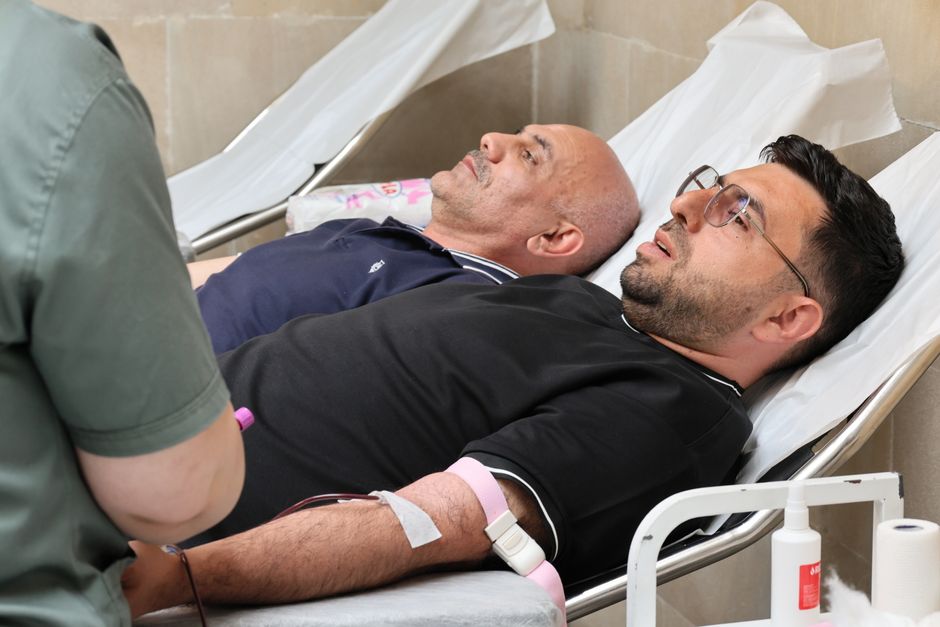
You must be at least 16 years old to donate blood in the United States. If you are 16, you will need written permission from a parent or guardian. Donors who are 17 or older can donate without parental consent. There is no federally mandated upper age limit, but individual blood centers may have their own rules.
How Old Do You Have To Be To Donate Blood?
The minimum age for blood donation in the United States is 16 years old. However, there is an important catch. At age 16, you must have a parent or legal guardian sign a consent form. At age 17, you can donate without that permission. Some blood centers only accept donors who are 17 or older, so it is smart to call ahead and check the specific center’s policy before you go.
There is no federal maximum age for blood donation. The U.S. Food and Drug Administration (FDA) does not set an upper age limit. Your health matters more than your number of birthdays. Many healthy people in their 70s and 80s donate regularly. Still, some blood banks have their own upper age limits, usually around 75 or 76. Even then, donors over that age may still be accepted if they have a doctor’s written approval. The key is that the decision rests on your overall health, not simply your age.
What Is the Minimum Age to Donate Blood?
The minimum age is 16 years old in most states. But not every state allows 16-year-olds to donate. Some states set the minimum at 17. The exact rule depends on state law and the policy of the blood center where you donate. If you are 16, you must bring a signed parental consent form. That form often needs to be from a parent who is present at the donation site. Some blood centers require the parent to stay with you during the entire donation process. If you are 17 or older, you do not need any special permission beyond the standard health screening.
What Is the Maximum Age to Donate Blood?
There is no single maximum age that applies everywhere. The FDA removed its upper age limit for blood donation in 2015. Before that, donors over 65 were often deferred. Today, the decision is made by each blood center. Many centers have no upper limit at all. Others set a limit, often 75 or 80, but allow older donors if they get a doctor’s note. The most important factor is whether you are healthy enough to donate. If you are over 70 and in good health, you are still likely eligible. But you should verify with your local blood center because policies vary.



Do Age Rules Differ for Platelet or Plasma Donation?
For the most part, the age rules for whole blood donation also apply to platelet, plasma, and double red cell donations. The minimum age is still 16 or 17 with consent. The maximum age also follows the same center-specific policies. However, these types of donation often have additional health and weight requirements. For example, platelet donors usually need to weigh at least 110 pounds and have a higher platelet count. Plasma donation has similar weight and health checks. Age itself does not change these other requirements, but being older may increase the chance of having conditions that temporarily or permanently defer you.
Are There Health Requirements Besides Age?
Yes. Age is only one part of the eligibility check. Before you donate, you must pass a health screening every time. The general requirements include:
- Weigh at least 110 pounds.
- Be in good general health on the day of donation.
- Have a valid ID with your name and photo.
- Meet hemoglobin level requirements (usually 12.5 to 13.0 g/dL for women and 13.0 to 14.0 g/dL for men).
- Not have certain infections or recent illnesses.
You will also be asked about recent travel, medications, tattoos, piercings, and medical history. Many of these factors can temporarily defer you regardless of your age. For example, you might have to wait 12 months after a tattoo if it was done at an unregulated facility, or wait 28 days after taking certain antibiotics. Your age does not change these waiting periods.
Can Teens Donate Blood?
Yes, teens can donate blood starting at age 16 in most states. Many high schools host blood drives specifically for students. If you are a teenager and want to donate, check with your school nurse or the blood center to get the parental consent form in advance. You also need to meet the weight and health requirements. Some teens are deferred because they weigh less than 110 pounds or have low iron levels. Eating a healthy meal and drinking plenty of water before donating can help, but it cannot fix a weight or hemoglobin deficiency. If you are 16 or 17, you are allowed to donate whole blood every 56 days, the same as adults.
Can Older Adults Donate Blood?
Yes, older adults can donate blood as long as they are in good health. There is no age cutoff that automatically stops you. In fact, many older donors have been giving blood for decades and continue to do so into their 70s and 80s. Some blood centers ask donors over 76 to bring a note from their doctor confirming they are healthy enough to donate. Other centers do not ask for a note at all, even for donors over 80. The most important thing is to be honest about your health history during the screening. Age-related conditions such as heart disease or diabetes may be a reason for deferral if they are not well controlled. But if your conditions are managed and you feel well, you can almost certainly donate.
What Factors Could Defer You Regardless of Age?
Several common factors cause temporary or permanent deferral. Age does not change these rules. For example:
- You may be deferred if you have a fever, cold, or flu on donation day.
- Certain medications, such as isotretinoin for acne or finasteride for hair loss, require waiting periods after the last dose.
- Recent surgery or a blood transfusion often requires a waiting period of 12 months.
- Travel to areas where diseases like malaria are common can lead to a deferral of 12 months or longer.
- A diagnosis of hepatitis B or C, HIV, or certain cancers may permanently disqualify you.
These deferral rules are the same for every donor regardless of how old you are. If you have any questions about whether you are eligible, the blood center staff can guide you before you start the process.
Frequently Asked Questions
Can I donate blood if I am under 16?
No. The minimum age to donate blood in the United States is 16 years old with parental consent. Some states and blood centers require you to be at least 17.
Is there a maximum age for donating blood?
There is no federal maximum age. However, some blood centers have policies that require donors over a certain age, often 75 or 76, to provide a doctor’s written approval.
Do I need parental consent to donate blood at 16?
Yes. Most blood centers require a parent or legal guardian to sign a consent form. Some centers also ask the parent to be present during the donation.
Can a 16-year-old donate blood without parental consent?
No. At age 16, you need parental permission. At age 17, you do not need consent from a parent.
