
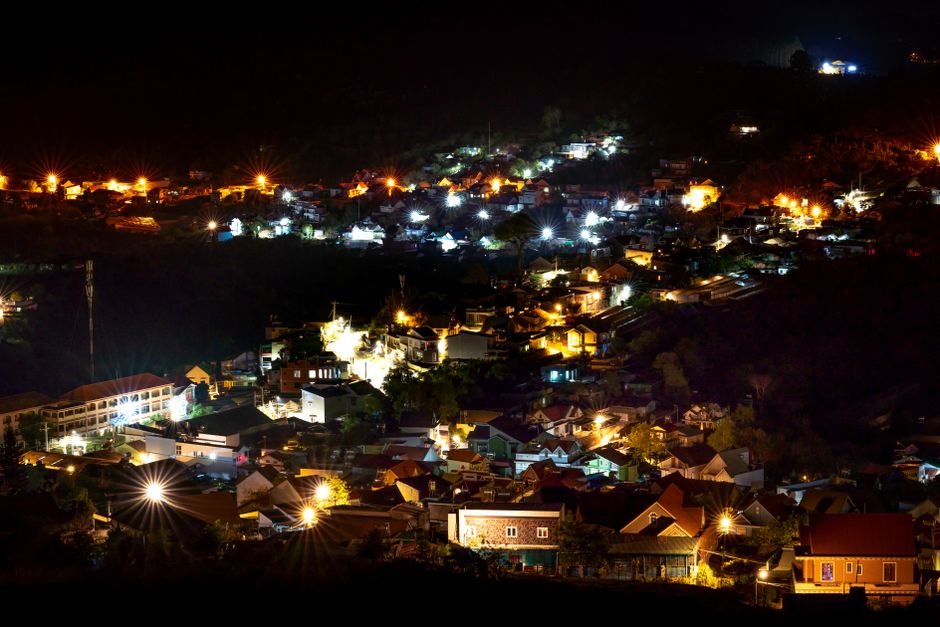
Most people think of light pollution as a problem for astronomers. It hides the stars, sure. But the bigger issue is what it does inside your body. Light at night disrupts melatonin, the hormone that helps regulate sleep, and that disruption reaches far beyond a single restless night.
How does light pollution affect humans? The main effects run through sleep and circadian rhythm. Artificial light at night — especially blue-rich light from LEDs and screens — can suppress melatonin, shift your internal clock, and reduce sleep quality. Over time, researchers have linked chronic circadian disruption to metabolic and mood-related health risks. The evidence for sleep effects is strong. The evidence for long-term disease risk is still developing.
What Counts as Light Pollution?
Light pollution is any artificial light that is excessive, misdirected, or present when it is not needed. It is not only city glow. A streetlamp outside your bedroom window, a bright phone screen at midnight, and a porch light left on all night are all forms of it.
Researchers generally describe light pollution in a few ways:
- Skyglow — the brightening of the night sky over populated areas
- Light trespass — light spilling into places where it is not wanted, like your bedroom
- Glare — excessive brightness that causes visual discomfort
- Clutter — bright, confusing groupings of light sources
The kind of light matters as much as the amount. Light in the blue part of the spectrum suppresses melatonin more strongly than warmer, amber-toned light. This is why the shift from older streetlights to white LED lighting has drawn attention from sleep researchers.
How Does Light Pollution Affect Humans Through Sleep?
Your body runs on an internal clock, called the circadian rhythm, that expects darkness at night. When light hits the retina after sunset, it sends a signal to a small region of the brain — the suprachiasmatic nucleus — that it is still daytime. That signal tells the body to hold back melatonin.
Melatonin is not a sleep drug. It is a timing signal. It helps your body know when night has arrived. When light delays or suppresses it, sleep timing can shift later, and falling asleep can become harder.
The research here is consistent. Studies have found that exposure to artificial light at night is associated with delayed sleep, shorter sleep duration, and reduced sleep quality. This is one of the better-established findings in the field.
What is less certain is how much light it takes, and how much individual sensitivity varies. Some people seem to be affected by very dim light. Others are less responsive. Researchers are still working out the thresholds.
Why Is Blue Light at Night a Bigger Problem?
Not all light affects the body the same way. The cells in your retina that signal the circadian system are most sensitive to blue wavelengths — roughly in the range of 460 to 480 nanometers. This is close to the peak of daylight, which makes biological sense: blue light tells the body it is daytime.
That is why evening exposure to blue-rich light is more disruptive than warm light of the same brightness. Screens, cool-white LED bulbs, and many modern streetlights all emit a lot of blue light.
This does not mean screens are the main villain. A bright overhead light or a streetlamp shining through a window can deliver more circadian-disrupting light than a phone held at a reasonable distance. Intensity and proximity matter.




Does Light Pollution Affect Health Beyond Sleep?
This is where the evidence gets more interesting — and more uncertain. Researchers have found associations between chronic exposure to artificial light at night and a range of health outcomes, including metabolic changes, mood disorders, and some cancers. But association is not the same as cause.
Shift workers are the most-studied group, because their schedules force them to be awake and exposed to light when their bodies expect darkness. Studies of shift workers have found higher rates of certain health problems compared with day workers. Researchers generally attribute part of this to circadian disruption, though other factors — like diet, stress, and reduced physical activity — also play a role.
For the general public, the picture is less clear. Some studies suggest that people living in areas with more nighttime light have higher rates of obesity, depression, and other conditions. But these studies cannot easily separate light exposure from other things that come with living in bright, urban areas.
The honest position: the link between light at night and sleep disruption is well established. The link between light at night and long-term disease is plausible and supported by some evidence, but not proven. It remains an active area of research.
How Much Light Is Too Much at Night?
There is no official threshold for “too much” nighttime light. No regulatory body has set a safe exposure limit for circadian disruption, because the science is not settled enough to support one.
What researchers do agree on is the general principle: darker is better for sleep, and brighter, bluer light late at night is more disruptive than dim, warmer light. The timing matters too. Light in the hour or two before bed and during the night is more likely to cause problems than light earlier in the evening.
For context, even relatively low light levels can affect melatonin in some people. Some studies have found suppression at levels far dimmer than a typical room light. But individual responses vary widely, and researchers have not settled on a single number that applies to everyone.
What Can You Do About Light at Night?
You cannot turn off the city. But you can reduce your own exposure, especially in the hours before sleep and during the night. These steps are based on established sleep science, not marketing claims.
- Dim your lights in the evening. Lower brightness in the two hours before bed when you can.
- Use warm-toned bulbs. Amber or warm-white light emits less blue light than cool-white LEDs.
- Block light from your bedroom. Blackout curtains or an eye mask can reduce light trespass from outside.
- Reduce screen brightness at night. Many devices have a night mode that shifts the screen toward warmer tones.
- Keep your sleep schedule consistent. A regular wake time helps anchor your circadian rhythm.
None of these steps is a cure for a sleep disorder. If you have persistent trouble sleeping, that is a medical issue worth discussing with a clinician. Light exposure is one factor among many.
Is Light Pollution Getting Worse?
By most measures, yes. Satellite data has shown that the area lit at night has grown over recent decades, and the shift to white LED lighting has increased the blue content of that light. Some research suggests that the total amount of light emitted at night has increased even where energy use has dropped, because LEDs are cheaper to run and people install more of them.
This matters for human health because the trend is moving in the direction that sleep researchers consider more disruptive — more light, and bluer light. It also matters for wildlife, which is a separate but related concern.
On the positive side, awareness has grown. Some cities have adopted warmer streetlights or shielded fixtures that direct light downward instead of into the sky and into bedrooms. These changes are largely driven by energy and wildlife concerns, but they may have sleep benefits too.
What Does the Evidence Actually Support?
It helps to separate what is well established from what is still being studied.
| Claim | Evidence Level |
|---|---|
| Light at night suppresses melatonin | Well established |
| Light at night can delay or disrupt sleep | Well established |
| Blue light is more disruptive than warm light | Well established |
| Chronic light exposure contributes to metabolic disease | Some evidence, not proven |
| Light at night causes cancer | Not established; associations only |
| A specific “safe” light level exists | No established threshold |
The pattern here is familiar in health research. The short-term, measurable effects — melatonin suppression and sleep disruption — are clear and repeatable. The long-term disease outcomes are harder to pin down, because they take years to develop and are tangled up with everything else in a person’s life.
Does Light Pollution Affect Mental Health?
Some research has found associations between higher nighttime light exposure and higher rates of depression and mood symptoms. The evidence is suggestive but not conclusive.
There is a plausible mechanism. Circadian disruption is known to affect mood, and sleep loss itself can worsen mood symptoms. But it is difficult to prove that light exposure is the cause rather than a marker of other factors, like living in a stressful urban environment.
What is clearer is the reverse relationship: poor sleep and disrupted circadian rhythms are common in people with mood disorders. Whether light at night is a meaningful contributor for the general population remains an open question.
Frequently Asked Questions
How does light pollution affect human health?
The best-established effect is on sleep and circadian rhythm. Light at night can suppress melatonin, delay sleep, and reduce sleep quality, and some research links long-term circadian disruption to broader health risks.
Is blue light worse than other light at night?
Yes, blue wavelengths suppress melatonin more strongly than warmer light of the same brightness. That is why cool-white LEDs and screens are considered more disruptive in the evening.
Can light pollution cause cancer?
No study has proven that light at night causes cancer in the general population. Some research has found associations, particularly in shift workers, but these are not the same as proven cause and effect.
How can I reduce light pollution in my bedroom?
Blackout curtains, an eye mask, and dimmer, warmer lighting in the evening can all reduce your exposure. Keeping a consistent sleep schedule also helps support your circadian rhythm.
