
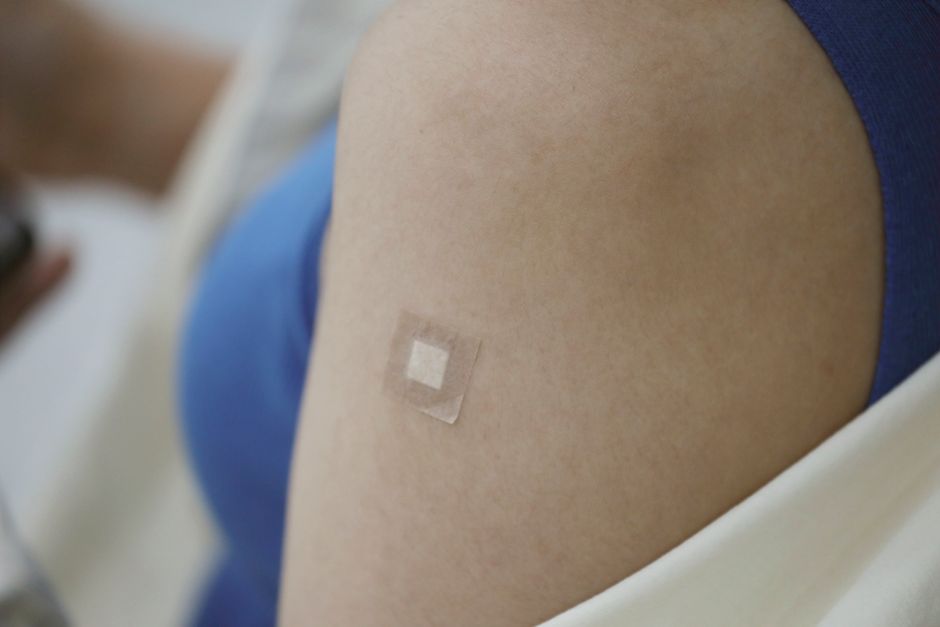
The first vaccine was developed in 1796 by English doctor Edward Jenner. He took material from a cowpox sore on a milkmaid’s hand and injected it into an eight-year-old boy. The boy later survived a smallpox exposure that would have killed most people. That single experiment launched the entire field of immunization.
What Exactly Did Edward Jenner Do to Create the First Vaccine?
Jenner noticed something that dairy workers in rural England already knew. Milkmaids who caught cowpox — a mild disease with blisters on the hands — almost never got smallpox. Smallpox at the time killed roughly 30 percent of people it infected. Survivors were often left blind or scarred for life.
Jenner hypothesized that cowpox infection somehow protected against smallpox. To test this, he took fluid from a cowpox blister on a milkmaid named Sarah Nelmes. On May 14, 1796, he scratched that fluid into the arm of James Phipps, an eight-year-old boy who had never had smallpox.
James developed a mild fever and some discomfort. Nothing serious. Six weeks later, Jenner exposed the boy to smallpox material. James did not get sick. Jenner repeated this with other subjects and got the same result. The procedure worked.
Jenner called his method “vaccination” from vacca, the Latin word for cow. He published his findings in 1798. The medical community was skeptical at first, but the evidence was hard to argue with. By 1800, vaccination had spread across Europe.
Was the First Vaccine Safe by Modern Standards?
No. And it is important to be honest about this. Jenner’s methods would not pass any ethics board today. He experimented on a child without what we would call informed consent. He had no way to sterilize his tools. He had no understanding of viruses or bacteria. Germ theory did not exist yet.
That said, Jenner was not reckless by the standards of his time. He had spent years observing cowpox and smallpox patterns before attempting the experiment. He chose a healthy child whose parents agreed to the procedure. He documented everything carefully.
Modern vaccine development follows completely different rules. Clinical trials now take years. Regulators review safety data from thousands of people before approving anything. The first vaccine was a brilliant insight built on shaky methods. Today’s vaccines are built on rigorous science. Both things are true at the same time.
How Was the First Vaccine Developed Differently from Modern Vaccines?
The differences are enormous. Here is a breakdown of what Jenner did versus what happens today:
| Factor | Jenner’s Method (1796) | Modern Vaccine Development |
|---|---|---|
| Source material | Cowpox blister fluid from a milkmaid | Purified antigens, mRNA sequences, or viral vectors grown in labs |
| Safety testing | None before human use | Years of preclinical and clinical trials |
| Number of test subjects | One child initially | Thousands to tens of thousands |
| Manufacturing | Arm-to-arm transfer of live material | Sterile, standardized production in bioreactors |
| Regulatory approval | None | FDA, EMA, or other national authorities |
| Monitoring after release | None | Continuous safety surveillance systems |
The core idea is the same: expose the immune system to something that looks like a pathogen without causing serious disease. Everything else about the process has changed completely.
One thing that has not changed is the principle of using a related but milder virus. Jenner used cowpox to protect against smallpox because the two viruses are similar enough that the immune system cannot tell them apart. Modern vaccines use the same logic. The measles vaccine uses a weakened measles virus. The polio vaccine uses an inactivated polio virus. The concept is pure Jenner.




Did Anyone Try Vaccination Before Edward Jenner?
Yes, but not in the same way. The practice of variolation existed long before Jenner. Variolation meant taking material from a smallpox sore and scratching it into the skin of a healthy person. The goal was to cause a mild case of smallpox that would provide immunity.
Variolation was practiced in China, India, and the Ottoman Empire for centuries before Jenner. Lady Mary Wortley Montagu, the wife of the British ambassador to the Ottoman Empire, brought the practice to England in 1721. She had her own children variolated.
The problem with variolation was risk. About 1 to 2 percent of people who received variolation died from the smallpox they were intentionally given. That was much better than the 30 percent death rate from natural smallpox, but it was still dangerous. Variolated people could also spread smallpox to others.
Jenner’s breakthrough was using cowpox instead of smallpox. Cowpox caused almost no serious illness in humans. It did not spread from person to person. But it still triggered immunity against smallpox. That made vaccination far safer than variolation.
Some historians point to earlier examples of people using cowpox material before Jenner. A farmer named Benjamin Jesty reportedly vaccinated his family in 1774 using cowpox. But Jesty never published his work or tried to spread the practice. Jenner was the first to systematically study, document, and promote vaccination.
What Diseases Have Been Eradicated or Controlled by Vaccines?
Smallpox is the only human disease that has been completely eradicated. The World Health Organization declared eradication in 1980 after a global vaccination campaign. Smallpox has not occurred naturally anywhere in the world since 1977. That is the single greatest achievement in the history of medicine.
Several other diseases are close to eradication or under strong control thanks to vaccines:
- Polio — cases have dropped by over 99 percent since 1988. Only two countries still report wild polio cases as of 2025: Afghanistan and Pakistan.
- Measles — vaccination prevented over 60 million deaths between 2000 and 2023 according to the World Health Organization. The disease still circulates where vaccination rates drop.
- Rubella — declared eliminated in the Americas in 2015. Still present in parts of Africa and Asia.
- Tetanus, diphtheria, and pertussis — once common childhood killers in the United States. Now rare because of routine vaccination.
- Hepatitis B — childhood vaccination programs have reduced new infections by more than 80 percent in many countries.
- HPV — the vaccine prevents infections that cause cervical cancer. Studies published in The Lancet show dramatic reductions in HPV infections among vaccinated populations.
These are not small wins. Before vaccines, measles killed about 2.6 million people every year worldwide. Polio paralyzed hundreds of thousands of children annually. Tetanus killed tens of thousands of newborns. Vaccines changed all of that.
How Did the First Vaccine Lead to Modern Immunology?
Jenner did not know why his vaccine worked. He had no concept of the immune system. He could not see viruses or antibodies. He simply observed a pattern and tested it.
The actual science behind vaccination took another century to develop. Louis Pasteur developed the germ theory of disease in the 1860s and 1870s. He created the first laboratory-made vaccines for rabies and anthrax by weakening the pathogens on purpose. Pasteur called his method “attenuation” — making a germ less dangerous while keeping it recognizable to the immune system.
In the 1880s and 1890s, researchers like Emil von Behring and Shibasaburo Kitasato discovered antibodies. They showed that blood from an immune animal could protect another animal from infection. That discovery led to the first diphtheria antitoxin and launched the field of immunology.
The 20th century brought even deeper understanding. Researchers learned that the immune system has memory cells that remember past infections. They figured out how to trigger those memory cells safely using killed or weakened pathogens. They developed adjuvants — ingredients that boost the immune response to a vaccine.
The 21st century added genetic engineering. The hepatitis B vaccine was the first made using recombinant DNA technology in 1986. The COVID-19 vaccines used messenger RNA technology that had been in development for decades. Every one of these advances traces back to Jenner’s basic insight: expose the immune system to something harmless that looks like something dangerous.
One thing people often misunderstand is that vaccines do not “weaken” the immune system. They train it. A vaccine is like a fire drill for your immune system. The building does not burn down, but everyone learns where the exits are and what to do when the alarm sounds. When the real infection shows up, the immune system already knows how to respond.
Common Misconceptions About the First Vaccine
A viral story claims that Jenner’s first vaccine was contaminated with syphilis or other diseases. There is no historical evidence for this. Jenner described his methods in detail in his 1798 publication. He used fresh cowpox material from a specific milkmaid. No cases of transmitted disease were reported in his original subjects.
Another misconception is that the first vaccine was “just a folk remedy” that Jenner stole credit for. The truth is more complicated. Folk observation existed — farmers and milkmaids knew cowpox protected against smallpox. But Jenner was the first person to test it scientifically, publish the results, and actively promote vaccination as a public health tool. That is not stealing credit. That is turning folk knowledge into medicine.
Some people claim that vaccines were invented specifically to profit pharmaceutical companies. This does not match the historical record. Jenner made no money from his discovery. He spent his own funds to produce and distribute vaccine material. He wrote letters to doctors around the world teaching them how to vaccinate. The modern pharmaceutical industry did not exist in 1796.
Vaccines have always been about preventing disease, not generating profit. The fact that companies now manufacture and sell vaccines does not change the core purpose. The profit margin on vaccines is actually lower than on most prescription drugs. Vaccine development is expensive and risky. Many companies have stopped making vaccines because the financial returns are not worth the investment.
Frequently Asked Questions
How was the first vaccine developed by Edward Jenner?
Jenner took fluid from a cowpox blister on a milkmaid’s hand and scratched it into the arm of an eight-year-old boy. The boy developed immunity to smallpox and survived later exposure.
What disease did the first vaccine protect against?
The first vaccine protected against smallpox, a deadly disease that killed about 30 percent of people it infected. Smallpox was declared eradicated in 1980.
Why did Jenner use cowpox instead of smallpox for the first vaccine?
Cowpox caused only mild illness in humans but was similar enough to smallpox that the immune system could not tell them apart. This gave protection without the danger of smallpox.
How long did it take to develop the first vaccine?
Jenner spent years observing cowpox and smallpox patterns before attempting his experiment in 1796. The actual experiment and follow-up took about two years before he published his results in 1798.
