
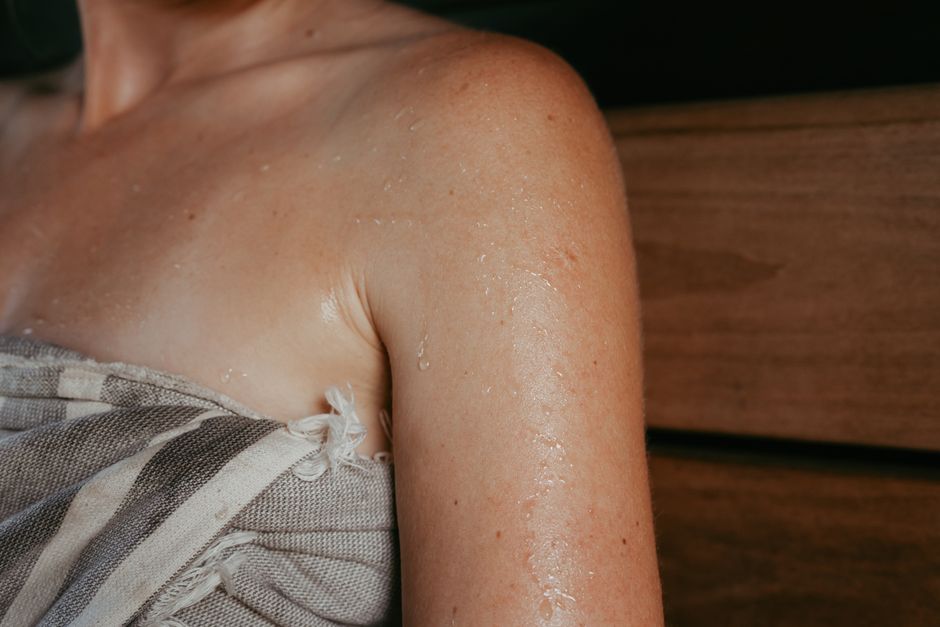
You cannot stop sweating permanently, and you should not try. Sweating is how your body cools itself, and people born without the ability to sweat face a life-threatening condition called anhidrosis. What you can do is reduce how much you sweat in situations where it is not needed, and there are several evidence-based ways to do that. The most effective natural approaches work on the triggers and the nerve signals behind sweating, not on the sweat glands themselves.
What Actually Controls How Much You Sweat?
Your sweat glands are controlled by the sympathetic nervous system, which is part of the automatic nervous system. That is the key fact behind almost everything in this article. Sweating is not something you consciously switch on. It is a reflex.
You have two main types of sweat glands. Eccrine glands are found across nearly your entire skin surface and open directly onto it. They produce a clear, mostly odorless fluid made of water and salt, and they are your body’s main cooling system. Apocrine glands are concentrated in the armpits and groin. They are connected to hair follicles and produce a thicker fluid. Bacteria on the skin break that fluid down, which is what produces body odor.
When your core temperature rises, your brain’s hypothalamus sends signals through the sympathetic nerves to the eccrine glands. They release fluid onto your skin, and as it evaporates, you cool down. This system is tightly regulated. It responds to heat, exercise, fever, and emotional stress.
Emotional sweating is different. Stress, anxiety, and embarrassment can trigger sweating on the palms, soles, and face before your body has any need to cool down. In some people this response is exaggerated, a condition called hyperhidrosis. Hyperhidrosis is a recognized medical condition, not a personal failing or a hygiene problem. It affects a meaningful share of the population and is often underreported because people are embarrassed to mention it.
Understanding this matters because it tells you where natural approaches can and cannot work. You can reduce triggers, calm the stress response, and change your environment. You cannot permanently shut down a reflex your body depends on.
Can You Stop Sweating Naturally and Permanently?
No. There is no natural method that permanently stops sweating, and any product claiming to do so is not telling you the truth. What exists are ways to reduce sweating significantly, sometimes to the point where it stops being a daily problem.
The word “permanently” is where most claims fall apart. Sweat glands do not turn off permanently from lifestyle changes. Even medical treatments that destroy or block sweat glands tend to be temporary, because nerves and glands can adapt over time.
What natural approaches can realistically do:
- Reduce how much you sweat in specific situations, such as stress or mild heat
- Reduce body odor by limiting bacterial breakdown on the skin
- Lower the frequency and intensity of sweating episodes
- Improve comfort without changing your body’s core cooling ability
What they cannot do:
- Permanently disable sweat glands
- Cure hyperhidrosis
- Replace medical treatment if sweating is severe or has a medical cause
If you sweat so much that it soaks through clothes, disrupts your work or social life, or happens without any trigger, that is worth a conversation with a doctor. Excessive sweating can sometimes signal an underlying condition such as thyroid problems, low blood sugar, or an infection. Ruling those out comes first.
Which Natural Remedies Have Real Evidence Behind Them?
A few natural approaches have genuine support. Others are popular but unproven. Here is an honest breakdown.
Aluminum-based antiperspirants. These are not the same as deodorants. Deodorants mask odor. Antiperspirants reduce sweat by temporarily blocking the sweat duct. Aluminum salts form a plug at the top of the duct that physically reduces how much sweat reaches the surface. This is one of the best-supported ways to reduce underarm sweating, and it is available without a prescription. Some people prefer to avoid aluminum for personal reasons, but the evidence that it is harmful is not there. The concern that aluminum antiperspirants cause breast cancer or Alzheimer’s disease has been studied and is not supported by current evidence.
Anticholinergic wipes. A prescription-strength wipe containing glycopyrronium is sometimes used for excessive sweating, but this requires a prescription and medical guidance. It is not a natural remedy and should not be self-prescribed.
Sage. Sage has a long folk history for reducing sweating, and some small studies suggest it may help. The evidence is limited and not strong enough to call it proven. If you want to try sage tea, it is generally considered safe in normal food amounts. Sage supplements in high doses can be harmful, and sage is not considered safe in medicinal amounts during pregnancy.
Black tea soaks. Tannins in black tea may temporarily reduce sweating when applied to the skin. The evidence is mostly anecdotal. It is low risk to try, but do not expect a permanent change.
Baking soda. Sometimes used as a paste under the arms. It can irritate skin, especially with repeated use. There is no strong evidence it reduces sweating.
Apple cider vinegar. Often recommended online. No reliable evidence shows it reduces sweating. Applied undiluted, it can burn or irritate skin.
Botulinum toxin injections. This is a medical treatment, not a natural one, but it is worth knowing about because it is one of the most effective options for severe underarm sweating. It works by blocking the nerve signal to the sweat glands. Effects typically last several months and then wear off, so it is not permanent. It requires a prescription and a clinician to administer it.
The pattern here matters. The approaches with the strongest evidence are the ones that act on the sweat duct or the nerve signal. The approaches with the weakest evidence are the ones marketed as “natural” fixes.




What Lifestyle Changes Reduce Sweating?
Lifestyle changes will not stop sweating, but they can reduce how often and how much you sweat in everyday situations. These are the changes most likely to make a real difference.
Manage stress and anxiety. Emotional sweating is driven by the sympathetic nervous system, the same system activated by stress. Techniques that lower stress reactivity can reduce stress-triggered sweating. Slow breathing, regular physical activity, adequate sleep, and structured relaxation have all been studied for their effects on the stress response. The effect on sweating specifically is not as well studied as the effect on stress itself, so treat this as helpful rather than guaranteed.
Choose breathable clothing. Natural fibers like cotton and linen allow air to move across the skin, which helps sweat evaporate. Synthetic fabrics can trap heat and moisture. Loose-fitting clothing helps more than tight clothing.
Watch what you eat and drink. Hot drinks, spicy food, and alcohol can all trigger sweating. Caffeine can too, especially in people who are sensitive to it. This varies a lot from person to person, so it is worth noticing your own patterns rather than following a blanket rule.
Stay hydrated. This sounds counterintuitive, but dehydration does not stop sweating. It makes your sweat less effective at cooling you and can push your body temperature higher. Drinking enough water supports normal cooling rather than suppressing it.
Keep your environment cool. Fans, air conditioning, and lighter bedding reduce the need for your body to cool itself. This is simple but often overlooked.
Maintain a healthy body weight. Body fat insulates and can make physical activity produce more heat. This is a general relationship, not a guarantee, and weight is only one factor among many.
What About Antiperspirants, Deodorants, and Odor?
People often use “antiperspirant” and “deodorant” as if they mean the same thing. They do not, and understanding the difference helps you choose the right product.
| Product | What it does | How it works |
|---|---|---|
| Antiperspirant | Reduces sweat | Aluminum salts temporarily block the sweat duct |
| Deodorant | Reduces odor | Masks or reduces odor-causing bacteria |
| Combination product | Reduces sweat and odor | Contains both aluminum salts and odor control |
If your main concern is sweat volume, you want an antiperspirant. If your main concern is smell, a deodorant may be enough. Many products combine both.
Applying antiperspirant at night is often recommended because the sweat ducts are less active while you sleep, which lets the aluminum salts form a better plug. This is common clinical advice rather than a strongly proven timing rule, but it is low risk and many people find it works better.
Body odor comes from bacteria breaking down sweat, not from sweat itself. Keeping underarm skin clean and dry, and removing underarm hair if you prefer, can reduce odor by reducing the surface bacteria have to work with.
When Should You See a Doctor About Sweating?
Most sweating is normal. Some sweating is a sign that something else is going on. Knowing the difference matters.
See a doctor if you experience any of the following:
- Sweating that soaks through your clothes or drips from your hands
- Sweating that happens at night without a clear cause
- Sweating that started suddenly or changed pattern recently
- Sweating along with chest pain, shortness of breath, or a racing heart
- Sweating with unexplained weight loss, fever, or chills
- Sweating that disrupts your sleep, work, or daily life
Night sweats in particular deserve attention. They can be caused by many things, including infections, hormonal changes, some medications, and certain cancers. That does not mean night sweats usually mean cancer. It means they are a symptom worth having checked rather than self-treating.
If you have hyperhidrosis, a doctor can discuss options that go beyond what you can do at home. These include prescription-strength antiperspirants, oral medications, botulinum toxin injections, and in some cases procedures that target the nerves involved in sweating. These are medical decisions, not natural remedies, and they come with their own trade-offs.
One clarification worth making: sweating more does not mean you are “detoxing.” Sweat is mostly water and salt, with trace amounts of other substances. Your liver and kidneys handle detoxification. Sweating does not meaningfully remove toxins from your body, despite what many wellness products claim.
Frequently Asked Questions
Can you stop sweating permanently without medical treatment?
No. There is no natural method that permanently stops sweating, because sweating is a reflex your body needs for cooling. Lifestyle changes and antiperspirants can reduce sweating significantly, but they do not switch it off for good.
Does sage actually reduce sweating?
Some small studies suggest sage may help reduce sweating, but the evidence is limited and not strong enough to call it proven. Sage tea is generally safe in normal food amounts, though medicinal doses should be avoided during pregnancy.
Why do I sweat so much even when I am not hot?
Emotional sweating is triggered by stress and anxiety through the sympathetic nervous system, not by temperature. If sweating happens without any trigger or is severe, it may be hyperhidrosis or another condition worth having evaluated by a doctor.
Is it true that sweating removes toxins?
No. Sweat is mostly water and salt with trace amounts of other substances. Your liver and kidneys do the real work of removing waste, and sweating does not meaningfully detoxify your body.
