
Tension builds in the body as a physical response to stress, worry, and the demands of daily life. When your brain perceives pressure, your muscles tighten automatically, preparing for action that never comes. Releasing that tension quickly starts with interrupting the stress response itself. The fastest natural methods involve deep, slow breathing, progressive muscle relaxation, and targeted movement. These techniques work because they directly counter the physical changes that stress triggers, signaling your nervous system that the danger has passed.
Why Does Stress Cause Physical Tension?
Stress triggers a chain reaction in your body. Your brain releases hormones like cortisol and adrenaline. These hormones increase your heart rate and redirect blood flow to your major muscle groups. Your shoulders, neck, and jaw tighten as part of this reflex. It is a survival mechanism designed for short bursts of action.
Problems arise when the stress never stops. Modern life keeps that switch flipped on. Your muscles stay partially contracted for hours or days. That constant contraction restricts blood flow, which causes pain and fatigue. The pain adds more stress, and the cycle continues.
How To Release Tension Quickly And Naturally: The Breathing Reset
Your breath is the fastest access point to your nervous system. You cannot control your heart rate directly, but you can control your breathing. Slow breathing activates the vagus nerve, which sends a calming signal throughout your body. This is not a relaxation technique in the vague sense — it is a measurable physiological response.
The most effective pattern is extended exhale breathing. Inhale through your nose for four seconds. Then exhale slowly through your mouth for six to eight seconds. The exhale should be longer than the inhale. Doing this for two to three minutes measurably lowers heart rate and blood pressure. It shifts your nervous system from a state of alert to a state of rest.
Research consistently shows that slow breathing at around six breaths per minute produces the strongest calming effects. You do not need to count perfectly. The key is making each exhale noticeably longer than each inhale. Practice this while sitting or lying down. Close your eyes if it helps. Within a few minutes, you should feel your shoulders drop and your jaw unclench.
Progressive Muscle Relaxation: A Step-by-Step Method
Progressive muscle relaxation works by giving your muscles a clear instruction to let go. The technique involves tensing one muscle group for a few seconds, then releasing it completely. The contrast between tension and relaxation helps you recognize what tension feels like and how to release it.
Start with your feet. Tense the muscles in your feet and hold for five seconds. Then release and notice the sensation of letting go. Move upward: calves, thighs, buttocks, abdomen, chest, hands, arms, shoulders, neck, and face. Spend about ten seconds on each area. The entire routine takes five to ten minutes.
This method is widely recommended by clinicians for anxiety and stress-related muscle pain. Some studies suggest it reduces both physical tension and emotional distress. It is especially useful before sleep, as it helps the body transition into a restful state. The technique is safe for most people, but if you have a condition that makes tensing muscles painful, skip the tensing part and focus only on relaxing each area.





Movement That Releases Tension Fast
Gentle movement helps clear stress hormones from your bloodstream. When you are stressed, adrenaline and cortisol build up. Physical activity metabolizes these hormones and returns your body to baseline. You do not need a full workout. A few minutes of movement is enough to shift your state.
Shaking is one of the fastest methods. Stand up and shake your arms, legs, and whole body for thirty to sixty seconds. This sounds simple, but it works. Animals in the wild do this after a stressful event to discharge the physical energy of the stress response. The movement releases muscle contraction and helps reset your nervous system.
Stretching also helps, especially for the neck, shoulders, and hips. These areas hold the most tension for most people. Slow neck rolls, shoulder shrugs, and a gentle forward fold release the muscles that stay contracted during stress. Hold each stretch for twenty to thirty seconds. Breathe deeply while you hold. The combination of stretch and breath is more effective than either alone.
Heat and Cold: Simple Physical Tools
Temperature affects muscle tissue directly. Heat increases blood flow and relaxes contracted muscles. A warm shower, heating pad, or warm compress on the neck and shoulders can reduce tension within minutes. The effect is mechanical — heat physically encourages muscles to lengthen.
Cold works differently. It reduces inflammation and numbs pain signals. If your tension is accompanied by sharp pain or swelling, cold may be more helpful. Some people alternate between heat and cold. This contrast therapy stimulates blood flow and can break a cycle of chronic tension.
Neither method is a cure for ongoing stress. But for quick relief, heat is consistently reliable. A heating pad on your shoulders for ten minutes while you practice slow breathing combines two effective approaches into one session.
Self-Massage for Immediate Relief
You do not need a therapist to release tension. Your own hands can target the areas that hold stress. The jaw, temples, neck, and the base of the skull are common tension zones. Use your fingertips to apply firm, steady pressure to these areas for thirty to sixty seconds each.
The temporomandibular joint — where your jaw connects to your skull — is a frequent tension holder. Place your fingers on the joint just in front of your ears. Press gently and open and close your mouth slowly. This releases the masseter muscle, which many people clench without realizing it.
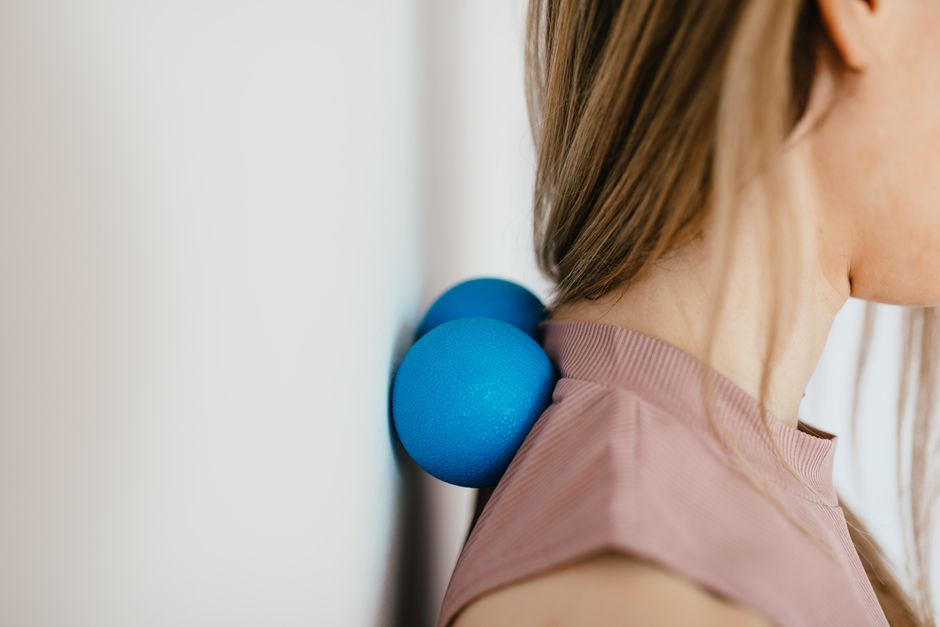
For the neck and shoulders, use a tennis ball against a wall. Place the ball between your upper back and the wall. Lean into it and roll slowly to find tight spots. Hold pressure on each spot for about thirty seconds. This is a form of self-myofascial release that many physical therapists recommend for muscle tension.
When Tension Is a Sign of Something More
Most muscle tension is temporary and responds well to these natural methods. But persistent tension can be a symptom of an underlying condition. Chronic anxiety, depression, and sleep disorders all produce physical tension as a symptom. If tension lasts for weeks despite your best efforts, it is worth discussing with a healthcare provider.
Some medical conditions also cause muscle tightness. Fibromyalgia, chronic fatigue syndrome, and certain autoimmune conditions present with muscle pain and tension. If your tension is accompanied by fatigue, widespread pain, or sleep problems, do not assume it is just stress. A proper evaluation can rule out treatable conditions.
There is also a difference between tension and spasm. A muscle spasm is a sudden, involuntary contraction that can be intensely painful. If you experience spasms that do not resolve with stretching and rest, seek medical advice. In rare cases, muscle tightness can be a sign of a neurological issue. Trust your body — if something feels different or worse than usual, get it checked.
Building a Daily Tension-Release Habit
Quick relief methods work, but prevention is better. A daily practice of even five minutes can keep tension from accumulating. The best time is either first thing in the morning or just before bed. Consistency matters more than duration.
A simple daily routine might look like this: two minutes of slow breathing, two minutes of neck and shoulder stretching, and one minute of progressive muscle relaxation. This is not a large time commitment. It is less time than scrolling through your phone. But it gives your body a regular signal that it is safe to relax.
Some people find that regular exercise, adequate sleep, and reduced caffeine intake naturally lower their baseline tension. Caffeine is a stimulant that amplifies the stress response. Reducing your intake, especially after midday, can make a noticeable difference in how much tension you carry. Hydration also matters — even mild dehydration increases muscle cramping and tension.
Frequently Asked Questions
What is the fastest way to release muscle tension?
Extended exhale breathing is the fastest natural method. Inhale for four seconds and exhale for six to eight seconds for two to three minutes to activate your body’s relaxation response.
Can stress cause muscle tension even when I am not aware of it?
Yes, stress hormones can keep muscles contracted without your conscious awareness. Many people hold tension in their jaw, neck, or shoulders without noticing until pain develops.
How long does it take for natural tension release methods to work?
Breathing techniques can shift your nervous system within two to three minutes. Progressive muscle relaxation and stretching typically take five to ten minutes to produce noticeable relief.
Are there any risks to releasing tension naturally?
These methods are safe for most people. If stretching causes sharp pain or if tension persists for weeks despite regular practice, consult a healthcare provider to rule out underlying conditions.
