

Checking blood pressure when you have atrial fibrillation is tricky, but it can be done. The key is to take several readings and use the average. Because AFib makes your heart beat irregularly, a single reading can be misleading — sometimes too high, sometimes too low.
A home monitor with an automatic cuff is the standard tool. Take at least three readings a few minutes apart, then average them. If the numbers vary wildly or your monitor keeps showing an error symbol, that is your signal to have a clinician check it manually.
Why Is Blood Pressure Hard to Measure With Atrial Fibrillation?
Standard blood pressure cuffs are built for a steady heartbeat. AFib does not provide one.
When your heart beats normally, each pulse pushes a consistent volume of blood into your arteries. A blood pressure cuff measures the pressure at two points: when blood first pushes through (systolic) and when it flows freely again (diastolic). With a regular rhythm, those two points are easy to detect.
In AFib, the upper chambers of the heart quiver instead of contracting properly. The ventricles — the lower chambers that pump blood out — receive erratic signals. Some beats are strong. Some are weak. Some come so close together that the ventricle has not had time to refill. The result is a pulse that varies in strength from beat to beat.
That variation is why a single blood pressure reading in AFib can be unreliable. A cuff may catch a strong beat and record a higher number. Or it may catch a weak beat and record a lower one. Neither number reflects your true average pressure.
This is not a minor technicality. Research has consistently shown that blood pressure measurements in people with AFib tend to be less accurate and less reproducible than in people with normal rhythm. The measurement error can go in either direction — overestimating or underestimating — depending on which beats the device happens to capture.
How Do You Check Blood Pressure With Atrial Fibrillation at Home?
Home monitoring is still useful in AFib. You just need to adjust your method.
Use a validated upper-arm automatic monitor. Wrist and finger monitors are less accurate in general, and that gap widens with an irregular rhythm. Upper-arm cuffs are the standard for home use.
Here is a practical approach:
- Sit quietly for five minutes before measuring. This matters more in AFib because your heart rate and rhythm can shift with activity.
- Place the cuff on your bare upper arm, at heart level. A cuff over clothing or hanging below heart level will skew the reading.
- Take three readings, each about one minute apart. Do not talk or move during any of them.
- Record all three numbers, not just the last one. Your clinician needs to see the spread.
- Average the three readings. That average is more meaningful than any single number.
If your monitor shows an irregular heartbeat symbol or an error code, note that. Many modern home monitors have an AFib detection feature. These are not diagnostic tools, but they can flag when a reading is unreliable.
Some people find that their monitor simply will not give a reading during an AFib episode. If that happens repeatedly, do not keep retrying. Wait until your rhythm settles, or have someone check it manually.
Does Your Blood Pressure Reading Change During an AFib Episode?
Yes. Blood pressure often fluctuates during AFib and may differ from your reading when your rhythm is normal.
During an AFib episode, the rapid and irregular ventricular rate can reduce the amount of blood the heart pumps out with each beat. When the heart does not fill properly between beats, the volume of blood ejected drops. That can lower blood pressure.
At the same time, the body tries to compensate. Hormones and nerve signals that regulate blood pressure kick in. Heart rate may rise. Blood vessels may tighten. These responses can push pressure back up — or create a swinging pattern where it rises and falls.
What this means for you: a reading taken during an active AFib episode may not reflect your typical blood pressure. If your doctor is adjusting your blood pressure medication, they need to know whether your rhythm was normal or irregular when the reading was taken.
This is one reason some clinicians prefer to assess blood pressure control when the heart rhythm is stable. But that is not always possible. If you are in persistent AFib, your readings will always be taken during an irregular rhythm. In that case, consistency in how you measure matters even more.


When Should a Clinician Measure Your Blood Pressure Manually?
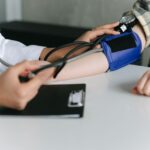
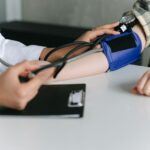
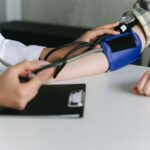
Manual measurement with a stethoscope is often more reliable in AFib — but it requires skill.
A clinician using a manual cuff listens for the Korotkoff sounds, the tapping noises blood makes as it flows through a partially compressed artery. In a regular rhythm, those sounds follow a predictable pattern. In AFib, they vary. An experienced clinician can account for this by listening through several beats and estimating the average.
Manual measurement is not perfect either. Studies comparing manual and automatic readings in AFib have found discrepancies in both directions. Neither method is flawless.
Some situations call for manual measurement:
- Your home monitor consistently fails to give a reading
- Your readings vary by a large margin from one measurement to the next
- Your doctor needs to make a medication decision based on your blood pressure
- You are having symptoms like dizziness, chest pain, or shortness of breath
If you are in a clinical setting, ask whether the person taking your blood pressure knows you have AFib. It changes how they should interpret the number.
What About Monitors That Detect AFib?
Some home blood pressure monitors now include an AFib detection feature. These devices analyze the pulse wave during a reading and flag irregularity.
These features can be useful for spotting AFib that has not been diagnosed. But they are not meant to replace a diagnosis from a clinician using an electrocardiogram. And for people who already know they have AFib, the detection feature does not solve the measurement accuracy problem. It just confirms what you already know.
If you are using one of these monitors, read the instructions carefully. Some models automatically discard readings taken during an irregular rhythm. Others average multiple readings. The behavior varies by brand, and it affects how you should interpret the number on the screen.
What Numbers Should You Aim For?
There is no separate blood pressure target just for people with AFib. The general guidance for adults applies.
For most adults, normal blood pressure is below 120/80 mm Hg. High blood pressure is generally defined as 130/80 mm Hg or higher, though the threshold your doctor uses may depend on your age and other health conditions.
What changes in AFib is not the target — it is the confidence in the measurement. If your readings are inconsistent, your doctor may rely more on home averages over time rather than a single office reading.
Some evidence suggests that high blood pressure and AFib worsen each other. High blood pressure is a well-established risk factor for developing AFib, and poorly controlled blood pressure may make AFib episodes more frequent or harder to manage. That makes accurate measurement important, even when it is difficult.
If you are unsure whether your readings are reliable, bring your monitor to your next appointment. Your doctor can compare your home readings with a manual reading taken in the office. That comparison often reveals whether your device is giving you usable numbers.
Frequently Asked Questions
Can a blood pressure monitor give a wrong reading if you have AFib?
Yes. AFib causes beat-to-beat variation in pulse strength, which can make automatic monitors record numbers that are higher or lower than your true average. Taking multiple readings and averaging them reduces this error.
How many blood pressure readings should I take with AFib?
Take at least three readings about one minute apart and average them. A single reading in AFib is not reliable enough to act on.
Should I use a wrist monitor for blood pressure with AFib?
No. Upper-arm monitors are more accurate in general, and the difference is greater when your heart rhythm is irregular. Wrist and finger monitors are not recommended for home blood pressure monitoring in AFib.
Can I rely on my home blood pressure monitor during an AFib episode?
Home monitors can still provide useful information during an AFib episode, but the readings may be less accurate and more variable. If your monitor repeatedly fails or shows error codes, wait until your rhythm settles or have a clinician measure manually.
