
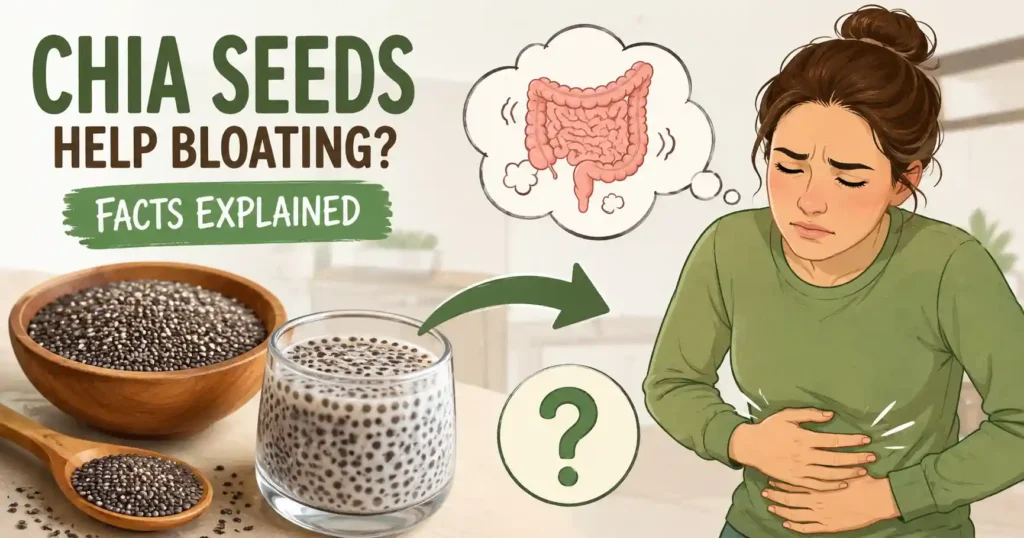
Yes, chia seeds can help with bloating when the bloating is linked to constipation or low fiber intake. Their soluble fiber absorbs water, softens stool, and may improve bowel regularity. But chia seeds can also make bloating and gas worse, especially if you suddenly eat large amounts or do not drink enough water with them.
As of 2026, current digestive research still shows that fiber helps some gut problems while temporarily worsening others during adjustment.
A lot of wellness content treats chia seeds like a digestion miracle. That is not really how digestion works. The same food can help one person and annoy another, depending on hydration, gut sensitivity, IBS status, and how much fiber they already eat.
⚡ Quick Takeaway
- Chia seeds may help bloating linked to constipation.
- They can temporarily increase gas during fiber adjustment.
- Hydration changes whether chia helps or backfires.
- Visible chia in stool is usually not dangerous.
- Large servings create more digestive complaints.
- Slow increases work better than aggressive “superfood” habits.
Do Chia Seeds Help With Bloating?
Chia seeds help with bloating best when constipation is the real problem. The fiber in chia absorbs water and adds bulk to stool, which can help food move through the digestive tract more efficiently.
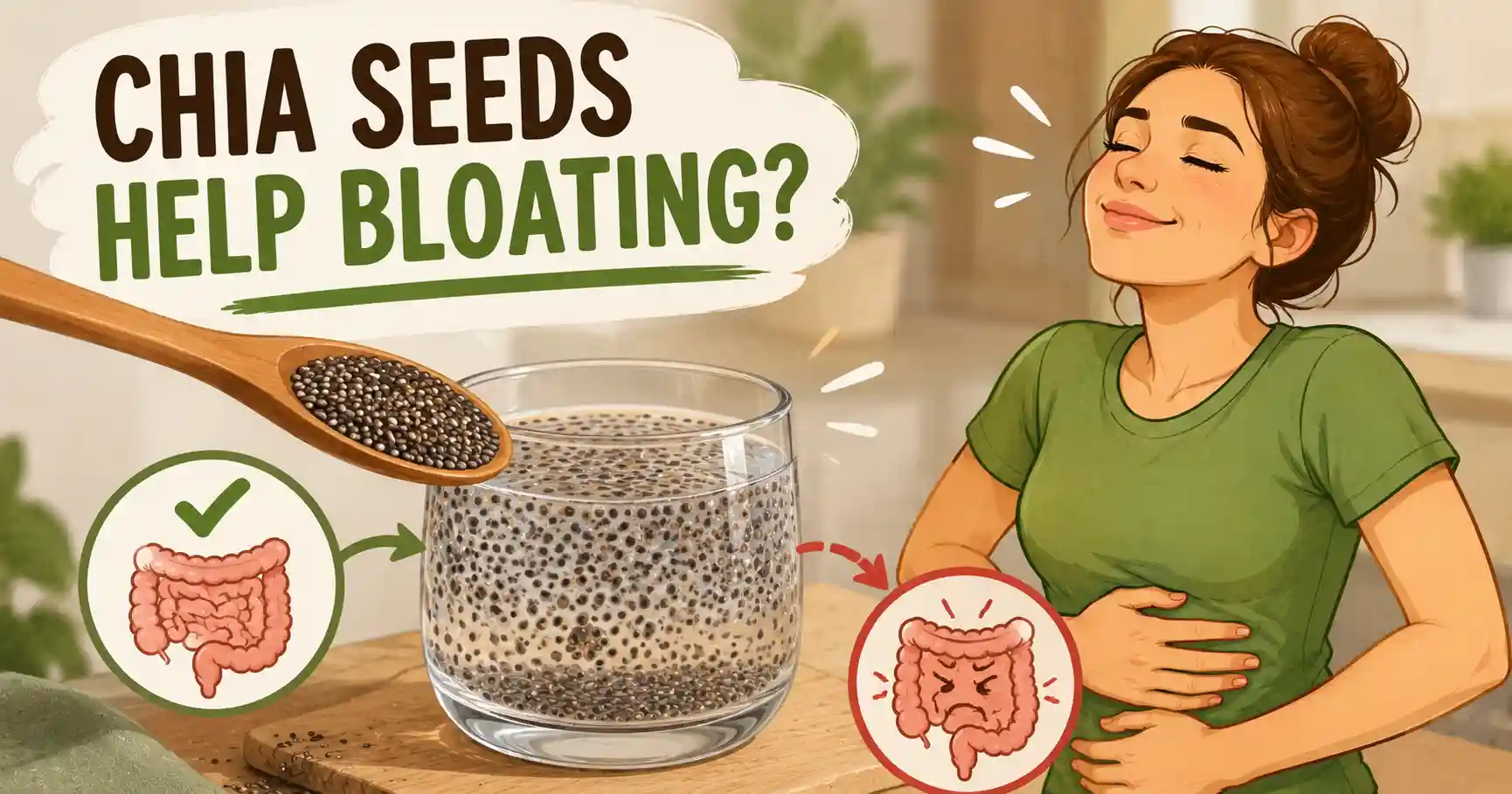
One ounce of chia seeds contains roughly 10 grams of fiber, according to the Harvard T.H. Chan School of Public Health. That is a large amount for such a small serving. Many Americans do not even reach the daily fiber recommendation, so adding chia can noticeably change digestion within days.
But this is where online advice gets sloppy.
Not all bloating comes from constipation. Some bloating comes from:
- gas fermentation
- IBS
- food intolerances
- stress-related gut sensitivity
- swallowing excess air
- slow digestion after heavy meals
If your bloating is mainly trapped gas, suddenly adding a high-fiber food may actually increase pressure and discomfort at first.
That contradiction confuses people, like some say chia fixed their stomach issues, and others say chia made them look six months pregnant. Both experiences can be real.
The difference usually comes down to:
- serving size
- water intake
- existing fiber intake
- gut sensitivity
- How quickly was chia added?
Why Do Chia Seeds Make Some People Gassy?
Chia seeds can increase gas because gut bacteria ferment some of their fiber content in the colon.1Effect of Chia (Salvia hispanica L.) Associated with High-Fat Diet on the Intestinal Health of Wistar Rats, PubMed Central. This is a normal digestive process, not necessarily a sign that something is wrong.
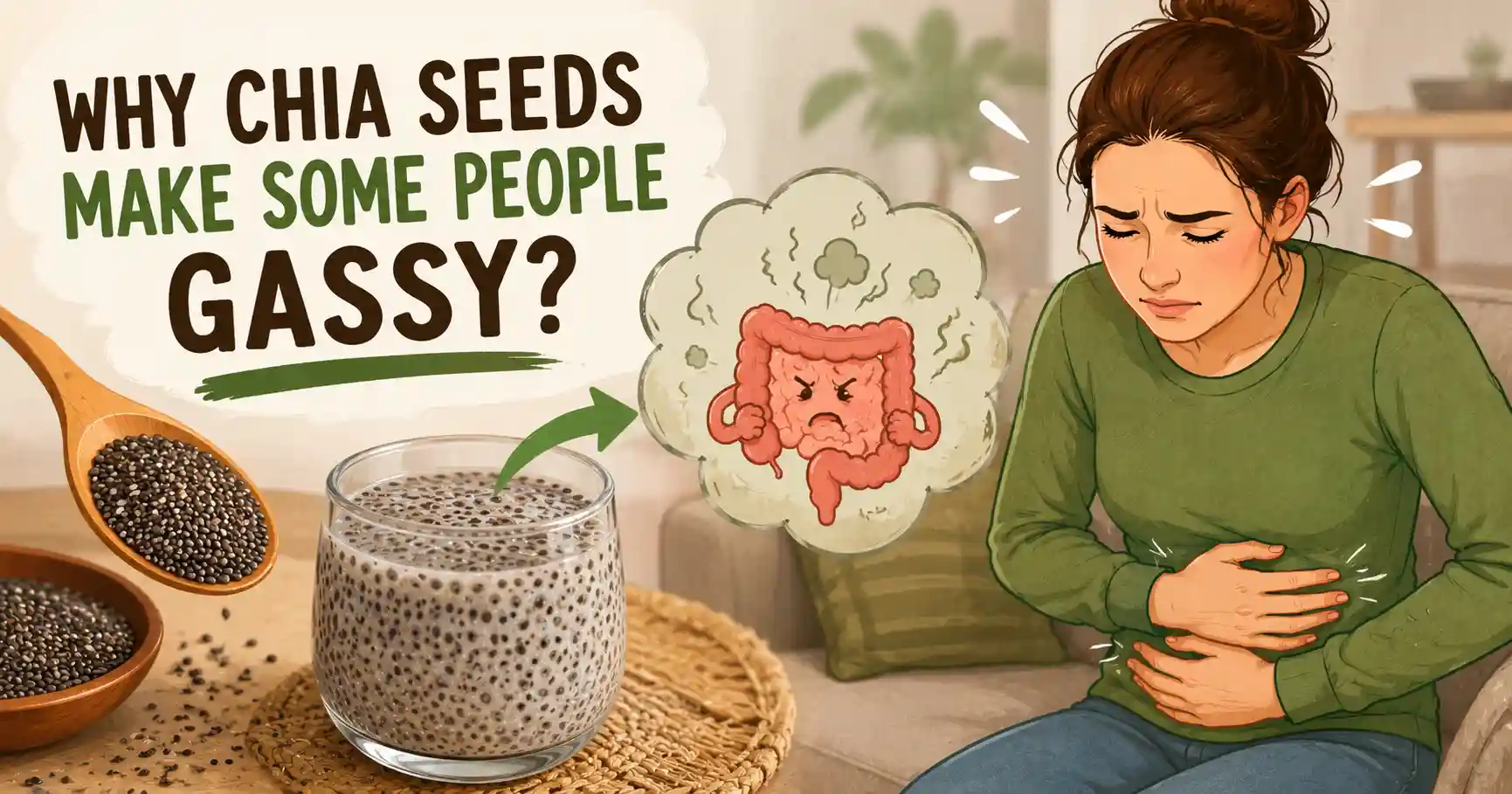
The problem is usually dose and speed. A lot of people go from very low fiber intake to adding two large spoonfuls of chia overnight. That is a digestive shock.
According to the Cleveland Clinic and NIDDK guidance on fiber intake, increasing fiber too quickly commonly causes:
- bloating
- cramping
- gas
- stomach fullness
This happens because gut bacteria suddenly receive far more fermentable material than usual.
There is also another issue wellness blogs barely mention: healthy foods are still mechanically stressful in large amounts.
Chia expands when mixed with liquid. That gel texture helps stool softness, but excessive amounts can leave some people feeling heavy or overly full.
People with IBS or sensitive digestion often notice this more.
Common Reasons Chia Seeds Cause Gas
| Cause | What Happens |
|---|---|
| Too much too fast | Gut bacteria rapidly ferment fiber |
| Not enough water | Fiber thickens stool instead of softening it |
| Large servings | Expansion creates stomach fullness |
| IBS sensitivity | Fermentation triggers stronger reactions |
| Low-fiber baseline diet | Digestive system is not adapted |
One thing that stood out while reviewing ranking wellness content: many articles keep repeating “fiber is good” without explaining adaptation. The body does not instantly become efficient at processing large fiber increases.
That adjustment period matters more than most articles admit.
Do Chia Seeds Relieve Constipation or Cause It?
Chia seeds usually help with constipation when eaten with enough fluid. Without enough water, they can make constipation worse in some people. This is probably the biggest misunderstanding online.
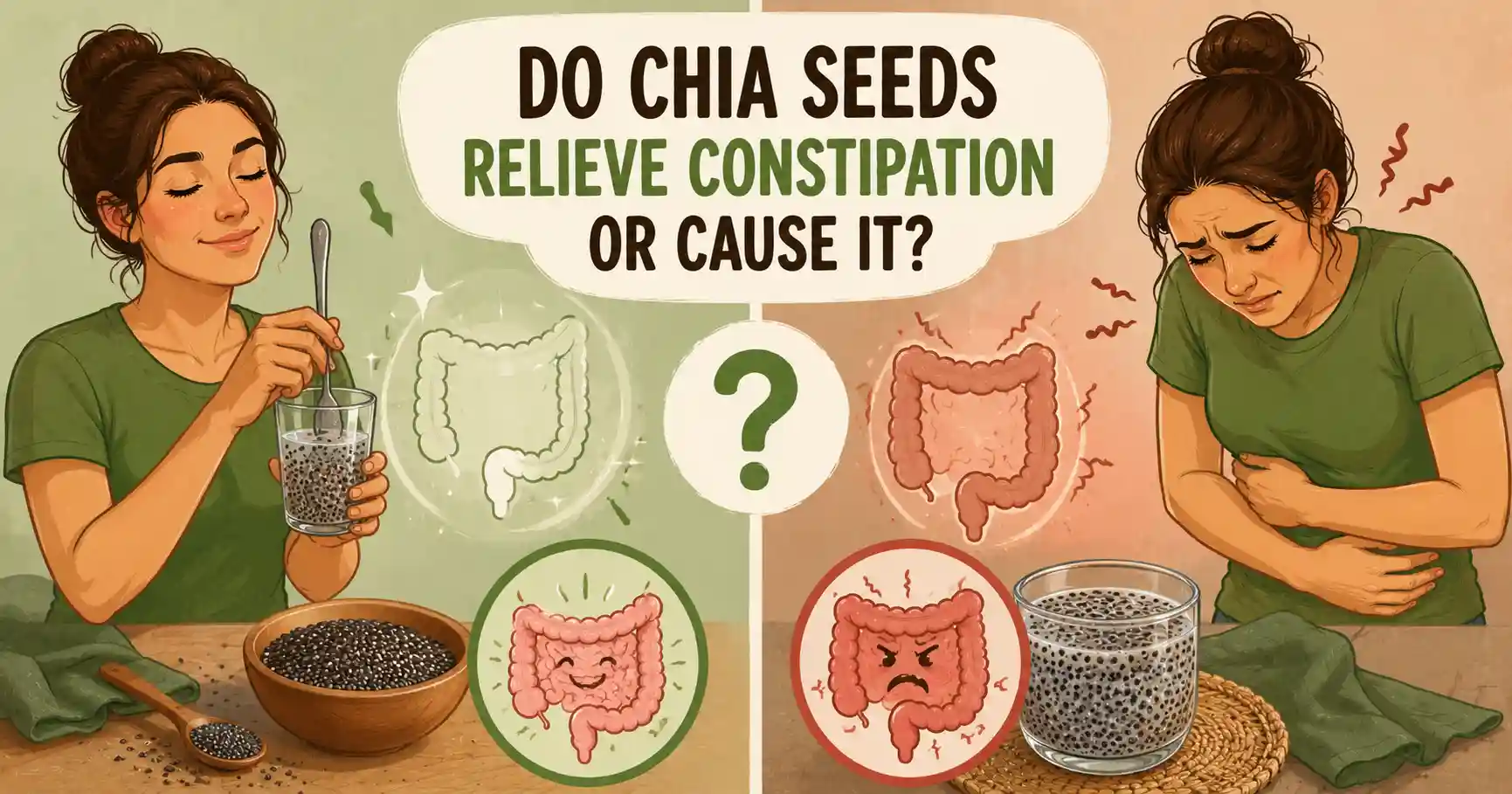
Chia contains soluble fiber, which absorbs water and forms a gel-like texture. That can:
- soften stool
- increase stool bulk
- support bowel movement frequency
Research published in the American Journal of Clinical Nutrition and other dietary fiber studies consistently shows that higher fiber intake is associated with better bowel regularity for many adults.2Fiber intake and laxation in people with normal bowel function: a systematic review, ScienceDirect.
But fiber is not magic by itself.
What Usually Helps vs What Backfires
| Habit | Likely Result |
|---|---|
| Small servings + enough water | Better bowel regularity |
| Gradual increase over 1–2 weeks | Less gas and cramping |
| Eating dry chia without fluids | Constipation risk increases |
| Suddenly eating large servings | Bloating and pressure |
| Ignoring hydration | Harder stool movement |
A weird but important nuance: some people already eat a relatively high-fiber diet. For them, adding chia may not dramatically improve constipation because fiber was never the main problem.
Sometimes constipation is linked more to:
- dehydration
- low movement
- medication side effects
- pelvic floor issues
- IBS-C
- chronic stress
That is another place wellness articles oversimplify things.
How Much Chia Is Usually Reasonable?
For most adults:
- 1 tablespoon daily is a safer starting point
- Increase slowly if tolerated
- Drink extra fluids consistently
Jumping immediately to large “superfood” servings is usually where problems start.
Quick Takeaway: Chia seeds often help with constipation, but hydration determines whether the fiber actually moves smoothly through the gut.
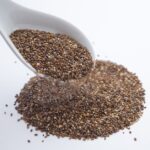




Why Do Chia Seeds Sometimes Look Undigested?
Seeing chia seeds in stool does not automatically mean your body failed to digest them. The outer seed coating can remain partially visible after digestion.
People get alarmed by this constantly.
Searches like:
- “chia seeds not digesting.”
- “whole chia seeds in poop”
- “Are chia seeds passing through me?”
They are extremely common. The digestive system does not always destroy every visible food structure.
You can sometimes see:
- corn remnants
- sesame seeds
- flax fragments
- chia seed shells
while still absorbing nutrients from the food. Chia also absorbs water and forms a gel coating. That texture changes how it moves through digestion.
What actually matters more is whether you are having symptoms like:
- severe pain
- vomiting
- inability to pass stool
- ongoing constipation
- difficulty swallowing
Those deserve medical attention. Visible seed remnants alone usually do not.
There is one legitimate concern, though. Dry chia can absorb liquid rapidly. Case reports have described swallowing issues when large amounts of dry chia expand after contact with fluid. That is why soaking chia or consuming it with enough liquid is generally safer.
How Much Chia Is Too Much for Digestion?
For many people, digestive problems start when servings become excessive relative to their usual fiber intake.
A realistic range for most adults is:
- 1–2 tablespoons daily
Beyond that, some people tolerate it well, while others notice:
- bloating
- cramping
- excessive fullness
- loose stools
- gas
The internet loves extreme “healthy eating” habits. Digestion usually hates extremes.
One thing current research still supports is that gradual fiber increases work better than aggressive changes.3The Role of Dietary Fiber in Health Promotion and Disease Prevention: A Practical Guide for Clinicians, National Library of Medicine. Your gut bacteria adapt over time. Sudden jumps are what create many of the horror-story reactions people post online.
Signs You May Be Overdoing Chia
- Constant bloating after meals
- New stomach pressure
- Excessive gas
- Feeling overly full quickly
- Cramping
- Worsening constipation despite high fiber intake
Ironically, some people keep increasing fiber when constipation worsens, even though dehydration is the actual problem. More fiber is not always the answer.
Who Should Be Careful With Chia Seeds?
People with sensitive digestion should introduce chia slowly.
That includes:
- IBS sufferers
- people with chronic bloating
- those with swallowing problems
- individuals with bowel narrowing conditions
- people unused to high-fiber diets
According to Harvard nutrition guidance and digestive health experts, fiber tolerance varies widely between individuals.
That variability gets flattened in social media wellness advice.
Some people genuinely feel better with chia. Others do better with gentler fiber sources first, such as:
- oats
- kiwi
- cooked vegetables
- psyllium in controlled amounts
There is no universal “best digestion food.”
That idea mostly exists because the nutrition content online rewards certainty more than accuracy.
Quick Takeaway: Chia seeds are usually safe for healthy adults, but people with sensitive digestion often need smaller servings and slower increases.
Best Ways to Eat Chia Seeds Without Bloating
The safest way to use chia for digestion is a gradual introduction with enough fluid intake.
Better Approaches
- Start with 1 teaspoon to 1 tablespoon
- Drink extra water during the day
- Soak chia before eating
- Avoid suddenly doubling fiber intake
- Give digestion several days to adjust
Common Mistakes
- Eating large dry servings
- Combining chia with multiple other high-fiber foods immediately
- Expecting overnight results
- Ignoring hydration
- Assuming more fiber always equals better digestion
A lot of bloating problems blamed on chia are actually caused by the combination of:
- high fiber
- low water
- sudden dietary change
Not the chia alone.
Our Take
If you are wondering whether chia seeds help with bloating, the most accurate answer is that they help some types of bloating and worsen others. Constipation-related bloating often improves. Gas-related bloating may temporarily get worse before the gut adapts. The details matter more than the wellness headlines do.
FAQs
Do chia seeds help with bloating
Chia seeds may help with bloating when constipation or low fiber intake is the underlying issue. Their soluble fiber absorbs water and supports bowel regularity. But if bloating is caused by gas sensitivity, IBS, or sudden fiber increases, chia can temporarily worsen discomfort before digestion adapts.
Will chia seeds constipate you?
Chia seeds are more likely to help constipation than cause it, but hydration matters. Without enough fluid intake, the fiber can thicken stool and slow movement through the digestive tract. Large servings taken suddenly also increase the chance of digestive discomfort and stool changes.
Do chia seeds cause flatulence?
Yes, chia seeds can increase flatulence because gut bacteria ferment part of their fiber content. This effect is more common when someone rapidly increases fiber intake or already has sensitive digestion. Smaller portions and gradual increases usually reduce the problem over time.
Why are chia seeds not digestible?
Visible chia seed remnants in stool do not always mean nutrients were not absorbed. The outer shell can remain partially intact during digestion. Unless symptoms like pain, vomiting, severe constipation, or swallowing difficulty occur, this is usually considered normal digestive behavior.
Will chia seeds help with constipation?
Chia seeds may help with constipation by adding bulk and softness to stool through their soluble fiber content. Research on dietary fiber supports this effect in many adults. The best results usually happen when chia is introduced slowly alongside increased water intake and regular movement.
Scientific References
- 1Effect of Chia (Salvia hispanica L.) Associated with High-Fat Diet on the Intestinal Health of Wistar Rats, PubMed Central. ↩︎
- 2Fiber intake and laxation in people with normal bowel function: a systematic review, ScienceDirect. ↩︎
- 3The Role of Dietary Fiber in Health Promotion and Disease Prevention: A Practical Guide for Clinicians, National Library of Medicine. ↩︎
