
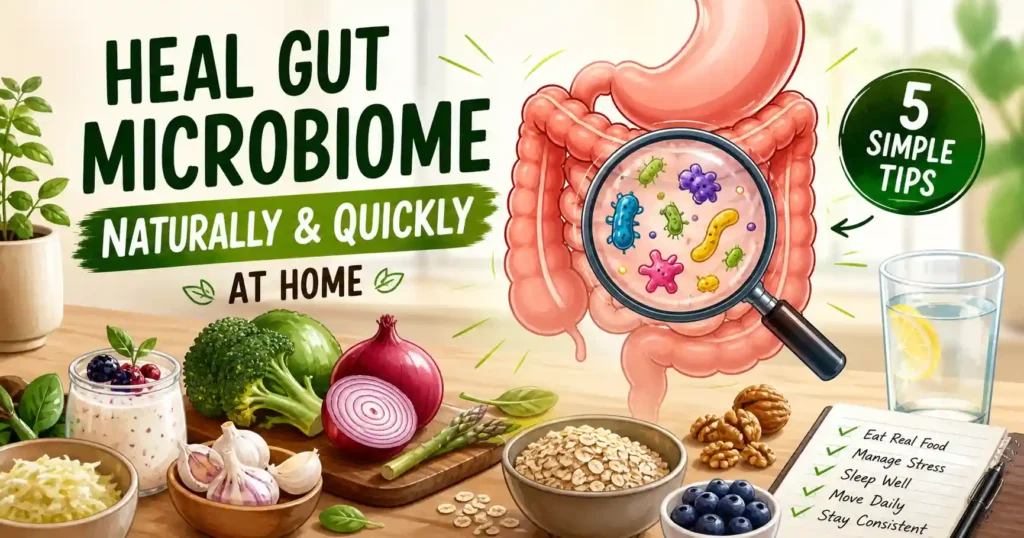
Healing the gut microbiome means restoring a balanced community of beneficial bacteria in your digestive system. This balance helps regulate digestion, immune function, and inflammation. A healthy microbiome supports how your body processes food, fights disease, and maintains energy levels.
Key Takeaways
- Gut healing starts with removing damage — adding “healthy” foods won’t work if the system is still being stressed.
- Fiber and food diversity matter more than probiotics — feeding existing bacteria is more effective than adding new ones.
- Changes can start quickly — but stable gut improvement takes consistent weeks, not days.
- After antibiotics, rebuild the ecosystem — focus on restoring balance, not just replacing bacteria.
- Lifestyle directly affects gut health — poor sleep and high stress disrupt microbiome balance.
- Supplements only help after diet is fixed — they support progress but don’t create it.
What Is the Gut Microbiome and Why Does It Matter?
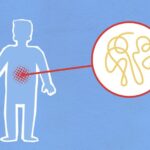
The gut microbiome is a collection of trillions of bacteria, fungi, and other microbes living in your digestive tract. Most of them are not harmful. In fact, many are essential.
These microbes help break down food your body cannot digest on its own. They also produce compounds like short-chain fatty acids (SCFAs), which support the gut lining and reduce inflammation. A 2019 review in Nature Reviews Gastroenterology & Hepatology showed that microbiome imbalance is linked to conditions like obesity, diabetes, and IBS.
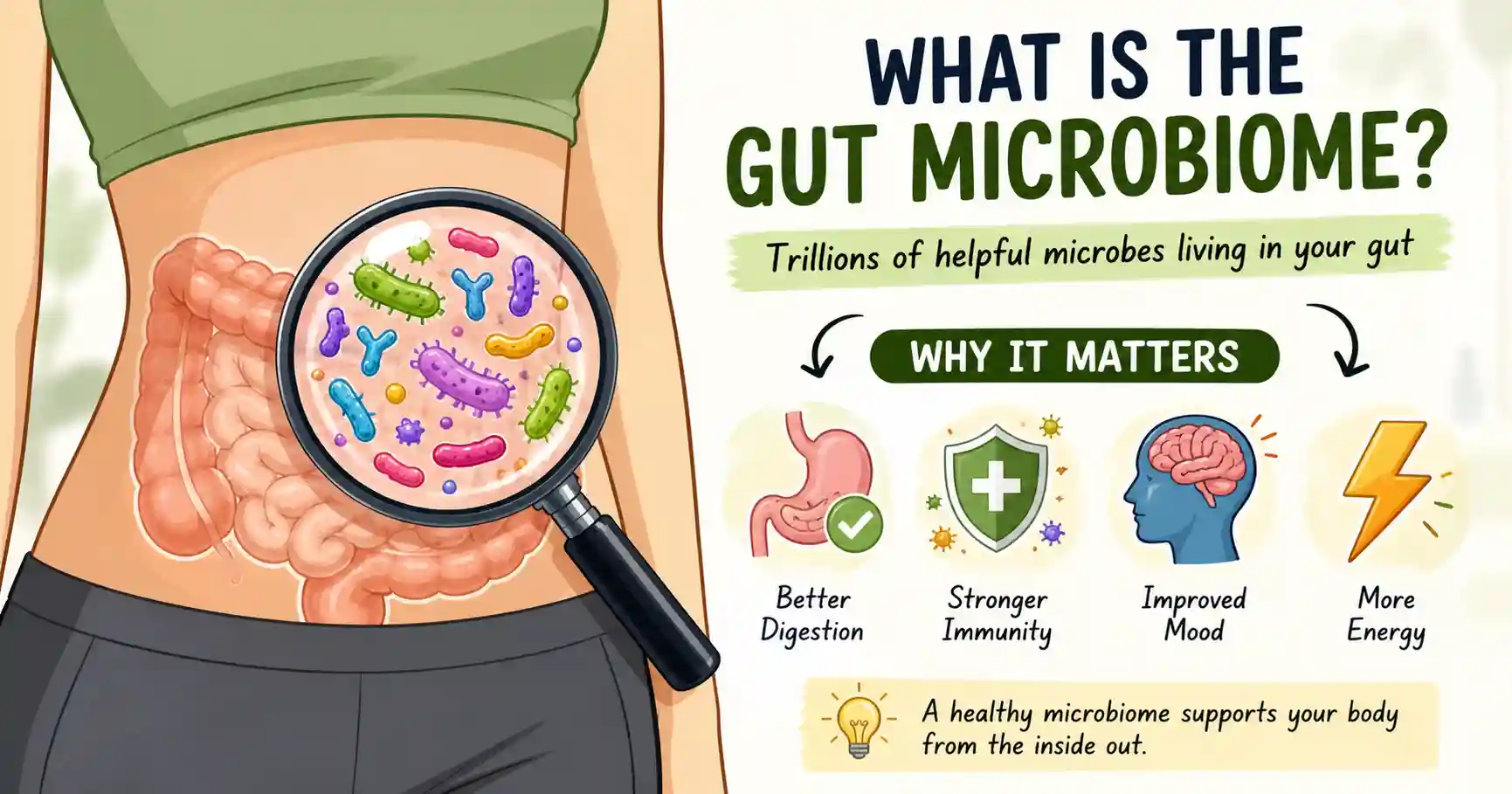
What matters is not just having bacteria — it’s having the right balance and diversity.
When that balance breaks, problems show up:
- Bloating and gas
- Brain fog
- Irregular digestion
- Skin issues
- Low energy
The mistake most people make is thinking this is a “stomach problem.” It’s not. It’s a system problem.
How to Heal Gut Microbiome Naturally at Home (5 Steps)
Here is the simplest way to fix your gut without overcomplicating it:
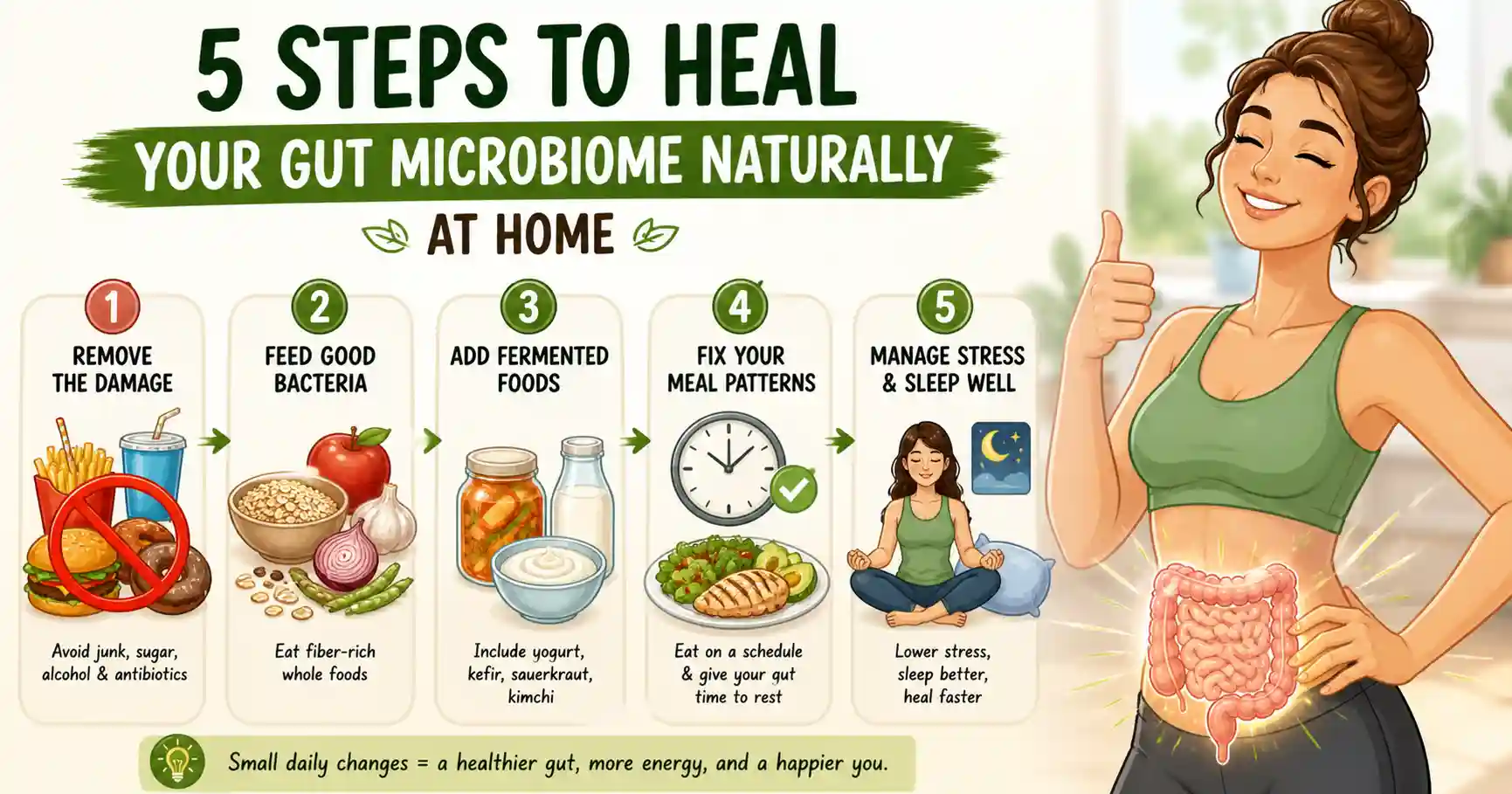
1. Remove what damages your gut first
Adding “healthy foods” won’t help if you keep damaging the system.
Focus on reducing:
- Ultra-processed foods
- Excess sugar
- Alcohol (especially frequent intake)
- Unnecessary antibiotics
Most articles skip this. It’s the first real step.
2. Feed good bacteria (not just yourself)
Fiber is not just for digestion — it feeds bacteria.
Best sources:
- Oats
- Lentils
- Beans
- Apples
- Garlic
- Onions
These act as prebiotics, which bacteria ferment into SCFAs like butyrate. That’s what helps repair your gut lining.
3. Add fermented foods (but don’t overdo it)
Fermented foods introduce beneficial bacteria.
Examples:
- Yogurt (with live cultures)
- Kefir
- Sauerkraut
- Kimchi
But here’s the nuance most miss: If your gut is already irritated, too much fermented food can worsen symptoms initially. Start small.
4. Fix your meal patterns
Your gut bacteria follow a rhythm.
What works better:
- Regular meal timing
- Avoid constant snacking
- Leave 12 hours between dinner and breakfast
This gives your gut time to reset.
5. Sleep and stress matter more than you think
This sounds generic, but it’s not.
Chronic stress changes gut bacteria composition. A 2021 review in Obesity Reviews showed stress directly impacts gut-brain signaling and microbiome balance. If sleep is poor, gut healing slows down.
How to Heal Gut Microbiome Fast — What Actually Works?
Here’s the truth: there is no “fast” fix in the way people expect. But you can speed things up by focusing on high-impact changes.
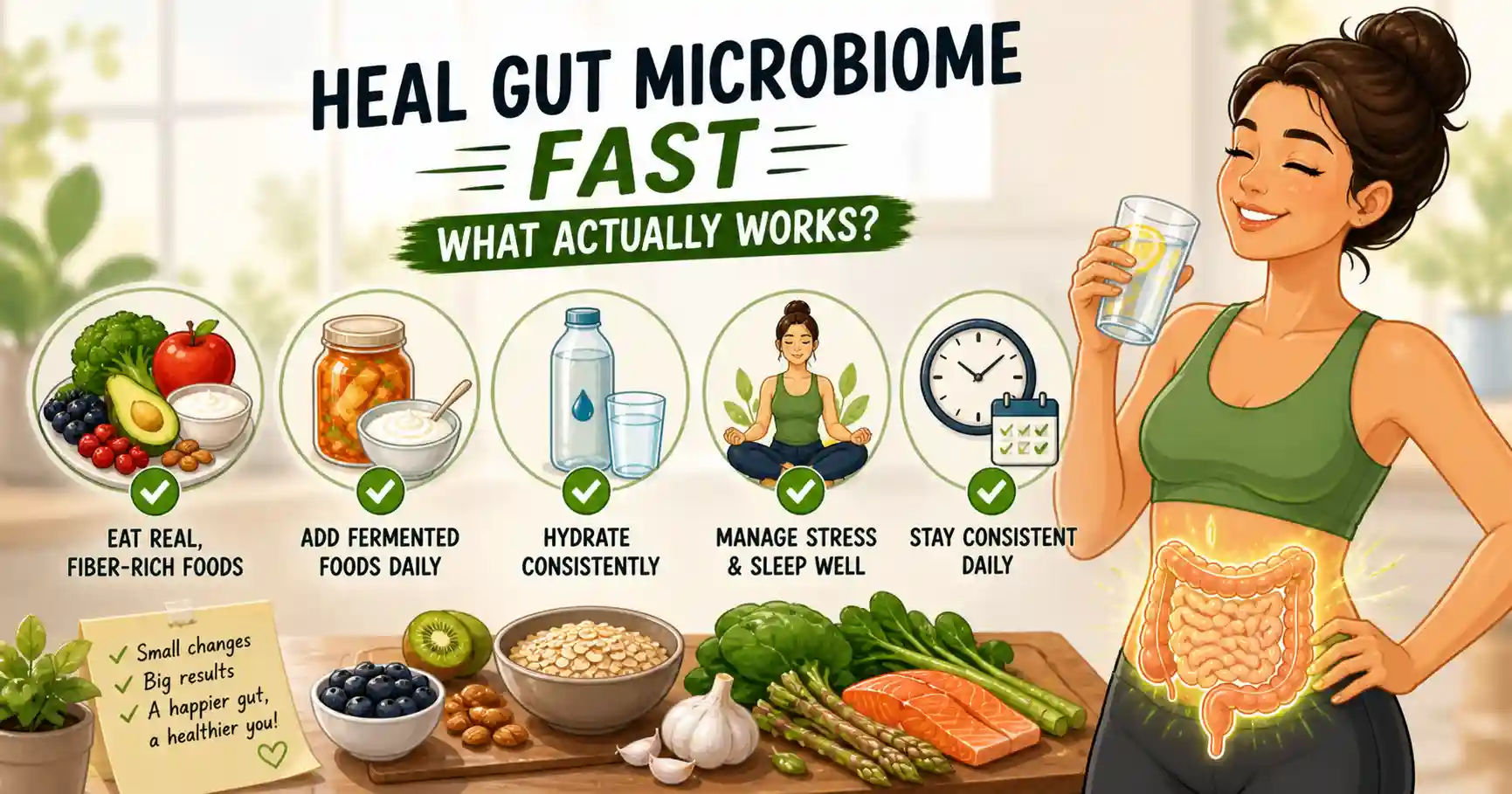
What actually moves the needle quickly:
- Removing processed food (the biggest effect)
- Increasing fiber intake consistently
- Fixing sleep within 7–10 days
What doesn’t work fast:
- Random probiotics
- Detox drinks
- “Gut reset” kits
Research in Cell (2018) showed that diet changes can alter microbiome composition within 24–48 hours, but stable improvement takes weeks.
So yes, changes start fast. But results stabilize slowly.

How to Heal Gut Microbiome After Antibiotics
Antibiotics don’t just kill harmful bacteria — they wipe out beneficial ones too. Recovery requires a different approach.
Step-by-step:
- Wait before adding probiotics
Taking them during antibiotics reduces effectiveness. - Focus on prebiotic fiber first
Your body needs to rebuild its environment. - Then introduce probiotics selectively
Look for strains like:- Lactobacillus rhamnosus
- Bifidobacterium lactis
- Increase food diversity
A 2018 study in Cell found that diet diversity strongly predicts microbiome recovery.
How to Heal Gut Microbiome With Diet (Foods That Work)
Not all “healthy foods” affect the microbiome the same way.
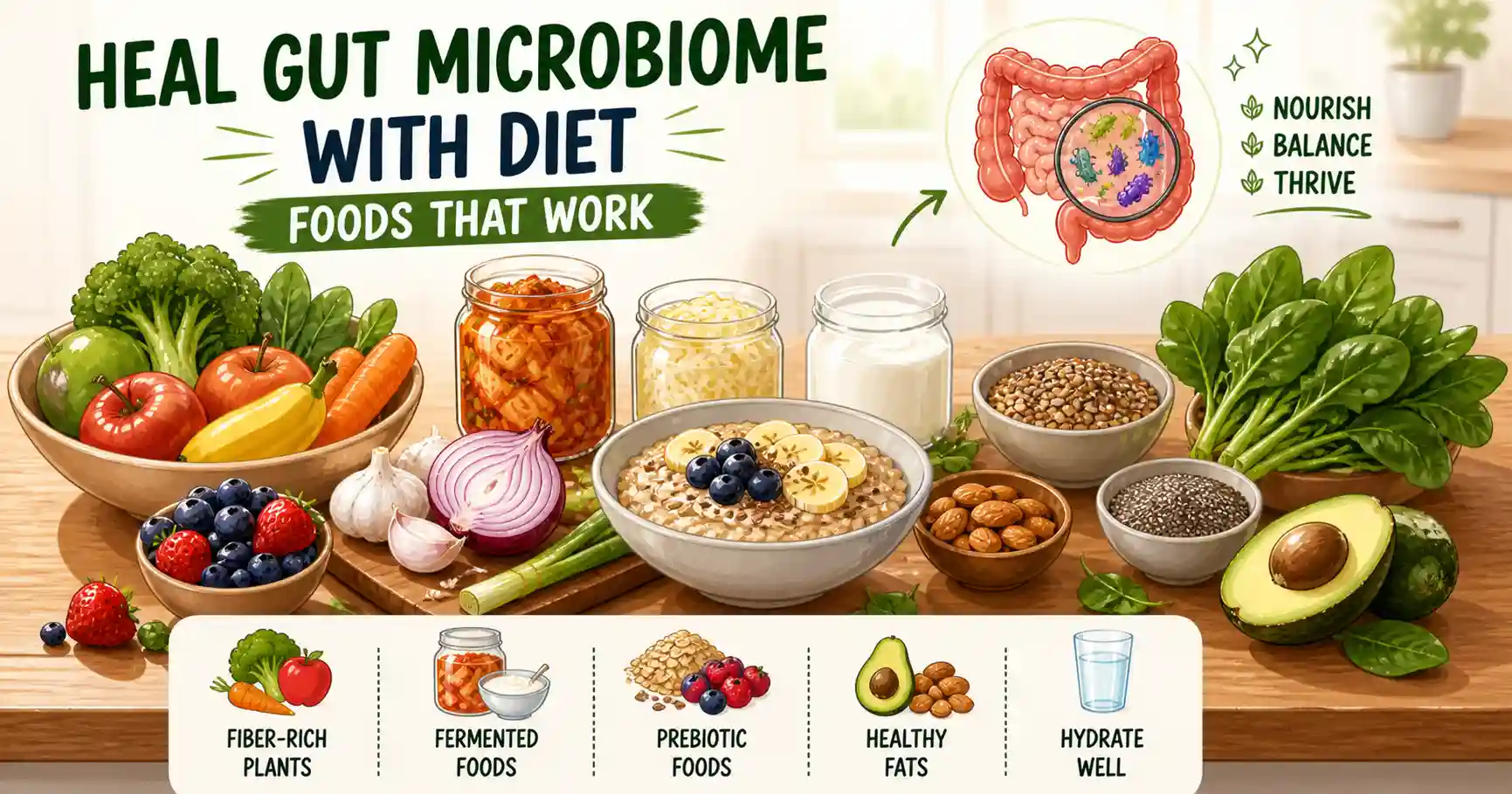
Here’s a clear breakdown:
| Food Type | What It Does | Examples |
|---|---|---|
| Prebiotics | Feed bacteria | Garlic, onions, oats |
| Fermented foods | Add bacteria | Yogurt, kefir |
| Polyphenol-rich foods | Support diversity | Berries, green tea |
| Resistant starch | Improves gut lining | Cooked & cooled rice, potatoes |
What most people misunderstand:
Eating “clean” is not enough.
You need:
- Variety
- Consistency
- Enough fiber (25–35g/day)
A repetitive “healthy diet” can still lead to low diversity.
How to Heal Gut Microbiome With Supplements — Do They Help?
Supplements can help — but they are not the foundation.
What works:
- Targeted probiotics (strain-specific)
- Prebiotic fiber supplements
What doesn’t work well:
- Random multi-strain blends
- Low-dose formulas
- Taking probiotics without changing diet
A 2020 review in Nutrients found probiotics may support gut balance, but results vary widely depending on strain and dose.
Why Most Gut Healing Advice Fails (Common Mistakes)
Most people fail because they do things in the wrong order.
Biggest mistakes:
- Taking probiotics before fixing the diet
- Eating “healthy” but low-fiber foods
- Expecting fast results
- Ignoring stress and sleep
- Overloading on fermented foods
How Long Does It Take to Fix Your Gut Microbiome?
Here’s a realistic timeline:
- Days 1–3: Early changes begin
- Weeks 1–2: Digestion may improve
- Weeks 3–6: Bacterial diversity increases
- Months 2–3: More stable balance
Some studies suggest meaningful improvements within weeks, but full stability takes longer.
Best Way to Improve Microbiome Long-Term
Once your gut improves, the goal shifts to maintenance.
What actually works long-term:
- Rotating foods weekly
- Keeping fiber intake consistent
- Staying physically active
- Avoiding unnecessary antibiotics
What doesn’t:
- Extreme diets
- Cutting entire food groups
- Relying on supplements alone
Final Thought
Healing your gut microbiome is not about finding the perfect supplement or diet trend. It’s about consistent, basic habits done in the right order. If you fix the environment, the microbiome follows.
Frequently Asked Questions
How to heal the gut microbiome naturally?
Healing your gut microbiome naturally involves improving diet, increasing fiber intake, reducing processed foods, and supporting healthy habits like sleep and stress management. Research shows that consistent dietary changes have the biggest impact, especially when combined with diverse plant-based foods and reduced sugar intake.
How to heal the gut microbiome fast?
You can improve your gut microbiome quickly by removing processed foods, increasing fiber, and improving sleep. Some changes can begin within days, but long-term balance typically takes several weeks. Quick fixes like detoxes or supplements alone rarely produce lasting results.
How to heal the gut microbiome after antibiotics?
After antibiotics, focus first on rebuilding your gut environment through fiber-rich foods and dietary diversity. Then introduce targeted probiotics if needed. Studies suggest that recovery depends more on restoring the ecosystem than simply adding bacteria back.
What are the best foods to rebuild the microbiome?
The best foods include prebiotic-rich options like garlic, onions, oats, and legumes, along with fermented foods such as yogurt and kefir. Polyphenol-rich foods like berries also support microbiome diversity and help beneficial bacteria grow.
Do probiotics fix the gut microbiome?
Probiotics may help support gut health, but they are not a complete solution. Their effectiveness depends on the strain, dosage, and your existing gut condition. Without proper diet and lifestyle changes, probiotics alone are unlikely to significantly improve microbiome balance.
