
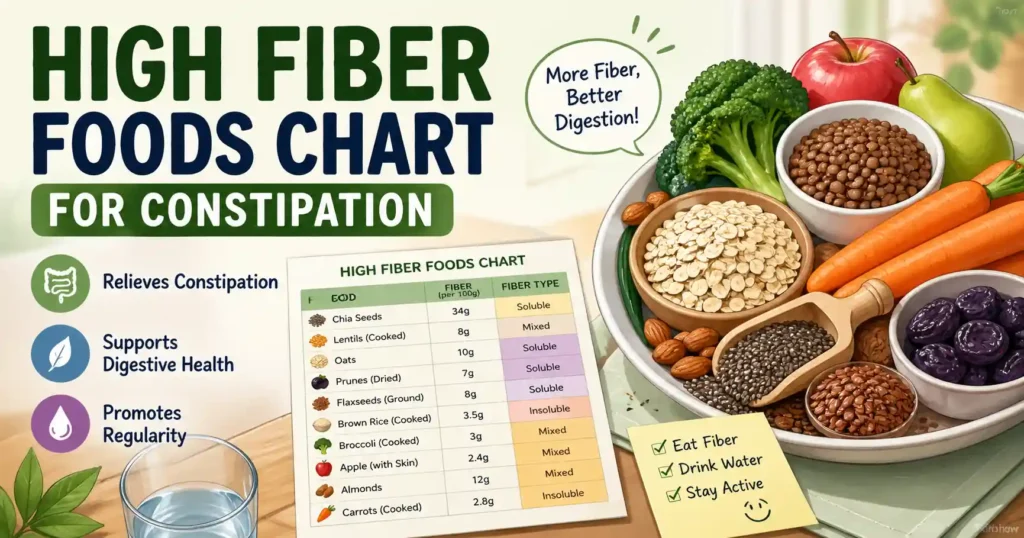
A high fiber foods chart for constipation is a structured list of foods ranked by fiber content to help improve bowel movement frequency and stool consistency. It works by increasing stool bulk and supporting gut movement. The type of fiber—not just the amount—determines whether symptoms improve or get worse.
Key Takeaways
- Fiber type matters more than fiber amount
- Too much fiber too fast can worsen symptoms
- Hydration determines whether fiber works
- Some high-fiber foods increase bloating
- Soluble fiber helps both constipation and diarrhea
- A chart is only useful if you know how to apply it
What is a high fiber foods chart for constipation?
A high fiber foods chart for constipation is a practical tool. It shows foods, their fiber content, and sometimes their fiber type. That last part is what most charts get wrong or ignore.
Fiber is not one thing. It behaves differently depending on:
Most charts only list grams. That’s not enough to solve constipation.
A useful chart should help you answer:
- What foods move stool faster?
- What foods slow things down?
- What foods trigger gas or bloating?
That’s where this guide goes further than typical lists.
How does fiber help constipation?
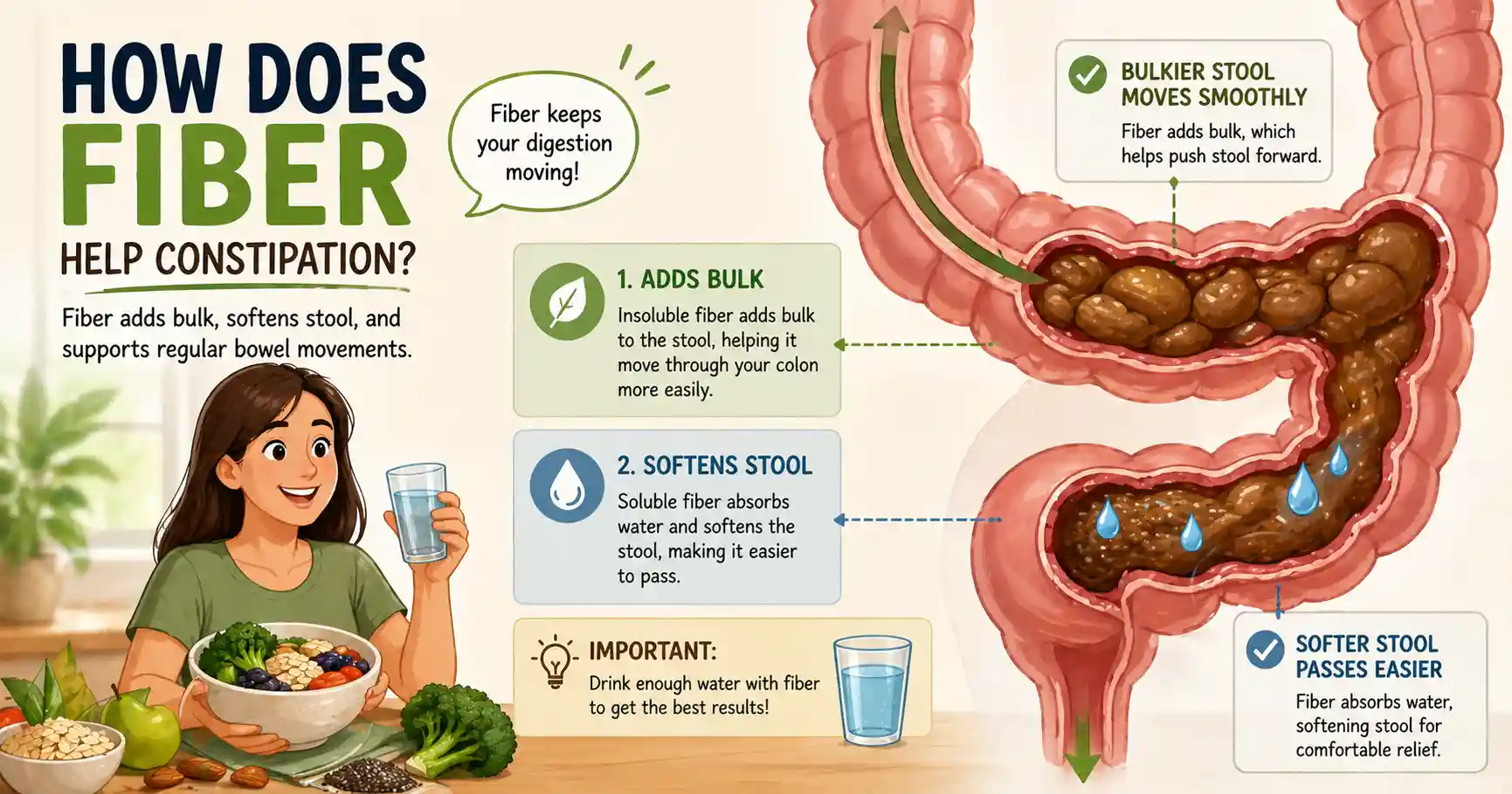
Fiber improves constipation in two main ways:
1. It adds bulk to stool
Insoluble fiber (like wheat bran) acts like a sponge. It increases stool size and pushes it through the colon faster.
2. It softens stool
Soluble fiber (like oats or chia seeds) absorbs water and forms a gel. This makes stool easier to pass.
Here’s the part most articles skip: If you increase fiber without enough water, you can make constipation worse. This isn’t rare. It’s common.
A 2021 review in the American Journal of Gastroenterology found that fiber improves constipation mainly when hydration is adequate. Without that, benefits drop sharply.
Quick Takeaway: Fiber helps constipation by adding bulk and softness—but only when paired with enough fluids.
Which high fiber foods actually relieve constipation fastest?
Not all high-fiber foods work the same. Some act faster.
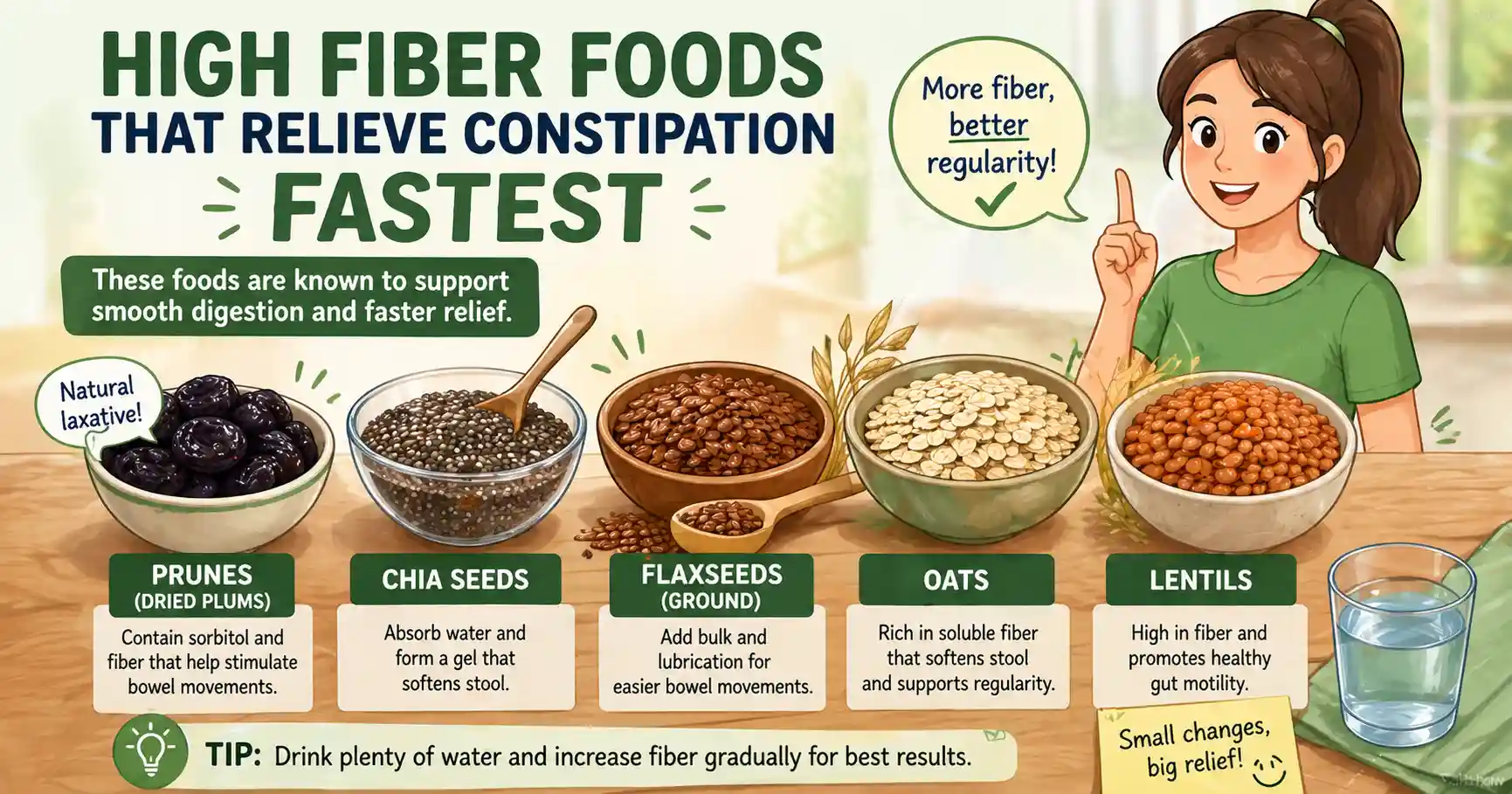
Fast-acting fiber foods (most effective)
- Prunes (dried plums) – contain sorbitol + fiber
- Chia seeds – absorb water quickly
- Flaxseeds (ground) – lubricating effect
- Oats – balanced soluble fiber
- Lentils – high fiber + gut-friendly fermentation
These tend to work within 24–48 hours for many people.
Slower but steady options
- Brown rice
- Apples (with skin)
- Carrots
- Almonds
They support regularity but don’t act as quickly.
Reality check most articles ignore:
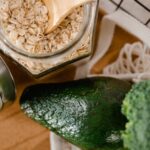
Some “healthy” high-fiber foods, like broccoli or cabbage, can worsen bloating before helping with constipation. That’s because they ferment aggressively in the gut.



What high fiber foods make bloating worse?
Bloating is where fiber advice falls apart.
High-risk bloating foods:
- Beans
- Broccoli
- Cabbage
- Cauliflower
- Onions
- Apples (in some people)
These are high-fermentable fibers (FODMAPs). They feed gut bacteria fast → gas → pressure → discomfort.
Lower-bloating fiber options:
- Oats
- Bananas
- Rice
- Carrots
- Chia seeds
These are gentler and better tolerated.
Quick Takeaway: If fiber makes you feel worse, it’s usually the type or speed of increase—not fiber itself.
What is the difference between soluble and insoluble fiber?
- Soluble fiber: dissolves in water and forms a gel
- Insoluble fiber: does not dissolve and adds bulk
Here’s how they behave differently:
| Fiber Type | What It Does | Best For | Risk |
|---|---|---|---|
| Soluble | Softens stool | Constipation + diarrhea | Too much → slow digestion |
| Insoluble | Speeds movement | Constipation | Too much → irritation |
This is where most advice goes wrong.
- People are told: “Eat more fiber.”
- But not: “Eat the right type of fiber for your symptom.”
How do you use a high fiber foods chart correctly?
This is the part missing everywhere.
Step-by-step approach:
- 1. Start low, not high: Add 5–7g extra fiber per day. Not 25g overnight.
- 2. Match fiber to your symptom:
- Constipation → mix of soluble + insoluble
- Bloating → mostly low-fermentable fiber
- Diarrhea → mostly soluble fiber
- 3. Pair with water: At least 1.5–2 liters daily.
- 4. Spread fiber across meals: Not all at once. That overloads digestion.
- 5. Track your response: Your gut is not generic. Adjust accordingly.
This is where charts become useful—not just decorative.
High fiber foods chart (printable-style)
Here’s a practical chart you can actually use:
| Food | Fiber (per 100g) | Type | Best Use |
|---|---|---|---|
| Chia seeds | 34g | Soluble | Fast constipation relief |
| Lentils | 8g | Mixed | Daily regularity |
| Oats | 10g | Soluble | Gentle digestion |
| Apple (with skin) | 2.4g | Mixed | Maintenance |
| Carrots | 2.8g | Insoluble | Mild support |
| Brown rice | 3.5g | Insoluble | Stable digestion |
| Almonds | 12g | Mixed | Snack fiber |
| Prunes | 7g | Soluble + sorbitol | Strong relief |
How much fiber do adults actually need daily?
According to the National Institutes of Health (NIH):
- Women: ~25g/day
- Men: ~38g/day
But here’s the nuance: Most people jumping from 10g → 30g suddenly feel worse.
The body needs time to adapt. Also, more fiber is not always better. Some people do best around 20–25g, not 35g.
Can fiber help both constipation and diarrhea?
Yes—but not in the same way. This confuses people.
- For constipation: Use insoluble + some soluble fiber
- For diarrhea: Focus on soluble fiber only
Soluble fiber absorbs excess water and firms stool. This is why foods like oats, bananas, Psyllium, etc are used in both conditions. But if you mix high insoluble fiber into diarrhea, symptoms often worsen.
Quick Takeaway: Fiber helps both conditions, but the type must change.
FAQs
What is the best high fiber food for constipation?
Prunes are often the most effective because they contain both fiber and sorbitol, which stimulates bowel movement. Chia seeds and flaxseeds also work well due to their ability to absorb water and soften stool. Results depend on hydration and individual tolerance.
Can too much fiber make constipation worse?
Yes, especially if fluid intake is low. Excess fiber can harden stool and slow movement instead of improving it. This is a common issue when people suddenly increase fiber intake without adjusting hydration or giving the gut time to adapt.
What fiber is best for bloating and constipation together?
Low-fermentable soluble fibers like oats and chia seeds are usually better tolerated. They support stool movement without producing as much gas as high-fermentable foods like beans or cabbage. Individual tolerance still varies significantly.
Is a high fiber foods chart useful for daily planning?
It can be, but only if it includes fiber types and not just grams. Most charts fail here. A good chart helps you match foods to your symptoms and adjust intake gradually instead of blindly increasing fiber.
How long does fiber take to relieve constipation?
Some foods, like prunes, may work within 24–48 hours. Others take several days. The timeline depends on hydration, gut health, and how consistent your intake is. Quick fixes are possible, but long-term consistency matters more.
Final Thought
A high fiber foods chart for constipation is useful—but only if you stop treating fiber as a single thing. The difference between relief and discomfort often comes down to type, timing, and tolerance, not just how many grams you eat.
