
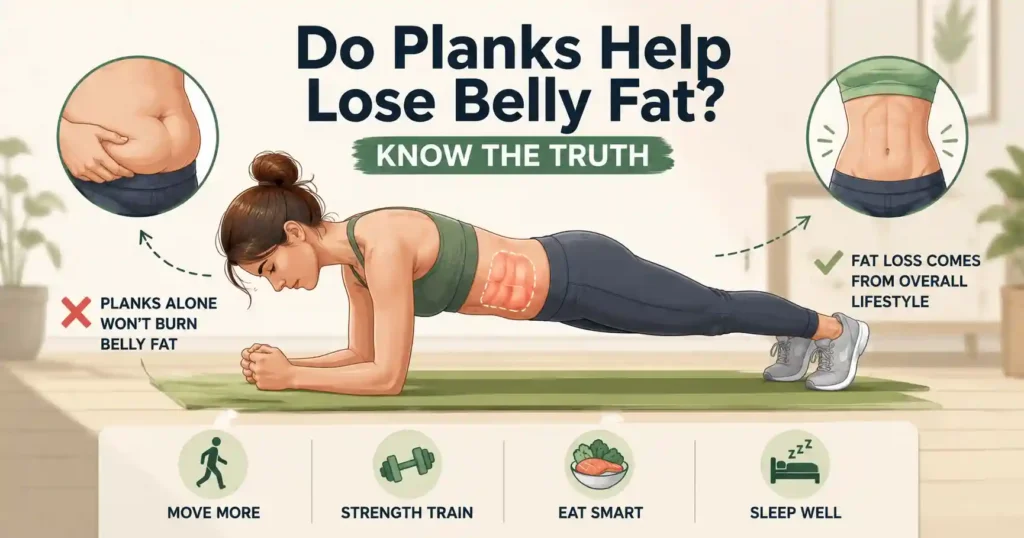
Planks help strengthen the abdominal muscles and improve core stability, but they do not directly burn belly fat on their own. Belly fat loss happens when your body burns more calories than it consumes over time. Planks can support that process, but they are not a shortcut to a flat stomach.
A lot of fitness content online quietly blurs the line between “feeling your abs work” and “losing fat.” Those are not the same thing.
Do Planks Help Lose Belly Fat?
No, planks do not directly target belly fat. They strengthen the muscles underneath the fat, especially the rectus abdominis, transverse abdominis, and obliques. Fat loss still depends mostly on total calorie balance, daily movement, sleep, and diet quality.
This is where many articles become misleading. Planks feel intense. Your core shakes. Your stomach burns. People naturally assume that means belly fat is melting. It is not.
Your body does not selectively burn fat from the exact muscle being trained. Research on “spot reduction” has repeatedly failed to show major localized fat loss from abdominal exercises alone.
A 2011 study published in the Journal of Strength and Conditioning Research found that abdominal training improved muscular endurance but did not significantly reduce abdominal fat.
That does not make planks useless. Far from it.
Planks help by:
- Building core endurance
- Improving posture
- Supporting better exercise performance
- Helping maintain muscle during weight loss
- Making the waist appear tighter in some people
But if someone is doing 2 minutes of planks daily while sitting 10 hours, sleeping poorly, and eating in a calorie surplus, the belly fat is staying.
That part gets skipped in too many fitness articles because “do planks help lose belly fat?” gets more clicks than “walking and calorie control matter more.”
Why Do Planks Feel Hard If They Burn So Few Calories?
Planks are difficult because they create high muscular tension, not because they burn massive calories.
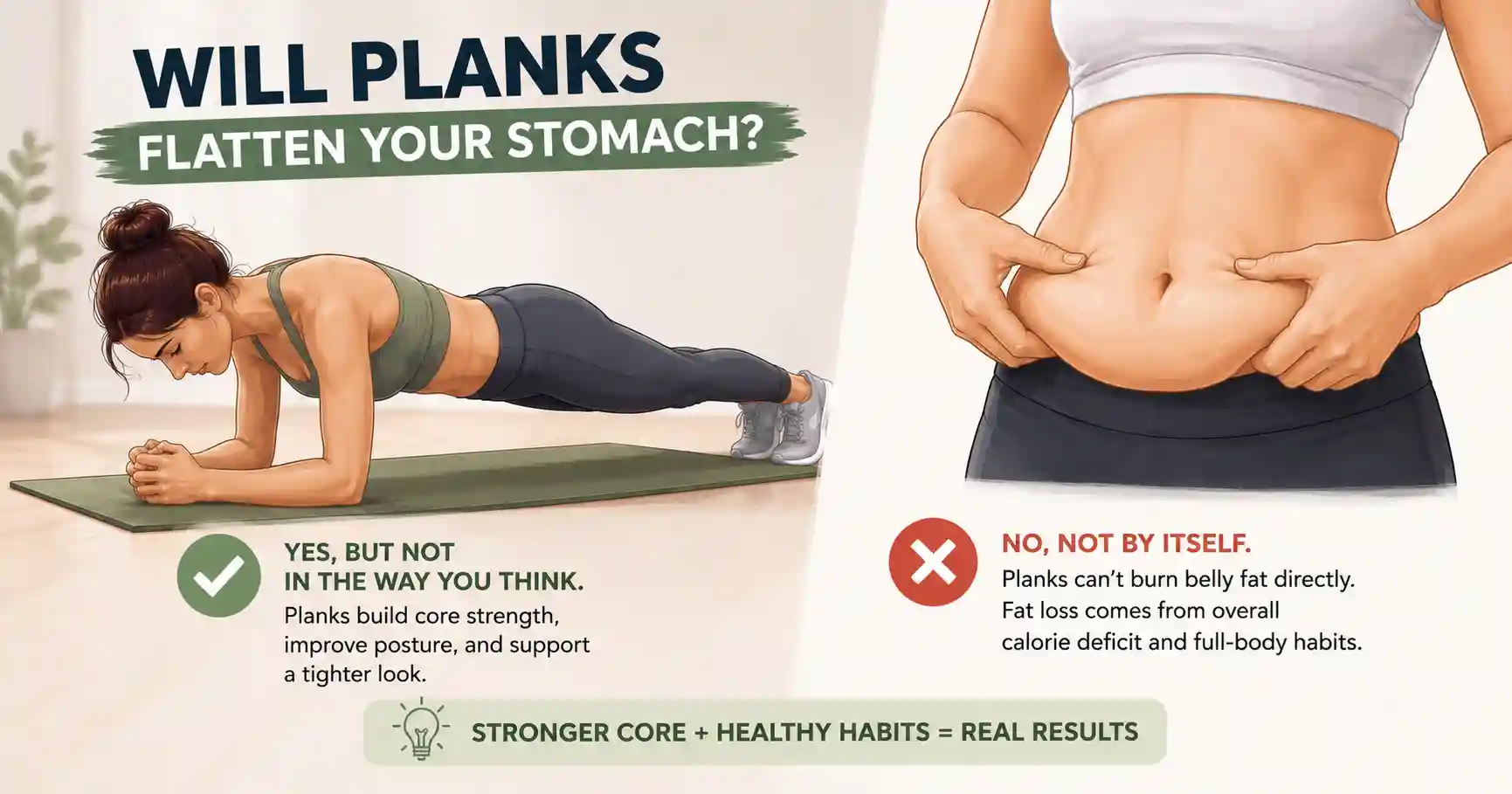
This is probably the biggest misunderstanding around planks. A 1-minute plank can feel harder than walking for 10 minutes. But walking often burns far more calories overall.
During a plank:
- Multiple muscles contract continuously
- Blood flow becomes partially restricted
- Core muscles fatigue quickly
- Breathing gets harder
That creates intense discomfort. But calorie burn during a standard plank is relatively modest.
| Exercise | Estimated Calories Burned in 1 Minute* |
|---|---|
| Standard Plank | 2–5 calories |
| Walking | 4–8 calories |
| Jump Rope | 10–16 calories |
| Burpees | 10–15 calories |
*Varies by body weight, intensity, and fitness level.
This is why many people say:
“I did planks for weeks but my stomach barely changed.”
The exercise was strengthening muscles, not increasing total energy expenditure enough to noticeably reduce body fat.
The current research, as of 2026, still supports this basic principle:
- Resistance training helps body composition
- Cardio and activity volume help calorie expenditure
- Diet controls most fat-loss outcomes
You usually need all three.
Will Planks Flatten Your Stomach?
Planks can make the stomach look flatter in some cases, but not because they directly remove fat.
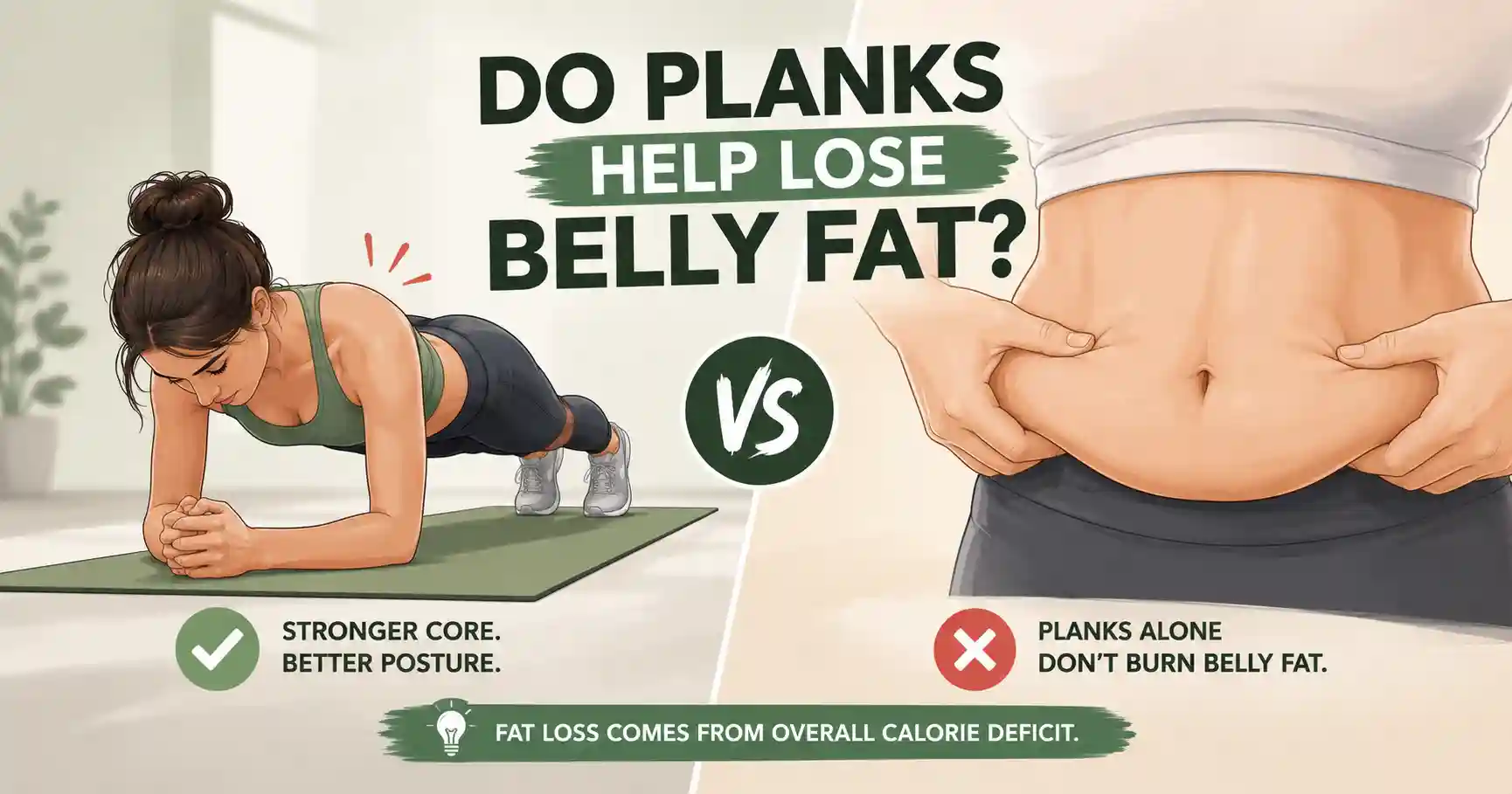
There are three reasons this happens:
1. Improved posture
Weak core muscles often contribute to:
- anterior pelvic tilt
- slouched posture
- stomach protrusion
Strengthening the core can slightly improve body alignment. The stomach may appear less pushed outward.
2. Increased abdominal tension
Planks train the deep core muscles, especially the transverse abdominis. This muscle acts partly like a natural corset around the midsection.
People sometimes notice:
- tighter waist appearance
- firmer stomach feel
- better abdominal control
That is real. But it is not the same as major fat reduction.
3. Fat loss from broader lifestyle changes
Many people start planks alongside:
- better eating
- walking
- weight training
- healthier routines
The fat loss comes mostly from the overall lifestyle shift, not from the plank itself. This distinction matters because unrealistic expectations are what make people quit.





How Many Calories Does a 1-Minute Plank Burn?
A 1-minute plank usually burns between 2 and 5 calories for most adults. That number surprises people because planks feel exhausting.
The exact amount depends on:
- body weight
- muscle mass
- plank variation
- intensity
- fitness level
Here is the reality:
- A heavier person burns more calories
- Dynamic plank variations burn more
- Longer sessions increase expenditure slightly
But even aggressive plank routines are still relatively low-calorie compared to:
- brisk walking
- cycling
- rowing
- interval training
This does not mean planks are ineffective. It means their main job is core endurance and stability, not calorie destruction.
A smarter approach is combining planks with:
- Daily walking
- Resistance training
- Protein-focused meals
- Better sleep consistency
That combination tends to work far better for belly fat than chasing longer plank times.
Are Planks Good for Weight Loss After 40?
Planks can support weight loss after 40, especially by preserving strength and improving movement quality.
They are also joint-friendly compared to some high-impact exercises.
This matters because belly fat changes after 40 are often tied to:
- reduced activity
- muscle loss
- hormonal shifts
- insulin resistance
- poor sleep
Planks help maintain core function without excessive stress on:
- knees
- hips
- ankles
For adults between 35 and 65, that matters more than flashy workout trends.
- Still, there is another issue many fitness articles avoid: Aging changes how fat is stored.
Visceral fat — the deeper abdominal fat around organs — becomes more common with age. According to research from the National Institutes of Health, visceral fat is more strongly linked with:
- insulin resistance
- cardiovascular risk
- metabolic disease
Planks alone are not enough to significantly reduce visceral fat.
The exercises that usually help more are:
- brisk walking
- resistance training
- cycling
- swimming
- interval-based workouts
Combined with nutrition changes. The good news is that consistency matters more than intensity for most middle-aged adults. A realistic routine done 5 days weekly beats an extreme routine abandoned after 2 weeks.
What Exercises Burn More Belly Fat Than Planks?
Exercises that burn more total calories usually help reduce belly fat faster than planks alone.
Here is a clearer comparison:
| Exercise | Main Benefit | Belly Fat Impact |
|---|---|---|
| Walking | Sustainable calorie burn | High long-term value |
| Strength training | Builds muscle, improves metabolism | Strong |
| HIIT workouts | High calorie expenditure | Strong but demanding |
| Cycling | Cardio + endurance | Strong |
| Swimming | Full-body movement | Strong |
| Planks | Core endurance | Supportive, not primary |
A perfect HIIT plan done twice is less useful than daily walking done for six months.
How Long Does It Take To See Results From Planks?
Most people notice strength improvements within 2–4 weeks. Visible stomach changes usually take longer.
Results depend heavily on:
- body fat percentage
- diet
- total activity level
- consistency
- age
- sleep quality
People often notice early benefits like:
- Improved posture
- Reduced lower back discomfort
- Better core control
- Increased endurance
Visible abdominal definition usually requires:
- lower body fat levels
- sustained calorie deficit
- full-body training
This is where social media creates unrealistic expectations. Short “30-day plank challenge” videos rarely mention:
- lighting
- flexing
- dieting
- water weight changes
The plank itself is only one small part of the outcome.
What Happens If You Do Planks Every Day?
Daily planks can improve core endurance and posture, but excessive daily training is not always better.
Moderate plank training is generally safe for most healthy adults. But doing extremely long holds every day may lead to:
- shoulder strain
- lower back discomfort
- wrist irritation
- overuse fatigue
More time is not always better.
A better progression is:
- Focus on form first
- Gradually increase duration
- Add variations later
- Combine with full-body movement
For most people, 30–90 seconds with proper form is enough. Beyond that, the returns start shrinking unless the exercise becomes more challenging.
FAQs
Do planks burn belly fat?
Planks help strengthen the abdominal muscles, but they do not directly burn belly fat from the stomach area alone. Belly fat decreases when overall body fat decreases through a calorie deficit, physical activity, sleep quality, and long-term lifestyle habits. Planks work best as part of a broader fitness routine.
Are planks good for weight loss?
Planks can support weight loss by improving muscle endurance and helping maintain core strength during fat loss. However, they burn relatively few calories compared to cardio or full-body strength training. Most effective weight-loss plans combine resistance training, movement, and nutrition changes rather than relying on planks alone.
Is a 1-minute plank good?
A 1-minute plank is a solid benchmark for many adults. It usually indicates decent core endurance and body control. For beginners, even 20–30 seconds with good form can be useful. Longer holds are not automatically better if posture breaks down or lower back strain develops.
Will planks flatten your stomach?
Planks may help the stomach appear flatter by improving posture and strengthening deep abdominal muscles. However, they do not directly remove belly fat. Visible stomach flattening usually requires overall fat loss through consistent eating habits and increased daily energy expenditure.
Does doing planks every day help lose belly fat?
Daily planks alone are unlikely to create major belly fat loss. They can improve core strength and stability, but fat loss depends more on total calorie balance and physical activity. Combining planks with walking, resistance training, and nutrition changes is usually far more effective.
Final Thoughts
So, do planks help lose belly fat? Indirectly, yes. Directly, not really.
Planks are useful for core strength, posture, stability, and muscle endurance. They can support a leaner-looking waist in some people. But the real drivers of belly fat loss are still:
- calorie balance
- sustainable movement
- resistance training
- sleep
- long-term consistency
That answer is less exciting than “this one move melts belly fat.” It is also far closer to reality.
