

The best fasting schedule for weight loss is 16:8 — 16 hours of fasting followed by an 8-hour eating window — because it produces consistent fat loss, preserves muscle when protein intake is adequate, and most adults can actually maintain it for months.
For women over 40, timing the eating window in the morning produces measurably better insulin and cortisol outcomes than the popular noon-to-8 PM window most people default to. Men focused on preserving muscle alongside fat loss get the best results pairing 16:8 with at least 1.2 grams of protein per kilogram of body weight during that eating window.
- 16:8 is the most effective fasting schedule for most adults because it balances meaningful fat loss with realistic long-term adherence.
- Women and men respond differently — women face a higher cortisol and hormonal disruption risk from aggressive fasting, particularly alternate-day fasting. Men usually tolerate longer fasting windows with fewer hormonal side effects.
- Early eating windows outperform late ones — a 9 AM–5 PM or 8 AM–4 PM schedule tends to produce better insulin and weight outcomes than the popular noon-to-8 PM approach.
- Muscle preservation requires protein, not just fasting. Adults over 40 should aim for at least 1.2g of protein per kilogram of body weight during the eating window.
- Expect 4–8 pounds of actual fat loss in the first month, not the exaggerated 10–15 pound claims common online.
- Start with 12:12 and build up gradually. Jumping directly into 16:8 increases dropout rates, while a short ramp-up period improves long-term consistency.
What Is 16:8 Intermittent Fasting and Why Does It Work?
16:8 fasting means you stop eating after dinner, skip breakfast, and eat your first meal around noon — or you eat breakfast early and stop eating by mid-afternoon. Either way, food is limited to an 8-hour window, and nothing but water, black coffee, or plain tea is allowed during the remaining 16 hours.
The mechanism is less glamorous than the marketing makes it out to be. You lose weight primarily because restricting your eating window makes it harder to overeat.
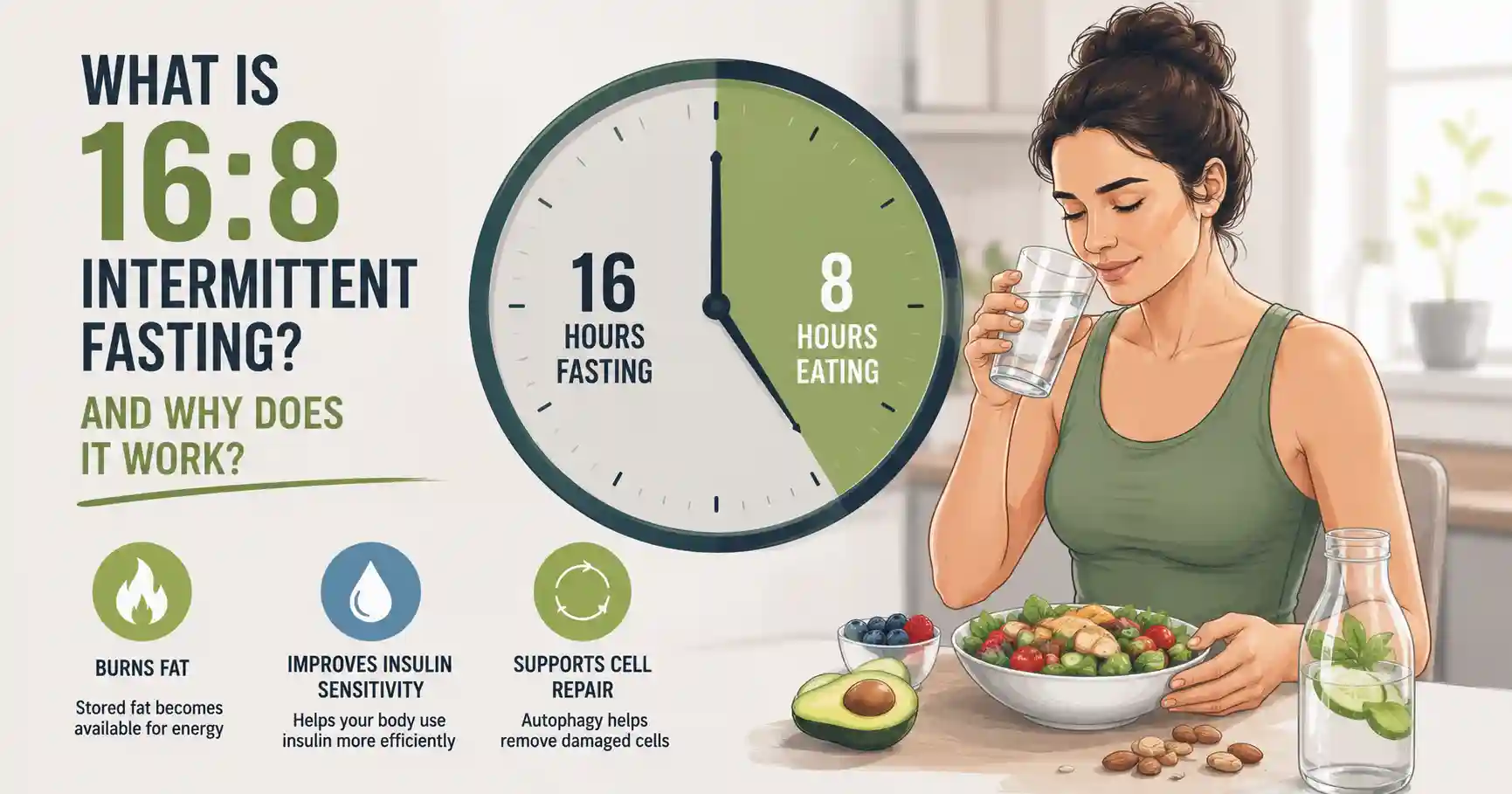
Clinical trials show that people following 16:8 without any calorie targets naturally reduce daily intake by 15–20%, according to research reviewed in Cell Metabolism (Sutton et al., 2018).
Insulin levels drop during the fasted hours, which shifts the body toward burning stored fat for fuel instead of incoming glucose. This is real, but it is still just a caloric deficit. The fasting window is the mechanism that creates the deficit without requiring you to count anything.
Where 16:8 outperforms traditional calorie restriction is in adherence. Across multiple trials, roughly 75% of adults can stick to a 16:8 schedule for 12 weeks. That number matters. The most effective diet is the one people actually follow past week three.
Helpful Articles You Might Like
- Are Protein Powders Good for Weight Loss? A Closer Look

- Where to Apply Progesterone Cream for Weight Loss?
- How Can I Tighten My Skin After Weight Loss? What to Know
- What is the Best Peptide for Weight Loss? Everything You Need to Know
- Which Are the Best Protein Shakes for Weight Loss?
- What is Significant Weight Loss? What You Need to Know






Which Fasting Schedule Is Best for Weight Loss?
Not all fasting schedules produce the same results, and some are significantly harder to sustain. Here is a direct comparison of the most researched options:
| Schedule | Fasting Hours | Avg. Weekly Loss | Adherence (12 weeks) | Best For |
|---|---|---|---|---|
| 12:12 | 12 hrs | ~0.2–0.3 kg | Very high | Beginners, shift workers |
| 14:10 | 14 hrs | ~0.3–0.4 kg | High | Transition to 16:8 |
| 16:8 | 16 hrs | ~0.4–0.5 kg | High (75%) | Most adults |
| 5:2 | 2 low-cal days/week | ~0.5 kg | Moderate | Flexible schedules |
| Alternate-Day Fasting | Every other day | ~0.7–0.8 kg | Low–Moderate | Short-term aggressive loss |
A meta-analysis of 11 studies found that alternate-day fasting (ADF) produces roughly 0.74 kg of loss per week, compared to 0.38 kg with 16:8. On paper, ADF wins.
In practice, the dropout rates undercut that advantage — people quit ADF at significantly higher rates, which means total weight lost at 12 weeks often favors 16:8. That trade-off is one of the more honest things you can say about this research area, and most articles skip right past it.
5:2 — eating normally five days and limiting calories to 500–600 on two non-consecutive days — sits between the two in both difficulty and results. It suits people who want flexibility during the week and can handle two rough days. It does not suit anyone who cannot separate their social life from their eating schedule.
Quick Takeaway: For most people starting, 16:8 offers the most reliable weight loss with the highest chance of sticking to it past the first month.
What Is the Best Fasting Schedule for Weight Loss for Women?
Women and men do not respond identically to fasting, and this gap is where nearly every article on this topic either glosses over the research or ignores it entirely.
A 2023 study reviewed in Food Science & Nutrition (Wiley, Solianik et al.) found that fasting triggered a more pronounced sympathetic nervous system response in women than men — specifically higher norepinephrine and greater psychological stress.
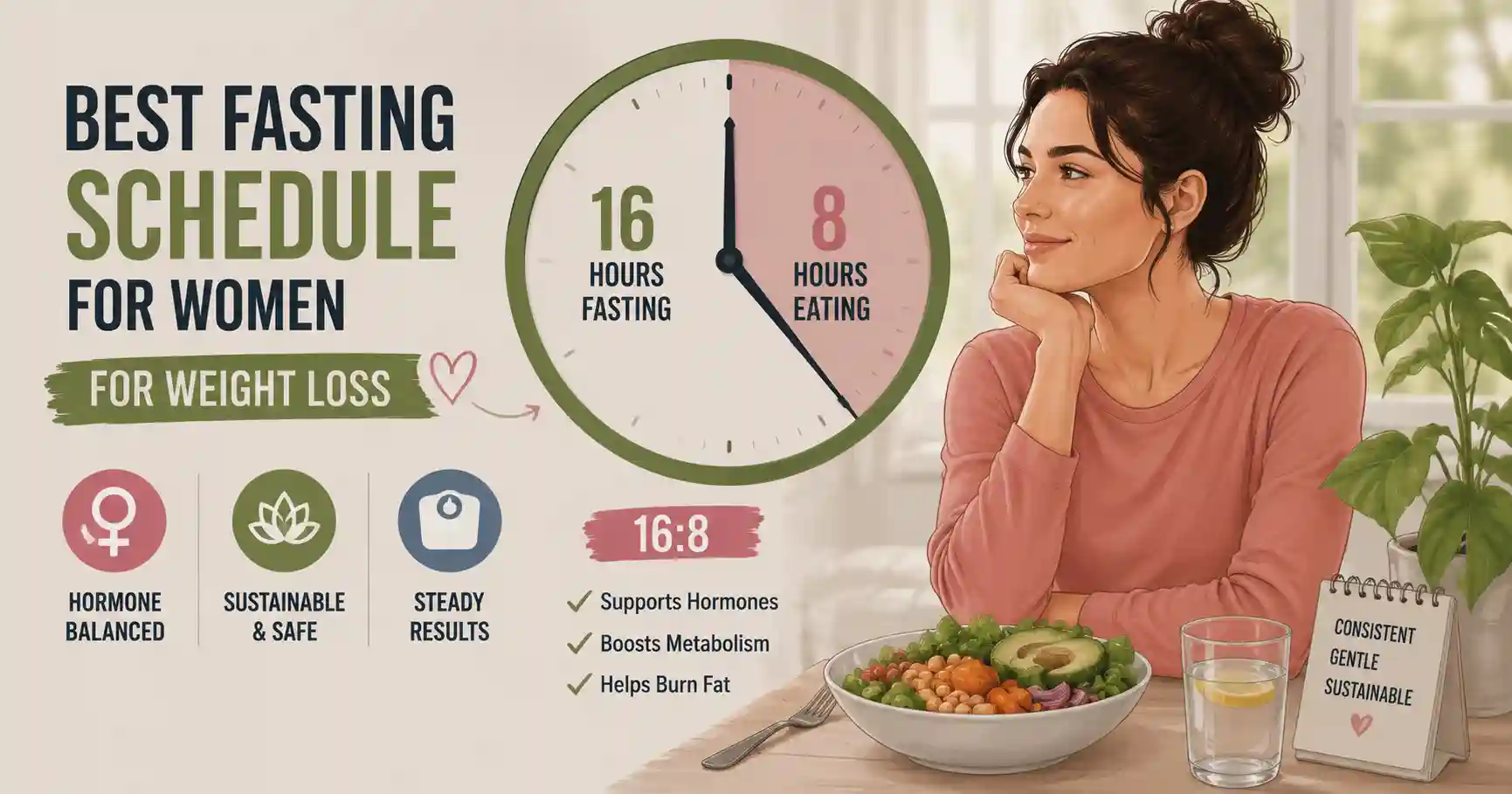
This is not a minor footnote. It means that fasting, particularly aggressive protocols like ADF, can place a disproportionate hormonal burden on women.
A separate three-week alternate-day fasting trial found that non-obese women experienced impaired glucose response after meals, while men in the same trial saw their insulin sensitivity improve. Same schedule, opposite metabolic outcomes.
The likely mechanism involves the HPA (hypothalamic-pituitary-adrenal) axis. In women, short-term fasting amplifies cortisol secretory response and disrupts the normal coupling between cortisol, LH (luteinizing hormone), and leptin.
For women who are already managing hormonal stress from perimenopause or irregular cycles, adding an aggressive fasting protocol on top can push cortisol into a range that interferes with fat loss rather than supporting it.
What this means practically:
- Women over 40 should generally start with 12:12 or 14:10, not 16:8
- If moving to 16:8, an early eating window (8 AM–4 PM or 9 AM–5 PM) is significantly less cortisol-disruptive than a late one (noon–8 PM)
- During the luteal phase of the menstrual cycle (roughly days 15–28), caloric needs increase by 100–300 calories. Tight fasting windows during this phase can worsen cravings and adherence. Loosening the window slightly — even to 14:10 — during this phase is a practical adjustment that most guides never mention
- Cienfuegos et al. (2022, Nutrients, University of Illinois at Chicago) found that women following 4–6 hour eating windows experienced a 14% drop in DHEA, a hormone linked to ovarian function and egg quality. DHEA levels remained within normal range in that study, but the finding points toward being cautious about very short windows unless results clearly justify them
The best fasting schedule for weight loss for women is 16:8 with a morning eating window — or 14:10 as a lower-stress alternative that still produces meaningful fat loss.





What Is the Best Fasting Schedule for Weight Loss for Men?
Men generally tolerate more aggressive fasting windows than women without the same hormonal disruption. That said, men over 40 face their own specific risk: muscle loss accelerates as testosterone declines with age, and fasting without adequate protein intake can compound that.
Research from Arciero et al. (2022, BMC Nutrition, Skidmore College) found that two days per week of intermittent fasting combined with protein pacing — spreading protein intake evenly across 4–5 meals, at about 30% of daily calories — significantly improved weight loss, fat mass reduction, and lean mass retention compared to fasting alone. The protein piece is not optional if preserving muscle is a goal.
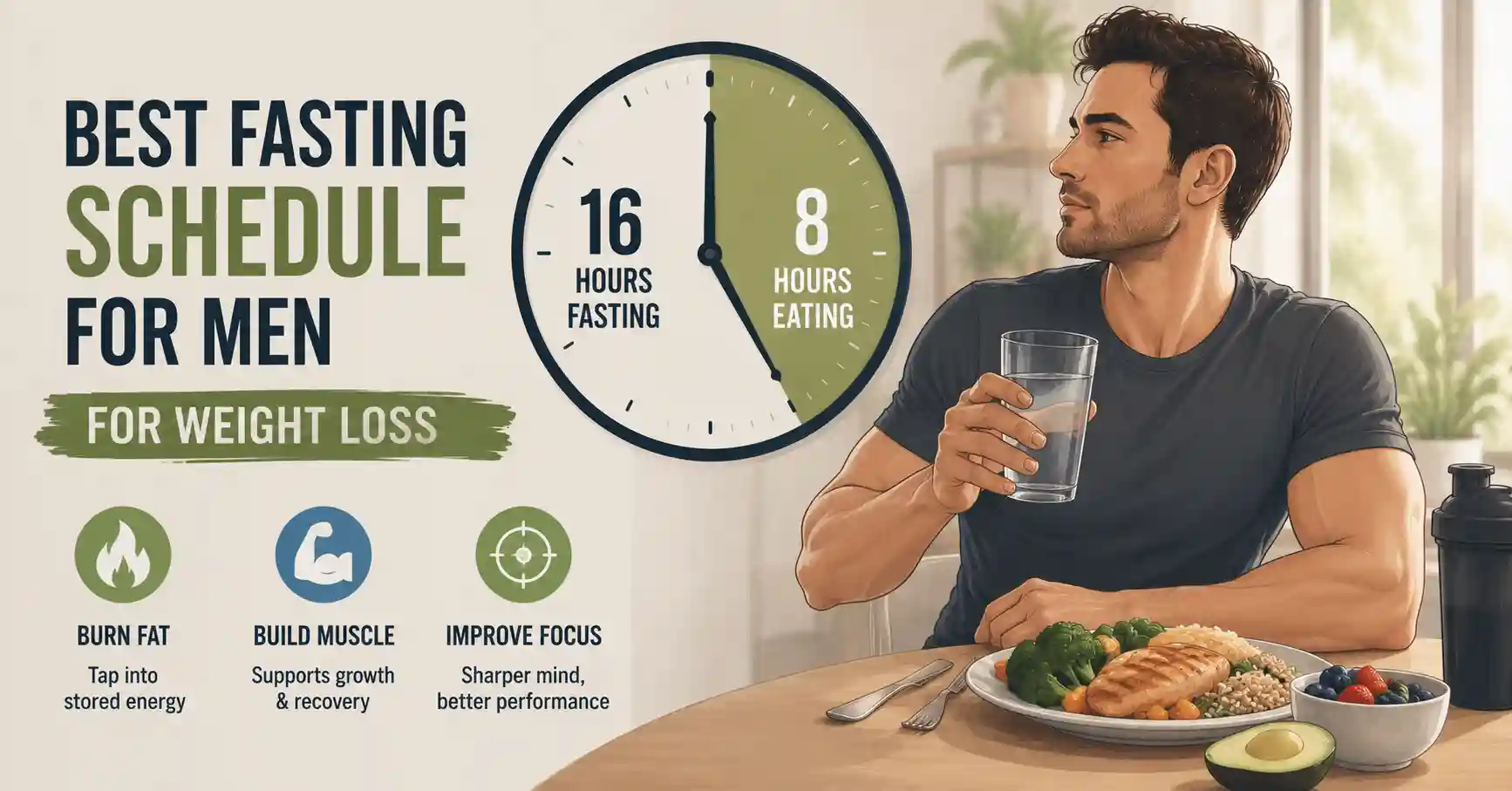
For men, the practical picture looks like this:
- 16:8 with protein front-loaded at the first meal (aim for 30–40g at breakfast or first meal) blunts the hunger hormone ghrelin for several hours and protects lean mass
- Men doing strength training should time the eating window so they consume protein within two hours of their workout. A 14:10 window built around a 6 PM training session — eating from roughly 4 PM to 8 PM — keeps the muscle-building signal (leucine-sensitive mTOR pathway) active during recovery
- Men specifically benefit from a later eating window more than women do, because their cortisol stress response to fasting is less pronounced. Noon to 8 PM is more workable for a man than for a woman, following the same schedule
Quick Takeaway: Men over 40 should pair 16:8 with at least 1.2g of protein per kilogram of body weight during the eating window to prevent the muscle loss that makes long-term weight management harder.
Does the Time of Your Eating Window Matter for Weight Loss?
Yes — and this is one of the most consistently underexplained findings in intermittent fasting research.
Sutton et al. (2018, Cell Metabolism) ran a controlled trial comparing early time-restricted eating (6 AM to 3 PM) against a standard eating schedule in men with prediabetes. The early-eating group showed a 25% improvement in insulin sensitivity, significantly reduced blood pressure, and lower appetite — without any change in caloric intake. Same calories, different timing, meaningfully different metabolic outcomes.
The reason comes down to circadian biology. Cortisol peaks in the morning, and insulin sensitivity is naturally highest in the first half of the day. Eating within this window means your body processes carbohydrates and fat more efficiently.
A noon-to-8 PM window goes against that curve — you are eating during the hours when insulin sensitivity is declining, and melatonin is beginning to rise, which further reduces glucose clearance.
The uncomfortable truth here is that most people follow 16:8 from noon to 8 PM because it lets them eat dinner with their family and still have a “normal” social life. That is a perfectly reasonable choice. But it is not the most metabolically effective version of this protocol.
Shifting the window even two hours earlier — eating from 10 AM to 6 PM instead of noon to 8 PM — produces measurably better results while still allowing a reasonable dinner time.
How Much Weight Can You Realistically Lose in a Month with Fasting?
Most people lose 3–5 lbs in the first week of 16:8. Almost none of that is fat. The first week’s loss comes primarily from glycogen depletion and the water that glycogen holds — roughly 2–4 lbs of water weight releases as carbohydrate stores shrink. This is real weight off the scale, but it comes back immediately if you resume normal eating.
From week two onward, sustainable fat loss averages 1–2 lbs per week for most adults following 16:8 without explicit calorie counting. Over a month, a realistic total is 4–8 lbs of actual fat loss. People who add deliberate protein targets (1.2g/kg) and shift toward an earlier eating window can land at the higher end of that range.
These numbers are not exciting compared to what supplement ads promise, but they are the actual range that multiple clinical trials report. Anyone claiming 10–15 lbs of fat loss in a month from fasting alone is either counting water weight or working with a population that started with a very high caloric baseline.
How to Start a Fasting Schedule This Week (Free 7-Day Plan)
The most common mistake is starting at 16:8 on day one after years of regular eating patterns. Your body is not used to the signal, and the first 48–72 hours can be rough enough to make you quit before seeing any benefit.
Days 1–3: 12:12 Close your eating window at 7 PM. Do not eat again until 7 AM. This is probably close to what you already do when you account for sleep. Use these days to stop evening snacking.
Days 4–5: 14:10 Push your first meal to 9 AM and stop eating by 7 PM. Drink black coffee or plain tea in the morning if hunger is distracting. This is where most discomfort surfaces — push through it. The hunger hormones adjust within 3–5 days.
Days 6–7: Move toward 16:8. First meal at 10 AM or 11 AM. Stop eating by 6 PM or 7 PM. You are now in the 16:8 range. Notice which meal feels easiest to skip — that is where your natural window wants to sit.
What to eat during the window: Prioritize protein at the first meal (eggs, Greek yogurt, chicken, cottage cheese). Include vegetables and healthy fats. Avoid ultra-processed carbohydrates that spike insulin and drive hunger back up within two hours. You do not need a complex meal plan — you need to make the eating window count.
What to drink during the fast: Water, black coffee, plain sparkling water, and unsweetened herbal tea. Nothing with calories or artificial sweeteners that trigger an insulin response.
Frequently Asked Questions
How long should you fast a day to lose weight?
Fasting for at least 14–16 hours per day produces measurable fat loss for most adults. A 16-hour fast is the most researched starting point. Shorter fasts of 12–13 hours can produce modest results, particularly for beginners or women concerned about hormonal disruption. Fasting beyond 18–20 hours daily offers limited additional benefit and increases the risk of muscle loss.
What is a 16:8 fasting schedule?
A 16:8 fasting schedule means eating within an 8-hour window and fasting for the remaining 16 hours of the day. A typical version is eating between 10 AM and 6 PM, then not eating again until the following morning. Water, black coffee, and plain tea are allowed during the fasting period and do not break the fast.
What is a good intermittent fasting schedule for beginners?
For most beginners, starting with a 12:12 schedule — eating between 7 AM and 7 PM, for example — is the most manageable entry point. After 3–4 days, shifting to 14:10 builds tolerance. The goal is to reach 16:8 within two weeks. Beginning too aggressively increases dropout before any fat-loss benefits appear.
Is fasting different for women over 40?
Yes. Women over 40 have a more sensitive cortisol and hormonal stress response to prolonged fasting than men, which can disrupt insulin, leptin, and reproductive hormones. An early eating window (8 AM to 4 PM or 9 AM to 5 PM) and shorter fasting windows (14:10 rather than 16:8) tend to produce better results with fewer hormonal side effects in this group.
Can you lose weight with fasting without changing what you eat?
To a degree, yes. Restricting the eating window naturally reduces caloric intake by 15–20% for most people without deliberate tracking. However, eating ultra-processed foods primarily during the eating window will blunt results significantly. Fasting does not override a high-calorie, high-sugar diet — it reduces the opportunity to eat it. As of 2026, current research consistently shows that food quality during the eating window determines whether fat loss is sustained past the first month.
Final Take
The best fasting schedule for weight loss is the one that matches your biology, your schedule, and your stage of life. For most adults, that is 16:8 — but the timing of that window, and how you approach it as a woman or a man over 40, changes the outcome in ways that most of the content on this topic fails to explain clearly.
Disclaimer: This article is for informational purposes only and is not a substitute for professional medical advice, diagnosis, or treatment. Always consult your doctor or a qualified healthcare provider before starting any fasting regimen, particularly if you have an existing health condition, take prescription medications, or are pregnant or breastfeeding.
