
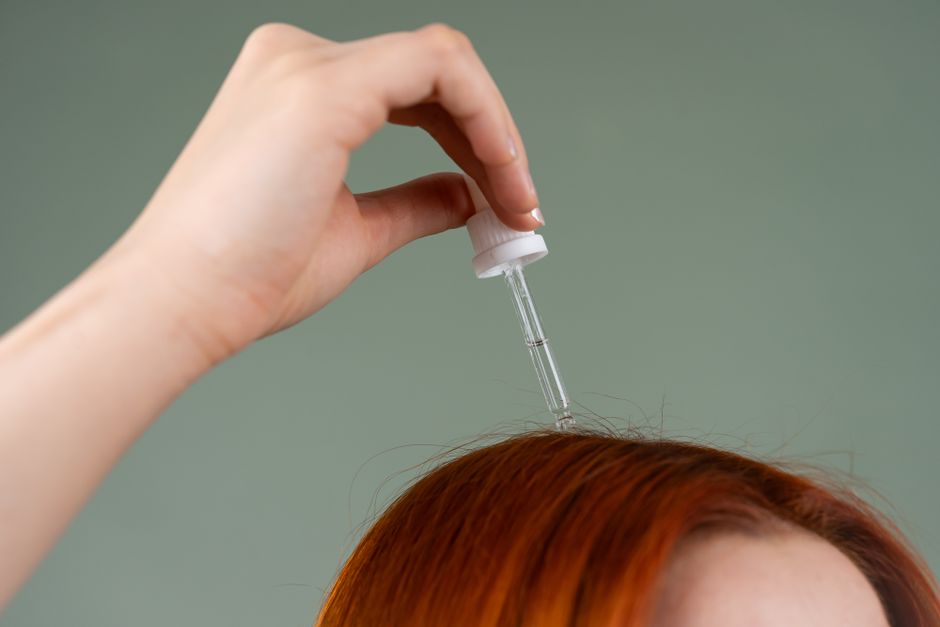
Hair lost to anabolic steroids often does grow back after you stop, but only if the follicles are still alive and the loss hasn’t been going on too long. The catch is that steroids tend to accelerate a hair-loss process that was already programmed into your genetics. Once that process destroys a follicle, the hair does not return. So the honest answer depends on two things: what kind of steroid was used, and whether you carry the genes for male-pattern baldness.
Will Hair Loss From Steroids Grow Back Or Stay Permanent?
It can go either way. The deciding factor is whether the drug simply pushed healthy follicles into a resting phase or sped up genetic balding that permanently shrinks them.
Anabolic steroids can cause hair loss through two separate paths. The first is temporary shedding driven by hormonal shock. The second is permanent, because the drug feeds a genetic sensitivity that was always going to thin your hair eventually.
If your loss is the temporary kind, regrowth is common after the drug clears your system. If it’s the genetic kind, the hair that’s gone is usually gone for good. Many people experience a mix of both, which is why the outcome is hard to predict for any one person.
How Do Steroids Actually Cause Hair Loss?
Anabolic steroids raise androgen levels in the body, and androgens are the main hormonal drivers of pattern hair loss. The key androgen is dihydrotestosterone, or DHT.
DHT binds to receptors in hair follicles on the scalp. In people who are genetically sensitive to it, DHT causes follicles to shrink over time. Each growth cycle produces a thinner, shorter hair until the follicle stops producing visible hair at all. This process is called miniaturization.
Steroids don’t invent this process. They pour fuel on a fire that may already be burning slowly. Someone with strong genetic sensitivity might lose hair in months on a cycle that would otherwise have taken years to show.
There’s a second mechanism worth understanding. Sudden hormonal shifts can push large numbers of follicles into the resting phase of the growth cycle all at once. A few months later, those hairs fall out together. This is called telogen effluvium, and it’s a shedding event rather than follicle destruction.
That distinction matters. Telogen effluvium is reversible. Miniaturization from DHT is not, once it advances far enough.
Which Steroids Are Most Likely to Cause Hair Loss?
The steroids most associated with hair loss are the ones that convert readily into DHT or are already DHT-derived. Testosterone, for example, converts into DHT through an enzyme called 5-alpha reductase.
Drugs that are already structurally close to DHT tend to be harder on the hairline. These include compounds like stanozolol and drostanolone, which are not converted by the same enzyme because they’re already androgenically potent.
On the other side, some steroids are considered milder on hair because they don’t convert to DHT as easily. Nandrolone is one example. But “milder” does not mean safe. Any exogenous androgen can still affect a sensitive scalp.
Here’s a non-obvious point that gets lost in gym talk: the dose and duration matter, but your genetics matter more. Two people can run the same cycle and have completely different hair outcomes. One loses a visible patch. The other loses nothing. Neither result tells you what will happen to you.





What’s the Difference Between Shedding and Permanent Loss?
Shedding is fast and diffuse. Permanent loss is slow, patterned, and concentrated.
Telogen effluvium usually shows up as increased hair in the shower drain or on your pillow. It tends to hit across the whole scalp rather than in one spot. It typically starts a few months after the hormonal trigger and resolves over time once the trigger is removed.
Pattern hair loss follows a map. It starts at the temples or the crown. It moves in a predictable direction. The hairs that fall are being replaced by thinner ones, or by nothing at all.
You can often tell them apart by looking closely at the hair itself. In pattern loss, hairs from the affected area are finer and shorter than hairs from the back of the scalp. In shedding, the hairs that fall out are normal-sized.
This is a rough guide, not a diagnosis. A dermatologist can examine the scalp and tell the difference with more confidence.
Does Hair Grow Back After You Stop Steroids?
Hair often does grow back after you stop, but the amount depends on how much of the loss was temporary shedding versus permanent miniaturization.
If the loss was mostly telogen effluvium, regrowth is common. The follicles are intact. They just need time to cycle back into a growth phase. This can take several months, and full recovery isn’t guaranteed for everyone.
If the loss was driven by DHT miniaturization, stopping the drug removes the fuel but does not reverse the damage. Miniaturized follicles can sometimes recover partially if the process is caught early. Once a follicle is fully scarred or dormant for years, it typically does not come back.
There’s no reliable way to know in advance which category you’ll fall into. That uncertainty is the real answer, and it’s worth sitting with before starting a cycle.
Can You Prevent Hair Loss From Steroids?
Prevention focuses on lowering DHT activity in the scalp, but the evidence for this in steroid users specifically is limited. Most of what’s known comes from treating genetic hair loss in the general population.
Two medications are widely used for androgen-related hair loss. Finasteride blocks the enzyme that converts testosterone to DHT. Minoxidil is applied to the scalp and extends the growth phase of follicles. Both are approved for pattern hair loss and are commonly prescribed.
Some clinicians also recommend ketoconazole shampoo, which has mild anti-androgen activity on the scalp. The evidence for it as a standalone treatment is weaker than for the two medications above.
A critical caveat: finasteride is not appropriate for everyone, and it can cause side effects. It should only be used under medical supervision. No clinical guidelines exist for using these drugs specifically to prevent hair loss in people taking anabolic steroids, so any such use is off-label and based on extrapolation.
If you’re already losing hair on a cycle, the most effective step is to stop the drug. Everything else is secondary.
When Should You See a Doctor?
See a doctor if you’re losing hair in a pattern, if the loss is rapid, or if you’re considering medication. A dermatologist can assess the scalp and help identify what’s driving the loss.
It’s also worth being honest with your doctor about steroid use. This isn’t about judgment. It changes what they look for and what they can safely recommend. Many other conditions can cause hair loss, including thyroid problems, iron deficiency, and certain autoimmune conditions, and those need to be ruled out.
Hair loss from steroids sits at the intersection of hormones and genetics. Neither is fully under your control. What is under your control is getting an accurate diagnosis and making decisions with real information instead of forum rumors.
Frequently Asked Questions
Will hair loss from steroids grow back if I stop?
It often grows back if the loss was temporary shedding, but not if the follicles were permanently damaged by DHT. The outcome depends on how much of the loss was reversible versus genetic.
How long does it take for hair to grow back after steroids?
Regrowth from shedding can take several months, and full recovery isn’t guaranteed. Hair grows slowly, so visible improvement usually takes time even when the follicles are healthy.
Is steroid hair loss always permanent?
No. Shedding from hormonal shifts is usually reversible, while loss driven by genetic sensitivity to DHT is typically permanent once follicles miniaturize. Many people have a mix of both.
Can finasteride prevent hair loss from steroids?
Finasteride lowers DHT and is approved for pattern hair loss, so some clinicians use it for this purpose. No clinical guidelines exist for using it specifically in steroid users, and it requires medical supervision.
