
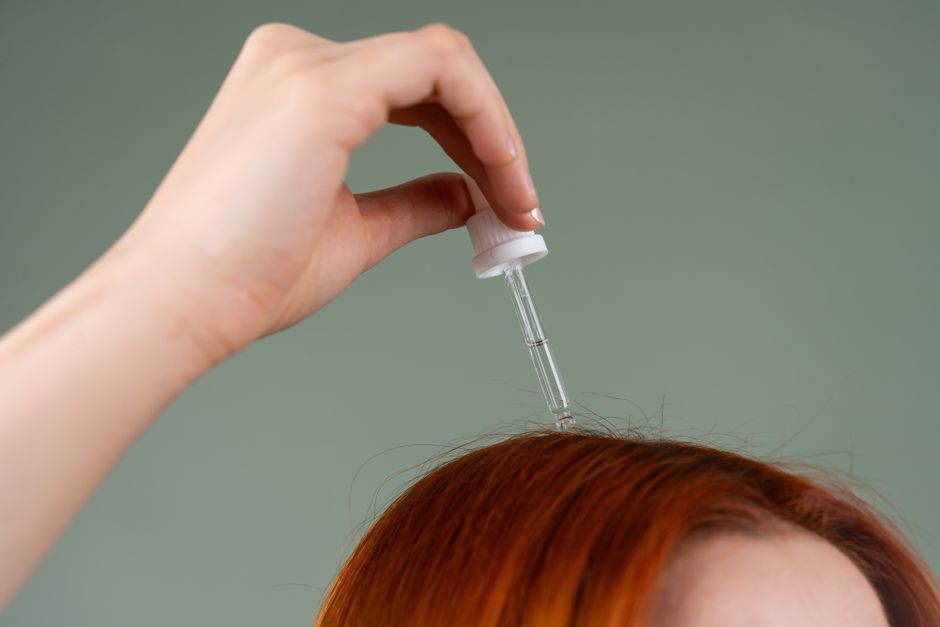
Hair loss at the back of the head in women is most often caused by female pattern hair loss, a hereditary condition that can thin hair at the crown and back of the scalp even when the front hairline stays intact. The most effective approach combines a proper diagnosis from a dermatologist, evidence-based treatments like minoxidil, and management of any underlying conditions such as thyroid disease or iron deficiency. There is no single fix that works for everyone, and results take months, not weeks.
Why Does Hair Loss Happen at the Back of a Woman’s Head?
The location of hair loss tells you something about the cause. Hair thinning that concentrates at the crown and back of the scalp, while the front hairline stays relatively preserved, is the classic pattern of androgenetic alopecia in women. This is also called female pattern hair loss.
In this condition, hair follicles gradually shrink in response to androgens, particularly dihydrotestosterone (DHT). Each growth cycle produces a thinner, shorter hair until the follicle eventually stops producing visible hair. The follicles at the crown and back of the scalp are more sensitive to this process in women than follicles at the front.
Genetics play a major role. If your mother or grandmother had thinning at the crown, your risk is higher. But genes are not the whole story. Several other conditions can cause or worsen hair loss in this specific area:
- Telogen effluvium — a temporary shedding condition triggered by stress, illness, surgery, or rapid weight loss. It usually causes diffuse thinning rather than a specific pattern.
- Thyroid disorders — both hypothyroidism and hyperthyroidism can cause diffuse hair thinning.
- Iron deficiency — low ferritin levels are linked to hair shedding, even without anemia.
- Traction alopecia — caused by tight hairstyles that pull on hair follicles. This more often affects the edges and sides but can affect the back if ponytails or buns are worn tightly.
- Alopecia areata — an autoimmune condition that causes patchy bald spots. It can appear anywhere on the scalp, including the back.
- Central centrifugal cicatricial alopecia (CCCA) — a scarring form of hair loss that starts at the crown and spreads outward. It is more common in women of African descent.
The distinction matters because treatment differs. A dermatologist can usually tell the difference through a scalp exam and sometimes a biopsy.
How Do You Know If It’s Female Pattern Hair Loss or Something Else?
A dermatologist can usually identify the cause through a focused scalp examination and medical history. The pattern of loss, the condition of the scalp, and any accompanying symptoms point toward different diagnoses.
Female pattern hair loss typically shows a widening part and diffuse thinning over the crown, with a preserved frontal hairline. The scalp itself looks normal — no redness, scaling, or scarring. If the scalp is inflamed, itchy, or shows patches of smooth, shiny skin, that suggests a different condition.
Blood tests are commonly ordered to rule out reversible causes. These may include:
- Complete blood count
- Ferritin (iron storage)
- Thyroid-stimulating hormone (TSH)
- Vitamin D
- Zinc
Hormone panels may be checked if there are signs of excess androgens, such as acne, irregular periods, or excess facial hair. These can point to polycystic ovary syndrome (PCOS) or other endocrine conditions.
A scalp biopsy is sometimes needed when scarring alopecia is suspected. Scarring alopecias destroy hair follicles permanently, so early diagnosis matters.
What Treatments Actually Work for Hair Loss at the Back of the Head?
Minoxidil is the most established treatment for female pattern hair loss. It is available over the counter as a topical solution or foam. Both are applied directly to the scalp. The 2% solution and 5% foam are FDA-approved for women. The 5% solution is approved for men but is sometimes recommended off-label for women by clinicians.
Minoxidil works by prolonging the growth phase of the hair cycle and widening the hair follicle. It does not fix the underlying hormonal process, so hair loss typically resumes if you stop using it. Results take at least three to six months to become visible. Some women see improvement, some see stabilization, and some see no change.
Prescription options include:
- Spironolactone — an anti-androgen that blocks the effect of androgens on hair follicles. It is widely prescribed off-label for female pattern hair loss. It is not FDA-approved for this purpose, but clinical practice and some studies support its use.
- Finasteride — a 5-alpha-reductase inhibitor that reduces DHT production. It is FDA-approved for male pattern hair loss but not for women. It is contraindicated in women of childbearing potential because of risks to a male fetus.
- Oral minoxidil — low-dose oral minoxidil has gained interest in recent years. Some dermatologists prescribe it off-label. Evidence is growing but still limited compared to topical minoxidil.
Other in-office treatments include platelet-rich plasma (PRP) injections and low-level laser therapy. Evidence for PRP is mixed. Some studies show benefit; others do not. Low-level laser devices are FDA-cleared for hair regrowth, but study results vary and the effect is generally modest.
Hair transplant surgery can restore hair in areas of permanent loss. It works best for women with stable, well-defined areas of thinning and a good donor supply. It is not typically recommended for diffuse thinning.





What Lifestyle and Medical Steps Can Help?
Treating any underlying condition is the first step. If blood tests reveal iron deficiency, thyroid dysfunction, or another reversible cause, correcting it may slow or stop the shedding.
Nutrition matters, but the evidence is specific. Severe calorie restriction, low protein intake, and deficiencies in iron, zinc, vitamin D, and B vitamins are associated with hair loss. Correcting a documented deficiency can help. Taking supplements without a deficiency has not been shown to regrow hair.
Hair care habits can prevent additional loss:
- Avoid tight hairstyles that pull on the scalp, especially ponytails, buns, and braids worn in the same position daily.
- Avoid harsh chemical treatments and excessive heat styling, which can damage hair shafts and worsen the appearance of thinning.
- Handle wet hair gently. Wet hair stretches and breaks more easily.
- Use a wide-tooth comb and avoid aggressive brushing over thinning areas.
Stress management may help if stress is a trigger. Telogen effluvium from a stressful event usually resolves on its own within six to twelve months, though it can take longer if the stressor continues.
Smoking is associated with worse hair loss in some studies. Quitting is generally beneficial for overall health, and may help hair as well.
What Doesn’t Work or Has Weak Evidence?
Many products marketed for hair regrowth have little or no evidence behind them. Biotin supplements are widely sold for hair health, but unless you have a documented biotin deficiency, they have not been shown to regrow hair. Biotin deficiency is rare in people eating a normal diet.
Ketoconazole shampoo is sometimes recommended for hair loss. It is an antifungal shampoo used for dandruff and seborrheic dermatitis. Some small studies suggest it may have mild anti-androgen effects on the scalp, but evidence for hair regrowth is limited.
Caffeine shampoos, saw palmetto supplements, and most “hair growth” vitamins have not been confirmed in large human trials. Some early research exists, but it is not strong enough to recommend them as proven treatments.
Laser combs and caps vary widely in quality. Some are FDA-cleared, but the magnitude of benefit is generally small, and results vary between users.
No topical product can reverse scarring alopecia. If follicles are destroyed, they do not regenerate. This is why early diagnosis of scarring conditions is important.
When Should You See a Doctor?
See a dermatologist if you notice sudden or rapid hair loss, patches of complete baldness, scalp pain, itching, scaling, or redness, or if the loss is spreading. These signs suggest something other than typical female pattern hair loss.
Also see a doctor if you have signs of hormonal imbalance, such as irregular periods, acne, or excess facial hair. These may point to PCOS or another condition that needs treatment.
If you have tried minoxidil for six months without any change, a dermatologist can reassess the diagnosis and discuss prescription options. Not everyone responds to minoxidil, and some people need a different approach.
Hair loss at the back of the head in women is treatable in many cases, but it usually requires patience and a realistic understanding of what treatments can and cannot do. Most options slow or partially reverse loss. Few restore a full head of hair.
Frequently Asked Questions
Can hair loss at the back of a woman’s head grow back?
Yes, in many cases hair can regrow or thicken with treatment, especially if the cause is female pattern hair loss and the follicles are still alive. Scarring alopecias cause permanent loss because the follicles are destroyed.
Is minoxidil safe for women to use long-term?
Topical minoxidil has been used for decades and is generally well tolerated, with the most common side effect being scalp irritation. Long-term use is common, but you should discuss duration and monitoring with your doctor.
What blood tests should I ask for if I’m losing hair at the back of my head?
Doctors commonly check ferritin, thyroid-stimulating hormone, complete blood count, vitamin D, and zinc. Hormone panels may be added if there are signs of excess androgens.
How long before hair loss treatments show results?
Most treatments take at least three to six months before you see visible change, and up to a year for full effect. Hair grows slowly, so patience is necessary.
