
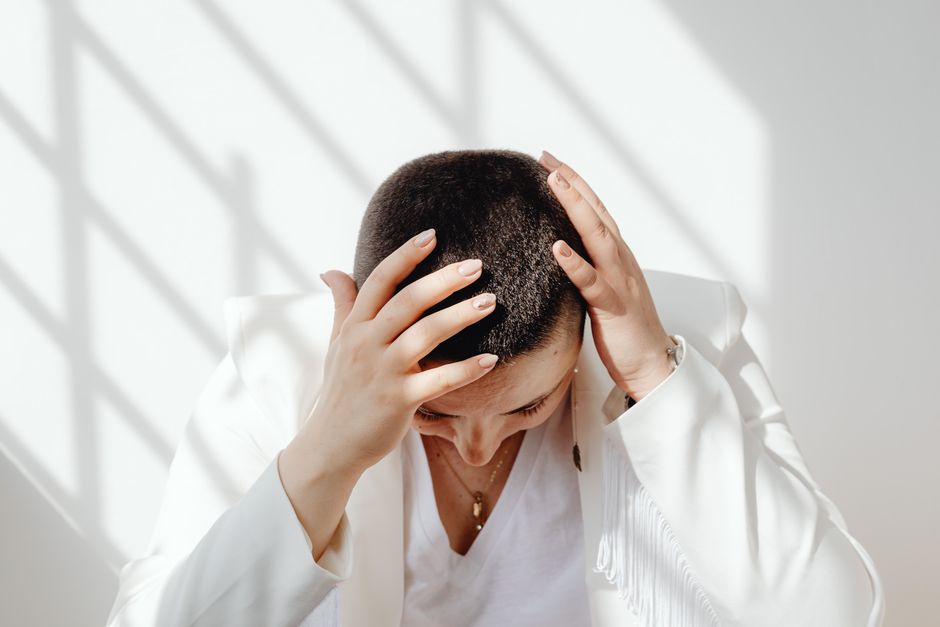
Yes, stress-related hair loss almost always grows back on its own once the stressor is removed. Most people see regrowth within three to six months, though the exact timeline depends on the type of hair loss and how long the stress lasted. This is one of the few hair loss conditions where the outlook is genuinely good — and the science behind it is straightforward once you understand what is happening inside your body.
What Actually Happens to Your Hair During Stress?
Stress does not make hair fall out instantly. The process is delayed. The most common form, called telogen effluvium, happens when a physical or emotional stressor pushes a large number of hair follicles into a resting phase at the same time.
Normally, about 90 percent of your hair is in a growing phase at any moment. The other 10 percent is resting. After a major stress event — illness, surgery, job loss, divorce, or even extreme dieting — up to 30 percent of follicles can shift into that resting phase at once. The result is noticeable shedding about two to three months later.
This is why people often do not connect the stress to the hair loss. They think about what happened last week when the real trigger was three months ago. The hair does not fall out during the stressful event. It falls out later, after the body has already started recovering.
The good news is that telogen effluvium is a temporary disruption. The follicles are not damaged. They are just paused. Once the body returns to normal, the growing cycle restarts.
How Long Does It Take for Stress Hair Loss to Grow Back?
For most people, noticeable regrowth begins within three to four months after the stressor ends. Full recovery of normal density usually takes six to nine months. In some cases it can take up to a year.
The timeline depends on two things. First, how long the stress lasted. A single stressful week may cause shedding that resolves faster than chronic stress over several months. Second, your individual hair growth cycle. Hair grows at about half an inch per month on average. If you lost a significant amount of length, it will take time to grow back visibly.
One important detail: regrowth is not always even. You may see short, fine hairs at the hairline or throughout the scalp first. Some people describe it as baby hair. This is normal. The new hairs start thin and get thicker over several growth cycles.
If you have not seen any regrowth after six months of reduced stress, it is worth seeing a dermatologist. There may be another factor at play, such as thyroid issues, iron deficiency, or an underlying genetic condition that was unmasked by the stress.
Does Stress Hair Loss Grow Back and How Long It Takes for Different Types
Not all stress-related hair loss is the same. Telogen effluvium is the most common, but there are two other types that behave differently.
Telogen effluvium is the one that almost always grows back fully. The hair follicles are intact. They just need time to cycle back into the growing phase. Most people recover completely within six to nine months without any treatment.
Alopecia areata is different. It is an autoimmune condition where the immune system attacks hair follicles. Stress can trigger it, but it is not caused by stress alone. Some people with alopecia areata see regrowth within a year. Others have persistent or recurring patches. The outcome is less predictable than telogen effluvium.
Trichotillomania is a hair-pulling disorder often triggered or worsened by stress. People pull out their hair as a way to cope with anxiety. The hair usually grows back if the pulling stops, but repeated pulling over years can damage follicles permanently.
If you are unsure which type you have, a dermatologist can tell by looking at the pattern of loss and examining the scalp. Telogen effluvium causes diffuse thinning all over. Alopecia areata causes round patches. Trichotillomania causes irregular, broken hairs in reachable areas.




What the Research Actually Says About Recovery
Research published in the Journal of the American Academy of Dermatology found that telogen effluvium resolves on its own in most people within six months. The study followed patients who had a clear stress trigger and found that 95 percent had full recovery within that window.
Another study in Dermatology Practical and Conceptual looked at women with chronic telogen effluvium — shedding that lasts longer than six months. They found that even in these cases, the condition eventually resolved for most people once underlying causes were addressed. The key was identifying and removing the ongoing stressor.
The American Academy of Dermatology states that stress-related hair loss is reversible and that treatment is usually not needed. They recommend focusing on stress management, nutrition, and giving it time. This is one of the few areas where the evidence strongly supports a wait-and-see approach rather than aggressive intervention.
That said, there is no magic timeline that applies to everyone. Some people recover in three months. Others take a full year. The research consistently shows that the hair follicle is resilient. It wants to grow. It just needs the right conditions.
What Actually Helps Hair Grow Back Faster
There is no supplement or treatment proven to speed up the natural regrowth process for stress-related hair loss. But there are things you can do to support the conditions your hair needs to grow.
Manage the stress itself. This is the single most important step. The hair will not grow back if the stress continues. Sleep, exercise, and talking to someone are more effective than any product. A 2018 study in the Journal of Clinical and Aesthetic Dermatology found that mindfulness-based stress reduction improved hair density in women with telogen effluvium.
Eat enough protein and iron. Hair is made of protein. Low iron is one of the most common nutritional causes of hair shedding. A simple blood test can check your ferritin levels. Many dermatologists recommend keeping ferritin above 40 ng/mL for healthy hair growth.
Avoid harsh treatments. Bleaching, perming, and heat styling on already fragile hair can cause breakage. This does not affect regrowth from the root, but it makes hair look thinner while it is growing back.
Consider minoxidil only if your doctor recommends it. Minoxidil (Rogaine) is sometimes used for telogen effluvium, but the evidence is mixed. It may help speed regrowth in some people. But it is a lifelong commitment if you start it. Once you stop, any hair gained from it will fall out. Many dermatologists advise waiting to see if natural regrowth happens first.
| Intervention | What the Evidence Says | When to Consider |
|---|---|---|
| Stress reduction | Strong evidence for recovery | Always the first step |
| Iron supplementation | Effective if deficient | Only after blood test confirms low levels |
| Protein intake | Supports healthy growth | If diet is low in protein |
| Minoxidil | Mixed evidence for stress-related loss | Only if no regrowth after 6 months |
| Biotin supplements | No strong evidence for stress hair loss | Not recommended unless deficient |
Common Misconceptions About Stress Hair Loss
The biggest myth is that stress causes permanent baldness. It does not. Chronic stress can worsen genetic hair loss in people who are already predisposed to it, but it does not cause permanent baldness on its own. Telogen effluvium is always reversible if the trigger is removed.
Another myth is that you need expensive treatments or supplements. Most products marketed for stress hair loss are not backed by good evidence. Biotin is in almost every hair supplement, but biotin deficiency is rare. Unless you have a confirmed deficiency, extra biotin will not help your hair grow.
A third misconception is that hair loss during stress means you are unhealthy. It does not. Telogen effluvium is a normal biological response to a major event. It is your body’s way of conserving energy. It is not a sign of poor health or nutrient deficiency in most cases. It is a sign that something big happened, and your body reacted appropriately.
Some people also believe that frequent washing causes more hair loss during stress. It does not. The hair that comes out in the shower is hair that was already shed. It was just waiting to fall out. Washing does not cause extra loss. It just reveals what already happened.
Frequently Asked Questions
How can I tell if my hair loss is from stress?
Stress-related hair loss usually causes thinning all over the scalp, not bald patches. It typically starts two to three months after a major stressful event and may feel like excessive shedding in the shower or on your pillow.
Can stress hair loss happen months after the stressful event?
Yes. Telogen effluvium has a delay of about two to three months. You may notice hair loss well after the stressful period has ended, which often confuses people into thinking the stress was not the cause.
Do I need to see a doctor for stress hair loss?
If shedding lasts more than six months or you notice round bald patches, see a dermatologist. A simple blood test can rule out thyroid issues or iron deficiency. Most cases do not require medical treatment.
Will my hair grow back the same as before?
For telogen effluvium, yes. Hair usually regrows to its original thickness and texture. In rare cases, if stress was severe or prolonged, the new hair may be slightly different in texture temporarily, but this normalizes over time.
